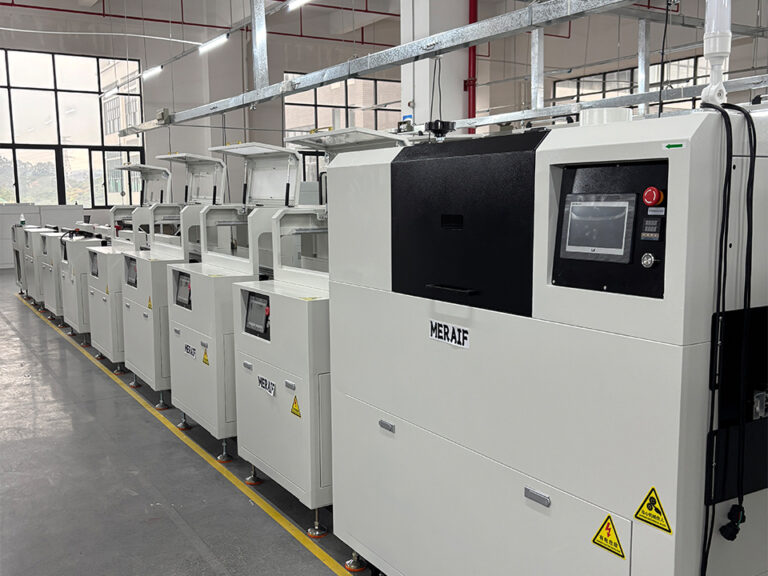
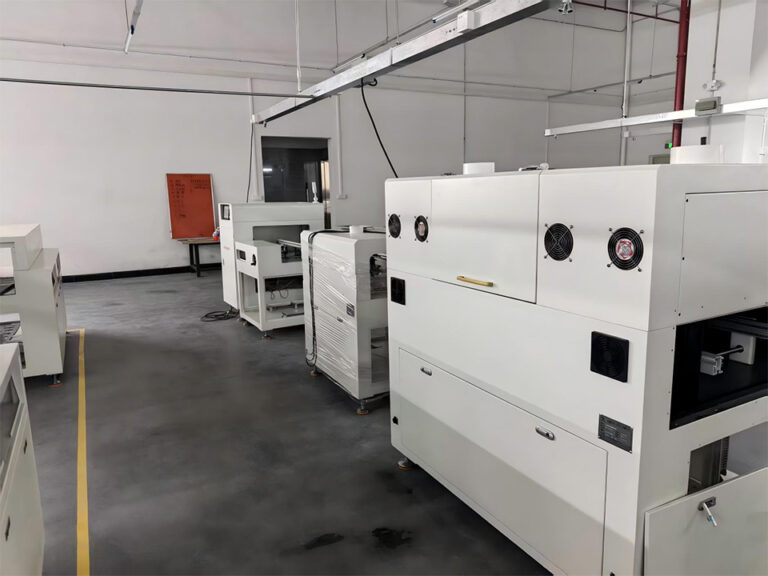
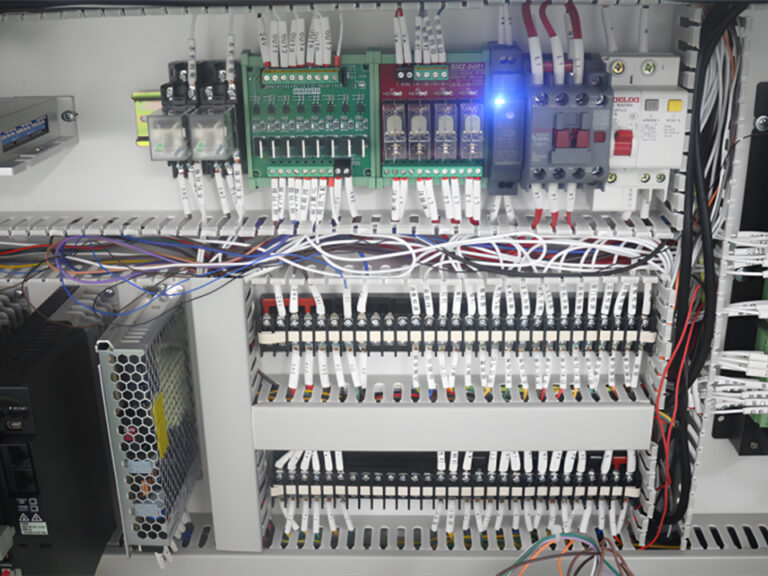
Now the long, annoying truth: the “fastest” high-speed pick and place machine on a datasheet can still lose in your factory because feeders jam, nozzles wear, PCB warp compensation eats cycle time, your operator changeover is slow, and your line is bottlenecked by printing, reflow, or inspection—not placement.
So what are you actually buying when you choose Fuji NXT vs Hanwha vs ASM?
A headache? Or a stable line?
Let’s talk like adults.
The search intent hiding inside your H1
This isn’t “what is pick and place.” This is commercial investigation. You’re comparing platforms because you either (a) need a buying short list, or (b) need ammunition for an internal fight—procurement vs manufacturing vs quality.
And yes, I’ve watched that meeting go sideways.
The 2024 context nobody wants to say out loud
The SMT equipment world keeps getting more political and more consolidated, and that changes pricing, lead times, and service coverage even if your board design never changes.
Example: Reuters reported that ASMPT ended takeover talks in November 2024, with the reporting pointing to China-related regulatory/geopolitical risk and “reverse CFIUS” outbound investment scrutiny becoming effective January 2, 2025. That’s not trivia. That’s supply-chain reality. (Reuters) External source: Reuters coverage of the ASMPT takeover-talks story (Nov 11, 2024)
Meanwhile, the industry demand picture wasn’t “dead” in 2024. IPC’s early-2024 survey said respondents anticipated 9.5% revenue growth for 2024, which lines up with why so many factories were still budgeting capacity and automation even while complaining about costs. (electronics.org) External source: IPC survey summary on 2024 revenue expectations
Fuji NXT vs Hanwha vs ASMPT: what each one “really is”
Fuji NXT (the modular pragmatist)
Fuji NXT is less “one monster machine” and more “a platform you scale.” The pitch is modular flexibility: add modules, mix heads, chase balance.
Fuji’s own published NXT III numbers tell you what they want you to believe: the H24 head is listed at 35,000 CPH (standard) and 37,500 CPH (productivity priority). (fujiamerica.com) External spec reference: Fuji NXT III product page
But here’s the part that matters: NXT wins when you’re trying to keep throughput while the product mix keeps changing.
Hanwha (the speed-first production bruiser)
Hanwha’s SMT machines (think SM-series) have a chip-shooter mindset: push volume, keep it simple, keep it moving.
Their published spec for the SM471PLUS calls out 78,000 CPH (optimal) and placement accuracy in the tens of microns @ 3σ. (hanwhasemitech.com) External spec reference: Hanwha SM471PLUS published specs table
Hanwha tends to show up when the KPI is blunt: boards per shift, not “flexibility poetry.”
ASMPT SIPLACE TX (the precision-speed hybrid that hates sloppy processes)
SIPLACE TX is designed to do “fast” without pretending accuracy is optional.
ASMPT’s SIPLACE TX page states 96,000 CPH in a footprint of 1 m × 2.23 m. (smt.asmpt.com) External spec reference: ASMPT SIPLACE TX page
And if you care about advanced packaging / SiP-like density, the SIPLACE TX micron press info (Nov 30, 2023) claims 93,000 CPH at a 20-micron @ 3σ accuracy class, with even higher accuracy modes available (with speed trade-offs). (smt.asmpt.com) External source: ASMPT press page on TX micron “Speed and precision for SiPs” (Nov 30, 2023)
The comparison table procurement will love (and ops will argue with)
| Platform (example) | Published speed headline | Published accuracy headline | What usually breaks first | Best-fit factory reality |
|---|---|---|---|---|
| Fuji NXT III | H24 head: 35,000–37,500 CPH (per head mode) (fujiamerica.com) | (Varies by config; platform depends on head + vision + process) | Changeovers + feeder logistics + line balancing across modules | High-mix / medium-to-high volume where you scale by modules and want predictable ramp-ups |
| Hanwha SM471PLUS | 78,000 CPH (optimal) (hanwhasemitech.com) | “tens of µm @ 3σ” class (hanwhasemitech.com) | Feeder handling discipline + maintenance rhythm (nozzle/feeder wear) | High-volume SMT where speed matters more than constant product churn |
| ASMPT SIPLACE TX | 96,000 CPH; 1 m × 2.23 m footprint (smt.asmpt.com) | 25 µm @ 3σ is widely cited for TX-class configs (head dependent) (LinkedIn) | Process control (board warp, fiducials, vision calibration) | High-volume lines that can actually feed it clean boards + stable upstream printing |
| ASMPT SIPLACE TX micron | 93,000 CPH at 20 µm @ 3σ (config dependent) (smt.asmpt.com) | Up to 10 µm mode with speed trade-off (smt.asmpt.com) | Setup rigor + inspection strategy (you can’t “wing it”) | Dense modules / SiP-like work where placement gap and yield are the money |
Yes, this table is unfairly honest. Good.
The ugly truth about “high-speed”: feeders are your real machine
If you want one sentence to tattoo on your forehead before you sign a PO, it’s this:
Your line doesn’t run at “max CPH.” It runs at “feeder reality.”
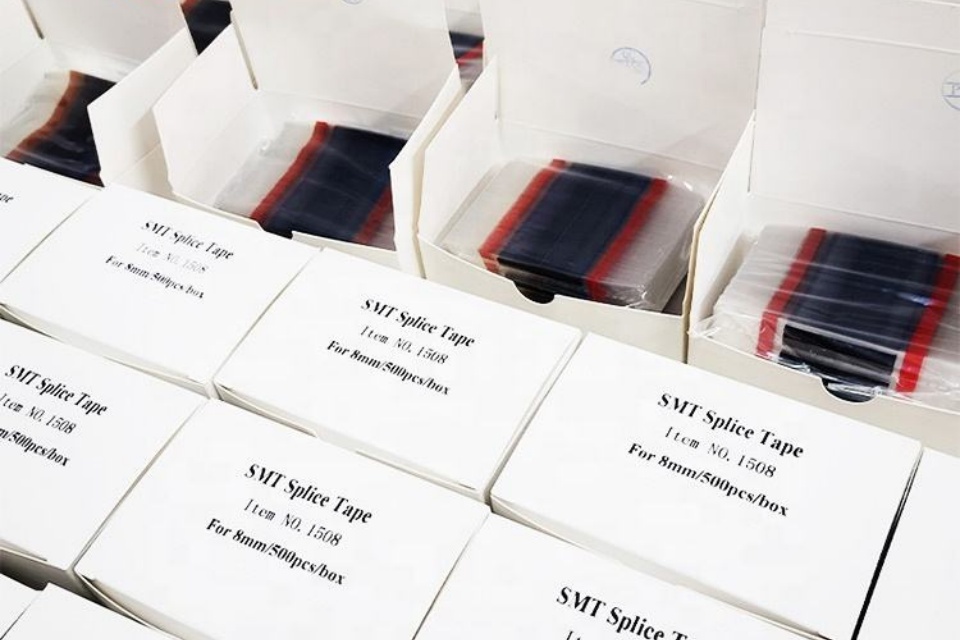
Splicing quality, feeder count, feeder cart discipline, spare feeder availability, and whether your operators treat feeders like precision devices or like luggage—those decide output.
And the cost trap? Feeder ecosystems don’t just cost money. They lock you in.
So when someone asks you “Fuji NXT vs Hanwha vs ASM,” what they’re really asking is:
- Which feeder ecosystem fits our culture?
- Which service team shows up fast?
- Which software won’t make our changeovers slower?
Real case examples (because theory is cheap)
Fuji’s public customer news is blunt about why factories buy: productivity, capacity, and uptime stories.
One 2024 example: Fuji reported that ELESTA expanded its sensor production using a new NXTR S model (high-performance placement focus). (FUJI EUROPE CORPORATION GmbH) External source: Fuji Euro: ELESTA expansion with NXTR S (May 2024)
Another example tied to late-2024 operations: FEIG ELECTRONIC improved productivity with a new SMT line from Fuji, with the timeline pointing to capacity and output pressure as the driver (not “we liked the UI”). (all-electronics.de) External source: Fuji Euro: FEIG ELECTRONIC productivity story
Do these prove “Fuji is best”? No. They prove what triggers buying decisions: output demand + operational friction.
My decision filter (the one I’d use if it were my money)
I’d ask five questions, in this order:
- What’s our real mix? 0201-heavy? Fine-pitch QFN? Tall connectors? Odd-form?
- How many changeovers per week? If the answer is “constantly,” speed alone is a trap.
- What’s our feeder discipline? If it’s sloppy, you want the system that forgives humans the most.
- Who fixes it at 2 a.m.? Vendor service coverage and parts availability beats brochure features.
- What’s the line bottleneck today? If SPI or oven is the limiter, you don’t need to buy the fastest placement platform—yet.
If your team can’t answer these, stop shopping. Seriously.
Internal resources to make this decision less painful
If you’re building a line, don’t buy placement in isolation. I’d start here:
- Review your full build options for turnkey SMT line solutions so placement, printing, reflow, and inspection match.
- If you’re chasing output, compare layouts for high-speed mass production SMT lines before you argue about one machine spec.
- If you’re still iterating designs, look at prototype and small-batch SMT line planning so you don’t overbuy speed you can’t use.
- Make sure operators can run what you buy—your OEE depends on training and after-sales support.
- When you’re ready to compare configurations, grab the downloadable equipment catalog and mark up the feeder + head options you actually need.
FAQs
What is a high-speed pick and place machine in SMT?
A high-speed pick and place machine is an SMT placement platform designed to mount thousands of tiny components per hour on PCBs using vision alignment, vacuum nozzles, and automated feeders, with speed measured as CPH but limited in real life by feeder availability, board handling, and line balance across upstream and downstream processes. If your printer, reflow, or AOI is behind, “high-speed” just means you create WIP faster.
What does CPH mean on pick and place machine specs?
CPH (components per hour) is the vendor’s standardized throughput metric that estimates how many placements a machine can perform under test conditions, but it usually assumes ideal feeder access, optimized placement paths, stable board handling, and limited interrupts—conditions that your actual product mix, fiducial strategy, and operator changeovers routinely violate. Treat CPH like a top-speed rating on a car: interesting, not decisive.
Which is better: Fuji NXT or Hanwha or ASM pick and place machine?
The better machine is the one whose feeder ecosystem, software behavior, and service response let you hold your target OEE on your specific mix of 0201–QFP–BGA parts, because raw max CPH only becomes meaningful after you’ve already controlled downtime, changeover time, placement yield, and upstream print stability. If you buy on CPH first, you’ll pay twice—once in capital, then again in lost uptime.
When should you pick Fuji NXT over a Hanwha chip shooter?
Fuji NXT makes the most sense when you need modular scaling and frequent product changeovers, because its platform approach (add modules, mix heads, tune line balance) can protect output without turning every new job into a reprogramming and feeder reconfiguration crisis that drains shifts and invites placement defects. If you run many SKUs, boring flexibility beats flashy speed.
When does ASMPT SIPLACE TX (or TX micron) become worth it?
ASMPT’s SIPLACE TX family becomes worth it when your factory can support tight process control—flat boards, reliable fiducials, stable paste, and disciplined feeder handling—because the platform’s value shows up when you push both speed and placement quality, especially as component sizes shrink and tolerances tighten into the 20–10 µm classes. (smt.asmpt.com) If your fundamentals are messy, you won’t “buy” your way out with a premium platform.
What specs matter most besides speed and accuracy?
Beyond speed and accuracy, the most important specs are feeder capacity and interchangeability, vision system behavior on your smallest components, changeover features (feeder carts, offline setup, quick calibration), and the vendor’s spare-parts and service model, because those factors control downtime, schedule stability, and true cost per placed component more than headline CPH ever will. This is where most “cheap” deals get expensive.
Conclusion
If you want, I can turn your real constraints (product mix, target UPH, floor space, operator skill level, feeder inventory) into a short-list recommendation with a line-level layout.
Start with your goals, not a brochure: contact our team here and share your current line bottleneck and daily changeover count.