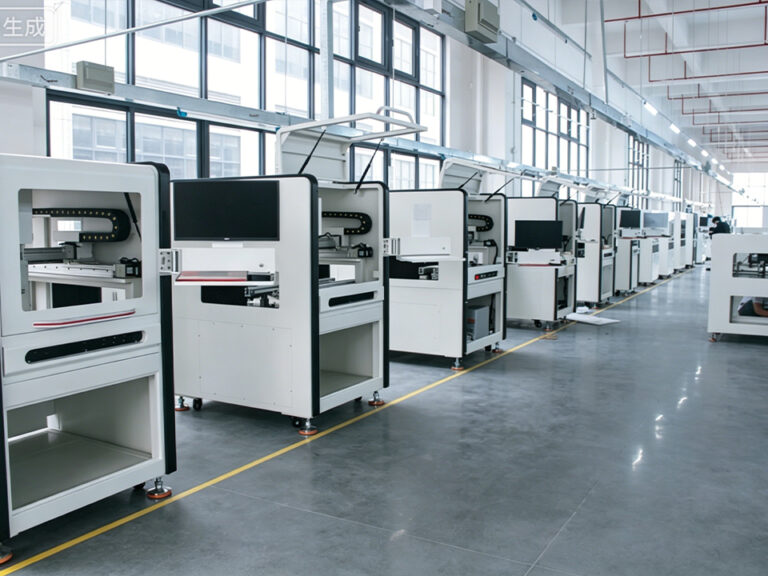
Heads don’t matter. Not by themselves, anyway—because a multi-head pick and place machine only goes “parallel” when your feeder picks, vision pipeline, nozzle schedule, and gantry motion plan stop fighting each other like four teams using four different clocks. So what are you really buying when you pay for more heads: speed, or a bigger set of ways to waste time?
I’m going to say the quiet part out loud: most “optimization” projects fail because they chase peak CPH on a brochure, not sustained CPH on your worst real board, on your worst real shift, with your worst real reel splices.
The ugly math vendors avoid
A dual-head pick and place looks simple in sales slides: two heads, twice the output. But your cycle time isn’t “two heads = double.” It’s the slowest block in a loop: feeder access, camera time, nozzle changes, travel distance, acceleration limits, settle time, and the tiny pauses your logs call “negligible” (until you add them up and they eat your shift).
Here’s the mental model I use when I audit logs:
- Your machine is a queueing system, not a magic wand.
- “Parallel placement heads” mainly help when motion and pick/place dwell dominate.
- They help far less when vision and feeder pick latency dominate.
- They can even hurt if your program forces extra camera checks or excessive nozzle swaps.
And yes, the scheduling problem is nasty. University work on PCB assembly planning keeps pointing back to the same bottleneck trio—nozzle assignment, feeder assignment, and placement sequencing—because small decisions there cascade into big time losses. See the 2024 Strathclyde paper that lays out these machine-level constraints and why they’re hard to solve cleanly. (Strathprints)
Parallel placement heads: what “good” actually looks like
You can feel it when a line is tuned well. The heads stay busy. The gantry doesn’t yo-yo across the table. The camera isn’t constantly re-checking parts you’ve already proven stable. And nozzle changes don’t happen like nervous ticks.
So, what do we optimize?
1) Feeder geography (yes, geography)
If you run long travel moves between the “pick zone” and “place zone,” parallel heads just mean two heads taking turns wasting travel time. That’s not dual-head efficiency. That’s dual-head patience.
Practical moves that usually pay off:
- Put the highest-hit-rate passives in shortest-reach feeder positions.
- Cluster parts that share nozzle types (or nozzle families) so you don’t churn.
- If you run mixed production, design feeder layouts that survive changeovers. Your “perfect” layout that collapses during swap-out is fake efficiency—build for your mixed SMT line reality.
2) Nozzle strategy (multi-nozzle placement head reality)
A multi-nozzle placement head can be fast. But it can also turn your machine into a nozzle-change simulator.
Hard truth: nozzle changes are the silent throughput killer. Every time you swap, you pay time, risk a mis-pick, and invite calibration drift if maintenance is sloppy. If your program swaps nozzles “just in case,” your machine spends its life preparing to work instead of working.
What I’d rather see:
- A stable nozzle set per job family.
- Part grouping that minimizes swap frequency.
- Vision rules that are strict where they must be strict (fine pitch, polarity-sensitive), and lighter where the process is already stable.
3) Head balancing (don’t “equalize,” balance)
Engineers love symmetry. Machines don’t care.
If Head A always does the fast passives and Head B gets stuck with oddballs (connectors, shields, tall parts), the line behaves like a single head with a helper. You want balanced workload by time, not by component count.
This matters even more on high-speed mass production SMT lines, where tiny inefficiencies get multiplied into real money.
4) Pick and place head calibration (stop treating it like “maintenance paperwork”)
Calibration is boring. And expensive when skipped.
Pick and place head calibration isn’t just “does it pass a check.” It’s: head-to-camera offsets, nozzle runout, theta alignment, Z height, and repeatability under speed. When a multi-head system drifts, you often see “random” placement errors that are not random at all—they’re head-specific patterns.
If you don’t have the tools, training, and routines to keep calibration tight, parallel heads become parallel sources of defects. That’s when you lean on a real training and after-sales support team instead of hoping the next software tweak will fix mechanical truth.
What your CFO cares about: cost pressure is real
This isn’t just nerd stuff. It’s labor economics.
U.S. wage data for electrical/electronic assemblers shows a May 2023 median around $19.47/hour (about $40,490/year). That’s not a scare tactic. It’s a baseline cost you can model against scrap, rework, and overtime. You can pull it straight from the U.S. Bureau of Labor Statistics OES table. (Bureau of Labor Statistics)
Now add the messy macro layer: manufacturing hiring and staffing conditions have been unstable, with Reuters reporting weak factory employment signals in early 2024 tied to softer manufacturing activity. That volatility is exactly why “sustained throughput” matters more than “peak speed.” (Reuters, March 1, 2024). (Reuters)
Comparison table: choosing the right head architecture (and not lying to yourself)
| Architecture | What it is | Where it wins | Where it bites you | Best-fit use case |
|---|---|---|---|---|
| Dual-head gantry | Two placement heads share a gantry path | Simple parallelism, flexible jobs | Feeder/camera bottlenecks cap gains fast | Mid-volume lines with varied BOMs |
| Multi-head gantry | More heads or head modules, often with shared vision | Higher sustained output if scheduling is strong | Nozzle swaps + calibration drift multiply | High-volume with stable product families |
| Turret / rotary (chipshooter style) | Continuous rotation, high-speed passives | Raw passive speed, short cycles | Flexibility limits, setup discipline required | Consumer/high-volume passive-heavy boards |
| Hybrid line (chipshooter + flexible placer) | Split workload by component type | Best of both when balanced well | Line balancing mistakes waste both machines | “Real” high-speed SMT lines with mix |
| “Software-only optimization” promise | Same hardware, new programming | Cheap wins if your baseline is messy | Won’t fix feeder physics or worn mechanics | Plants that never standardized setups |
What I’d do first (in order)
- Pull real logs (not marketing CPH). Identify top three wait states: feeder pick latency, vision time, travel time, nozzle changes.
- Lock the nozzle policy. Make it boring and repeatable.
- Re-map feeder positions by hit rate and travel distance.
- Balance by time, not by part count.
- Recalibrate and validate head-to-head performance at production speed, not at “demo speed.”
- Codify it so the next engineer doesn’t “optimize” you back into chaos. If you need examples of what stable looks like across plants, start with customer case patterns and steal the discipline, not the branding.
FAQs
What are parallel placement heads on a multi-head pick and place machine?
Parallel placement heads are two or more placement heads (or head modules) that pick and place components at the same time, so a multi-head pick and place machine can overlap travel, vision, and placement steps instead of doing them in one serial loop. In practice, “parallel” only shows up when feeders and cameras can keep up. If your heads idle waiting for a reel pick or a vision capture, you don’t have a head problem. You have a scheduling and material access problem.
How do I optimize multi-head pick and place placement speed without losing accuracy?
To optimize multi-head pick and place placement speed, you reduce cycle time by removing hidden waits—camera time, nozzle change time, feeder pick delays, and gantry acceleration limits—while keeping placement error inside spec through tighter head calibration, smarter part grouping, and fewer unnecessary vision checks. Speed gains that ignore calibration usually come back as rework. If you can’t measure head-to-head offsets and nozzle runout, you’re guessing.
What causes throughput to stall on dual-head pick and place systems?
Throughput stalls on dual-head pick and place systems when the machine spends more time waiting on feeders, vision capture, nozzle swaps, or long travel moves than it saves by having a second head, so the “parallel” hardware turns into two heads queued behind the same bottleneck. Look at your logs. If “idle” or “wait” states dominate, buying more heads won’t rescue you.
How often should you perform pick and place head calibration?
Pick and place head calibration is the routine process of measuring and correcting head-to-camera offsets, nozzle runout, theta angle, and Z height so every head places to the same coordinate frame, which prevents head-to-head drift that shows up as rotation errors, skew, and consistent miss-picks at speed. Frequency depends on vibration, maintenance quality, and changeovers, but the trigger is simple: calibrate when you see head-specific error patterns or after any event that changes mechanics (head swap, crash, major maintenance).
What’s the best multi-head pick and place setup for high-speed SMT lines?
The best multi-head pick and place setup for high-speed SMT lines is the one that keeps the heads fed and moving—short feeder reach, stable nozzle sets, minimized vision steps, and balanced component allocation across heads—because peak CPH on the brochure matters less than sustained CPH across real boards. If your line runs three “easy” boards fast and then chokes on the fourth, your setup isn’t high-speed. It’s selective-speed.
Conclusion
If you’re planning a multi-head upgrade or trying to squeeze more sustained CPH out of what you already own, talk to us like you’d talk to an annoyed process engineer. We prefer it that way. Start with turnkey SMT line solutions or just contact our team and send a board file + placement log so we can argue with real numbers.