Most buyers ask the wrong question first. They ask, “How fast is the pick and place machine?” Fine. Speed sells.
But the better question is uglier: what can the head actually pick, hold, inspect, correct, and place all day without lying to your production plan?
That part matters. A placement head is not just a moving Z-axis with a nozzle attached; it is the mechanical contract between the machine, the feeder, the component package, the vision system, the vacuum circuit, the board support, and the operator who gets blamed when the line misses the quoted CPH number by 38%. Why pretend otherwise?
Vacuum nozzles for pick and place machines are still the default answer for SMT. They should be. For 0201s, 0402s, 0603s, SOT-23s, QFNs, BGAs, SOICs, LEDs, and most standard tape-fed packages, vacuum is fast, simple, and brutally efficient. The industry built an empire on suction, ceramic tips, stainless shafts, rubber pads, vacuum sensors, and vision correction.
But vacuum has a boundary. It hates porous surfaces. It hates tall center-of-gravity parts. It hates warped packaging, loose leads, inconsistent tray pockets, heavy connectors, and parts that behave like they were designed by someone who has never stood near an SMT line.
That is where the argument starts: vacuum nozzle vs gripper pick and place, and whether the alternatives are worth their cost.
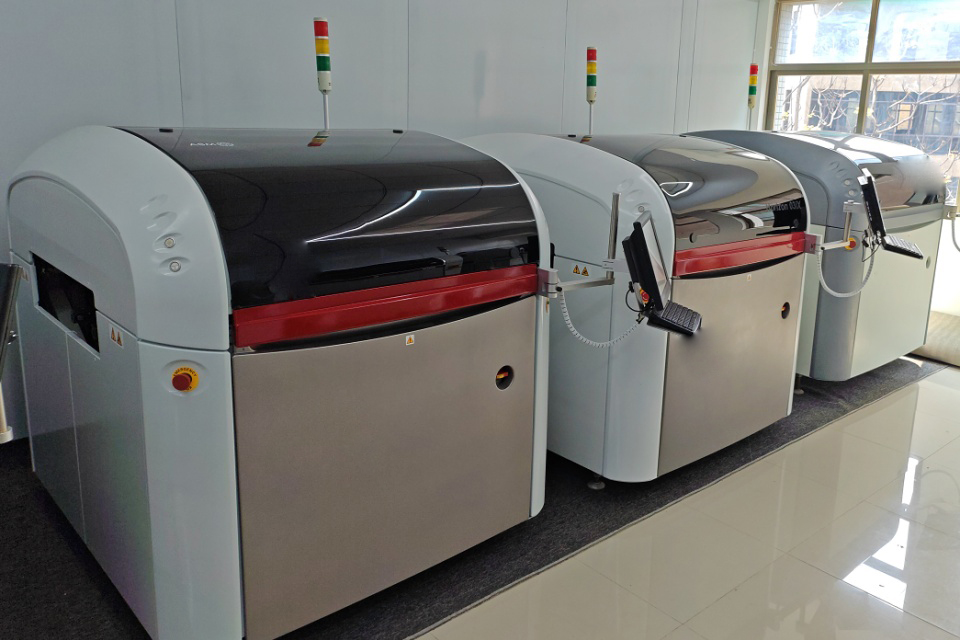
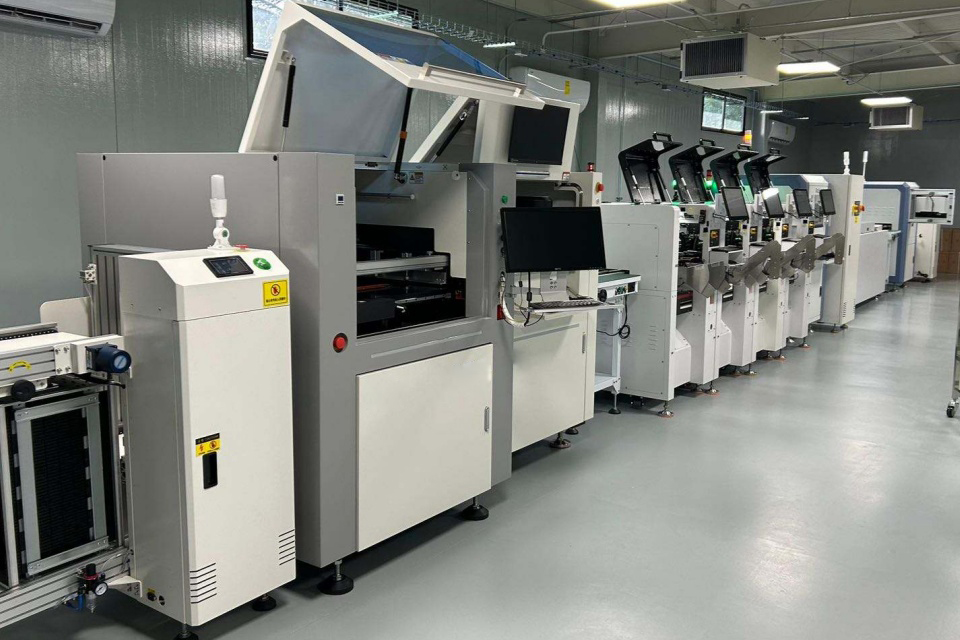
If you are still choosing only by brochure speed, start with the machine class first. A general pick and place machine platform might look similar from the outside, but the head architecture decides whether it belongs in a prototype cell, a mixed SMT line, or a high-volume factory where one bad nozzle policy becomes a six-figure headache.
The hard truth about vacuum nozzles
Vacuum nozzles win because most SMT components are designed to be vacuum-picked. That is the boring truth, and boring is profitable.
A standard SMT pick and place nozzle creates a seal against the component’s top surface, lifts it, moves it through vision correction, and places it onto solder paste with a programmed force. The machine may use vacuum sensing to confirm pickup, camera inspection to correct theta rotation and X/Y offset, and nozzle height compensation to reduce placement defects.
On common chip components, this is elegant. On odd-form components, it becomes theater.
A vacuum nozzle is only as good as the seal, the contact area, the center of mass, and the release behavior. The failure is not always dramatic. Sometimes the part lifts, passes vision, travels, places, and still ends up skewed because the nozzle was technically “working” but mechanically marginal. Those are the defects that make engineers superstitious.
I do not trust a nozzle choice until I know five things: package size, top-surface material, component weight, feeder presentation, and placement force. Skip any one of those and you are guessing.
For nozzle sourcing and replacement strategy, the safe move is to treat nozzles as process tooling, not accessories. A dedicated SMT nozzle inventory matters more than buyers admit, especially when operators start swapping “close enough” nozzle IDs during night shift.
Why vacuum became the default
Vacuum nozzles became dominant because they solve the big SMT equation: speed plus repeatability plus low changeover friction.
They are light. They support multi-nozzle rotary heads. They can be changed automatically. They allow high-speed pick paths. They pair well with laser or camera centering. They scale across component libraries. And, when maintained properly, they are cheap compared with downtime.
The economic pressure is not going away. In May 2024, IPC’s global electronics manufacturing sentiment data reported that 59% of electronics manufacturers were seeing rising labor costs and 48% were seeing rising material costs, which is exactly the kind of squeeze that pushes factories toward faster placement, better feeder discipline, and lower manual odd-form handling. IPC’s May 2024 sentiment report made the cost pressure explicit. (emails.ipc.org)
So yes, vacuum wins most days. But not all days.
Where vacuum nozzles start to fail
The usual sales pitch says, “Use the right nozzle.” True. Also incomplete.
Vacuum nozzle problems show up in patterns:
Small chips can tombstone or shift when the nozzle is worn, contaminated, or mismatched to the package. BGAs can suffer from poor release if the nozzle face is wrong. LEDs can crack or tilt if the head force is poorly controlled. Connectors and shields can rotate because the suction point sits too far from the center of mass. Odd-shaped parts can pass pickup verification while still being unstable during acceleration.
And then there is surface texture. A flat ceramic capacitor is friendly. A vented plastic connector with ribs, cavities, markings, and uneven top geometry is not.
The machine does not care about your excuse. It places what the head can control.
For small-batch work, this is why I would rather see a conservative setup on a prototype and small-batch SMT line than a heroic speed target that burns half the afternoon in nozzle experiments.
The alternatives: grippers, clamps, custom tooling, and hybrid heads
A gripper is not a magic upgrade. It is a trade.
Gripper heads hold the component mechanically rather than relying only on vacuum. That can make them better for connectors, transformers, relays, large electrolytic capacitors, shields, sockets, switches, and parts with poor vacuum pickup surfaces. But grippers add mass, setup complexity, clearance problems, part-specific tooling, and usually slower cycle time.
Still, they have a place. ASMPT’s SIPLACE Placement Head TWIN, for example, is described as a head for large, heavy, and odd-shaped components; ASMPT states it can pick components with a nozzle or a gripper and offers more than 120 grippers for special components, with adjustable force up to 100 N and component support up to 300 g. ASMPT’s placement head documentation is one of the cleaner public examples of how serious suppliers frame the nozzle-versus-gripper problem. (smt.asmpt.com)
That is the quiet admission: high-end platforms do not pretend one end-effector solves everything.
The better machines offer head ecosystems. Nozzles for speed. Grippers for odd-form control. Force sensors for press-fit or snap-in detection. Coplanarity checks for risky packages. Warpage detection when boards stop being flat. Real-time 3D measurement when the placement operation becomes more like assembly than simple SMT.
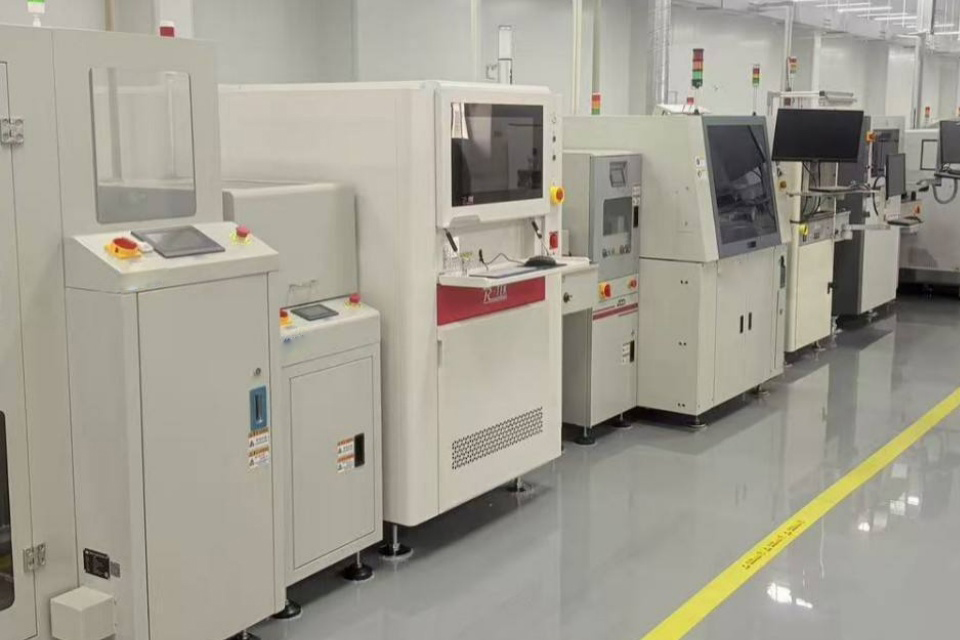
This is why high-speed mass production lines and mixed-product lines should not use the same head strategy. One is an efficiency problem. The other is a changeover and control problem.
The AI hardware boom makes placement heads less forgiving
Here is the uncomfortable connection: AI hardware growth is making advanced electronics assembly more demanding, not easier.
IPC said in October 2024 that AI server demand was expected to grow at a 12.3% compound annual growth rate over the next five years, and its supply-chain note specifically called out areas such as HBM chip assembly, PCB design, HDI fabrication, and PCBA assembly and test. IPC’s AI data-center electronics supply-chain brief was not about nozzles directly, but it explains why denser, higher-value boards punish sloppy placement decisions. (electronics.org)
The same pressure is visible in government funding. In December 2024, NIST reported that the U.S. Department of Commerce awarded SK hynix up to $458 million in direct CHIPS funding to support an approximately $3.87 billion Indiana investment for AI memory packaging and advanced packaging R&D. NIST’s CHIPS award announcement also noted up to $500 million in loans and about 1,000 expected facility jobs. (NIST)
Why does that matter to a placement head article? Because expensive boards change the tolerance for “almost right.” A mispicked 0402 is annoying. A damaged high-value module, connector, shield, or packaging-related assembly is a process failure with a purchase-order-sized shadow.
Reuters reported earlier in August 2024 that SK hynix’s planned Indiana facility included next-generation high-bandwidth memory chips used in GPUs for AI systems, with the project tied to advanced packaging capacity. Reuters’ SK hynix coverage shows how much capital is moving into packaging and assembly-adjacent capability, not just wafer fabrication. (Reuters)
Vacuum nozzles vs alternatives: the practical comparison
| Placement head type | Best fit | Weak spot | Typical component examples | My take |
|---|---|---|---|---|
| Standard vacuum nozzle | Fast SMT placement | Seal failure, wrong nozzle wear, fragile surfaces | 0201, 0402, 0603, QFN, BGA, SOIC | Best default for 80–90% of normal SMT work |
| Special vacuum nozzle | Fragile or unusual package tops | Inventory control and setup discipline | LEDs, lenses, large ICs, shields | Worth it when damage or skew appears repeatedly |
| Rubber pad nozzle | Irregular or delicate surfaces | Wear, contamination, inconsistent release | LEDs, plastic packages, polished surfaces | Useful, but inspect often |
| Mechanical gripper | Heavy, tall, or odd-form parts | Slower cycle time and part-specific setup | Connectors, relays, sockets, transformers | The right answer when vacuum is pretending |
| Clamp or custom end-effector | Repeat odd-form assembly | Tooling cost, engineering time | Shields, modules, mechanical inserts | Good for stable production, bad for chaotic BOMs |
| Hybrid nozzle/gripper head | Mixed SMT and odd-form placement | Higher machine cost and programming discipline | Boards with chips plus connectors or modules | Strong choice for mixed-product factories |
The placement head decision tree I actually trust
Start with the component, not the machine.
Can the component be vacuum-picked from a stable, flat, non-porous surface? Use a vacuum nozzle. Can the nozzle contact the center of mass without covering a sensitive area? Still vacuum. Does the part rotate during acceleration, slip during travel, or place inconsistently even with a correct nozzle? Stop blaming the operator.
Move to a special nozzle or gripper evaluation.
Then ask whether the component arrives in tape, tray, tube, bulk, or custom fixture. Feeder presentation changes everything. A bad feeder setup can make a good nozzle look defective. A poor tray pocket can make a good gripper look slow. The placement head is only one witness at the crime scene.
This is why SMT feeder compatibility belongs in the same conversation as placement heads. Feeding, pickup, inspection, and placement are not separate problems in production. They are one chain.
Do not overbuy the head
The fashionable mistake is buying a machine with exotic capability and then using it like a basic chip shooter. The opposite mistake is worse: buying a fast chip machine and expecting it to behave like an odd-form automation cell.
A vacuum-only pick and place machine may be perfect for LED strips, IoT boards, power supplies, consumer electronics, and standard PCB assembly. It may be a poor fit for high-mix industrial controls full of relays, terminal blocks, transformers, and connectors.
Mixed SMT placement needs range. Not theoretical range. Verified range.
If your board family includes 0201 passives and 60 mm connectors, you are not shopping for “best pick and place machine nozzle types.” You are shopping for a head architecture, a feeder strategy, nozzle libraries, gripper options, inspection logic, spare parts supply, and support discipline.
That is why I like keeping spare parts and SMT accessories visible during machine selection, not after installation. Consumables decide uptime.
My blunt ranking of the choices
Vacuum nozzle first. Special nozzle second. Gripper when the data proves vacuum is unstable. Custom tooling only when the production volume justifies engineering time.
There. Simple.
But the machine quote should include the messy details: nozzle sizes, nozzle material, auto nozzle changer capacity, vacuum sensor behavior, placement force range, head camera limits, supported package height, maximum component weight, gripper options, feeder compatibility, and spare nozzle availability.
A cheap quote with missing tooling is not cheap. It is delayed cost.
For standard SMT, the best pick and place machine nozzle types are usually not exotic. They are clean, correctly sized, available in duplicate, mapped properly in software, inspected on schedule, and paired with the right feeder. Factories do not lose yield because vacuum is bad. They lose yield because vacuum is treated as generic.
FAQs
What are pick and place machine placement head types?
Pick and place machine placement head types are the end-effector systems that pick components from feeders, correct their position through vision or sensors, and place them onto a PCB; common types include vacuum nozzle heads, special nozzle heads, mechanical gripper heads, clamp-style tools, and hybrid nozzle-gripper heads.
Are vacuum nozzles better than grippers for SMT placement?
Vacuum nozzles are better than grippers for most SMT placement because they are faster, lighter, easier to change automatically, and well suited to standard packages such as 0201, 0402, QFN, BGA, SOIC, and SOT components, while grippers are better for heavier odd-form parts.
When should I use a gripper instead of a vacuum nozzle?
A gripper should be used instead of a vacuum nozzle when the component is too heavy, tall, porous, uneven, unstable, or poorly sealed for suction pickup, especially with connectors, relays, sockets, transformers, shields, and mechanical modules that rotate or slip during machine acceleration.
What causes vacuum nozzle placement errors?
Vacuum nozzle placement errors are usually caused by wrong nozzle size, worn nozzle tips, clogged vacuum paths, poor component seal, incorrect pickup height, bad feeder presentation, excessive acceleration, weak vacuum sensing, contaminated component surfaces, or mismatch between the nozzle contact point and component center of mass.
What is the best placement head type for high-speed production?
The best placement head type for high-speed production is usually a multi-nozzle vacuum placement head because it supports rapid pickup, vision correction, automatic nozzle changes, and repeatable placement across standard SMT packages, but odd-form-heavy production may require a hybrid head or separate gripper-capable machine.
A placement head decision should be made from the BOM upward, not from the brochure downward. For line planning, nozzle selection, odd-form evaluation, or mixed SMT production design, talk to the team through the pick and place machine contact page before the wrong head architecture becomes a permanent bottleneck.