A bad camera choice rarely looks dramatic on day one. It looks like “minor” fiducial drift, rising 0201 placement corrections, nozzle offsets nobody trusts, and operators quietly slowing the line because the machine has started making them nervous.
That costs money.
I’ll be blunt: in many SMT buying conversations, the pick and place vision system is treated like a checkbox. “Does it have vision?” Yes. “Can it read fiducials?” Yes. But that is the wrong conversation, because coaxial and downlooking cameras do not see the same way, fail the same way, or protect yield against the same defects.
So which one should you trust?
The answer depends on what you are asking the camera to do: find PCB fiducials, verify nozzle pickup, inspect orientation, correct offset before placement, or survive mixed-product chaos where boards, solder mask colors, LED packages, and fine-pitch ICs change every shift.
According to NIST’s 2024 report on manufacturing robotics measurement science, smarter robots need better perception, measurement, and validation methods, not just faster motion. That point applies directly to SMT placement. Speed without vision confidence is just a faster way to manufacture scrap.
What a Pick and Place Vision System Actually Does
A pick and place vision system is the camera, lighting, calibration, and image-processing setup that lets an SMT placement machine identify board position, component position, rotation, polarity, and placement correction before parts hit solder paste.
That sounds tidy. It isn’t.
The camera has to handle real production dirt: glossy solder mask, warped PCBs, fiducials with flux haze, embossed markings, black-on-black packages, reflective shields, nozzle shadow, tape pocket tolerance, and vibration from a machine running thousands of placements per hour.
This is where the coaxial camera vs downlooking camera debate gets serious.
A downlooking camera usually looks vertically at the board from above. It is commonly used for PCB fiducial recognition, board alignment, barcode reading, and feature inspection. A coaxial camera, in the machine vision sense, uses coaxial lighting so illumination travels along the optical axis, making reflective or low-contrast surfaces easier to read.
Simple distinction. Big consequences.
Coaxial Camera Vs Downlooking Camera: The Real Difference
A downlooking camera tells the machine where the board is. A coaxial lighting machine vision setup helps the machine see difficult surfaces more consistently, especially when reflections or poor contrast would confuse normal lighting.
Here is the hard truth: camera position matters, but lighting often matters more. A mediocre lens with controlled lighting can beat a premium camera staring into glare.
In SMT, “vision failure” is often blamed on software. Sometimes that is fair. But many failures start earlier: poor illumination geometry, bad exposure windows, weak fiducial contrast, or camera calibration that was fine in a demo room and unstable after months of production vibration.
Reuters reported in November 2024 that China reached 470 industrial robots per 10,000 workers, more than doubling since 2019, while South Korea led globally at 1,012 robots per 10,000 workers. Why does that matter here? Because higher automation density raises the penalty for weak sensing. More robots and faster SMT lines mean less room for human correction after vision gets it wrong.
Downlooking Camera Alignment: Where It Wins
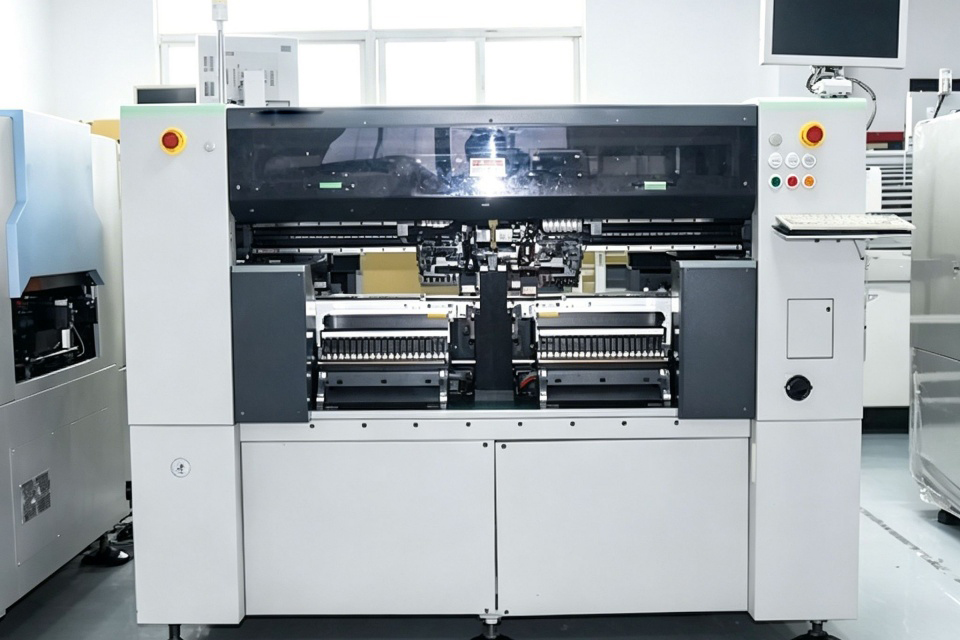
Downlooking camera alignment is the default workhorse in many SMT machines because it is practical, fast, and directly tied to board positioning.
For most PCB assembly lines, the downlooking camera reads fiducial marks. The machine compares expected fiducial locations with observed locations, then calculates X, Y, and theta correction. Without that correction, even a mechanically accurate placement head can place components onto the wrong coordinate frame.
It is basic. It is not optional.
A downlooking camera is usually the better fit when the job is board-level orientation rather than surface-detail inspection. If you are running prototype and small-batch SMT lines, ask how quickly the system learns new boards, not just how many cameras are installed.
Downlooking cameras are also easier for operators to understand. The image resembles what they expect to see: board, fiducial, pad, marking, edge. That matters during troubleshooting, especially when technicians need to decide whether the issue is the PCB, lighting, nozzle, or placement program.
But downlooking cameras have limits. They can struggle with reflective surfaces, poor contrast, black solder mask, contaminated fiducials, uneven lighting, and features that need surface-normal illumination to become visible.
And that is where coaxial lighting earns its keep.
Coaxial Lighting Machine Vision: Where It Wins
Coaxial lighting machine vision is strongest when you need high-contrast imaging of flat, reflective, or low-relief features. It sends light along the same axis as the camera lens, reducing shadows and making certain surface details pop.
That sounds technical because it is. But the buying implication is simple: if your production includes shiny pads, metal shields, etched markings, reflective packages, or fiducials that disappear under angled light, coaxial imaging can save you from false rejects and mysterious offsets.
I do not believe every pick and place machine needs a premium coaxial camera configuration. That is brochure logic. But many factories underbuy vision because they compare machines by CPH, feeder count, and price before they compare imaging under bad conditions.
Bad move.
A 2023 pick-and-place vision study on autonomous smartphone camera-module testing reported about 2,000 tested camera modules and more than 99.92% accuracy using a camera-based vision system. The lesson is not that your SMT line should copy that exact setup; the lesson is that small vision decisions can materially change reliability when placement accuracy protects expensive components.
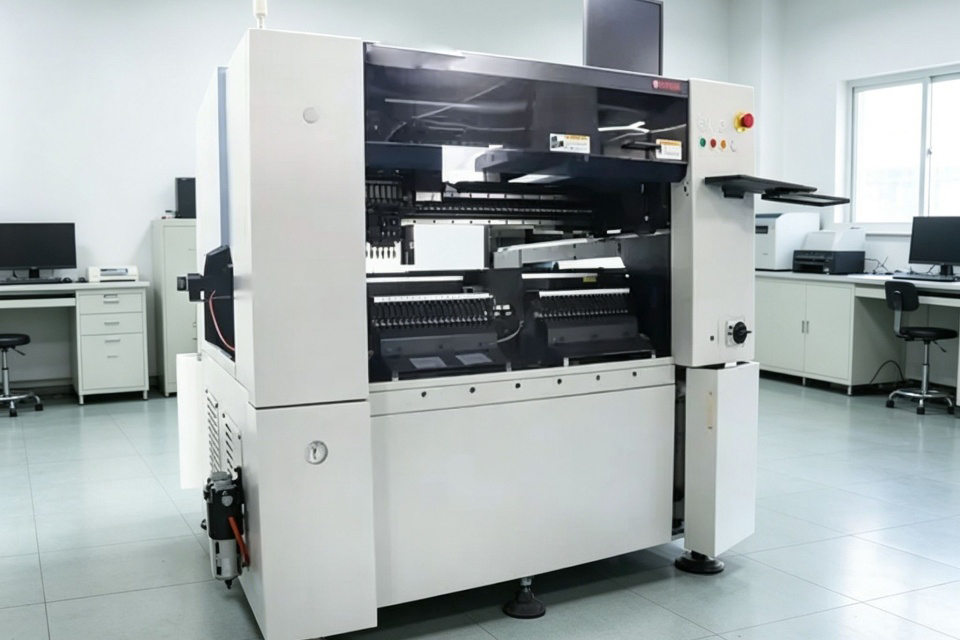
Comparison Table: Coaxial Vs Downlooking Cameras
| Factor | Downlooking Camera | Coaxial Camera / Coaxial Lighting Setup | My Take |
|---|---|---|---|
| Main job | PCB fiducials, board alignment, feature location | Reflective or low-contrast feature imaging | Downlooking is the baseline; coaxial is the problem-solver |
| Best use case | Standard SMT board alignment | Shiny pads, metal surfaces, hard-to-read fiducials | Use coaxial when normal lighting lies |
| Speed impact | Usually fast and simple | May need more controlled exposure | Slower is acceptable if it prevents misplacement |
| Operator friendliness | Easier to interpret | More technical and setup-sensitive | Training matters |
| Weakness | Glare, poor contrast, shadows | Cost, complexity, tuning sensitivity | Neither is magic |
| Best fit | General SMT production | High-mix, reflective, fine-pitch jobs | Strong lines often use both |
The “Best Camera for Pick and Place Machine” Is Usually a System
The best camera for pick and place machine performance is not determined by sensor resolution alone. It depends on optics, lighting geometry, calibration repeatability, software thresholds, mechanical stability, and how easily operators can recover from failed recognition.
Resolution is overhyped.
A 5 MP camera with poor lighting can lose to a lower-resolution camera with controlled illumination and stable calibration. I would rather buy a machine with boring, repeatable vision than a spec-sheet monster that needs constant babysitting.
This is especially true in high-speed mass production lines, where a small recognition error repeats thousands of times before anyone notices. In a low-volume lab, vision failure is annoying. In mass production, it becomes a batch-level liability.
Grand View Research estimated the global machine vision market at USD 20.38 billion in 2024, with quality assurance and inspection as the largest application segment and hardware representing more than 61% of market share. That matches what SMT buyers already feel: inspection and placement confidence are no longer luxury features.
When I Would Choose Downlooking First
I would start with a strong downlooking camera system if the factory mainly runs standard PCB assemblies, clear fiducials, stable panel quality, and conventional components.
Downlooking is often enough when the process is controlled. You get reliable board correction, simpler programming, lower operator confusion, and faster recovery when a fiducial fails. For buyers entering automation through turnkey SMT line solutions, that simplicity is valuable.
But do not confuse “enough” with “future-proof.”
If your customer base is shifting toward smaller packages, darker boards, odd substrates, higher-density assemblies, or mixed SMT lines, the vision requirement changes. A machine that looked fine on demo boards can become fragile when real customer products arrive.
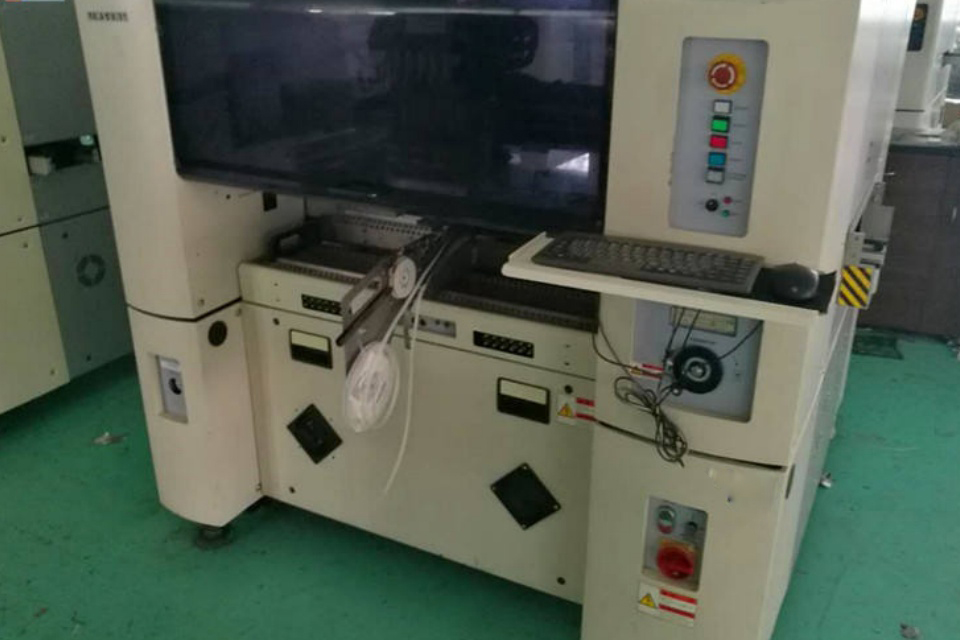
When I Would Pay More for Coaxial Vision
I would pay more for coaxial vision when inspection reliability matters more than machine sticker price.
That includes fine-pitch placement, reflective components, LED boards, metal-core PCBs, mixed assemblies, boards with poor fiducial contrast, or production where false rejects slow the line. It also includes factories running multiple brands and board types through mixed SMT lines, because variety punishes weak lighting.
Here is the controversial part: many budget SMT machines are sold with “vision” that is acceptable only under polite conditions. Clean fiducials. Good contrast. Friendly lighting. Slow setup. A vendor can pass a demo with that.
Production is impolite.
So ask for sample imaging under your worst board conditions. Black solder mask. Dirty fiducials. Reflective pads. Tiny polarity marks. Components with ambiguous markings. Do not let the sales conversation stay abstract.
How Do Pick and Place Vision Systems Work?
Pick and place vision systems work by capturing calibrated images of boards or components, identifying reference features such as fiducials or package edges, calculating positional error, and feeding correction data back to the placement controller before the nozzle places the component.
In a typical SMT workflow, the system first locates board fiducials. Then it corrects board offset and rotation. For component vision, the system may inspect the part after pickup, calculate centering and angular correction, reject damaged or missing parts, and adjust placement coordinates.
The scary part is not whether the camera can detect something once. The scary part is whether it can detect the same thing consistently across shifts, lighting changes, PCB lots, nozzle wear, and feeder variance.
That is why training and after-sales support matters. A machine vision camera for pick and place is only as useful as the team’s ability to tune thresholds, clean optics, recalibrate after maintenance, and recognize when a vision alarm is a symptom rather than the root cause.
Common Buying Mistakes
The first mistake is buying camera count instead of vision performance. More cameras do not automatically mean better placement.
The second mistake is ignoring lighting. In SMT machine vision, lighting is not an accessory. It is part of the measurement system.
The third mistake is testing only easy boards. Any vendor can show successful recognition on clean demo panels. Bring your worst board. Bring the ugly one. Bring the board your operators hate.
The fourth mistake is treating AOI as a substitute for placement vision. AOI catches problems after placement. Placement vision prevents some of them before they happen. Those are not the same thing.
For buyers comparing complete equipment categories, review both pick and place machines and SMT inspection systems, because placement and inspection should be planned as one process chain.
FAQ
What is a pick and place vision system?
A pick and place vision system is the imaging and correction setup that helps an SMT machine locate PCB fiducials, inspect picked components, calculate X/Y/theta error, and correct placement before parts are mounted onto solder paste. It combines cameras, lighting, calibration data, software algorithms, and machine motion control.
In plain English, it keeps the machine from blindly trusting coordinates. The board may shift. The component may rotate. The nozzle may pick slightly off-center. Vision catches those errors before they become defects.
What is the difference between coaxial and downlooking cameras?
A downlooking camera views the PCB or component area from above, while a coaxial camera setup uses lighting aligned with the optical path to improve visibility on reflective or low-contrast surfaces. Downlooking cameras are common for board alignment, while coaxial lighting is stronger for difficult surface imaging.
The difference is not just camera angle. It is how the target is illuminated. Coaxial lighting can reveal details that ordinary top lighting may wash out or distort.
Is coaxial vision always better for SMT placement?
Coaxial vision is not always better for SMT placement because it adds cost, setup complexity, and tuning requirements that may be unnecessary for standard PCB fiducial alignment. It is best used when reflective materials, poor contrast, or fine surface details create recognition problems for ordinary downlooking vision.
I would not pay for it just because it sounds premium. I would pay for it when my real boards prove that standard lighting is unstable.
Can a downlooking camera handle fine-pitch components?
A downlooking camera can support fine-pitch production when the machine has strong optics, stable calibration, good lighting, and reliable component vision elsewhere in the placement workflow. However, fine-pitch components increase tolerance pressure, so camera quality and lighting control become much more important than basic camera presence.
For QFP, BGA, 0201, 01005, and dense connector work, ask for actual placement accuracy data and sample-board testing. Do not rely on brochure screenshots.
What should buyers check before choosing a machine vision camera for pick and place?
Buyers should check fiducial recognition reliability, lighting options, component inspection capability, calibration workflow, image-processing controls, operator training, maintenance access, and real-board test performance before choosing a machine vision camera for pick and place. The camera must match the factory’s board mix, component range, and defect risk.
The smartest test is simple: give the vendor your hardest board and watch the recognition process live. If they hesitate, that tells you something.
Conclusion
Need help choosing the right pick and place vision system for your line? Start with your actual PCB mix, not a catalog promise. Review available pick and place machine options, compare them against your board conditions, and contact the team with the fiducials, components, and production volumes that cause the most trouble.