A fiducial looks boring until it ruins your yield.
I’ve seen lines where the mechanics were fine, the placement head was behaving, the feeders weren’t the villain, and yet the board kept drifting just enough to make everyone suspicious of everything except the real culprit: weak fiducial recognition software making confident little mistakes. That’s the ugly truth. In SMT, alignment errors don’t always announce themselves with alarms. Sometimes they just bleed into paste offset, tombstoning, skewed QFNs, false AOI calls, and a quality meeting nobody wants to attend.
Fiducial recognition algorithms identify known reference marks on a PCB, estimate the board’s actual position, and correct X/Y shift, theta rotation, and sometimes local distortion before printing, placement, or inspection. Simple idea. Not simple execution. The software has to find the right mark, ignore lookalikes, survive ugly lighting, and do all of that fast enough to keep the line moving.
Why Fiducial Recognition Algorithms Matter
But here’s where people get lazy: they treat vision alignment like a checkbox.
It isn’t. Fiducial recognition algorithms turn camera images into machine coordinates. A solder paste printer, pick-and-place machine, SPI unit, or AOI system doesn’t “know” where the PCB is just because the fixture closed. It knows because the vision system found trusted reference points and translated them into correction data.
And when that translation is wrong? The machine can be mechanically perfect and still miss the target. That’s the part buyers sometimes forget when they obsess over CPH numbers, feeder slots, and brand names while barely asking how the alignment engine rejects a dirty via pretending to be a fiducial.
OpenCV’s ArUco documentation explains the broader machine vision logic: detect marker candidates, validate geometry, decode the marker, estimate corners, and use calibration data for pose estimation. OpenCV ArUco marker documentation PCB fiducials are often simpler than coded ArUco markers, but the same basic discipline applies: detect, validate, localize, correct.
That’s why fiducial recognition belongs inside a serious process quality strategy. If the alignment reference is weak, every downstream process is standing on wet concrete.
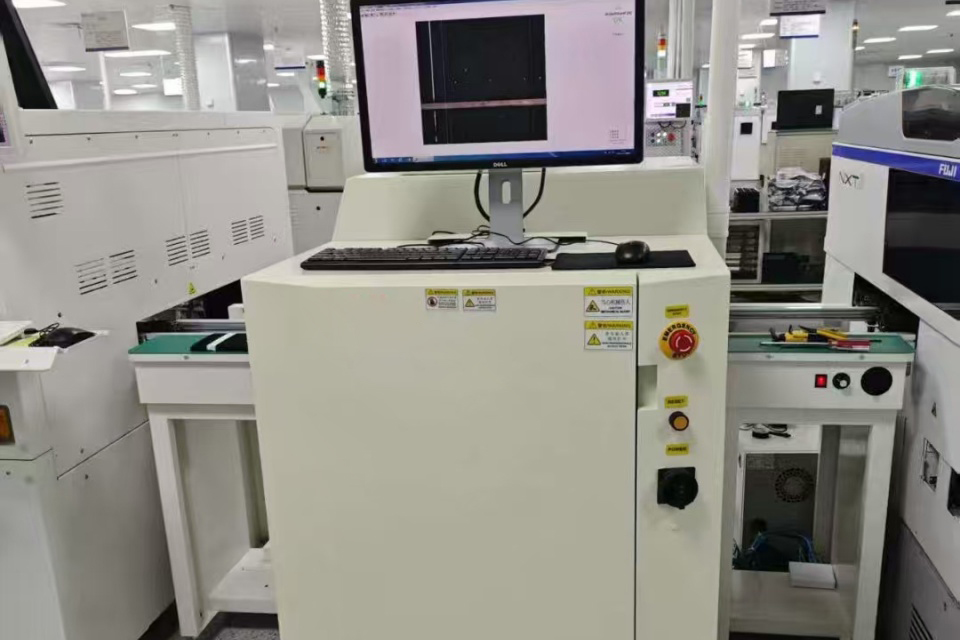
How Fiducial Recognition Software Works
First, the camera grabs the expected fiducial area. Not the whole board, ideally. A decent system uses CAD data, recipe coordinates, or a trained image to look in the right neighborhood instead of wandering around the PCB like it forgot why it came there.
Then the software cleans up the image. Contrast adjustment, thresholding, denoising, edge sharpening, exposure handling—the usual vision toolbox. Sounds routine. Until the board has black solder mask, a shiny ENIG finish, flux haze, fingerprints, or a slightly oxidized copper mark. Then the “routine” part starts lying.
After that, the detector hunts for candidates. With circular PCB fiducials, it may use blob detection, contour extraction, ellipse fitting, circle detection, or template matching. With computer vision fiducial markers like AprilTag or ArUco, it checks square borders, corner geometry, and encoded patterns.
The University of Michigan AprilTag paper describes visual fiducials as artificial landmarks that support camera-relative position and orientation estimation. AprilTag research paper Different factory, same core problem: find the known mark, measure it accurately, and convert pixels into motion correction.
The last step is the one I care about most: rejection. Good fiducial recognition software doesn’t just find something round and celebrate. It checks size, circularity, contrast, expected position, distance between fiducials, and whether the candidate makes sense compared with the board recipe. Bad software accepts a via, a solder splash, or a reflection. Then everyone blames the stencil.
Where Fiducial Marker Detection Fails
Most failures are embarrassingly ordinary.
Dirty lens. Bad lighting. Oxidized copper. Solder mask creeping too close. Warped panel. Wrong recipe. Outdated calibration. A protective glass cover that hasn’t been cleaned since the last machine relocation. Nothing exotic. Just factory life.
The scary failures aren’t the ones that stop production. Those are almost polite. The real trouble is quiet misrecognition: the system accepts the wrong feature, applies a small offset, and keeps running. A few microns here, a little theta error there, and suddenly your paste print looks suspicious, your 0201s are touchy, and AOI is flagging defects that feel random but aren’t.
Local fiducials deserve more respect here. Global fiducials correct the board as a whole, but local fiducials protect the danger zones—BGAs, QFNs, fine-pitch connectors, dense RF areas, odd panel layouts. For prototype and small-batch SMT lines, they can save hours of detective work because every changeover resets part of the process memory.
Global gets you close. Local keeps you honest.
Classical Vision vs AI-Assisted Recognition
I frankly believe classical vision gets dismissed too quickly by people selling “AI-powered” everything.
Thresholding, blob detection, Hough transforms, contour extraction, template matching, and subpixel center estimation are still useful because they’re fast, explainable, and fairly easy to validate. In production, that matters. When the line is down, nobody wants a black-box confidence score and a shrug.
AI-assisted detection earns its place when the image is genuinely messy: glare, blur, noise, weak contrast, contamination, partial occlusion, unstable lighting. Research such as DeepArUco++ shows how deep learning can improve marker detection under difficult lighting and image-quality conditions. DeepArUco++ research
But let’s not pretend AI fixes bad habits. If the fiducial is poorly designed, the lighting is inconsistent, the camera calibration is old, and the operator is copying recipes like folklore, AI may only make the failure harder to diagnose. My bias? Use deterministic geometry where the process is controlled. Bring in AI only where the variability is real enough to justify the complexity.
Hybrid wins. Usually.
What SMT Buyers Should Evaluate
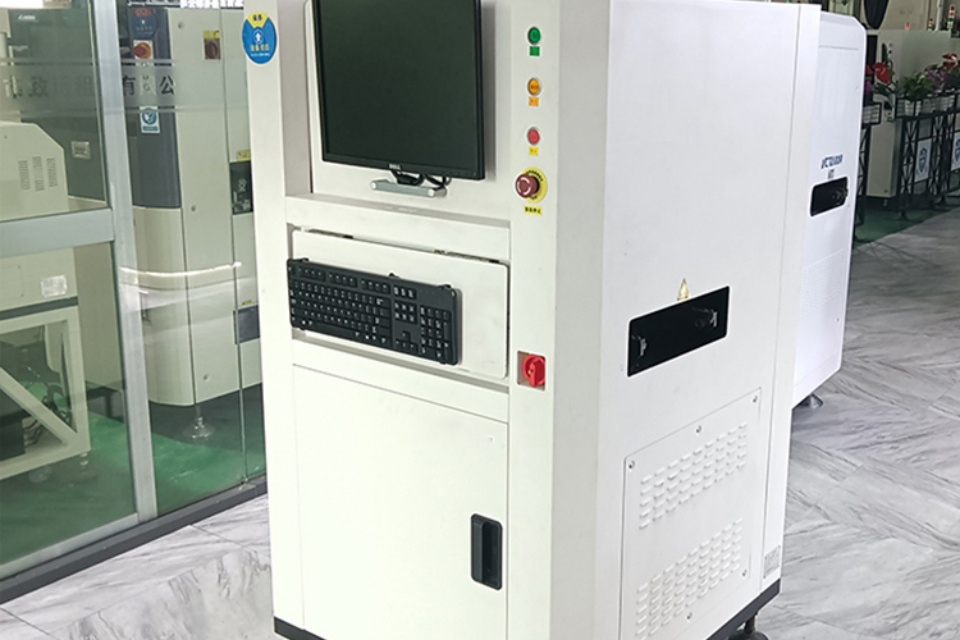
Buyers love speed specs. Feeder counts. Placement rates. Brand comparisons. All fair. But if you’re buying pick-and-place machines, solder paste printers, AOI systems, or turnkey SMT line solutions, you need to ask tougher questions about fiducial recognition software.
Don’t just watch a clean demo board run once under showroom lighting. That proves almost nothing. Ask the vendor to show imperfect boards. Dark solder mask. Mild oxidation. Nearby vias. Reflective copper. Slight panel warp. Then ask what the software accepted, what it rejected, and why.
Here’s the shop-floor checklist I’d use:
| Evaluation Area | What to Check | Why It Matters |
|---|---|---|
| Detection stability | Repeatability across many boards | Reveals drift and false positives |
| Subpixel accuracy | Center or corner estimation method | Prevents small image errors from becoming placement offsets |
| False-positive rejection | Ability to reject vias, pads, reflections, and silkscreen | Prevents quiet alignment failures |
| Lighting tolerance | Performance across finishes and solder mask colors | Reflects real production conditions |
| Local fiducial support | Correction near dense or fine-pitch areas | Improves alignment where tolerance is tight |
| Traceability | Saved images, offsets, alarms, and logs | Speeds troubleshooting |
| Line integration | Data flow across printer, mounter, SPI, and AOI | Protects downstream quality control |
Market pressure makes this less theoretical. IPC’s 2024 electronics supply chain reporting showed pressure on orders and shipments, which makes scrap, rework, and repeat setup mistakes harder to absorb. IPC 2024 electronics supply chain report Meanwhile, Fortune Business Insights valued Europe’s SMT inspection equipment market at USD 82.1 million in 2024, with projected growth to USD 120.9 million by 2032. Europe SMT inspection equipment market
So yes, fiducial recognition software affects buying decisions. It affects yield. It affects whether your AOI data is useful or just noisy paperwork.
Best Practices for Reliable Machine Vision Alignment
Start with the board. Always.
Use fiducials with strong contrast, stable finish, and enough keep-out space. Don’t bury them next to vias, pads, silkscreen dots, solder mask edges, copper artwork, or anything else that can confuse a blob detector after three shifts of real production grime. If the board has dense or high-risk zones, add local fiducials. The square millimeters you “save” by skipping them may cost you later.
On the line, control the optics like you mean it. Clean the lens. Clean the glass. Check focus. Standardize lighting. Watch exposure. Recalibrate on schedule, not after the machine starts embarrassing you. For high-speed mass production lines, don’t sacrifice validation just to shave a tiny slice off recognition time.
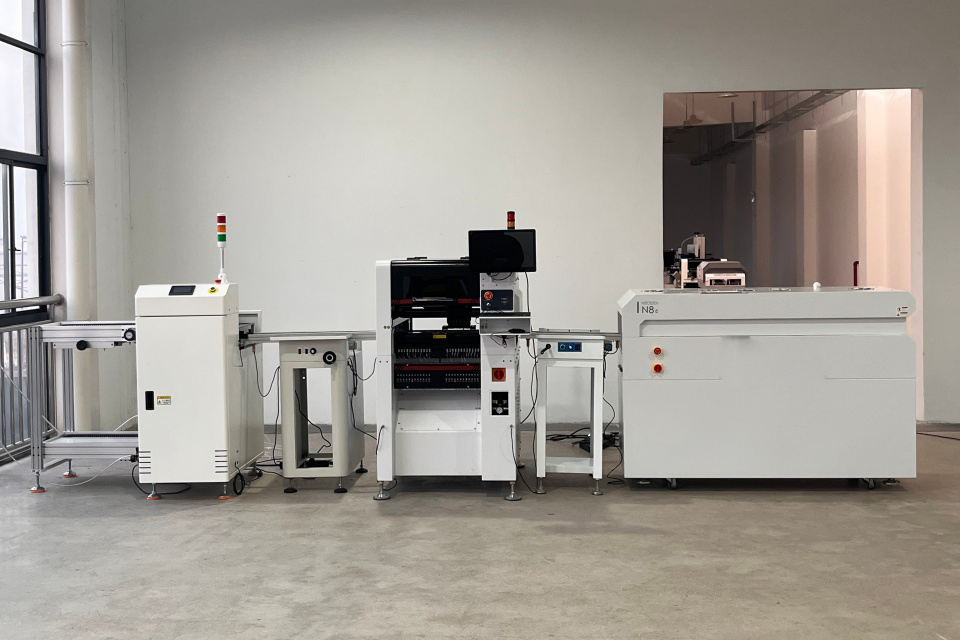
Operators need training too. Not a five-minute “press this button” handoff. Real training. They should know what a healthy fiducial image looks like, what a false candidate looks like, why offset logs matter, and when a recognition issue should be escalated instead of patched with a recipe tweak. That’s why training and after-sales support should be treated as part of the alignment system, not some decorative service package.
FAQs
What are fiducial recognition algorithms?
Fiducial recognition algorithms are machine vision methods that detect known reference marks in an image, estimate their exact position or pose, and convert that visual measurement into alignment correction before solder paste printing, component placement, automated inspection, or robotic movement starts. In SMT, they help equipment compensate for board shift, rotation, and local variation.
They’re used in pick-and-place machines, solder paste printers, SPI systems, AOI machines, coating equipment, and robotic cells. The job sounds narrow, but it touches almost every precision step in the line.
How do fiducial recognition algorithms work?
Fiducial recognition algorithms work by capturing a camera image, narrowing the search area, detecting possible reference marks, validating shape and contrast, estimating the fiducial center or corners, and calculating correction values for the machine coordinate system. Most SMT systems correct X/Y offset and theta rotation, while advanced setups may also handle scale or distortion.
The better systems also store images, offsets, alarms, and recognition logs. That sounds boring until something drifts and those logs become the only thing separating real troubleshooting from guesswork.
Why is fiducial marker detection important in PCB assembly?
Fiducial marker detection is important in PCB assembly because it gives production equipment a trusted visual reference before solder paste printing, component placement, or automated inspection begins. Without accurate detection, a machine may move precisely while aligning to the wrong board position, creating paste offset, placement defects, false AOI calls, or unnecessary rework.
It matters most on fine-pitch parts, dense boards, panelized PCBs, and products where the tolerance stack is already tight. That’s where “close enough” gets expensive.
What causes fiducial recognition software to fail?
Fiducial recognition software fails when image quality, fiducial design, calibration, or recipe settings prevent the algorithm from identifying the correct reference point consistently. Common causes include glare, dirty optics, oxidized copper, board warpage, poor lighting, similar nearby features, outdated calibration, incorrect ROIs, and sloppy recipe copying between product revisions.
Most of these aren’t software mysteries. They’re process-control problems showing up through the vision system.
Is AI better than classical image alignment algorithms?
AI is better than classical image alignment algorithms only when production images are too variable for deterministic methods to remain stable, such as severe glare, blur, contamination, inconsistent marker appearance, or difficult lighting. Classical methods remain faster, easier to audit, and often more practical when board design and optics are properly controlled.
The best answer is usually hybrid. Use classical geometry when the process is clean. Use AI when the mess is real, measurable, and worth the added validation burden.
Fiducial recognition algorithms aren’t just background software. They’re part of the measurement system that decides whether SMT equipment can print, place, inspect, and correct with confidence.
If your line is fighting placement drift, AOI registration errors, solder paste offset, or unreliable changeovers, review the full alignment chain—not just the machine that happens to be flashing the alarm. For help selecting alignment-sensitive SMT equipment, inspection systems, and line configurations, contact the team through the SMT equipment consultation page.