Three words. Space is expensive. And I’m going to say the quiet part out loud: the biggest “installation risk” isn’t the machine, it’s you squeezing an SMT line into a room that was designed for storage racks, then acting surprised when maintenance turns into yoga and uptime turns into fiction.
So let’s talk about pick and place machine installation the way the factory floor talks about it: clearances, utilities, floor reality, and the ugly tradeoffs you don’t see in brochures.
If you’re building a new line, start with a proper layout (and a sanity check on utilities) before you sign anything on equipment. If you want a turnkey approach, this is exactly where turnkey SMT line solutions earns its keep—because floor plans and power drops don’t forgive optimism.
Search intent: what the user actually wants
This topic screams informational with commercial intent. You’re not buying a machine “today.” You’re trying to avoid buying the same install twice. You want a checklist, real dimensions, and the gotchas that burn schedules.
Floor space requirements: footprint is not the number that matters
Here’s the trap. Vendors quote footprint. Operations live in the service envelope.
Pick and place machine floor space requirements should be modeled like this:
- Machine footprint (the metal rectangle)
- Service envelope (doors open, covers off, feeder banks pulled, nozzle station accessed)
- Operator aisle (normal running)
- Maintenance aisle (abnormal but inevitable)
- Material flow (reels in, scrap out, carts turning, boards staging)
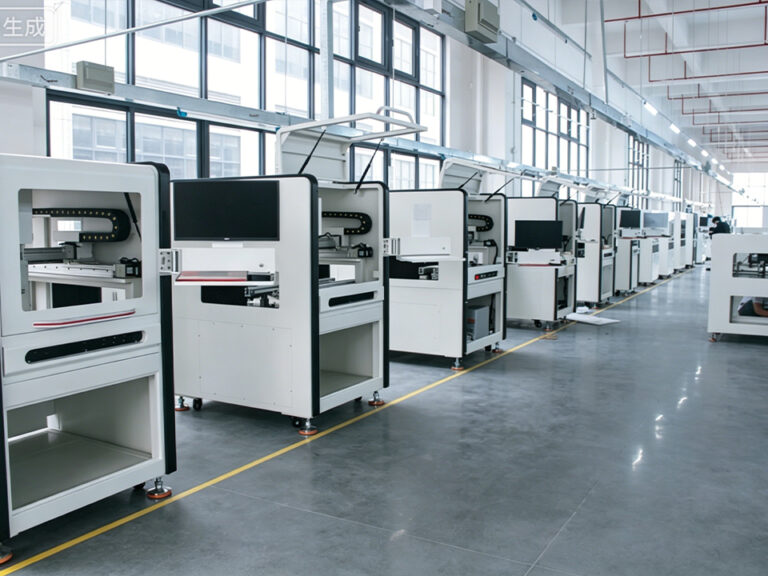
Want a practical number? For a typical SMT line segment (printer → SPI → 1–2 mounters → reflow → AOI), I usually tell people to plan 10–20 meters of line length and 3–6 meters of total “lane width” once you include aisles, feeder carts, and buffer behavior. Tight rooms can work. But they punish you later.
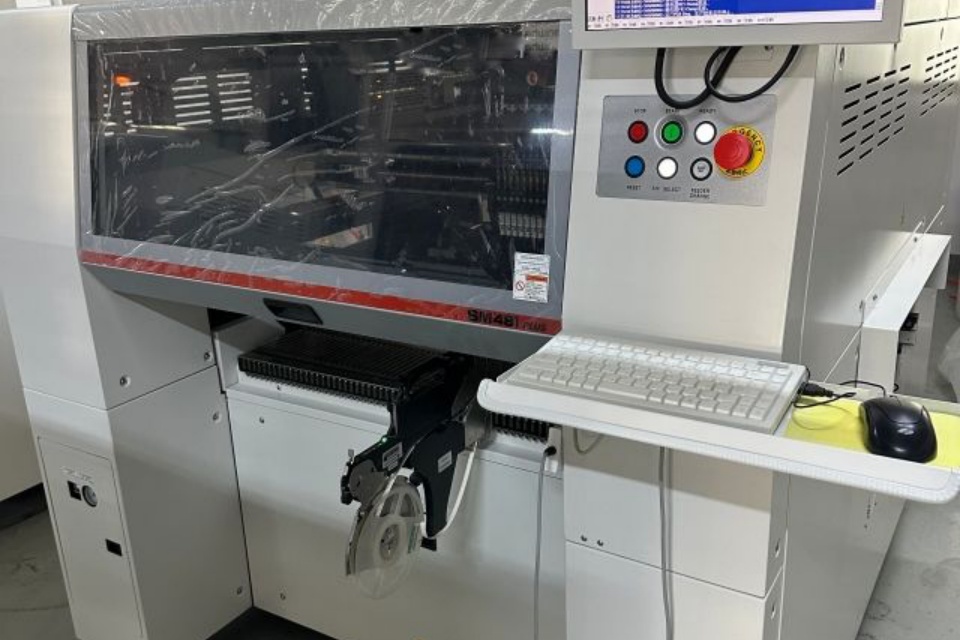
And yes, the model matters. A Yamaha YSM / YRM class mounter, a Panasonic NPM platform, a Hanwha DECAN series—each has different feeder-side behavior and maintenance access patterns. Plan around the worst day, not the demo day.
If your line is for early-stage builds, your layout pressures change (more changeovers, more carts, more kitting). That’s why prototype & small-batch line planning tends to need more usable space per placement head than people expect.
The OSHA problem nobody wants to budget for: access clearances
Short sentence. Clearance is law. Block access, pay later.
People treat electrical panel clearance like a “nice-to-have.” OSHA does not. A 2023 OSHA enforcement release on Dollar General calls out blocked electrical panels and exits and stacks proposed penalties into the millions. That’s not an SMT factory story, but the lesson transfers cleanly: blocked access becomes an enforcement and safety issue fast. OSHA’s May 2023 Dollar General release (osha.gov)
And it gets more specific. An OSHA citation document against Petco cites the three-foot minimum clearance requirement around electrical panels (29 CFR 1910.303(g)(1)(vi)(B)). If you cram an SMT line so tight that reels, bins, or carts live in front of panels, you are manufacturing a violation. OSHA citation PDF (Petco, 2023)
Rhetorical question. Do you really want your feeder cart to be the reason you can’t legally open a panel?
Site preparation checklist: the stuff that makes or breaks placement accuracy
This is where most “SMT pick and place installation requirements” lists get fluffy. I won’t.
1) Floor: flatness, load, and vibration (foundation and leveling)
A pick-and-place machine doesn’t care that your epoxy floor looks pretty. It cares about repeatability.
- Load: A single mounter can easily land in the ~1–3 metric ton neighborhood depending on platform and options, before you add carts, buffers, and people. If your facility has raised floors or questionable slabs, stop guessing and get the structural data.
- Flatness/level: OEM specs vary. Many installs fail because teams do “good enough” leveling, then wonder why high-density placements drift at the edges of the working area.
- Vibration: If you share a slab with stamping, forklifts slamming dock plates, or a big air compressor cycling hard, you’ve got a repeatability problem in disguise.
If you want an evidence anchor, look at how load and configuration change robot positioning accuracy in controlled testing; the principle is simple: accuracy is sensitive to real mechanical conditions, not just controller math. Open-access robotics accuracy study (received 2024) ([PMC][2])
So yes: pick and place machine foundation and leveling isn’t a “rigging detail.” It’s an accuracy control.
2) Power: stability beats “enough kW”
Most SMT installs don’t blow up because they lacked power. They fail because power quality and distribution were sloppy.
Plan for:
- Correct voltage and phase per OEM (often 3-phase in the 200–400V family, region-dependent)
- Proper grounding architecture (don’t mix “ground” meanings)
- Dedicated circuits where needed (noise-sensitive equipment and safety circuits)
Also: leave access. Again. Your electrician can’t service what your line blocks.
3) Compressed air: dry air is the hidden reliability upgrade
Wet air kills uptime. Slowly. Then suddenly.
Power and compressed air requirements for pick and place machine setups typically land around 5–6 bar (0.5–0.6 MPa) with defined flow rates and dryness needs, but the real point is air quality: water and oil carryover will trash valves, regulators, and pneumatic actuators over time.
If you’re running a high-throughput line, your “air story” becomes bigger: central compressor sizing, dryer performance at summer humidity, and whether the plant header drops pressure during peak cycles. That’s why high-speed mass production line builds need utilities engineering, not vibes.
4) ESD and grounding: damage that passes test today
This part makes people uncomfortable. ESD can ship. It can still hurt you.
ESD and grounding requirements for SMT installation matter because ESD damage often shows up as early-life failures, marginal performance, or “random” field returns that never trace cleanly back to the day you installed equipment.
Practical controls:
- ESD flooring / mats where the process demands it
- Ground points that are tested, logged, and maintained
- Wrist strap + footwear compliance that’s enforced (not performative)
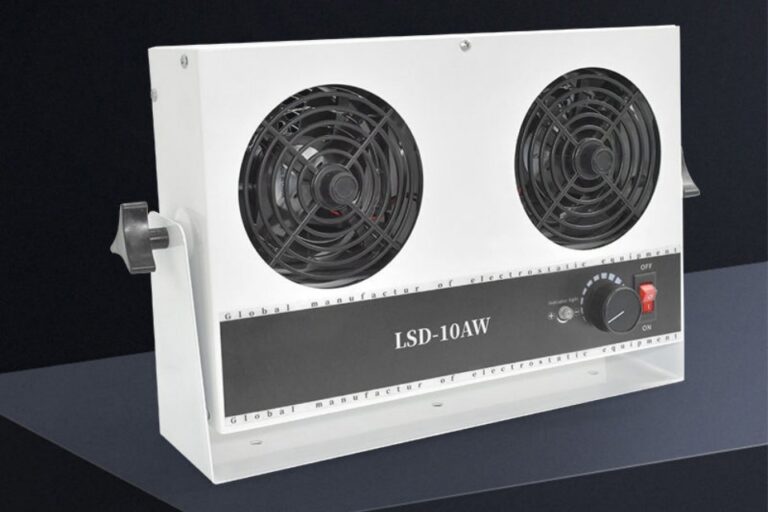
- Ionization where insulating materials or dry air make charging unavoidable
If you want a simple internal way to operationalize this, build it into your commissioning and training flow. Training and after-sales support should include ESD behaviors, not just button clicks.
5) Layout planning: material flow is either designed or it becomes a fight
Everyone draws the line like a straight arrow. Real production looks like:
- feeder carts turning
- reels staged
- WIP piling up at bottlenecks
- rejects routed to review
- stencil cleaning interruptions
- maintenance rolling in at the worst time
That’s why SMT line layout planning for pick and place must include kitting space, feeder cart parking, and rework paths—not just machine rectangles.
If you want to sanity-check your current plan against common buyer questions, your own SMT FAQ page can act like a checklist starter for what customers keep asking (which is usually what keeps going wrong).
The table I wish more factories used before delivery day
| Site/Space Item | Typical Target Range (verify with OEM) | What breaks when you ignore it | Quick pre-install check |
|---|---|---|---|
| Service envelope (all sides) | +0.8–1.2 m aisle where humans work | Feeder swaps slow, covers can’t open, maintenance gets skipped | Put tape on floor and “act out” feeder/cart moves |
| Electrical panel access | Keep required clearance (often 3 ft / ~0.9 m in OSHA context) | Safety violation + delayed troubleshooting | Mark panel zones as “no storage” from day one |
| Floor load capacity | Depends on slab; plan for concentrated loads | Cracking, settling, long-term leveling drift | Get structural confirmation, not opinions |
| Floor level/flatness | OEM-specific; tighter for precision | Placement drift, calibration instability | Survey level/flatness before machine ships |
| Power provision | Correct voltage/phase + clean distribution | Nuisance faults, downtime, unsafe workarounds | Confirm drops, breakers, grounding plan |
| Compressed air | ~5–6 bar common + dry/clean | Valve issues, inconsistent actuators | Measure pressure drop at peak demand |
| ESD grounding | Facility + equipment grounding verified | Latent failures, “mystery” returns | Test and log ESD points before SAT |
| Temperature & humidity | Typically controlled range | Vision/placement stability suffers, ESD risk rises | Log room conditions over a full week |
FAQs (Featured Snippet style)
How to prepare a site for a pick and place machine?
Site preparation for a pick and place machine installation is the process of making the floor, utilities, environment, and safety clearances match the OEM spec so the mounter can hold accuracy, pass acceptance tests, and be serviceable without tearing up your line six months later. After that definition, the work is simple but not easy: verify slab, mark service envelopes, lock utilities, validate air quality, then run SAT with real products.
What are typical pick and place machine floor space requirements?
Pick and place machine floor space requirements are the total footprint plus the service envelope—operator aisle, feeder cart parking, board infeed/outfeed, and electrical-panel access—needed to run and maintain the mounter safely; planning only the base footprint is how you end up blocking access and losing uptime. If you’re tight on space, design for carts and changeovers first, not last.
What are SMT pick and place installation requirements for power and compressed air?
SMT pick and place installation requirements for power and compressed air mean providing the correct electrical supply (voltage, phase, grounding, and distribution) and stable, clean pneumatic supply (pressure, flow, dryness) that stays inside the OEM’s limits during peak production, not just during idle tests and demos. Measure pressure drop and power stability under load, not in a quiet room.
What ESD and grounding requirements matter during SMT installation?
ESD and grounding requirements during SMT installation are the controls—flooring, tested ground points, wrist/footwear systems, ionization where needed, and verified equipment grounding—that keep static discharge from damaging components or assemblies during handling and placement, including latent damage that can pass today’s test but fail later in the field. Treat ESD like a yield lever, not a poster on the wall.
Do I need a special foundation and leveling plan for a pick and place machine?
Pick and place machine foundation and leveling is the set of slab, load, flatness, and vibration conditions that let the machine maintain mechanical repeatability, because placement accuracy is a physical outcome influenced by how the platform sits and stays put under motion, load, and nearby vibration sources. If your slab moves, your process moves with it.
Conclusion: if you want this to go smoothly, stop guessing
If you’re planning a line and want a reality check on space, utilities, and commissioning steps, I’d start with your intended output (prototype vs volume) and map it to a layout + site plan. Grab the downloadable catalog for platform options, review our service promise for scope expectations, then contact us with your room dimensions and target takt time so we can pressure-test the plan before delivery day becomes panic day.
And if you’re still tempted to “make it fit” by shaving aisles: remember OSHA’s record of penalizing blocked access and exits, including large settlements and strict abatement timelines. That’s not theory. That’s paperwork with dollar signs. OSHA corporate-wide settlement release (Aug 2023) (osha.gov)
[2]: https://pmc.ncbi.nlm.nih.gov/articles/PMC11722867/ ” Study of Positioning Accuracy Parameters in Selected Configurations of a Modular Industrial Robot—Part 1 – PMC “