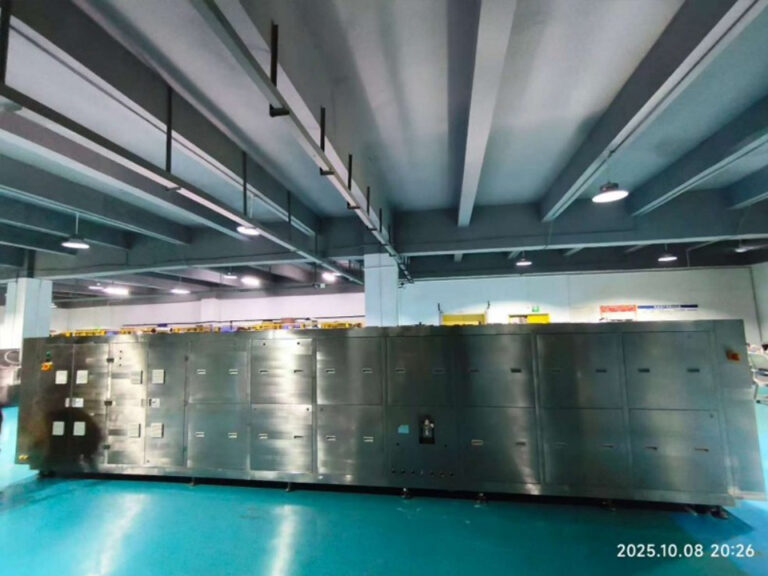
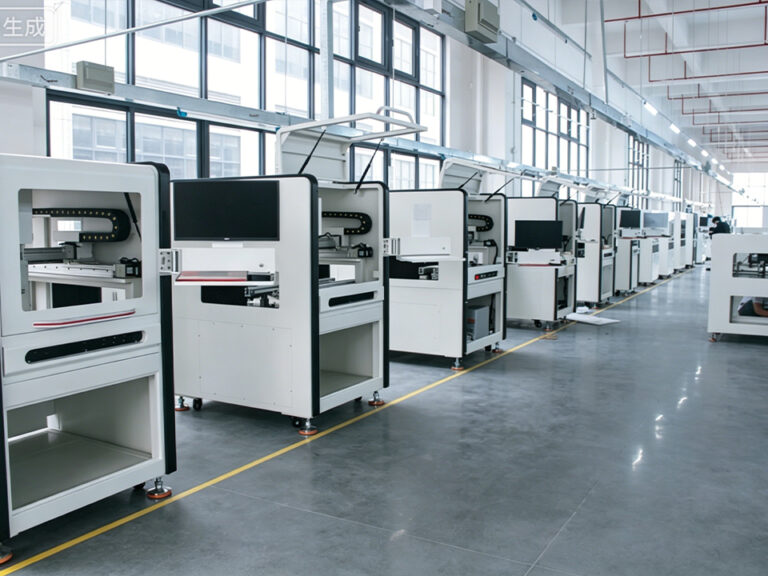
Most teams miss it.
They spend six figures on placement speed, feeder intelligence, AOI coverage, and glossy commissioning decks, then act surprised when the line chokes on bent reels, mismatched barcodes, moisture-exposed ICs, poor tray design, undocumented alternates, and supplier packs that were obviously designed for warehouse storage rather than machine consumption. Why are we still pretending this is an equipment problem?
I’m blunt about this because I’ve seen the pattern too many times: automated assembly does not forgive vague material control. A human operator can rescue a bad reel, flip a mislabeled tray, or notice a warped PCB panel before disaster. A Yamaha, Panasonic, Fuji, Juki, or Hanwha line will not “figure it out.” It will stop, mis-pick, skew throughput, or quietly push defects downstream where they become expensive, political, and embarrassing.
And that is the hard truth.
When Reuters reported Tesla and Volvo pausing output in Europe after Red Sea disruptions, the lesson was not only about geopolitics. It was about timing discipline. Reuters noted that rerouting around Africa added about 10 days and roughly $1 million in extra fuel on Asia-to-Northern Europe voyages, while the Suez route carries about 12% of global container traffic. In automated manufacturing, that kind of delay is not abstract; it changes lot mix, expiration windows, feeder planning, and launch sequencing on the floor. (Reuters)
Then Taiwan shook.
In April 2024, Reuters reported the Taiwan earthquake disrupting chip and display supply. TSMC said tool recovery exceeded 70% within 10 hours, but advanced 3 nm and 4/5 nm operations in Tainan still faced interruptions, and analysts warned of shipment delays and price pressure. That is exactly why “materials for automated assembly” cannot mean only “did purchasing buy the part?” It has to mean “can the line consume the exact lot, in the exact format, at the exact time, without improvisation?” (Reuters)
My view is simple: supply chain readiness is machine readiness in disguise. If your package orientation, leader length, moisture history, reel geometry, barcode schema, and approved substitute logic are unstable, your automated assembly line is unstable even before first article inspection begins.
The seed problem nobody likes to own
Automated assembly sits on a brutal assumption: every upstream signal is trustworthy. Not mostly. Fully enough.
NIST’s 2024 work on supply chain traceability made the point more elegantly than most factories do. The agency argued that manufacturers need reliable ways to record, link, and query supply-chain event data, including manufacturing, shipping, and receiving events, so provenance and pedigree are actually verifiable. I agree, and I’ll say it more harshly: if you cannot reconstruct where a reel came from, when it was opened, how it was relabeled, what feeder it touched, and which board serial numbers it hit, you do not have an automated process. You have a fast guessing system. (NIST)
That matters more now because automation density is rising, not easing. Reuters’ November 2024 coverage of the IFR report said South Korea reached 1,012 industrial robots per 10,000 employees, while China hit 470 and Germany 429. More robots mean less tolerance for packaging slop, supplier inconsistency, and undocumented exceptions. Volume hides nothing for long. (Reuters)
I’d go further. The industry keeps talking about automation ROI as if takt time alone closes the case. It doesn’t. ROI comes from the absence of stupid interruptions. The reel that lacks a clean leader. The QFN tray with inconsistent pocket tolerances. The MSL3 MCU that sat too long outside its moisture barrier bag. The SAC305 paste lot that is technically in stock but operationally unusable because it missed the line’s temperature-conditioning window. Those are not side issues. Those are the business model.
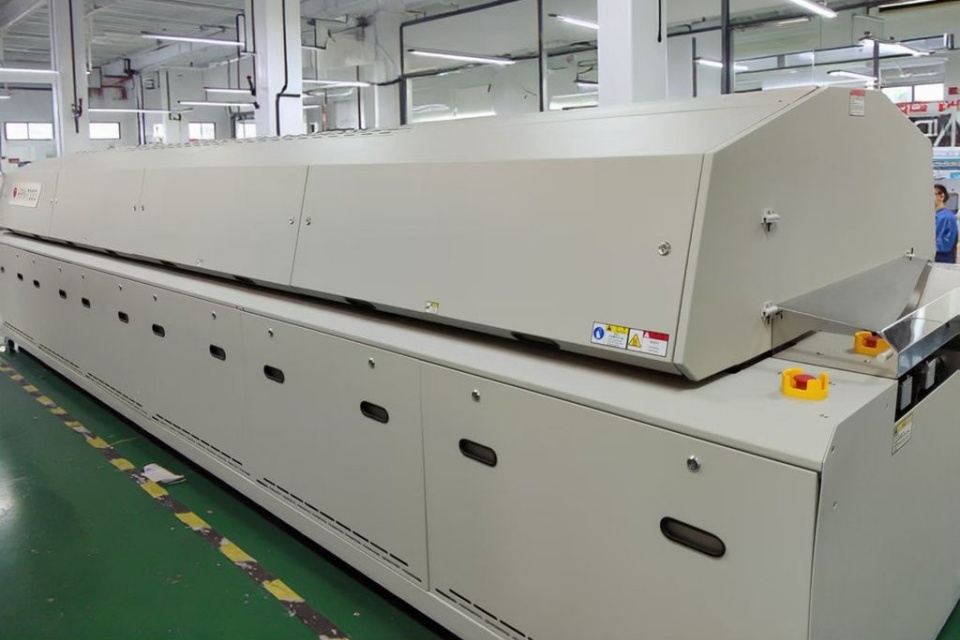
What manufacturing readiness actually looks like
Here is the standard I use: a material is ready for automated assembly only when it is physically compatible, digitally traceable, quality-qualified, and schedulable without manual heroics.
Physically compatible means your materials arrive in machine-consumable form. Tape-and-reel, JEDEC trays, stick magazines, PCB panels, solder paste cartridges, labels, and consumables all need exact handling assumptions defined before launch. A 0603 resistor reel is easy. A mixed portfolio of fine-pitch BGAs, odd-form parts, coated boards, custom fixtures, and selective-wave nozzles is not. This is why companies buying turnkey SMT line solutions or planning high-speed mass production lines should audit packaging formats with the same aggression they use when comparing placement specs.
Digitally traceable means the ERP, MES, WMS, and line software speak a shared language. Not a pretty dashboard. A shared language. Lot code, date code, supplier ID, reel quantity, feeder assignment, alternate part approval, MSD state, and consumption history should travel together. NIST’s 2024 manufacturing report is useful here: it noted that discrete technology products represented 39% of U.S. manufacturing, and that high-cost supply-chain items for discrete technology include wholesale trade, primary metals, fabricated metals, management entities, and chemical products. Read that carefully and the message is obvious: your “material problem” is rarely just a part-number problem; it is a network-cost and coordination problem. (NIST 发布信息)
Quality-qualified means you do not release materials to automation on supplier promises alone. I don’t care how famous the brand is. Incoming inspection needs packaging checks, dimensional verification where risk justifies it, solderability or storage validation where applicable, and a documented response for nonconforming reels, damaged trays, warped panels, or suspect labels. That is where practical resources like your own process and quality guidance and vetted SMT consumables stop being content assets and start becoming operational controls.
Schedulable without manual heroics means the line can run tomorrow morning without someone texting three suppliers, relabeling two reels by hand, baking one tray lot, and borrowing feeders from another building. If your launch depends on your best planner being a magician, you are not ready. You are lucky.
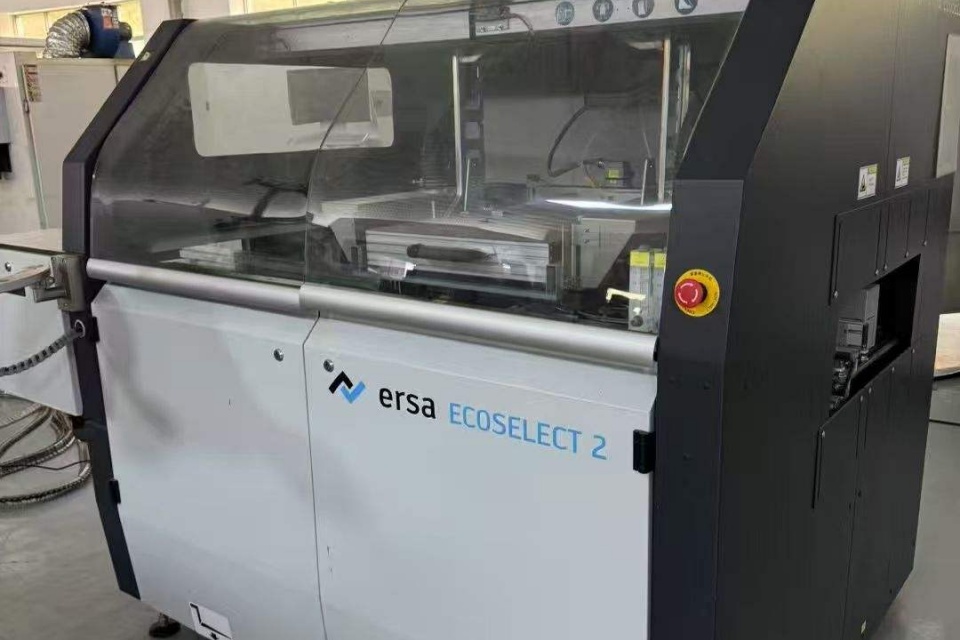
The checkpoints that separate real readiness from wishful thinking
| Material / Control Point | What automated assembly expects | What goes wrong when you fake it | Owner |
|---|---|---|---|
| Component packaging | Standardized reel, tray, or stick format with verified orientation, leader/trailer, and pocket integrity | Mis-picks, feeder alarms, nozzle loss, line stoppage | Supplier Quality + NPI |
| Moisture-sensitive devices | MBB integrity, desiccant/HIC present, exposure clock tracked, bake rules defined | Popcorning, latent defects, scrap, rework loops | Warehouse + QA |
| PCB panels | Flatness, fiducials, tooling holes, edge rails, vacuum support, stack height limits | Placement drift, print variation, conveyor jams | Process Engineering |
| Barcodes and digital IDs | Scannable, unique, system-mapped lot/date/supplier/revision data | Wrong lot consumption, bad genealogy, recall chaos | IT/MES + Materials |
| Approved alternates | Feeder/nozzle/program compatibility validated before release | “Equivalent” parts that are not operationally equivalent | Engineering Change Control |
| Solder materials | Storage window, conditioning time, viscosity/lot rules, FIFO by usable life | Print instability, voiding, tombstoning, downtime | SMT Process |
| Intralogistics | Kitting sequence, feeder staging, replenishment timing, supermarket logic | Starved line, hidden WIP, operators firefighting | Planning + Line Support |
That table looks basic. It isn’t.
Each row is a money leak, and each leak gets worse as assembly line automation gets faster. A prototype cell can sometimes survive ambiguity; a prototype and small-batch line often has room for judgment calls. A mass-production line does not. Speed compresses tolerance for nonsense.
The unpopular discipline: design the supply chain around consumption, not procurement
Buyers often optimize for landed unit price. I understand why. It is measurable, reportable, and politically safe. But automated assembly cares about consumed cost per good board, not purchased cost per nominal part.
That difference is enormous. A cheaper component source that arrives in inconsistent reel formats, with weak label data and variable pocket depth, can wreck OEE far more effectively than a higher-priced source with disciplined packaging and traceability. And once you add feeder resets, verification labor, changeover drag, and escaped defects, the “savings” turn into theater.
NIST’s October 2024 digital thread roadmap for manufacturing supply-chain resilience argues that digital-thread capabilities can improve supply-chain resilience and capacity. Good. They should. But software will not rescue bad physical preparation. If the reel is wrong, the data model is just a very organized record of failure. (NIST)
So what do I recommend?
Start with a material consumption map, not a purchasing spreadsheet. Build readiness by package family: 8 mm passive reels, odd-form reels, JEDEC trays, moisture-sensitive ICs, bare PCB panels, solder materials, labels, fixtures, and feeder-dependent accessories. Tie each family to exact intake criteria, handling rules, barcode requirements, machine compatibility, and escalation paths. Then run a dry simulation from receiving to line-side staging. If a human has to invent a workaround at any point, you found the defect before the machine did.
And yes, use customer evidence. A serious manufacturer should study live deployment patterns, not brochure adjectives. Your own customer cases and buying guides are useful here because they expose where line architecture, feeder strategy, and changeover logic actually collide with material reality.
FAQ
What is supply chain readiness for automated assembly?
Supply chain readiness for automated assembly is the condition in which components, PCBs, solder materials, packaging formats, data records, and replenishment flows are all qualified to be consumed by machines without manual improvisation, unplanned stops, traceability gaps, or quality drift across receiving, storage, kitting, placement, inspection, and rework.
In plain English, it means the line can run at intended speed with the materials you actually have, not the materials your ERP claims you have.
How do you prepare materials for automated assembly?
Preparing materials for automated assembly means validating that every incoming item meets machine-consumption requirements for packaging, orientation, moisture control, barcode structure, feeder compatibility, shelf-life status, approved alternates, and line-side presentation, then connecting those physical checks to MES or ERP records so consumption and genealogy stay accurate in real time.
If one of those links is missing, your prep is incomplete even when the warehouse says inventory is available.
What materials data matters most before assembly line automation goes live?
The most important materials data before assembly line automation goes live includes part number, approved manufacturer and supplier, lot code, date code, quantity per reel or tray, moisture-sensitivity state, packaging format, feeder and nozzle compatibility, substitute approval status, and the exact mapping between that material and the production program consuming it.
I’d add one more field the industry still underestimates: exception history, because repeat deviations are usually the first signal that a “temporary” workaround has become your real process.
Why do automated lines fail even when the machines are installed correctly?
Automated lines fail after correct installation when upstream materials are inconsistent, late, poorly packaged, weakly labeled, moisture-exposed, or digitally disconnected from planning and execution systems, causing machine stoppages, verification delays, feeder issues, wrong-part risks, and quality escapes that have nothing to do with nominal equipment capability or headline placement speed.
That is why I never celebrate FAT or SAT too early; the machine may be ready while the material system is still primitive.
If you’re building for throughput instead of appearances, start by tightening the material system before you add more speed. Review your packaging assumptions, feeder logic, line-side staging, and traceability model, then compare them against the requirements of your planned turnkey SMT line solutions or high-speed mass production lines. When you want a second set of eyes, use the contact page and make the conversation concrete: reel formats, MSD controls, barcode schema, feeder strategy, and recovery plans. That’s where automated assembly starts paying back.