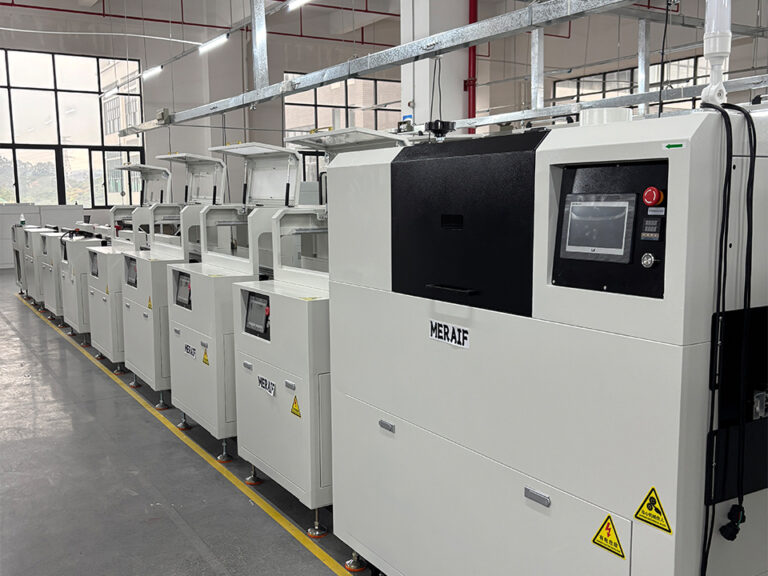
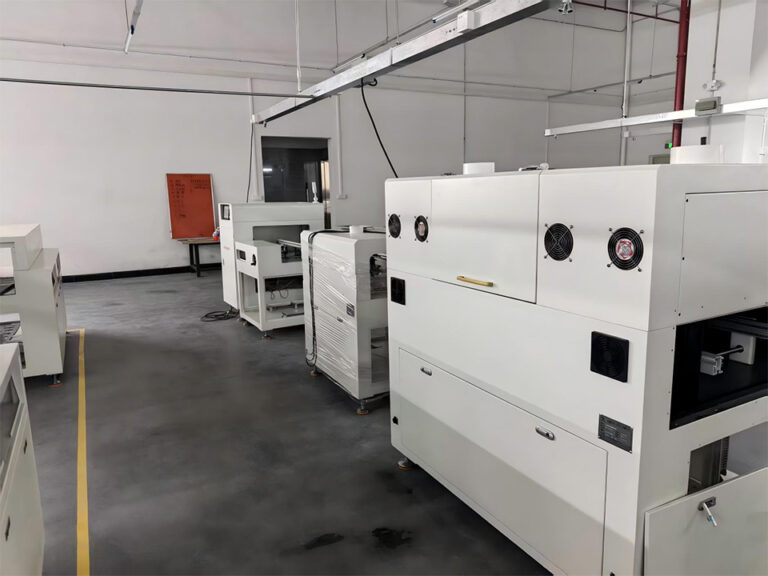
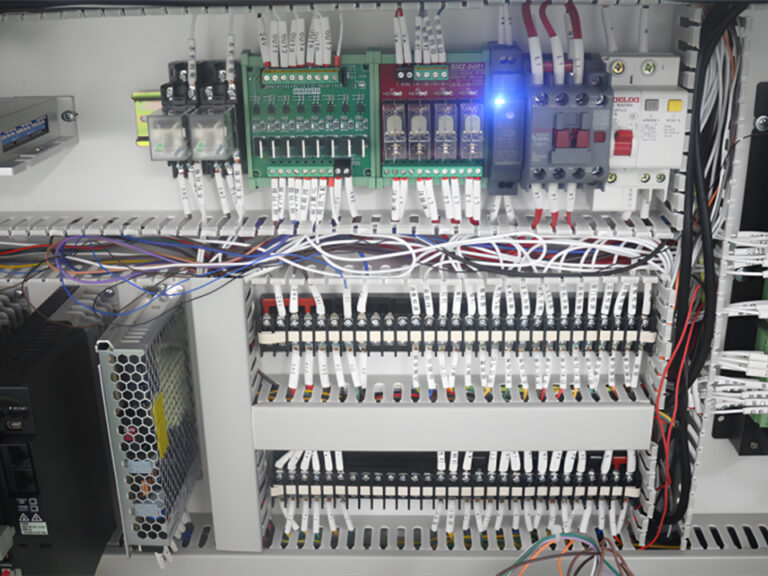
Speed sells.
But in SMT, the buying mistake I keep seeing is this: teams pay for theoretical flexibility or theoretical output, then spend the next year finding out that feeder strategy, SKU churn, operator skill, engineering changes, and recovery from small stoppages matter more than brochure CPH. Which pain do you really have?
I’ll say it plainly. “Modular” sounds modern, so buyers lean toward it almost by reflex. And “fixed” sounds old, rigid, maybe even shortsighted. That instinct is lazy. In a market where U.S. manufacturing spent much of 2024 in contraction, supplier deliveries slowed again, and average production-material lead times in April 2024 sat at 79 days, flexibility had real value — but only for plants that were actually living with unstable demand, unstable sourcing, or unstable product mix. For everybody else, too much flexibility could become an expensive tax on utilization. Deloitte’s May 2024 supply-chain analysis and Reuters’ coverage of the 2024 U.S. manufacturing slump make that backdrop hard to ignore. (Deloitte)
The first hard truth: most buyers are asking the wrong question
The clean, honest question is not “modular or fixed?” It is “How often does my factory get forced to change its mind?” If the answer is every week, then modular pick and place machines start to look smart. If the answer is twice a year, then a more capacity-focused system — what many teams casually call a fixed system — often wins because it is easier to balance, easier to standardize, and easier to keep full.
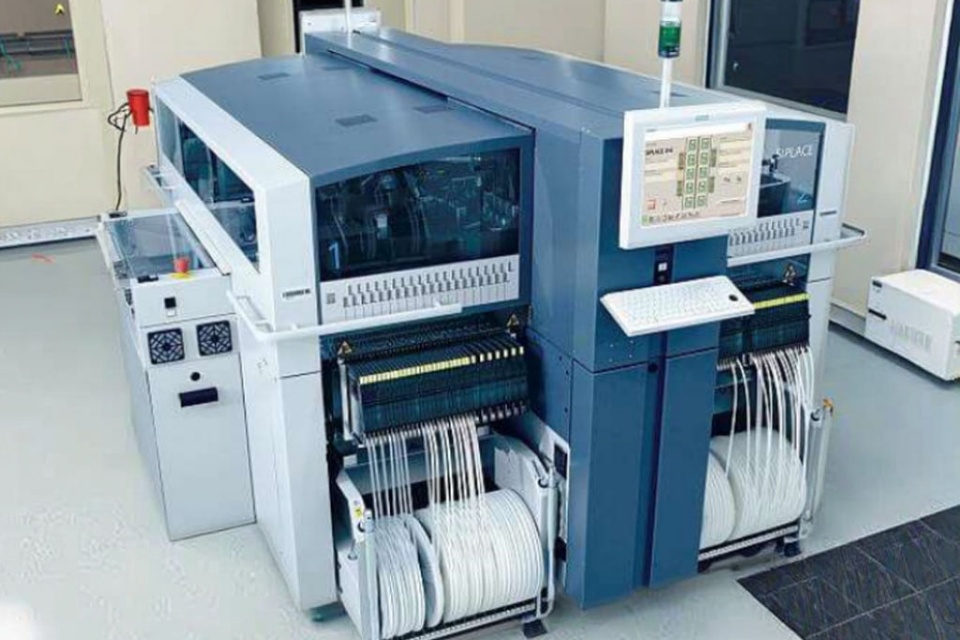
And here is the part vendors quietly admit in their own portfolios. Panasonic pitches SMT solutions across “any mix and any volume,” Yamaha positions the YRM20 as a premium modular platform for high-mix, enhanced-value PCBs on a single lane, and ASMPT explicitly splits its placement family between the SIPLACE SX for flexibility and scalability and the SIPLACE TX for high-volume production. In other words, the industry itself does not pretend there is one correct architecture. It segments by volatility, not by fashion. Panasonic SMT overview, Yamaha YRM20, and ASMPT placement solutions say that in plain language. (connect.na.panasonic.com)
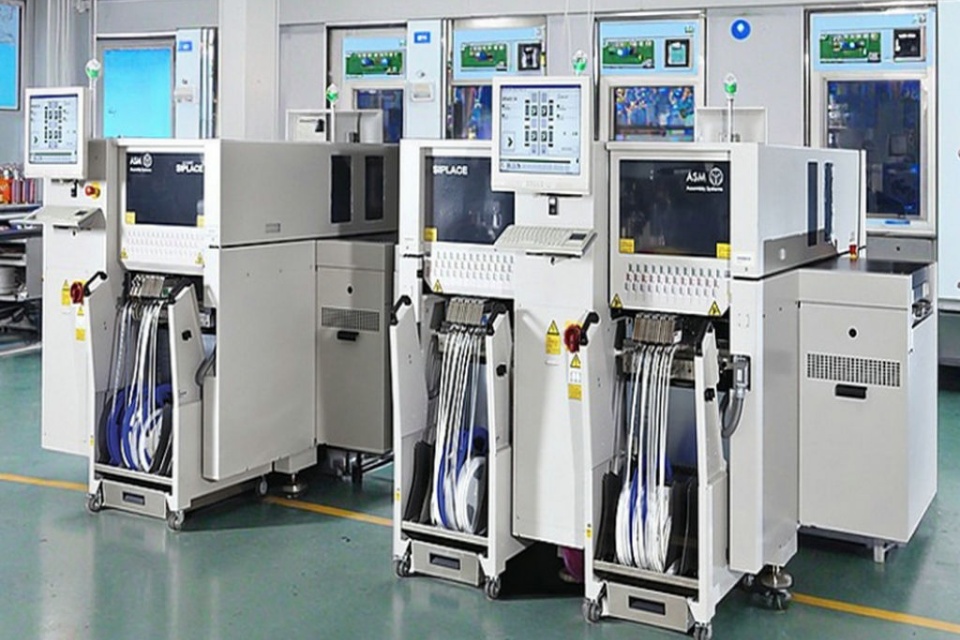
What modular really buys you
A modular SMT machine is not magic. It buys you options.
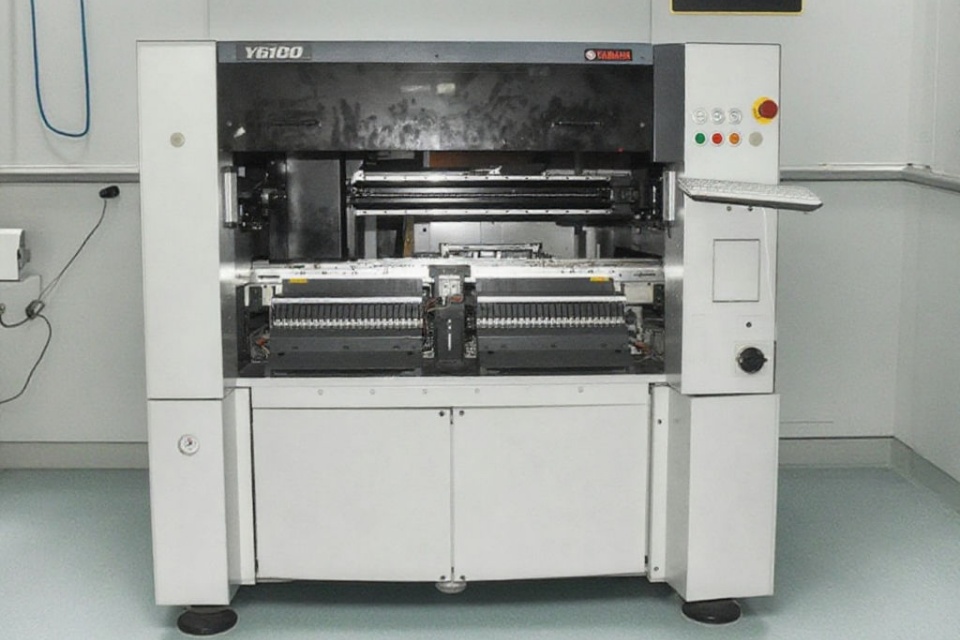
That can mean scalable line expansion, faster adaptation to new board families, easier balancing across mixed product demand, and less pain when feeder setups or component ranges shift. Yamaha, for example, markets the YRM20 around one-head flexibility, 115,000 CPH class throughput, support from 0201 metric to larger parts, and features meant to keep operating rate from collapsing during high-mix production. Panasonic’s NPM-DX is also sold around broad component support, constant-load mounting, automatic recovery, and labor-saving functions rather than just raw speed. These are not random brochure phrases. They are vendor admissions that changeover loss is a real factory cost. Yamaha YRM20 and Panasonic NPM-DX both lean hard into that logic. (Yamaha Motor Global Site)
So when do modular pick and place machines earn their keep?
They earn it in prototype and small-batch SMT lines, in plants running ugly demand curves, in NPI-heavy environments, in factories supporting customer schedules they do not control, and in mixed SMT lines where the cost of stopping the line to reconfigure is more damaging than the cost of owning a more flexible platform. If your customer sends weekly ECOs, if feeder banks keep changing, if product families share enough process steps to benefit from shared modules, modular is not a luxury. It is damage control.
What fixed systems still do better
Now the unpopular part.
A fixed or more dedicated high-volume configuration is still the right answer in a lot of factories. Not because the hardware is more glamorous. It isn’t. It wins because discipline wins. If your product family is stable, your demand is predictable, your feeder layout can stay standardized, and your board mix does not swing all over the place, then the line with less architectural freedom often gives you better real utilization, simpler maintenance routines, cleaner operator training, and fewer planning mistakes.
ASMPT’s own positioning tells the story. The SIPLACE TX is framed as a compact, high-performance module for high-volume production, with 96,000 cph in a 1 m × 2.23 m footprint and suitability for medium- and high-volume applications. That is the language of dense, repeatable output. Not endless adaptability. ASMPT SIPLACE TX says exactly that. (smt.asmpt.com)
I’ll put it more bluntly: if you run the same board family all month, modular can become a way of paying extra for freedoms you barely use. And unused flexibility has a nasty habit of hiding in the budget as extra feeders, extra configuration complexity, extra spare planning, and extra engineering time that nobody allocates honestly.
Why this trade-off got sharper in 2024
This is where the broader market matters.
In March 2024, Reuters reported the U.S. ISM manufacturing PMI at 47.8, still in contraction, and in July 2024 Reuters reported the PMI at 48.5 with manufacturers describing short-notice order cuts rippling through lower-tier suppliers. Deloitte, meanwhile, said average lead time for production materials in April 2024 was 79 days and noted renewed delivery friction. That combination — soft demand plus supply uncertainty — is exactly why so many plants started valuing line agility more than they did in the old “just keep the machine full” era. Reuters, March 2024, Reuters, July 2024, and Deloitte, May 2024 all point in the same direction. (Reuters)
But there is another side to that same story. Weak demand also punishes underutilized capital. If volume is soft, buying a modular architecture “just in case” can be a bad move unless you already know you will monetize that flexibility through product diversity, faster launches, or reduced downtime.
The real-world evidence is not subtle
Look at what the biggest electronics supply chains actually did.
Apple increased spending on suppliers in Vietnam in April 2024; Reuters reported that its spending there had already reached about 400 trillion dong, or roughly $15.84 billion, and supported about 200,000 jobs. Reuters also reported that Apple’s India iPhone output had reached about $14 billion, while India’s manufacturing incentive scheme had attracted more than $17 billion in investment since 2020 and helped generate roughly 11 trillion rupees of production and nearly one million jobs over four years. That is not abstract strategy talk. That is multi-country supply-chain diversification at scale. Reuters on Apple in Vietnam, Reuters on Apple’s India iPhone output, and Reuters on India’s manufacturing incentives are good reminders that electronics production is being reorganized around optionality, geography, and risk spread. (Reuters)
That favors modular thinking. Usually.
But not all the way. The same diversification wave also produced huge, dedicated factory investments. Reuters reported in February 2024 that TSMC was building a second Japan chip factory, taking the project’s investment to more than $20 billion. Separate Reuters reporting on U.S. industrial policy said announced investments tied to strategic-sector factory building reached $525 billion in the Brookings-MIT analysis they cited. Big capital still flows into large, focused production nodes when the volume thesis is strong enough. Reuters on TSMC in Japan and Reuters on the U.S. factory boom show that scale and specialization are not going away. (Reuters)
So no, modular does not “win.” It wins only when variability pays for it.
Here is the comparison buyers actually need
| Decision factor | Modular pick and place machines | Fixed / high-volume-oriented systems | My blunt read |
|---|---|---|---|
| Product mix | Better when SKUs shift often | Better when board family stays stable | Volatility decides the winner |
| Changeovers | Usually easier to absorb without wrecking output | More painful if feeder strategy keeps changing | Changeover loss is the hidden bill |
| Expansion path | Easier to scale in stages | Better when capacity plan is already clear | Modular lowers forecasting risk |
| Utilization discipline | Can suffer if flexibility is underused | Stronger when demand is repeatable | Stable demand loves dedicated lines |
| Engineering overhead | More configuration freedom, more planning responsibility | Less freedom, often less daily complexity | Freedom is not free |
| Best fit | NPI, HMLV, customer-driven scheduling | Repetitive, forecastable, volume-led production | Match the line to the chaos level |
The vendor split supports that table. Yamaha frames its YRM20 around high-mix flexibility and operating-rate protection, while ASMPT splits SX toward flexible, scalable production and TX toward high-volume output. Panasonic’s SMT portfolio language also covers the full mix-volume spectrum instead of pretending one machine type solves every factory problem. (Yamaha Motor Global Site)
My decision rule
I don’t think this needs a mystical framework. It needs honesty.
If 70% to 80% of your annual volume sits inside a narrow product family, your feeders do not churn constantly, and your planners can forecast with decent confidence, I would lean toward a more fixed, throughput-first line design, especially if you are building high-speed mass production lines. If your product mix keeps mutating, or your customers use you as their shock absorber, or you are still building out your future-state configuration through turnkey SMT line solutions, I would lean modular.
And please do not ignore service. The more flexible the line, the more you depend on setup logic, balancing know-how, feeder discipline, and recovery routines. That makes training and after-sales support more valuable than many buyers admit. I’ve seen factories blame machine architecture for problems that were really caused by weak onboarding and poor operating standards.
Capital discipline matters more than brochure logic
One more hard truth.
Automation spending is still serious money, and the market has not been shy about it. The U.S. Census Bureau said robotic equipment expenditures totaled $12.96 billion in 2022, equal to 1.1% of total equipment expenditures, in a publication released in April 2024. So yes, factories are still investing. But that does not mean they should buy flexibility without a cash logic behind it. U.S. Census ACES robotics data makes the spending scale obvious. (Census.gov)
I frankly believe the worst purchase is not the “wrong machine.” It is the machine bought with the wrong story. If finance is told the line is for volume, operations will starve it of changeover tolerance. If finance is told the line is for flexibility, but sales never delivers the mix that justifies it, the asset will look bloated from day one.
FAQs
What is the difference between modular pick and place machines and fixed systems?
Modular pick and place machines are SMT platforms designed to scale, reconfigure, or absorb changing product mix more easily, while fixed systems are usually configured for steadier, repeatable output with less day-to-day architectural freedom and more emphasis on utilization, balance, and volume efficiency. In practice, the split is about operational volatility. If your boards, feeders, or schedules keep changing, modular helps. If they do not, fixed often pays better.
Are modular SMT machines better for flexible production?
Yes, modular SMT machines are generally better for flexible production because they are built to handle broader component ranges, easier line scaling, and higher change frequency without turning every engineering update into a production crisis that wrecks operating rate and delivery promises. That does not make them automatically better for every plant. They need enough product churn to justify their extra flexibility.
When should you choose fixed pick and place systems?
You should choose fixed pick and place systems when demand is predictable, board families are stable, feeder setups stay mostly standardized, and the line’s main job is to produce repeatable volume at high utilization with less configuration complexity and fewer daily process decisions. That is why dedicated volume lines still make sense. Stability rewards discipline.
How do you choose between modular and fixed pick and place systems?
You choose between modular and fixed pick and place systems by mapping three things honestly: SKU volatility, changeover frequency, and how much of your revenue depends on fast reconfiguration versus pure output, because those three factors reveal whether flexibility creates profit or just creates extra capital burden. Start with your actual order pattern, not your hopes. Then compare that against your staffing, feeder strategy, and expansion plan.
If you are still weighing the trade-off, study your own mix first, then compare it against real customer cases and your supplier’s support depth before you buy. And if you want help matching the line concept to your product mix, go straight to contact us — that conversation is cheaper than buying the wrong kind of flexibility.