The brochure lies.
Not always maliciously, but consistently enough that I distrust any 100k+ CPH claim until I see the feeder map, board takt, component mix, splice discipline, nozzle table, operator plan, and the unsexy little downtime log nobody wants to share. A High-Speed Pick And Place Machine is not really high-speed because its head can move fast across an empty benchmark pattern; it is high-speed only when the Component Feeder System can keep the placement heads fed without turning the line into a very expensive waiting room. So why do so many factories still buy the headline number?
Because CPH is seductive. It gives procurement a clean number. It gives sales teams a sharp weapon. It gives managers a way to say, “We doubled capacity,” without admitting that SMT throughput is a chain of small failures, not a single machine specification.
And here is the hard truth: in a 100k+ CPH environment, feeders are not accessories. They are throughput governors.
Reuters reported that Foxconn’s Q3 2024 revenue jumped 20.2% year over year to T$1.85 trillion, driven by AI server demand while consumer electronics stayed flatter year over year; that is the exact production pattern that exposes weak feeder strategy, because high-value assemblies surge suddenly, BOMs shift fast, and the line that looked balanced in January starts gasping by October. Reuters’ Foxconn AI server demand report (Reuters)
IPC’s January 2024 electronics supply-chain sentiment report put expected electronics manufacturing revenue growth at 9.5% for 2024, up from 5.2% for 2023, while 59% of manufacturers reported rising labor costs and 45% reported rising material costs; that combination tells us something blunt: factories are being pushed to produce more with less tolerance for sloppy setup labor. IPC’s 2024 electronics manufacturing sentiment release (electronics.org)
That is where SMT Feeder Technology earns or loses its keep.
A 100k CPH Pick And Place Machine needs feeders that do five things well: present components repeatably, support fast reel replacement, reduce mis-picks, integrate with verification software, and survive ugly production reality. I am talking about 8 mm tape running all shift, 0201 metric passives, odd-form parts sitting beside commodity capacitors, operators juggling line clearance, and one missing feeder ID turning a high-speed SMT assembly plan into a scrap investigation.
If you are shopping for the right Pick And Place Machines, do not begin with “What is the maximum CPH?” Begin with “What is the sustained good-board output after feeder replenishment, model changeover, verification, inspection feedback, and operator breaks?” That question makes some sales conversations uncomfortable. Good.
Why 100k+ CPH Is Mostly A Feeder Problem
The placement head gets the glory. The feeder eats the abuse.
Modern high-speed mounters have become absurdly capable. Yamaha lists the YSM40R at 200,000 CPH under optimum conditions, while ASMPT says the SIPLACE TX reaches 96,000 CPH in a compact 1 m by 2.23 m footprint; those figures are impressive, but both depend on stable component presentation, sane product design, feeder capacity, and process discipline. Yamaha YSM40R specification and ASMPT SIPLACE TX data (Yamaha Motor Global Site)
But speed is conditional. Always.
If a machine has 200,000 CPH “optimum” capability and the line loses six minutes per hour to feeder-related interruptions, you did not lose 10% emotionally; you lost 10% mathematically, before counting recovery time, operator distraction, first-board checks, AOI feedback, and the quiet damage of schedule instability. What looks like a small feeder problem becomes a monthly capacity tax.
Here is the ugly version: many buyers over-spec the mounter and under-spec the feeders. They will debate gantry architecture for weeks, then accept feeder strategy as a line item. Wrong order.
The Best Feeder Technology For Pick And Place Machines is not necessarily the fanciest feeder. It is the feeder ecosystem that matches your real production mix: tape width distribution, number of active part numbers, reel change frequency, NPI load, verification requirements, and whether your operators are trained or just surviving.
For high-volume builds, go hard on feeder availability, carts, offline setup, barcode verification, splice control, and preventive maintenance. For mixed SMT lines, the better answer may be modular feeder banks and faster offline staging rather than chasing the highest theoretical CPH. That is why the strategy for mixed SMT lines should not look like the strategy for high-speed mass production lines.
The Feeder Technologies That Actually Matter
I care less about buzzwords and more about failure modes.
Electric feeders generally give better control than older pneumatic designs, especially for pitch accuracy, calibration feedback, and software integration. Smart feeders add ID tracking and setup verification. Tape splicing systems reduce stoppages if operators are disciplined. Feeder carts make changeover less chaotic. Closed-loop systems tie placement data, feeder location, and material traceability into one process record.
Sounds neat. It is not neat on the floor.
A feeder can be “smart” and still be poorly managed. A barcode system can be installed and still ignored. A splice system can be available and still misused. The machine does not rescue bad line culture; it merely exposes it faster.
The U.S. Department of Commerce and NIST put up to $300 million into advanced packaging substrate and material research negotiations in November 2024, naming projects in Georgia, California, and Arizona; the policy signal is clear enough: electronics manufacturing is moving toward denser packages, tighter process windows, and more pressure on assembly precision. NIST’s CHIPS advanced packaging announcement (NIST)
Dense assemblies punish weak feeding. Smaller packages, tight pitches, and expensive boards leave no room for “mostly stable” component presentation. A mis-pick on a low-margin LED board is annoying. A feeder-driven placement error on an AI server PCB, automotive ECU, or medical control board can burn margin, reputation, and audit confidence in one shift.
This is why SMT feeder selection belongs in the first engineering meeting, not after the machine has already been selected.
Real Output: The Number Nobody Wants To Print
Nominal CPH is not fake. It is just incomplete.
In practice, I would rather own a 96,000 CPH platform with disciplined feeder staging than a 200,000 CPH monster fed by chaos. That sounds controversial until you watch a line stop because an 8 mm feeder was loaded in the wrong slot, a splice failed, the next reel was not kitted, or the operator had to leave the machine to hunt for material in a storage rack.
A strong feeder strategy reduces four losses:
- Micro-stops from mis-picks, tape tension problems, and cover-tape errors.
- Setup losses during product changeover and feeder exchange.
- Verification losses from wrong feeder, wrong reel, wrong slot, wrong revision.
- Maintenance losses from dirty, worn, or poorly calibrated feeders.
That last one gets ignored until it gets expensive. Feeders are mechanical systems. They wear. They get contaminated. They get dropped. They get “borrowed” between lines. Then everyone acts surprised when placement quality degrades.
Use spare parts and accessories planning as a throughput tool, not a purchasing afterthought. And train operators through a real training and after-sales support program, because an untrained operator can erase the value of a premium feeder bank in a week.
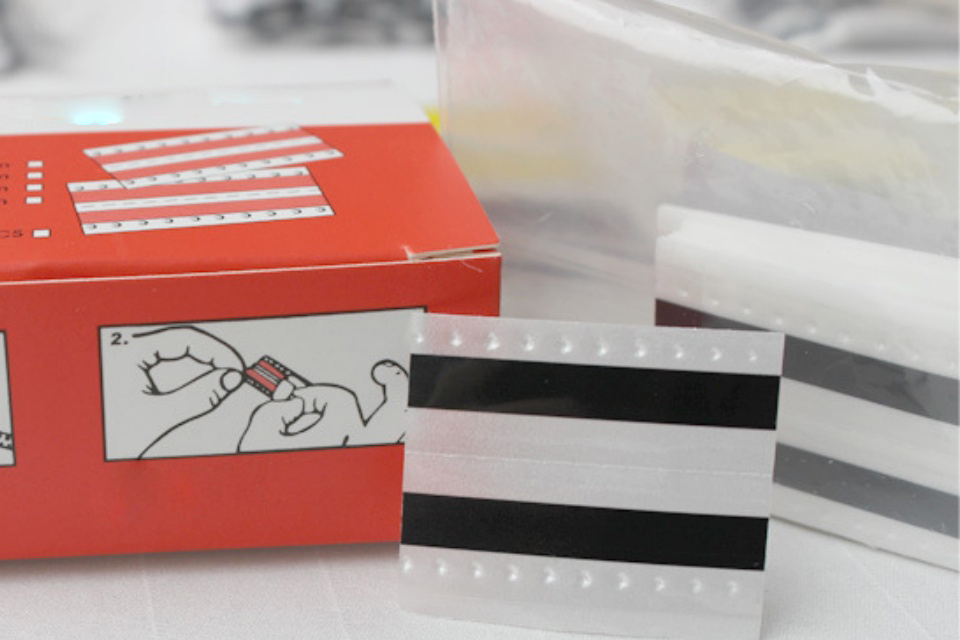
Feeder Strategy Comparison For 100k+ CPH Lines
| Feeder Strategy | Best Fit | Main Advantage | Hidden Risk | My Opinion |
|---|---|---|---|---|
| Basic mechanical feeders | Low-mix, cost-sensitive lines | Lower upfront cost | More manual verification and higher stoppage risk | Fine for modest speed, weak for serious 100k+ CPH work |
| Electric feeders | High-speed SMT assembly | Better pitch control and repeatability | Higher replacement cost | Usually worth it when uptime matters |
| Smart feeders with ID tracking | Regulated, high-mix, traceability-heavy production | Reduces wrong-part and wrong-slot errors | Requires disciplined software use | Strong choice for automotive, medical, industrial PCB assembly |
| Feeder carts and offline setup | Frequent changeovers | Cuts machine idle time | Needs floor space and process ownership | One of the most underrated investments |
| Auto-splicing plus material verification | Long runs and high-volume passives | Reduces reel-change stoppage | Bad splicing discipline creates new defects | Excellent, but only with trained operators |
| Full turnkey feeder-line integration | Scaling factories | Aligns feeder, printer, mounter, AOI, and handling flow | Vendor lock-in if specified lazily | Best when tied to real takt-time modeling |
This is where a turnkey SMT line solution can be genuinely useful, but only if the supplier models the whole line. Printer cycle time. Conveyor buffering. Placement split. Feeder capacity. AOI takt. Reflow constraints. Operator path. Material staging. If they only quote the mounter, they are not designing a line; they are selling a machine.
How Do High-Speed Feeders Improve Pick And Place Throughput?
High-speed feeders improve throughput by reducing the time placement heads spend waiting for stable component presentation, replacement reels, corrected setups, or operator intervention, which means the machine spends more of each hour placing verified components instead of recovering from feeding, kitting, splicing, or traceability mistakes.
That is the snippet answer. Now the factory answer: feeders improve throughput by attacking downtime at the source. They make components arrive in the right place, at the right pitch, with the right identity, while the machine is still moving. That sounds boring because real productivity usually is boring.
The best factories do not worship speed. They remove interruptions.
I want feeder data reviewed weekly: mis-pick rate by feeder position, splice failure by operator, component type by stop frequency, wrong-reel prevention events, and feeder maintenance overdue count. If you cannot measure that, your 100k CPH conversation is mostly theater.
FAQ
What is high-speed feeder technology in Pick And Place Machines?
High-speed feeder technology is the controlled mechanical, electrical, and software-based system that presents SMT components to Pick And Place Machines fast enough and accurately enough to support sustained high-volume PCB assembly without frequent mis-picks, wrong-part errors, reel-change stoppages, or setup delays.
In plain English, it is the difference between a machine that can place quickly in theory and a line that produces good boards at speed. Feeders handle tape advance, component positioning, reel staging, identity verification, and often traceability. At 100k+ CPH, feeder instability becomes a direct throughput limit.
Is a 100k CPH Pick And Place Machine always faster in real production?
A 100k CPH Pick And Place Machine is not always faster in real production because advertised CPH is usually measured under optimized conditions, while actual output depends on board complexity, feeder setup, component mix, nozzle changes, inspection feedback, operator skill, and downtime from material replenishment.
I would rather see sustained boards per hour over three shifts than a brochure number. If the feeder plan is weak, a higher-speed machine can simply reach its next stoppage faster. The useful metric is not peak CPH. It is verified placements per hour after losses.
What feeder features matter most for high-speed SMT assembly?
The most important feeder features for high-speed SMT assembly are accurate tape indexing, stable component presentation, smart feeder identification, fast reel replacement, splice support, offline setup compatibility, maintenance visibility, and software verification that prevents wrong-part, wrong-slot, and wrong-revision production errors.
Do not buy feeders like passive hardware. Treat them as process-control assets. For automotive, medical, aerospace, AI server, and industrial boards, traceability and verification may matter as much as raw speed because one undetected wrong component can cost more than the feeder upgrade.
How should buyers choose the best feeder technology for Pick And Place Machines?
Buyers should choose the best feeder technology for Pick And Place Machines by mapping actual BOMs, tape widths, reel-change frequency, product mix, feeder capacity, operator workload, traceability needs, and expected takt time before comparing machine CPH, because feeder fit determines sustained production speed.
Start with your worst repeat job, not your cleanest demo board. Count 8 mm feeders. Count changeovers. Count feeder-related stops. Then specify the machine. For broader sourcing, compare machine families through customer cases and production examples before locking the feeder ecosystem.
Are smart feeders worth the extra cost?
Smart feeders are worth the extra cost when the production line has high component variety, strict traceability, expensive assemblies, regulated customers, frequent changeovers, or high labor pressure, because they reduce human setup errors and make feeder status visible inside the broader SMT production control system.
But I would not sell smart feeders as magic. They need clean data, disciplined operators, working barcode routines, and maintenance ownership. Without that, you just bought a smarter way to document bad habits.
The Buyer’s Bottom Line
If you are building around Pick And Place Machines for 100k+ CPH production, stop treating feeders as accessories. They are the line’s circulatory system. The gantry is the muscle, the vision system is the eye, the software is the nervous system, but the feeders decide whether components arrive cleanly enough for any of that to matter.
My blunt recommendation: spend less time asking for the highest possible CPH and more time asking for a feeder-loss model. Ask for feeder capacity by 8 mm equivalent. Ask how offline setup works. Ask how reel splicing is verified. Ask how the system blocks wrong material. Ask how feeder maintenance is logged. Ask what happens when the operator is new, tired, or covering two lines.
That is where the truth comes out.
For a serious 100k+ CPH line review, start with the full SMT solution portfolio or contact the team through the PickAndPlaceMachine.com contact page with your BOM mix, target boards per hour, component size range, and current feeder-related downtime. The machine quote can wait. The feeder math cannot.