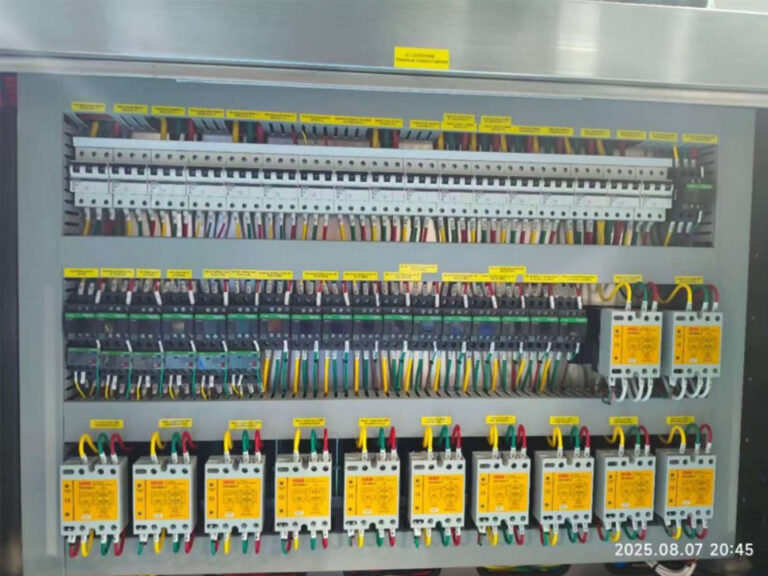
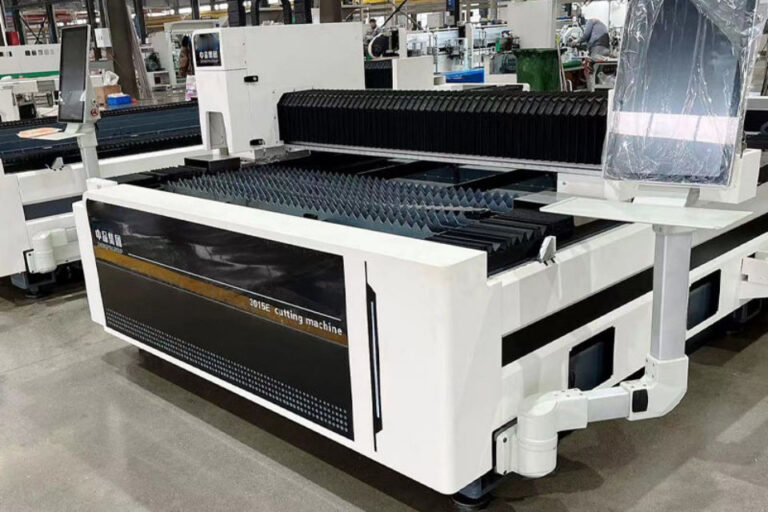
I’ve seen buyers approve Preventive Maintenance Contracts with less suspicion than they’d give a $40 nozzle quote. Strange habit. They’ll argue over freight, grease spec, feeder compatibility, or whether a used Yamaha head has been abused, but then they’ll sign a service maintenance contract because the proposal says “uptime” in a nice font.
Bad sign.
Here’s the ugly truth: preventive maintenance agreements don’t pay for themselves because they sound responsible. They pay when they stop a real financial leak—downtime, scrap, rework, emergency freight, Saturday labor, missed shipments, and that horrible moment when the line lead says, “We can maybe run it slowly.”
A pick-and-place machine can fake health for a long time. The head still moves. The board still exits. The operator still hears the same rhythm. But underneath? Nozzle wear, feeder drift, rail grime, weak lubrication, vacuum leakage, pitch errors, a lazy conveyor sensor, a camera light going soft. Then suddenly your “stable” line is throwing mispicks like confetti.
It happens. Often.
According to Siemens’ 2024 True Cost of Downtime report, surveyed large plants lose about 27 hours per month to unplanned downtime, while automotive downtime can reach $2.3 million per hour. And NIST’s manufacturing machinery maintenance work is just as blunt: reactive-maintenance-heavy manufacturers were tied to 3.3 times more downtime, while predictive maintenance users saw 15% less downtime and an 87% lower defect rate.
So no, the real argument isn’t “peace of mind.” I frankly believe “peace of mind” is what vendors say when they don’t have a spreadsheet.
The hard rule: a contract pays when it protects margin, not machines
But let’s not romanticize maintenance. A preventive maintenance contract pays for itself only when the annual avoided cost of downtime, emergency labor, scrap, expedited parts, missed shipments, and internal chaos exceeds the annual contract cost.
Simple math. Rarely done.
Too many procurement teams compare the contract price against last year’s repair invoices. That’s the wrong fight. If a Yamaha YSM20R, Panasonic NPM-DX, Fuji NXT III, Hanwha SM485, Juki RS-1R, Heller reflow oven, or Koh Young AOI stops the line, the technician invoice is usually the small cut. The deep wound is production loss.
Operators standing around. Feeders half-loaded. A reflow profile waiting for nothing. 0201 reels exposed too long. The planner quietly rewriting shipment dates. The customer asking where the boards are.
That’s why I’d read a supplier’s service promise for uptime support before I cared about a discount. Discounts are easy. Uptime isn’t.
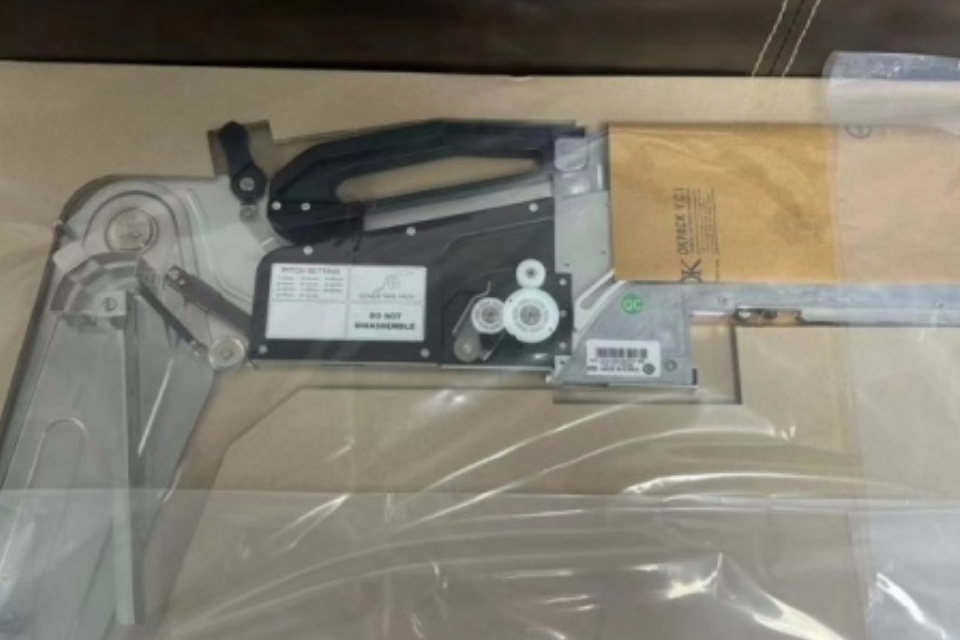
When preventive maintenance pays fast
The faster the line, the faster the contract earns its keep.
On a low-volume prototype line, one lost day is painful. On a high-speed SMT line, one lost hour can be a small financial crime scene, especially when the job is automotive electronics, telecom hardware, LED drivers, industrial controllers, medical PCBAs, or anything with tight delivery penalties and tiny component margins.
From my experience, a prototype and small-batch SMT line doesn’t always need monthly vendor visits. It may need smarter inspection, better operator habits, calibration discipline, and someone who notices feeder abuse before it turns into placement drift.
A factory running high-speed mass production lines is different. There, I want scheduled service windows, local spare kits, hard response-time language, feeder checks, lubrication records, vacuum test results, and an escalation path that doesn’t depend on one sales rep answering WeChat at midnight.
My bias? If the vendor can’t name the failure modes, they shouldn’t sell the contract.
A serious equipment maintenance contract should talk about ball screw wear, head vacuum pressure, nozzle clogging, feeder pitch error, camera lighting drift, conveyor belt tension, reflow oven blower health, flux residue, thermal profiling, MoS₂ grease compatibility, NLGI #2 lubricant intervals, and ESD-safe cleaning. Not just “annual inspection.”
That phrase is mush.
The maintenance contract ROI formula buyers should actually use
Don’t calculate preventive maintenance savings from repair bills alone. That’s amateur-hour accounting.
Use production risk:
Annual avoided loss = avoided downtime + avoided scrap/rework + avoided emergency parts + avoided premium labor + avoided shipment penalties
Maintenance contract ROI = annual avoided loss ÷ annual contract cost
Say a mid-sized SMT line loses $8,000 per hour when stopped. If the contract prevents only 10 hours of downtime per year, that’s $80,000 protected. Add $9,000 in emergency freight, $6,000 in reduced scrap, and $5,000 in avoided overtime. Total avoided loss: $100,000.
If the contract costs $24,000 per year, ROI is 4.17x.
Worth it? Yes. Obviously.
Now flip it. Same $24,000 contract, but the line runs one shift, has backup capacity, stocks common spares, and loses only $900 per stopped hour. The math gets thin fast. Preventive Maintenance Contracts don’t become smart just because the invoice has the word “preventive” on it.
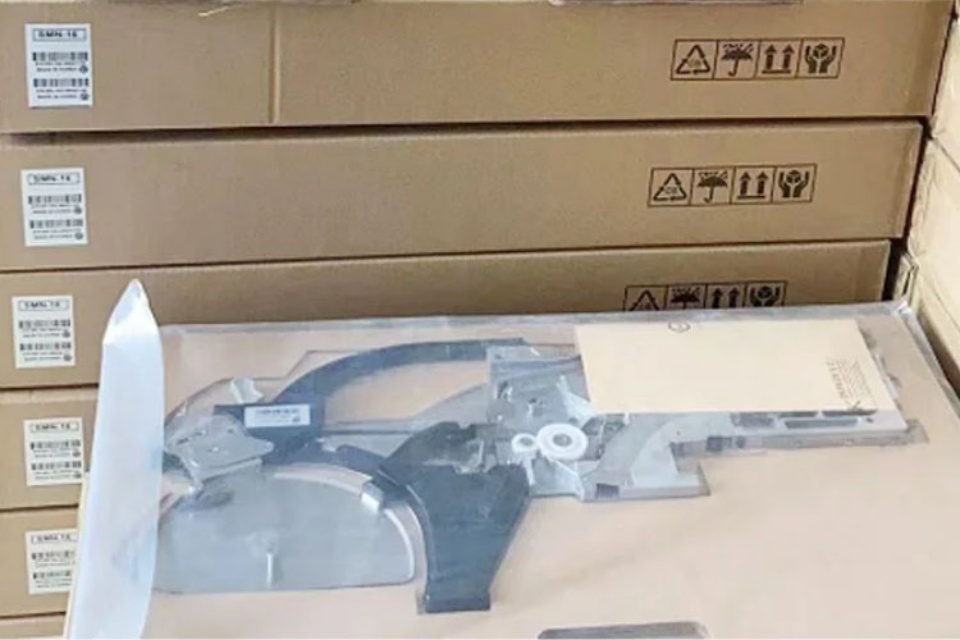
Comparison table: when maintenance contracts are worth it
| Contract situation | Likely ROI | Why it pays or fails | SMT example |
|---|---|---|---|
| High-speed line, no backup capacity | Very high | Every stopped hour blocks revenue and delivery | Yamaha YSM20R or Hanwha SM485 running 2 shifts |
| Used machine recently imported | High | Unknown wear history makes early inspection valuable | Fuji NXT III, Panasonic NPM-DX, Juki RS-1R |
| New turnkey line with trained operators | Medium to high | Protects ramp-up and stabilizes process windows | Turnkey SMT line solutions |
| Prototype line with irregular use | Medium | Needs calibration and operator discipline | Low-volume PCBA lab |
| Strong in-house technicians | Medium to low | Vendor must add parts access or deeper diagnostics | Factory already using CMMS and stocked spares |
| Cheap contract with vague scope | Low | Usually excludes the failure that stops production | “Inspection only” contracts |
| No spare-parts plan | Dangerous | Maintenance without parts availability is theater | SMT spare parts and accessories |
Where bad contracts hide their profit
However, some maintenance contracts are built around fog. Nice fog. Expensive fog.
“Priority response.” Priority over whom?
“Standard consumables excluded.” Which ones?
“Wear parts quoted separately.” Fine. But what counts as wear—feeder springs, belts, filters, grease, nozzles, lamps, vacuum ejectors, rails, clamps?
That’s where the money hides. In the exclusions.
Before signing, I’d ask for four things: the inspection checklist, the response-time definition, the excluded-parts list, and the service history template. If the vendor can’t provide them, you’re not buying a reliability program. You’re prepaying for a future argument.
And don’t ignore operators. One badly trained operator can wreck maintenance economics by misloading feeders, ignoring vacuum alarms, wiping optics with the wrong cloth, overtightening fixtures, or treating every yellow warning like background music. That’s why a good service plan should connect technical visits with training and after-sales support, not just a guy with a toolkit and a checklist.
Reuters reported in July 2024 that 58% of manufacturing leaders planned to increase AI spending in 2024, down from 93% the year before. I like that drop. It means factories are getting less drunk on slogans and more interested in proof. Maintenance deserves the same treatment.
Preventive versus predictive: don’t mix them up
Yet people still use “preventive” and “predictive” like they’re interchangeable. They’re not.
NIST’s manufacturing machinery maintenance work defines preventive maintenance as scheduled or cycle-based work, predictive maintenance as work triggered by observed data—temperature, vibration, noise, degradation signals—and reactive maintenance as work after failure.
Preventive says: inspect after X hours, X boards, X cycles, or X months.
Predictive says: the machine is telling you something now.
In SMT, the better service maintenance contracts blend both. You still need scheduled lubrication, cleaning, feeder inspection, calibration, thermal profiling, and nozzle checks. But you also want trend evidence: placement accuracy drift, pickup failure rates, feeder reject history, oven zone stability, AOI false-call patterns, SPI shifts, maintenance logs, and weird little alarms that operators swear “always happen.”
That last part matters.
NIST’s 2024 digital twin economics report makes the broader point: too little maintenance risks damage, too much maintenance creates unnecessary downtime and labor cost, while heat and vibration tracking may be the smarter middle path.
Translation: don’t buy the fanciest system. Buy the one that beats your actual failure pattern.
Safety is part of ROI, even when finance pretends it isn’t
Maintenance isn’t just money. It’s exposure.
The OSHA lockout/tagout standard for control of hazardous energy covers servicing and maintenance where unexpected energization, startup, or stored energy release could injure workers. That means sloppy maintenance planning isn’t just inefficient; it can become a compliance and safety problem.
In SMT factories, that includes conveyors, reflow ovens, wave soldering equipment, stencil printers, pneumatic systems, UV laser cutting machines, PCBA cleaning machines, soldering robots, unloaders, loaders, buffers, and PCB handling equipment.
I’d rather pay for one boring, disciplined service visit than gamble on five emergency repairs done under pressure at 11:40 p.m. with production yelling and the technician rushing. Boring is underrated.
So, are preventive maintenance contracts worth it?
Yes.
But only under adult supervision.
Preventive Maintenance Contracts are worth it when they’re tied to line economics, known failure modes, service scope, response time, spare-parts access, and measurable downtime reduction. They’re not worth it when sold as generic insurance for equipment nobody has properly audited.
For SMT buyers, my threshold is simple: if one serious stoppage costs more than 25–40% of the annual contract fee, analyze the contract hard. If two stoppages exceed the full fee, sign a well-scoped agreement and negotiate the exclusions like a difficult person.
Be difficult.
Because if the contract can’t answer “how to calculate preventive maintenance savings,” it probably can’t create those savings either.
FAQs
What are preventive maintenance contracts?
Preventive maintenance contracts are formal service agreements that schedule inspections, cleaning, calibration, lubrication, software checks, and wear-part reviews before equipment fails, with the goal of reducing unplanned downtime, improving process stability, and making maintenance costs more predictable for production assets such as SMT lines, printers, ovens, AOI systems, and feeders.
In plain English, the supplier gets paid before the breakdown, and you expect fewer breakdowns because the boring work happens early. That’s the deal. Not magic, not charity, and definitely not a substitute for operator discipline.
When does a preventive maintenance contract pay for itself?
A preventive maintenance contract pays for itself when the value of avoided downtime, emergency repair labor, rush freight, scrap, rework, overtime, and missed delivery penalties is greater than the annual contract fee within a defined operating period, usually 3, 6, or 12 months.
For a high-volume SMT line, preventing a few hours of downtime may cover the whole fee. For a prototype lab, the payback may depend more on calibration, training, and whether the supplier can get parts before your customer loses patience.
How do you calculate maintenance contract ROI?
Maintenance contract ROI is calculated by dividing the annual avoided loss from prevented failures, reduced downtime, lower scrap, fewer emergency parts, and avoided overtime by the annual cost of the service contract, then comparing the result against your internal payback threshold.
If avoided losses are $100,000 and the contract costs $24,000, ROI is 4.17x. If avoided losses are $12,000, the same contract looks weak unless it also reduces safety risk, protects a key customer, or covers assets you genuinely can’t service in-house.
Are preventive maintenance agreements better than reactive repairs?
Preventive maintenance agreements are better than reactive repairs when equipment failure would interrupt production, damage quality, delay shipments, or require expensive emergency support, because planned work is usually cheaper and less disruptive than urgent troubleshooting after the machine has already stopped.
But not always. If the machine isn’t a bottleneck, spare capacity exists, the team is skilled, and parts are already on the shelf, reactive service might be financially tolerable. Not elegant. Tolerable.
What should be included in SMT equipment maintenance contracts?
SMT equipment maintenance contracts should include machine inspection, nozzle and feeder checks, lubrication, calibration, conveyor review, vacuum system testing, vision-system verification, software or firmware review, oven profiling where relevant, service reporting, response-time terms, excluded-parts disclosure, and recommended spare-parts planning.
For pick-and-place machines, I’d also ask for placement accuracy checks, pickup error review, head-condition inspection, feeder calibration guidance, and a written list of near-term risks ranked by production impact. Not vibes. A list.
What is the biggest red flag in service maintenance contracts?
The biggest red flag in service maintenance contracts is vague scope language that promises “routine inspection” or “priority support” without naming exact tasks, response windows, covered assets, excluded parts, technician qualifications, reporting format, and escalation procedures.
Vagueness helps the seller after failure. A proper agreement says what gets inspected, measured, cleaned, excluded, reported, and escalated when the machine is down. If it doesn’t, you’re buying a brochure with payment terms.
If you’re comparing preventive maintenance agreements for pick-and-place machines, reflow ovens, SMT inspection systems, feeders, nozzles, or full SMT lines, start with the numbers. Then pressure-test the scope. Review the service promise, match it against your real line risk, and use the contact page when you’re ready to turn maintenance from a guessing ritual into a measurable uptime plan.