Most buyers look at price first. Mistake.
My blunt take is that this comparison is usually framed the wrong way, because the real fight is not China versus Japan in some abstract patriotic sense; it is low entry cost versus process stability, distributor-led support versus systemized support, and short-term savings versus what a bad quarter of downtime does to yield, deliveries, and credibility with customers.
If you are shopping for pick and place machines, the hard truth is simple: the machine itself is only half the purchase. The other half is the support architecture behind it—manuals, software updates, local response time, feeder expertise, operator training, spare-parts flow, and whether someone competent answers when your line stops at 2:13 a.m. Yamaha, for example, runs a dedicated SMT support portal with manuals, service information, software-release information, and a 24-hour support calendar, while FUJI publicly emphasizes e-learning and hands-on technician training. (Yamaha Motor Global Site)
Price Lies. Uptime Tells the Truth.
A cheaper placement machine can still be the more expensive asset if it adds one extra hour of changeover, one day of waiting for the wrong feeder setting to be diagnosed, or one week of dead time while your team hunts for a part that should have been stocked locally. That is not theory. Panasonic’s Dixon case study says the customer cut changeover time from about 60 minutes to 15 minutes and described a 75% reduction in downtime, while explicitly crediting technical support, training, reliability, and mounting efficiency. (Panasonic Connect)
So when a Chinese quote comes in 25% to 50% lower, what are you really buying? Sometimes a bargain. Sometimes a service problem in disguise.
What Japanese Machines Usually Sell You Besides the Machine
Japanese brands are not expensive by accident. They are usually charging for process discipline.
Look at the structure. Yamaha’s SMT pages show a formal support stack: product families, service web access, remote support, 24-hour support, extended warranty, and a sales network that spans Asia, Oceania, Europe, the Americas, and Africa. FUJI does something similar from a different angle; its service and support page highlights e-learning, training information, and technician programs aimed at high productivity and high quality. That sounds boring on a sales slide. In real factories, boring is good. Boring means repeatable. (Yamaha Motor Global Site)
And the case-study evidence lines up with that support-heavy model. In FUJI’s 2024 Alps Alpine case study, the company said automation rates rose from about 12% to 56%, a 44-point jump, enabling 5 to 6 hours of unmanned automated production after introducing FUJI Smart Factory tools. Panasonic’s Deltec case study describes dramatically shorter search and kitting times, error-proof material loading, lower work in process, and better inventory visibility through Panasonic software plus machine integration. That is the Japanese value proposition in plain language: less friction around the machine, not just speed on a spec sheet. (FUJI SMT Site)
That is why buyers who prioritize Yamaha pick and place machines or Panasonic pick and place machines are often paying for line behavior, not brand prestige.
Where Chinese Machines Win, Fairly and Honestly
Now the other side. Chinese equipment is not automatically “low quality,” and anyone still saying that in 2026 is lazy.
Chinese vendors often win on capital efficiency, speed of quotation, customization flexibility, and willingness to package a practical line for smaller factories that cannot justify top-tier Japanese ownership cost. NeoDen, for instance, says on its official support pages that its devices come with lifetime after-sales service and global technical support coverage, with replies within 24 hours, while NeoDen USA states a standard one-year limited warranty with parts support and optional extended coverage that can include on-site repair service in the United States or Canada. NeoDen support and NeoDen USA warranty information show why Chinese-origin systems are appealing to prototype labs, startups, education programs, and lower-volume assemblers. (Zhejiang NeoDen Technology Co., Ltd.)
That matters. A lot. If your line is building LED boards, consumer accessories, charger boards, simple industrial controls, or mixed low-volume work where budget pressure is brutal, a competent Chinese machine with sane feeder strategy and local technical backup can be the smarter buy. Not glamorous. Smart.
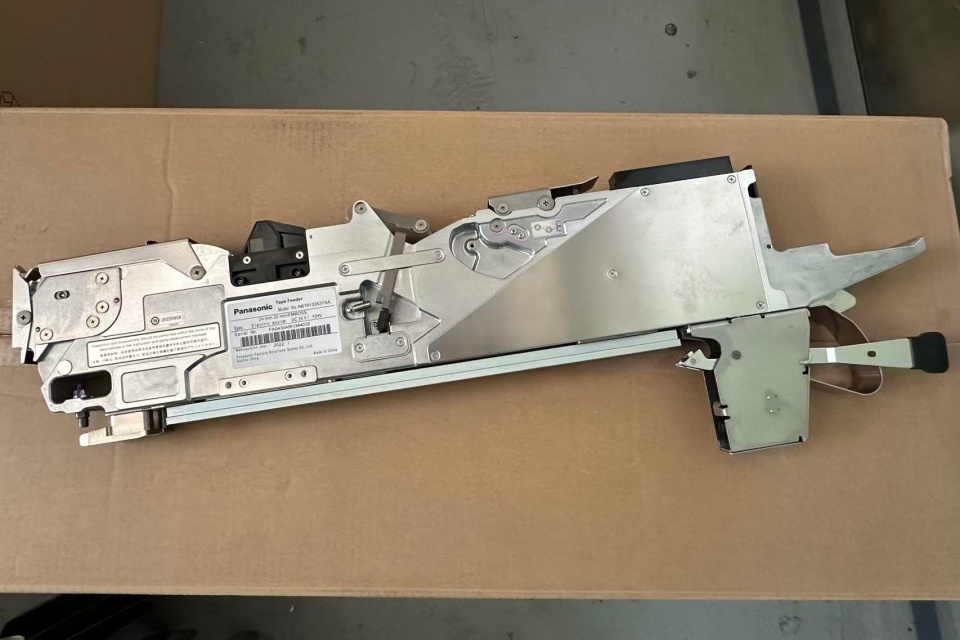
The Real Support Gap: Structured Ecosystem vs. Distributor Dependence
Here is where I stop being polite: too many buyers still treat “after-sales support” like a brochure phrase. It is not. It is a factory survival variable.
Japanese suppliers tend to formalize support into portals, training programs, remote diagnostics, regional networks, and documented service workflows. Yamaha explicitly advertises round-the-clock support and ties it to distributor service plus a regional sales network. FUJI ties support to training depth and technician capability. Chinese support, by contrast, can be very good, but it is more often uneven because it depends heavily on the exporter, the local reseller, the responsiveness of the assigned engineer, and the quality of the English documentation you receive. That is why I would spend more time evaluating the support chain than the placement-head animation in the sales demo. (Yamaha Motor Global Site)
Before you sign anything, ask for the support map in writing. Ask who handles installation. Ask who owns software issues. Ask whether feeder calibration, nozzle libraries, vision tuning, and traceability setup are included. Ask what happens on day 400, not day 4. And yes, ask to see the training and after-sales support structure and the actual warranty policy before the PO is issued.
2024 Numbers Buyers Should Actually Remember
The most useful recent numbers are not marketing CPH claims. They are operating numbers.
Panasonic’s Dixon case gives you one benchmark: 60-minute changeovers cut to 15 minutes, with downtime down by 75%. FUJI’s Alps Alpine case gives you another: automation rising from 12% to 56%, with 5 to 6 hours of unmanned production. And on the trade-risk side, Reuters reported in May 2024 that the United States announced tariff increases on $18 billion of Chinese imports, including semiconductors, in a wider escalation of industrial-policy pressure. I am not saying that every Chinese pick-and-place machine is directly trapped by that exact tariff action. I am saying buyers would be foolish to ignore the broader sourcing and policy environment around Chinese-origin electronics equipment, parts, and line dependencies. (Panasonic Connect)
My Buying-Side Verdict
If you run automotive electronics, medical assemblies, telecom hardware, or any factory where OEE, traceability, and multi-shift stability pay the bills, I would lean Japanese more often than not. The higher invoice hurts once. Weak support hurts every month.
If you are a startup EMS, an NPI-heavy shop, an education lab, or a price-sensitive manufacturer that needs functional throughput without premium ownership cost, a Chinese machine can be the right move. But only if the supplier proves service competence, spare-parts access, English documentation quality, and real post-installation accountability.
Used Japanese machines complicate this even further. Sometimes they are brilliant value. Sometimes they are museum pieces with fading support and awkward parts economics. So no, the answer is not “Japan always wins.” The answer is that Japanese systems more often sell a mature ecosystem, while Chinese systems more often sell a sharper entry price with support quality that must be checked harder.
| Buying Factor | Chinese Machines | Japanese Machines | What I Would Verify Before Purchase |
|---|---|---|---|
| Upfront CAPEX | Usually lower | Usually higher | Full landed cost, software licenses, installation scope |
| Support structure | Often distributor-dependent | More formalized and documented | Named support contacts, SLA, remote diagnostics |
| Training depth | Varies a lot by vendor | Usually stronger and more structured | Operator training hours, maintenance curriculum |
| Spare parts flow | Can be fast or chaotic | Usually more predictable | Local stock, lead times, critical spare list |
| Best fit | Budget-sensitive, lower-volume, flexible entry | High-mix, high-uptime, multi-shift production | Match machine class to factory reality |
| Main risk | Hidden service weakness | Overpaying for capability you will not use | Demand use-case proof, not brochure claims |
FAQs
Are Japanese pick and place machines better than Chinese machines?
Japanese pick and place machines are usually better when your factory needs predictable uptime, formal training, stable software, traceability, and multi-region support across several shifts or several plants, while many Chinese machines are better when capital is tight and your throughput does not justify premium ownership cost. Yamaha and FUJI publicly show more structured support and training systems, while Chinese vendors such as NeoDen show that lower-cost machines can still come with meaningful support commitments. (Yamaha Motor Global Site)
Why do Japanese machines usually cost more?
Japanese machines usually cost more because buyers are paying for more than hardware; they are paying for the surrounding service system, including training, remote support, documentation, software updates, regional coverage, and a lower probability that a production problem turns into a long and expensive interruption. Panasonic, Yamaha, and FUJI all publicly emphasize support depth, training, and process integration rather than only placement speed. (Panasonic Connect)
When is a Chinese pick and place machine the smarter buy?
A Chinese pick and place machine is the smarter buy when the factory’s real constraint is budget, not extreme uptime, and when the chosen vendor or distributor can prove competent installation, English documentation, spare-parts access, and fast technical response after commissioning instead of only offering an attractive quotation. NeoDen’s official support and warranty material shows why these systems can make sense for smaller or cost-sensitive operations. (Zhejiang NeoDen Technology Co., Ltd.)
What should I ask before signing a machine purchase order?
The right pre-purchase questions are the ones that expose post-purchase risk: who installs the machine, who trains operators, who handles software and vision issues, what spare parts are stocked locally, how warranty escalation works, how fast engineers respond, and what happens after the first year. That is also why I would ask suppliers to map their service flow in writing, not verbally, and then compare it against your line requirements and contact the team only after the support terms are clear. (Yamaha Motor Global Site)
If you are comparing quotes right now, do not compare only CPH, vision count, or nozzle quantity. Compare failure recovery time, training depth, feeder strategy, software maturity, and who owns the problem when output drops. That is the adult version of machine buying.
And if you need a line recommendation tied to throughput, product mix, feeder count, traceability, and support expectations, start with a real conversation about turnkey SMT line solutions instead of another glossy brochure.