Specs lie. Not always intentionally, but often enough that I don’t trust a placement accuracy number until I know the feeder age, nozzle condition, board support plan, fiducial strategy, paste print data, and whether the operator has been “temporarily” overriding alarms for three months.
It happens. A lot.
The brochure says ±25 μm. Fine. But what happens on a humid Tuesday, third shift, with a slightly bowed panel, a tired CL feeder, a nozzle that should’ve been tossed last quarter, and a QFN sitting right on the edge of the paste process window? That’s where Component Placement Accuracy stops being a line item and starts becoming the difference between good PCB assembly and expensive detective work.
What Component Placement Accuracy Really Means
Component Placement Accuracy is the ability of a pick-and-place system to place a component on its intended PCB pad position within defined X, Y, and theta limits so the solder joint can form properly during reflow. Simple sentence. Not a simple problem.
And no, it’s not just “machine accuracy.”
From my experience, the placement head usually gets blamed because it’s visible, expensive, and easy to point at. But the actual error stack is messier: paste offset, board stretch, panel warpage, poor support pins, worn feeders, sloppy package libraries, weak vacuum, dirty nozzles, fiducial lighting, bad tape pocket quality, and sometimes just plain bad habits on the line.
That’s the ugly truth.
When buyers compare máquinas pick and place, they often ask the wrong question first. They ask, “What’s the maximum placement accuracy?” I’d rather ask, “What does this machine hold after 40,000 placements, across mixed reels, on my PCB size, with my smallest package, at my real production speed?”
That second question gets you closer to the factory floor. The first one gets you a PDF.
Why Micron-Level Precision Actually Changes the Yield Curve
A 35 μm shift doesn’t sound dramatic. It’s barely anything to a human eye. But in SMT, that tiny offset can be the nudge that pushes a marginal pad into a bridge, an open, a tombstone, or a solder joint that looks acceptable until vibration and heat cycling expose the weakness.
Tiny error. Big invoice.
This is why micron-level precision matters in PCB component placement accuracy. A chunky 1206 resistor has room to forgive sloppy placement. A 0.4 mm pitch QFN does not. Neither does a micro-BGA, a camera module, a dense automotive ECU, or a board full of 01005 passives where the paste deposit already looks like it was applied with a nervous hand.
NIST’s 2024 microelectronics metrology work makes a point that PCB assembly people should take seriously: measurement science is tied directly to manufacturing, packaging, assembly, and yield improvement, not just lab validation. Their 2024 ECTC metrology report frames metrology as part of the production problem, not an academic afterthought.
And the money is saying the same thing. Reuters reported in 2024 that the U.S. planned to award Amkor up to $400 million for a $2 billion advanced chip packaging facility in Arizona, focused on packaging and testing chips for autonomous vehicles, 5G/6G, and data centers. That’s not just semiconductor politics. That’s precision assembly becoming infrastructure. Reuters on Amkor’s Arizona packaging facility
So yes, the microns matter. Anyone saying otherwise is probably selling speed.
Where SMT Placement Accuracy Gets Lost
But here’s where people get uncomfortable: placement accuracy usually doesn’t collapse in one clean, dramatic failure. It bleeds out slowly, one feeder lane, one nozzle tip, one bad board support decision, one ignored AOI trend at a time.
I’ve seen teams chase a phantom “machine drift” for days when the real issue was feeder presentation. I’ve seen operators clean nozzles like they were performing a ritual, but nobody checked vacuum stability. I’ve seen AOI systems collect beautiful defect maps that nobody used because the data lived in a different mental universe from the placement program.
That one still annoys me.
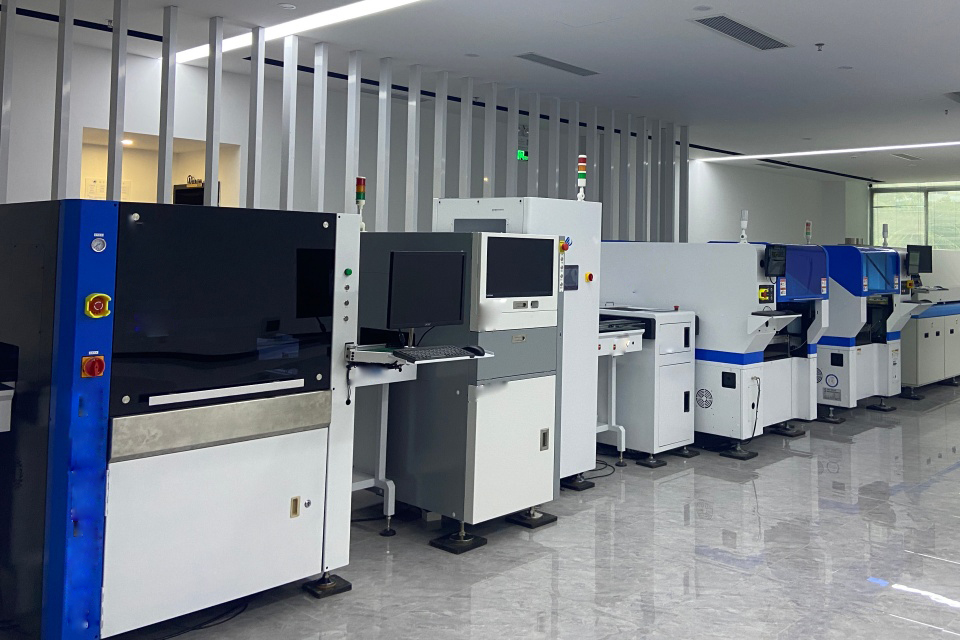
A real SMT line doesn’t treat Sistemas de inspección SMT as end-of-line punishment. SPI and AOI should feed back into placement correction, stencil review, feeder maintenance, package library updates, and operator training. Otherwise, inspection is just a very expensive way of saying, “Yep, still broken.”
The public failure record is less abstract than people like to admit. In a 2024 NHTSA filing, Hyundai reported rearview cameras that may have been produced with insufficient solder joints on a camera PCB; the filing says solder joint cracks could worsen over time and lead to camera failure. NHTSA Hyundai recall report 24V-879
A 2023 Ford NHTSA filing had a similar lesson hiding inside it. The recall covered 931 F-150 BEV vehicles where an electronic cabin coolant heater may have been manufactured with a missing solder joint, and Ford’s chronology traced the issue to a supplier’s low-volume secondary assembly line with inadequate controls. NHTSA Ford recall report 23V-688
That’s what escape looks like. Not a PowerPoint risk. A public filing.
Accuracy, Repeatability, and Tolerance Are Not the Same Thing
People mix these terms constantly, and it makes process reviews muddy.
Accuracy is how close the placed component lands to the intended location. Repeatability is whether the system can keep doing that again and again. Component placement tolerance is the acceptable error window before the placement becomes a real process threat.
Different animals.
The scary machine isn’t always the one with mediocre brochure accuracy. Sometimes it’s the one that places beautifully during a demo, behaves during calibration, then loses repeatability once the line is hot, the product mix changes, and the feeders start showing their age.
| Factor | What It Means | What Professionals Should Check | What Happens When Ignored |
|---|---|---|---|
| Precisión de colocación | How close the component lands to the programmed pad position | Real board data, not only brochure data | Offset parts, weak solder joints, bridges |
| Repetibilidad | Whether the system can place consistently across cycles and shifts | Cpk, shift-to-shift data, feeder/nozzle history | Random defects that are hard to reproduce |
| Component placement tolerance | Maximum acceptable placement error for a package or process | Package pitch, pad design, paste volume, reliability class | Passing boards with hidden risk |
| Fiducial correction | Vision-based board alignment before placement | Fiducial quality, lighting, camera calibration | Whole-board offset or rotation error |
| Feeder accuracy | Ability to present parts consistently for pickup | Feeder wear, pitch accuracy, tape tension | Mis-picks, skew, missing parts |
| Nozzle condition | Mechanical and vacuum stability during pickup and release | Wear, contamination, vacuum leakage | Rotation errors, dropped parts, tombstoning |
| Inspection feedback | Data loop from SPI/AOI back into process correction | Defect mapping by feeder, nozzle, package, board zone | Repeat defects treated as isolated events |
There’s also a strange split between prototype and volume production. Prototype teams often care deeply about flexibility but underestimate repeatability. High-volume teams chase CPH and sometimes pretend one sick feeder lane can’t quietly poison the whole shift.
Both habits cost money.
A prototype small-batch SMT line needs fast changeover, reliable vision correction, clear operator prompts, and sane library control because every product change creates another chance for human error. A high-speed mass production SMT line needs feeder discipline, nozzle traceability, preventive maintenance, closed-loop inspection, and boringly consistent process control.
Boring wins. Usually.
How Better Lines Improve Component Placement Accuracy
I frankly believe most factories could improve component placement accuracy without buying a new machine. Not all of them. But many.
Start with the unsexy stuff. Clean the nozzles properly. Verify vacuum. Check pickup position. Inspect feeder wear instead of pretending the feeder is “still okay.” Review fiducial recognition. Fix board support. Audit the component package library. Compare SPI offset to placement offset before blaming the mounter. Track defects by feeder slot, nozzle ID, component package, board zone, stencil, shift, material lot, and operator.
That’s when patterns stop hiding.
The fastest way to improve SMT placement accuracy is to stop treating the pick-and-place machine like a magic box. It’s not. It’s part of a chain: solder paste printer, placement machine, reflow oven, AOI/SPI, conveyors, board handling, material storage, maintenance, software discipline, and people who either follow the process or invent their own.
This is where a solución de línea SMT llave en mano can make sense. Not because “turnkey” sounds fancy. Because a line designed as one system has fewer weird handoff problems between printer, placement, inspection, reflow, and support equipment.
The NHTSA’s 2024 annual recall report adds the business-side warning. Across 2020–2024 recalls, nearly 80% had a final remedy available within 60 days, but the process still involved official filing, notification, remedy coordination, and public visibility. A component-level factory miss can travel much farther than the rework bench. NHTSA 2024 Annual Recalls Report
Rework is obvious. Reputation damage isn’t. The customer who stops sending new programs rarely writes “your placement process scared us” in the subject line.
Preguntas frecuentes
What is component placement accuracy in SMT assembly?
Component placement accuracy in SMT assembly is the ability of a pick-and-place machine to position each component on the PCB within specified X-axis, Y-axis, and rotational tolerance so solder joints form correctly during reflow and the finished PCBA meets electrical, mechanical, and reliability requirements. It’s not just a machine number.
In real production, placement accuracy depends on solder paste registration, PCB warpage, feeder condition, nozzle wear, package geometry, fiducial quality, and inspection feedback. A strong accuracy spec means little if the line around it is unstable.
Why does micron-level precision matter in PCB component placement accuracy?
Micron-level precision matters in PCB component placement accuracy because modern SMT packages have smaller pads, tighter solder volumes, denser layouts, and less tolerance for offset, skew, board stretch, and paste misregistration during reflow. A few dozen microns can separate a clean joint from a latent defect.
That’s especially true with 01005 passives, 0201 passives, QFNs, BGAs, RF modules, LED boards, camera modules, automotive ECUs, and medical electronics. Smaller pads leave less room for wishful thinking.
How can manufacturers improve component placement accuracy?
Manufacturers can improve component placement accuracy by combining machine calibration, feeder maintenance, nozzle control, fiducial optimization, board support, SPI/AOI feedback, operator training, and package-specific placement libraries into one controlled SMT process instead of treating the placement machine as an isolated accuracy device. The work is repetitive, but it pays.
Start by cleaning and inspecting nozzles, verifying vacuum, checking feeder wear, improving PCB support, reviewing fiducial recognition, auditing package libraries, and using AOI/SPI data to spot repeatable drift. Don’t guess. Trend it.
What is the difference between pick and place accuracy and repeatability?
Pick and place accuracy is how close a machine places a component to the intended target, while repeatability is how consistently it can achieve that placement across many boards, cycles, operators, feeders, and production conditions. Accuracy measures target error; repeatability measures whether the process stays stable.
A machine can look accurate during setup and still behave badly during full production. That’s why serious buyers ask for process capability evidence, not just a maximum accuracy claim.
What component placement tolerance is acceptable for SMT production?
Acceptable component placement tolerance depends on package size, pad geometry, solder paste volume, PCB design class, inspection limits, and reliability expectations, but tighter tolerance is required as pitch decreases and assembly density increases. A tolerance that works for 0805 passives may be unsafe for QFNs, BGAs, or 01005s.
The smarter approach is to define placement tolerance by risk. Critical packages deserve stricter placement windows, tighter inspection rules, better traceability, and more aggressive process monitoring than large passives with generous pads.
Final Take: Buy the Process, Not the Brochure
Component Placement Accuracy is not a decorative spec. It’s the visible result of dozens of invisible controls: feeder condition, nozzle health, paste print quality, PCB support, fiducial strategy, vision correction, reflow behavior, AOI/SPI feedback, operator discipline, spare parts, and maintenance culture.
So don’t buy a headline speed number and hope precision shows up later.
Challenge the accuracy claim. Ask about real board data. Ask how the supplier handles feeder wear, nozzle management, inspection feedback, spare parts, operator training, and after-sales response. For equipment selection or line planning, review the full SMT solution overview or contact the team directly through the SMT equipment consultation page.