Downlooking Cameras sound simple: mount a camera above the work area, point it down, and let the machine “see” what is happening. But in real factories, that simplicity disappears fast. Reflections, warped PCBs, solder-mask color shifts, feeder variation, poor lighting, nozzle wear, and cheap optics can turn a clean top-down image into unreliable process data.
I have seen buyers obsess over megapixels while ignoring lighting geometry. That is backwards. A downlooking camera is only useful when the full vision chain is controlled: lens, sensor, illumination, calibration, motion repeatability, software logic, and the defect type being measured. Otherwise, it becomes an expensive witness to problems the machine still cannot understand.
Why Downlooking Cameras Matter in Modern Machines
Downlooking cameras are downward facing cameras mounted above a board, tray, fixture, conveyor, or workpiece to identify position, orientation, surface features, fiducials, markings, edges, and defects from a top-down perspective.
That view is valuable because many machine decisions begin in X/Y space. Where is the PCB? Is the fiducial visible? Did the component arrive in the expected pocket? Is the label aligned? Has the board shifted before placement? These are not abstract software questions. They decide whether a máquina pick and place places a 0201 capacitor correctly or creates a rework problem that travels downstream.
The industrial pressure behind this is not small. The International Federation of Robotics reported in its World Robotics 2024 release that 4,281,585 industrial robots were operating in factories worldwide, a 10% increase, with 541,302 new robot installations in 2023 and 70% of new deployments in Asia. (IFR Federación Internacional de Robótica)
More robots means more cameras. More cameras means more false confidence unless the vision architecture is engineered properly.
Where Downlooking Cameras Win
Downlooking cameras are strongest when the task is flat, visible, repeatable, and position-driven.
They are excellent for PCB fiducial recognition, component presence checks, barcode or data-matrix reading, tray alignment, nozzle-to-board positioning, stencil registration, simple surface inspection, and pre-placement correction. In SMT production, they often act as the machine’s first reality check before motion begins.
A well-designed downlooking camera setup may include a global-shutter CMOS sensor, low-distortion lens, coaxial lighting, ring lighting, calibrated field of view, and software tuned to detect edges, holes, pads, solder paste deposits, package outlines, or board marks. In a solución de línea SMT llave en mano, this camera should not be treated as an accessory. It is part of the control loop.
Fast view. Big consequence.
The advantage is speed and clarity. A top-down camera can inspect a defined work zone quickly without needing complex mechanical movement. That makes it useful in high-speed SMT placement, dispensing, PCB handling, label verification, feeder inspection, and automated loading systems.
But the value depends on discipline. A cheap camera with unstable lighting will not become accurate because the brochure says “AI vision.” I would rather trust a modest sensor with a rigid mount, clean lighting, and proper calibration than a high-resolution camera bolted onto a vibrating gantry.
Where the Top-Down View Breaks Down
Downlooking cameras fail when the defect is not visible from above, when surface contrast is weak, or when the production process creates misleading reflections.
This is common in SMT. A top-down camera may confirm that a component exists, but it may not detect a lifted lead, poor wetting under a package, hidden BGA solder failure, nozzle damage, side-wall cracking, or height variation. It can see the top of the crime scene. Not always the crime.
Reflective solder pads are another problem. ENIG finish, flux residue, black solder mask, white silkscreen, and polished metal surfaces can confuse basic thresholding algorithms. Lighting changes can create “defects” that are really just shadows. In high-mix production, where boards, finishes, and component packages change frequently, this becomes even harder.
This is why I dislike the phrase “best cameras for machine vision.” It encourages buyers to compare camera models instead of failure modes. The better question is: what defect are we trying to catch, and from which angle is that defect actually visible?
NIST’s 2024 manufacturing robotics research report notes that many vision- and laser-based inspection systems are already designed to integrate with robot arms, while easier programming, lower-cost precision imaging, machine-learning training, and interoperability remain important technical needs.
That is the real bottleneck. Not the camera alone. The integration.
Alternative Vision Approaches Worth Considering
Alternative vision approaches exist because one camera angle rarely sees the whole truth.
Upward-looking cameras are often used in pick-and-place systems to inspect components before placement. They help detect pickup offset, rotation error, package outline, and lead position while the component is still on the nozzle. If the machine relies only on a downlooking camera, it may know where the board is but not whether the component is correctly held.
Side-view cameras help with height-sensitive problems. They can inspect nozzle tips, component seating, lead bend, coplanarity, and mechanical interference. In my opinion, side-view cameras are underused in mid-range automation because they expose ugly mechanical realities that some suppliers would rather not discuss.
3D AOI and SPI systems add depth. They are more useful when solder volume, component height, tilt, lifted leads, bridge risk, or warpage matters. For serious electronics manufacturing, a dedicated Sistema de inspección SMT is often the difference between catching a process drift early and discovering a batch failure after reflow.
Reuters reported in November 2024 that China reached 470 industrial robots per 10,000 workers, overtaking Germany’s 429, while South Korea remained the global leader at 1,012. That level of automation density pushes factories toward richer machine vision, because manual inspection cannot scale at the same pace. (Reuters)
The point is not to replace downlooking cameras. The point is to stop pretending they are enough for every inspection problem.
Comparison of Vision Approaches in Machine Automation
| Vision approach | Mejor caso de uso | What it catches well | What it often misses | Practical verdict |
|---|---|---|---|---|
| Downlooking cameras | Fiducials, PCB alignment, surface inspection, tray positioning | X/Y position, orientation, presence, markings, top-side features | Hidden joints, side defects, Z-height variation | Best default view, but not a complete inspection strategy |
| Upward-looking cameras | Component centering before placement | Pickup offset, package rotation, nozzle/component relationship | PCB-side defects, solder paste condition | Essential for accurate pick-and-place correction |
| Side-view cameras | Height, lead, nozzle, and clearance checks | Lifted parts, bent leads, nozzle wear, coplanarity issues | Full-board context | Very useful when mechanical defects matter |
| 3D AOI/SPI | Solder volume, height, tilt, post-print and post-reflow inspection | Volume, height, bridge risk, lifted leads, warpage indicators | Some reflective or shadowed areas | Strongest evidence layer for high-reliability SMT |
| Multi-angle lighting | Reflective surfaces, markings, polarity, surface contrast | Low-contrast features, engraved marks, shiny pads | True geometry unless paired with 3D | Often cheaper than adding another camera |
This table is where procurement teams should slow down. A downlooking camera may be the right answer for fiducials and surface position, but a weak answer for solder volume. A 3D AOI system may be excellent for inspection evidence, but excessive for a simple tray alignment task. The best system follows the defect.
How to Specify Downlooking Cameras Without Getting Sold Hype
A useful downlooking camera specification should include field of view, pixel resolution, working distance, lens distortion, lighting method, shutter type, calibration routine, repeatability, image storage, software tolerance, and the exact inspection target.
Do not accept vague phrases like “high precision camera” or “AI inspection.” They mean very little without measurement conditions. Ask for actual tolerances in microns or millimeters. Ask whether the sensor is global shutter or rolling shutter. Ask whether lighting is coaxial, dome, bar, ring, UV, blue, red, or near-infrared. Ask how often calibration is required and whether operators can perform it without engineering support.
For SMT lines, also ask how the downlooking system interacts with the printer, placement machine, AOI, SPI, feeders, nozzles, and board handling equipment. A camera that cannot share useful process data is not part of smart manufacturing. It is just a local checkpoint.
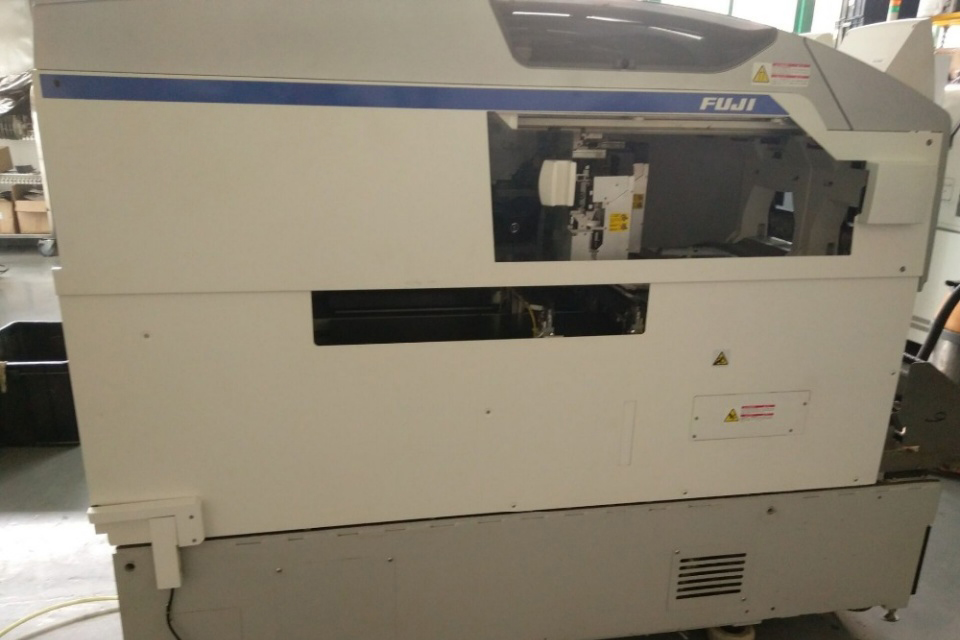
This matters when comparing used or new platforms from Yamaha, Panasonic, Fuji, Hanwha, Juki, ASM, and similar equipment families. If you are evaluating Máquinas pick and place Yamaha o Máquinas pick and place Panasonic, the camera question should be tied directly to your board mix, component package range, speed target, defect history, and maintenance capacity.
Here is my hard rule: if the supplier cannot explain what the camera will miss, they do not understand the camera well enough.
FAQ on Downlooking Cameras
What are downlooking cameras? Downlooking cameras are downward facing machine vision cameras installed above a work area to capture top-view images for alignment, inspection, positioning, and process control. They are commonly used in SMT machines, robotics cells, dispensing systems, PCB handling lines, and automated inspection equipment where visible surface features must be measured quickly.
They work best when the inspection target is visible from above and the system has stable lighting, calibrated optics, and repeatable motion.
How do downlooking cameras work? Downlooking cameras work by capturing calibrated images from above, then using machine vision software to detect fiducials, edges, shapes, markings, solder paste, components, holes, or positional offsets. The machine then uses that data to align, inspect, correct, reject, or continue the production sequence.
The camera does not act alone. The lens, lighting, exposure, calibration, software thresholds, and mechanical stability decide whether the result is reliable.
Are downlooking cameras better than side-view cameras? Downlooking cameras are better for top-side position, alignment, and surface inspection, while side-view cameras are better for height, lead condition, nozzle condition, and mechanical clearance. Neither view is universally better because each camera angle reveals some defects and hides others.
In serious automation, the two views often complement each other. Top-down vision gives context. Side-view vision catches geometry the top view cannot see.
What are the best cameras for machine vision? The best cameras for machine vision are industrial cameras matched to the application, usually with global-shutter sensors, low-distortion lenses, stable lighting, rigid mounting, and repeatable calibration. Camera choice should be based on defect type, working distance, field of view, speed, accuracy, and surface behavior.
Megapixels help only when the rest of the optical chain is controlled. Resolution without lighting discipline is just expensive noise.
When should a factory move beyond 2D downlooking cameras? A factory should move beyond 2D downlooking cameras when defects involve height, volume, tilt, warpage, hidden solder behavior, lifted leads, or side-wall geometry. These problems cannot be judged reliably from a flat top-down image, especially in fine-pitch SMT, automotive electronics, medical electronics, and high-reliability assemblies.
That is when 3D AOI, SPI, laser sensing, or side-view inspection becomes less of an upgrade and more of a process requirement.
Final Takeaway and Next Step
Downlooking Cameras remain one of the most useful vision approaches in modern machines because they give automation systems a fast, structured, top-down view of the production surface. But they are not magic. They do not replace side-view inspection, upward component centering, 3D AOI, SPI, good lighting, stable mechanics, or process discipline.
The smartest factories do not ask, “Which camera is best?” They ask, “Which viewing angle exposes the defect before it becomes expensive?”
For SMT lines, component placement, inspection upgrades, or full automation planning, start with the failure mode and work backward. Review available Sistemas de inspección SMT, compare them with your board mix and defect history, then use the página de contacto to request a configuration built around your real production conditions.
Source brief used: