Most buyers blink, then stall, because the first quote for a máquina pick and place always looks painful on paper, especially when someone in finance is still comparing it to a few operator wages instead of the messier reality of feeder prep, line stoppages, setup churn, rework loops, outsourced prototype premiums, and the cost of late boards. Then they wait.
I frankly believe that’s where the damage starts.
Not with the machine. With the thinking.
I’ve sat through too many buying conversations where everybody talks about CPH, nobody talks about feeder cart discipline, and the whole room quietly assumes that “automation” means labor savings—full stop. That’s rookie math. In small-batch SMT, the machine either cuts friction across the line or it becomes a very expensive stainless-steel monument to bad assumptions.
And yeah, I’ve got a strong opinion on this: a pick and place machine investment for a small-batch shop only makes sense when it solves high-mix pain. Not imaginary future volume. Not brochure fantasy. Real pain. The kind that shows up when your jobs flip every day, your centroid data is ugly, half the BOM shows up with substitutions, and the customer still wants boards out by Friday afternoon.
That’s the job.
Not speed theater.
The best evidence on that point isn’t a sales deck. According to the 2024 Auburn University ICAMS Smart Manufacturing Adoption Study, 54% of respondents identified as low-volume/high-mix manufacturers, and that same group ranked workforce-operations at 60%, workforce-engineering at 43%, and operational efficiency at 42% among the big headaches. That’s not abstract. That’s the exact world where a pick and place machine for small batch manufacturers lives or dies. (eng.auburn.edu)
Here’s the ugly truth: plenty of small manufacturers don’t need “more machine.” They need less chaos.
Because labor? It’s not stable enough to be your long-term strategy. The U.S. Bureau of Labor Statistics says electrical, electronic, and electromechanical assemblers had a mean annual wage of $43,740 in May 2023, while the broader assembler and fabricator category posted a median annual wage of $43,570 in May 2024, and BLS also projects about 198,800 openings per year, on average, over the coming decade, mainly from replacement needs. That doesn’t scream panic to me. It screams fragility. (bls.gov)
And while some owners still act like automation is optional—something you do after the “real growth” arrives—the World Robotics 2024 report from the International Federation of Robotics showed factories worldwide were operating 4,281,585 robots in 2023, up 10%, with annual installations above half a million units for the third straight year. That’s not hype. That’s direction. (ifr.org)
But here’s where buyers still get fooled.
They chase peak speed.
I chase recovery speed.
Those are not the same thing—not even close. A machine can look fantastic on a demo board with tidy reel layouts and a handpicked program, then fall apart the minute you feed it real production: 0201s, QFNs, the odd fine-pitch BGA, shield cans, connectors that never behave the same twice, SAC305 process windows, and an operator who inherited the last engineer’s library mess.
So when somebody asks me for the best pick and place machine for low volume production, I don’t start with brand names. I start with the pain map. How many changeovers a week? How many true repeats? How many feeder setups survive from one run to the next? How many jobs are engineering builds wearing a production label?
That answer matters more.
Way more.
If you’re still figuring out the line architecture, don’t buy blind. Look at a proper línea SMT para prototipos y lotes pequeños first. And if the placement machine isn’t really the only bottleneck—pretty common, actually—then step back and evaluate a full solución de línea SMT llave en mano instead of pretending one new box will magically fix print quality, board handling, oven consistency, and inspection gaps.
A small batch SMT assembly machine earns its money in strange places, not just obvious ones.
Yes, it cuts direct placement labor. Fine. Everybody knows that.
But it also shaves engineering waste during NPI, which is where small-batch shops bleed quietly. It reduces the number of jobs that get punted to manual placement because “this one’s tricky.” It catches alignment issues before they morph into reflow headaches. It drags urgent builds back in-house. It compresses lead time. And lead time—this part gets ignored—is often the real profit lever in low-volume electronics work.
Why? Because customers rarely pay extra for your operational suffering, but they absolutely remember who ships first.
What you are actually buying
I don’t trust the headline CPH number unless it’s tied to your boards, your package mix, your nozzle changes, your feeder strategy, and your operators—your actual mess, in other words, not the clean-room version used in demos. Otherwise it’s just a vanity metric with a nice font. It looks good.
And that gets us to the buying mistake I see again and again: people think they’re buying placement capacity, but in small-batch manufacturing they’re usually buying workflow, uptime, and fewer stupid interruptions. That’s it. That’s the deal.
A serious buyer should inspect these six variables before talking price for more than five minutes:
| Buying factor | What matters in small-batch production | Why it affects ROI | Red flag |
|---|---|---|---|
| Tiempo de cambio | Feeder reuse, offline setup, program import speed | Faster turnover means more sellable hours | Demo ignores feeder prep |
| Placement flexibility | 0201 capability, fine-pitch vision, odd-form handling | Fewer manual exceptions, fewer escaped defects | “We usually place that by hand” |
| Ecosistema alimentador | 8 mm to wider feeder availability, maintenance status, interchangeability | Feeders become the real production currency | Cheap machine, scarce feeders |
| Software workflow | CAD import, library management, traceability, operator usability | Engineering time drops or explodes here | Programming depends on one hero |
| Support depth | Spare parts, remote troubleshooting, training, response time | Downtime cost can erase savings fast | No local support path |
| Line fit | Printer, conveyor, AOI/SPI, reflow, storage, ESD flow | One good machine cannot save a bad line | Buyer shopping in isolation |
That table is where the money leaks—or gets saved.
Not the splashy machine video.
Not the “up to” speed claim.
Not the discount that looks clever until you realize feeder inventory is thin, nozzles are a scavenger hunt, and the first real fault call gets routed into a support black hole.
The machines people shortlist, and the mistake they make
Sure, buyers usually circle names like Yamaha YSM10 or YSM20, Panasonic AM100 or NPM-W2S, Juki RS-1R or LX-8, Hanwha XM520, or Fuji AIMEX-series platforms. Those are legitimate names. Industrial names. Nobody serious is confusing those with desktop toy machines.
But the model list by itself tells me almost nothing.
From my experience, the bad decision happens right after the shortlist. Someone says, “Let’s just get the fastest one we can afford,” which sounds rational until you remember that low-volume production punishes rigid complexity. If your product mix is ugly—and most real product mixes are ugly—the winner is often the platform that loses the least time between jobs, not the one that places the most parts in a perfect-world sprint.
That’s why I would spend more time reviewing actual pick and place machine options and less time asking strangers online for a universal winner. There isn’t one. Not for this segment. Not honestly.
Where SMT pick and place machine cost goes wrong
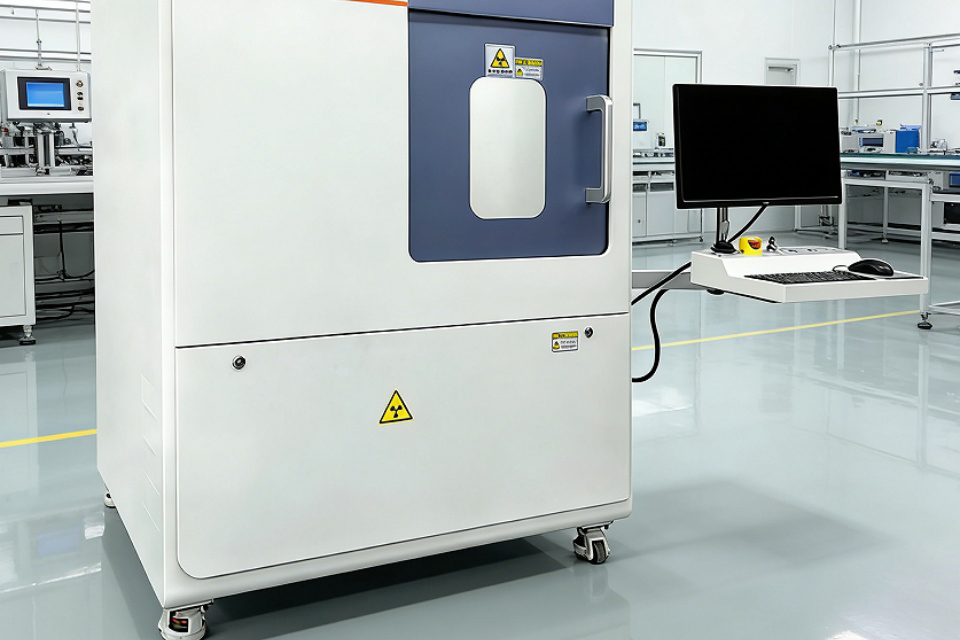
En SMT pick and place machine cost is never just the machine, and anybody who says otherwise is either new, selling, or conveniently forgetting the expensive bits around the edges—feeders, spare nozzles, preventive maintenance, compressed air quality, software training, line integration, board handling, ESD control, stencil printing consistency, reflow stability, and all the weird downtime nobody budgets for because it doesn’t fit nicely into a proposal sheet. That’s the trap.
And the trap gets worse when support is thin.
I push buyers toward formación y asistencia posventa early because I’ve seen “cheap” machines become expensive by month four. Not because the machine was junk, necessarily. Sometimes the hardware was fine. The real problem was onboarding, maintenance cadence, library discipline, feeder handling, and nobody on site knowing how to recover quickly when the line burped.
Here’s my unpopular take: used equipment is not automatically smart.
Sometimes it is. Sometimes it’s a steal.
Sometimes it’s a minor disaster in slow motion.
If the refurbished platform comes with healthy feeders, calibration history, sane software, parts access, and real support, great—you may have something. But if it’s cheap because the ecosystem is thin and the service chain is basically email roulette, then you didn’t buy value. You bought suspense.
A better decision frame for ROI
I like simple filters.
If your shop runs repeat jobs, stable feeder maps, predictable libraries, and enough throughput to keep the placer busy, the business case is easier. If your shop runs prototypes, ECO-heavy builds, and constant SKU churn, the case can still work—but only if the platform is built for fast recovery from change, not just high-speed placement in a steady-state fantasy.
That’s the split.
Capacity vs. agility.
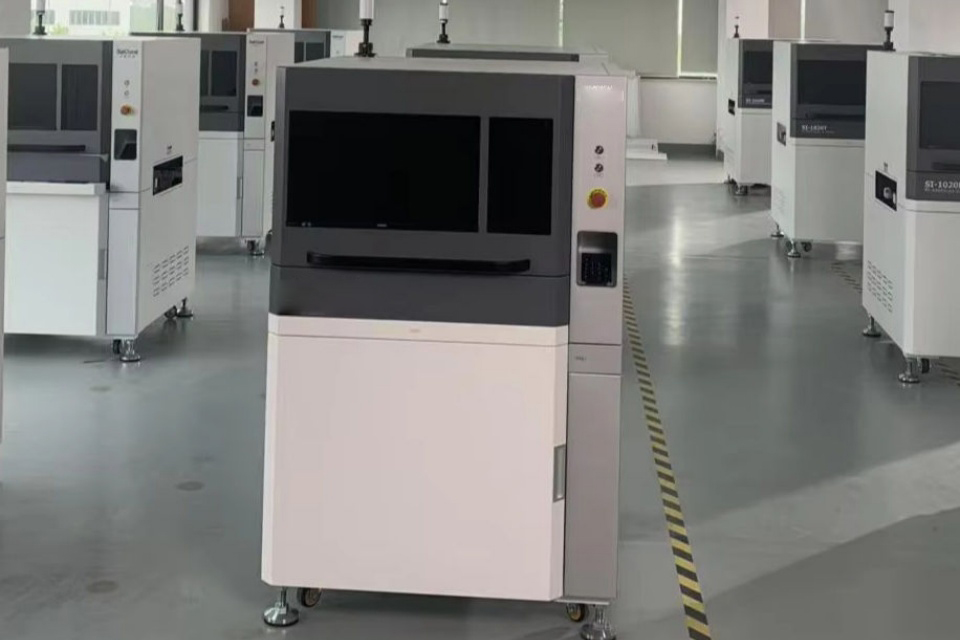
And I know which side small-batch manufacturers should obsess over. Agility. Every time. The Auburn research hints at the same thing: manufacturers still rely heavily on vendors and peers when they decide and implement technology, which tells me the real buying battle is still won with proof, not slogans. Good. It should be. Ask for a demo with your own data—your BOM, your centroid file, your package mix, your ugly edge cases. Then read actual casos de clientes and see what happened after install, not just before PO. (eng.auburn.edu)
What I would not compromise on
I wouldn’t compromise on feeder availability.
I wouldn’t compromise on programming workflow.
I wouldn’t compromise on service response.
I wouldn’t compromise on operator training.
And I definitely wouldn’t drop a new placement machine into a shaky line and call that a strategy. If print quality is wandering, conveyors are flaky, oven profiling is sloppy, or inspection is weak, then the placer won’t save you. It’ll just make the upstream weakness more expensive.
So when someone asks me how to choose a pick and place machine, my answer isn’t glamorous. Buy the platform that fits your real board mix, your actual job-change rhythm, and the support reality you can verify. Not the one that flatters the owner’s future-growth speech. Small-batch manufacturers get burned when they buy for the factory they hope to have instead of the one they actually run on Tuesday morning.
Preguntas frecuentes
What is a good pick and place machine for small batch manufacturers?
A good pick and place machine for small batch manufacturers is a flexible SMT placement system that minimizes setup time, handles frequent SKU changes, supports common feeder formats, and maintains repeatable accuracy on fine-pitch parts without forcing the buyer into an oversized, support-heavy production line. That’s the clean definition. In real life, I’d add this: if the software irritates your engineers and the feeder strategy is a mess, the machine won’t feel “good” for long.
What is pick and place equipment ROI?
Pick and place equipment ROI is the total financial return created when automation cuts direct placement labor, reduces setup waste, lowers defect and rework rates, shortens lead times, and brings outsourced PCB assembly work back in-house faster than the combined cost of equipment, training, maintenance, and floor-space changes. But most shops miss the ugly part—the ROI often comes from fewer disruptions, not just fewer hands.
What is the real SMT pick and place machine cost?
The real SMT pick and place machine cost is the full installed cost of ownership, not the invoice price, and it includes feeders, nozzles, spare parts, software licenses, training, air supply, electrical work, conveyors, stencil printing, reflow, maintenance, and the productivity lost when support or parts are weak. So no, the purchase order number isn’t the real number. Not even close.
Is a used pick and place machine worth it?
A used pick and place machine is worth it when the platform still has dependable feeder availability, local service access, calibration support, software usability, and spare parts coverage; without those, a lower purchase price often turns into slower changeovers, longer downtime, and a second purchase nobody planned for. I’ve seen both outcomes. The difference is usually ecosystem health, not the sticker.
What is the best pick and place machine for low volume production?
The best pick and place machine for low volume production is usually the model that gives the fastest validated changeover, the simplest programming flow, and the most stable support package for your actual component mix, rather than the machine with the highest advertised components-per-hour figure. That’s the definition. My blunt version? Recovery speed beats bragging rights in low-volume SMT.
If you want a faster way to sanity-check your options, don’t start with brand hype. Start with your boards, your feeder plan, your staffing reality, and your weekly changeover count, then ask for a recommendation built around the work you actually run. A practical next step is to contactar con el equipo with your component mix, target throughput, and budget range, and ask for a proposal that reflects real small-batch production instead of showroom fantasy.