When planners copy last year’s spend, add an inflation factor, and call the result an SMT maintenance budget, they erase equipment age, feeder population, utilization, service-contract exposure, spare-parts lead times, and the financial damage caused by stopping the line at precisely the wrong moment.
Why would finance trust that number?
I would not. My blunt view is that most annual SMT equipment maintenance costs are not truly forecast; they are negotiated guesses wrapped in spreadsheet formatting. A serious forecast starts at the asset and task level, separates cash expense from downtime exposure, and shows management what happens when production volume, failure frequency, or parts prices move against the base case.

What an SMT Maintenance Budget Must Actually Cover
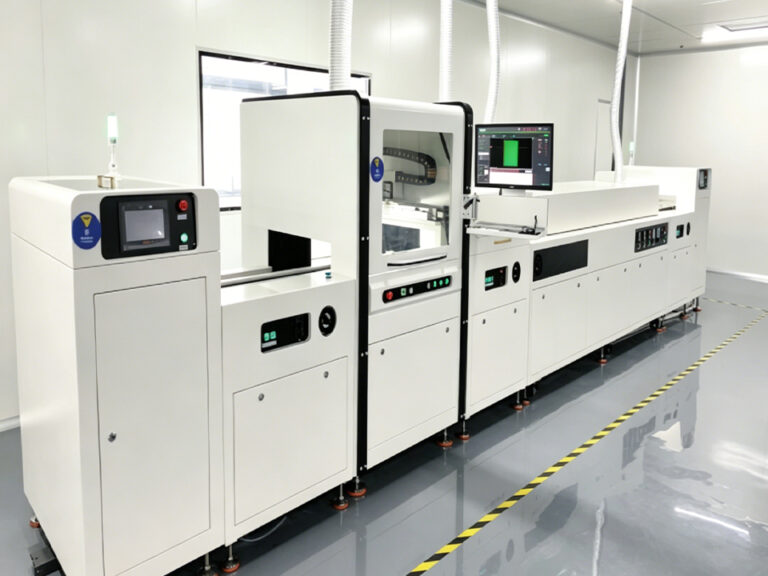
An SMT maintenance budget is a 12-month financial plan for keeping printers, SPI systems, placement machines, feeders, reflow ovens, conveyors, AOI equipment, compressors, and supporting utilities within their required operating condition.
It should capture six distinct cost groups:
- Planned maintenance labor
- Scheduled parts, filters, belts, seals, nozzles, and consumables
- Lubricants and cleaning materials
- Calibration, software, licenses, and service contracts
- Expected corrective-maintenance costs
- Maintenance-related production downtime
Do not mix these categories too early. A $15,000 OEM service agreement is a committed cash expense. A 25% probability of a $20,000 servo failure is a $5,000 expected risk. Four hours of planned line downtime at a $2,400 hourly contribution margin represents $9,600 in economic exposure, but it may not belong in the maintenance department’s cash budget.
Those numbers answer different questions. Combining them into one opaque total makes the forecast harder to defend.
Start With the Asset Register, Not Last Year’s Spending
The asset register is the spine of SMT equipment maintenance planning. For every machine, record:
- Manufacturer, model, serial number, and installation date
- Current operating hours and expected annual hours
- Shift pattern and utilization
- Warranty and service-contract status
- OEM maintenance intervals
- Last preventive-maintenance date
- Known repeat failures
- Installed software and license-renewal dates
- Approved lubricant and replacement-part numbers
- Supplier lead times
- Replacement value and remaining service life
Include feeders as a population, not an afterthought. A plant may have two placement machines but 300 tape feeders, each containing springs, gears, motors, sensors, and wear surfaces. The feeder repair budget can quietly exceed the apparent machine-maintenance budget.
Count everything.
When I pressure-test a forecast, I also ask whether the asset register reflects equipment that has been moved, cannibalized, placed in storage, or kept alive by parts taken from another machine. If finance sees six machines while maintenance knows only four are production-ready, the forecast is already compromised.
Convert Maintenance Tasks Into Annual Cost
Calculate each planned task separately:
Annual task cost = asset quantity × annual frequency × labor hours × burdened labor rate + parts + consumables + vendor charges
Suppose two placement machines each need quarterly service requiring six technician-hours. At a burdened rate of $48 per hour:
2 machines × 4 services × 6 hours × $48 = $2,304 annual labor
Then add belts, filters, grease, calibration tools, and any external technician charges. Repeat the calculation for printers, conveyors, ovens, SPI, AOI, feeders, compressors, and extraction systems.
Use operating hours when the OEM interval is meter-based. A machine requiring lubrication every 500 hours needs eight events when forecast utilization is 4,000 hours—not the four events somebody remembers performing last year.
And beware averages. A $12,000 repair occurring once every four years creates a $3,000 annual expected cost, but it does not create a neat $250 monthly invoice. The cash forecast needs timing and liquidity; the risk model needs probability.
Build a Controlled Lubricant and Consumables Ledger
Grease is cheap. Mistakes are not.
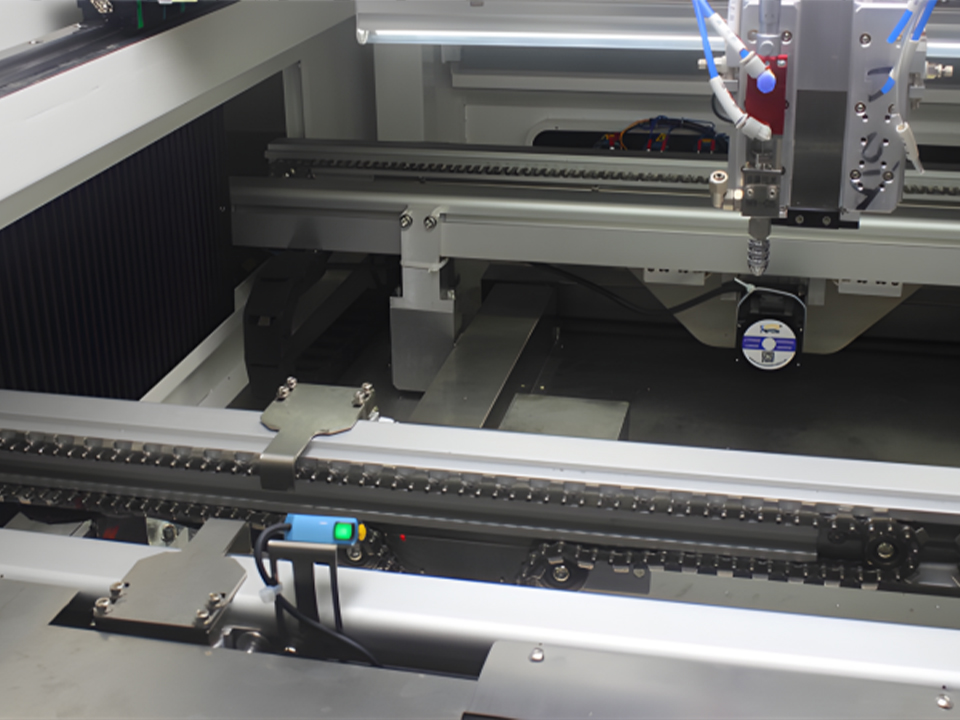
Lubricants should be budgeted by approved product, machine location, application quantity, service interval, package size, shelf life, and replenishment lead time. “General grease” is not an acceptable material specification for a precision ball screw or linear guide.
Record the base oil, thickener system, NLGI grade, operating-temperature range, and OEM approval. Lithium-complex, polyurea, silicone, PFPE, PTFE—whose repeating unit is commonly represented as ((C_2F_4)_n)—and molybdenum disulfide (MoS_2) products are not casually interchangeable.
For example, the supplier specification for OKS 402 NLGI 2 industrial grease lists a mineral-oil base and an approximate operating range of −30°C to +120°C. The OKS 470 lubricant for SMT ball screws and guides is presented for bearings, ball screws, guides, and sliding components, with 100 g, 400 g, and 1 kg package options.
Platform-specific materials need separate stock codes. The listed model codes for Panasonic MP grease used in SMT equipment include N510006423AA and several N990PANA variants. A broad industrial product such as PS2 NLGI 2 grease should remain a distinct item rather than being treated as an automatic substitute.
Supplier pages are procurement inputs, not engineering approval. Verify every lubricant against the machine manual, technical data sheet, safety data sheet, seal compatibility, and existing lubricant before purchasing it.
My hard rule: if maintenance cannot identify what grease is already inside the component, do not mix in a new one merely because its temperature range looks impressive.
Forecast Parts, Labor, Contracts, and Downtime Separately
A useful SMT maintenance cost forecast has three layers.
Committed costs
These include service agreements, CMMS subscriptions, software licenses, planned calibration, recurring inspections, and scheduled replacement kits. Their timing should normally be known.
Usage-driven costs
These change with operating hours, board volume, changeover frequency, feeder cycles, dust loading, and product mix. Filters, nozzles, belts, lubricants, and technician hours commonly belong here.
Risk-driven costs
These include servo amplifiers, motors, cameras, controllers, heating modules, blowers, lead screws, and discontinued boards. Calculate expected cost as:
Expected corrective cost = probability of failure × parts cost + labor + freight + expected downtime
Use failure modes, not one generic “breakdown” percentage. A $2,000 blower with a 30% annual failure probability creates a different purchasing problem from a discontinued $18,000 controller with a 5% probability and a 16-week lead time.
The second item may deserve a physical spare even though its mathematical expected cost is lower. Expected value does not understand production survival.
Use Real Evidence Without Pretending It Is SMT-Specific
Inflation matters, but a flat percentage is lazy. The U.S. Bureau of Labor Statistics reported a 3.3% increase in final-demand prices during 2024, after 1.1% in 2023. That is a defensible macroeconomic reference—not permission to increase every spare part, contract, and labor line by exactly 3.3%.
Apply escalation by category:
- Use current supplier quotations for proprietary parts.
- Use contracted increases for OEM service.
- Use approved wage assumptions for internal labor.
- Use freight scenarios for imported emergency spares.
- Use foreign-exchange assumptions when purchases are denominated in JPY, EUR, or CNY.
Downtime assumptions also require restraint. A NIST Manufacturing Extension Partnership case published in January 2024 reported outcomes including an 18% reduction in downtime, revenue growth from $3.5 million to $7 million, and 18 new jobs. Those results demonstrate the possible scale of operational improvement, but they are not a universal promise and should never be pasted directly into an SMT return-on-investment model.
The same skepticism applies to predictive technology. NIST’s 2024 economic analysis of digital twins argues that both insufficient maintenance and excessive maintenance can create costs; for some assets, tracking heat and vibration may be economically stronger than building a full digital replica.
That is the useful lesson. Buy enough information to improve the decision—not every sensor, dashboard, and software module a vendor can invoice.
Worked Annual SMT Maintenance Cost Forecast
Consider one two-shift SMT line scheduled for 4,000 operating hours:
- One solder-paste printer
- One SPI machine
- Two placement machines
- 180 active feeders
- One eight-zone reflow oven
- One AOI system
- Conveyors and supporting utilities
- Burdened technician rate: $48 per hour
- Constrained-line contribution margin: $2,400 per hour
A practical base-case forecast might look like this:
| Cost category | Forecast method | Annual cash budget | Economic memo cost |
|---|---|---|---|
| Planned internal labor | Task hours × frequency × $48 | $38,000 | — |
| OEM and third-party service | Contract and quoted visits | $30,000 | — |
| Scheduled parts and feeder repairs | BOM quantities × quoted prices | $44,000 | — |
| Lubricants and cleaning consumables | Interval demand plus package rounding | $9,000 | — |
| Calibration and inspection | Vendor quotations | $12,000 | — |
| CMMS and diagnostic software | License schedule | $6,000 | — |
| Training and certification | Approved annual plan | $7,000 | — |
| Expected corrective reserve | Failure probability × event cost | $35,000 | — |
| Forecast contingency | Controlled allowance on exposed spend | $14,000 | — |
| Planned production downtime | 20 hours × $2,400 | — | $48,000 |
| Total | $195,000 | $48,000 |
The annual maintenance cash budget is $195,000. The broader SMT line operating-cost forecast is $243,000 after adding planned downtime.
Do not hide the $48,000 inside labor or repairs. Show it as a separate economic cost so operations, maintenance, and finance can challenge the assumed hours and contribution margin.
Turn the Annual Number Into a Monthly Forecast
Annual totals conceal cash-flow shocks. Map every task, contract, replacement, and renewal to a month.
A sensible pattern might include:
- Monthly feeder inspection and repair allowance
- Quarterly placement-machine servicing
- Semiannual printer and SPI calibration
- Reflow exhaust and blower work before the high-volume season
- Annual AOI calibration during the plant shutdown
- Software renewals in their contractual months
- Long-lead spare purchases before the predicted risk window
Then run three scenarios:
| Scenario | Main assumptions | Forecast result |
|---|---|---|
| Base | 4,000 hours, normal failure rates, current production plan | $195,000 |
| High utilization | 4,800 hours, more PM events, 15% higher wear-part use | $218,000 |
| Stress | High utilization plus one controller failure and expedited freight | $254,000 |
The delta matters more than false precision. Management now knows that $195,000 funds the expected year, while $254,000 represents a plausible adverse case.
Make CMMS Maintenance Budgeting Auditable
A CMMS should connect every budget line to an asset, task, work order, purchase, and variance reason. If it merely stores PDFs, it is a digital filing cabinet.
At minimum, configure:
- Standard job plans with expected labor and materials
- Meter-based and calendar-based triggers
- Failure-mode and cause codes
- Parts usage by asset
- Technician time at burdened cost
- Vendor and purchase-order references
- Planned versus emergency-work classification
- Monthly budget-versus-actual reporting
- Forecast-at-completion updates
Track forecast accuracy alongside maintenance performance. Useful measures include planned-maintenance percentage, schedule compliance, mean time between failures, mean time to repair, emergency purchase value, spare-parts stockouts, and maintenance cost per operating hour.
But do not reward the team for spending exactly the budget. That creates ugly incentives: deferred work in an expensive month, unnecessary purchasing in December, and misclassified emergency repairs.
Reward forecast accuracy, equipment availability, defect control, and risk reduction together.
Best SMT Maintenance Budgeting Practices
The best SMT maintenance budgeting practices are surprisingly unforgiving:
- Build from assets, intervals, and operating hours.
- Separate committed, usage-driven, and risk-driven costs.
- Use expected-value modeling for failures.
- Flag unsupported parts by lead time and line-stoppage consequence.
- Keep downtime outside the cash budget but inside the economic forecast.
- Apply inflation assumptions by cost category.
- Maintain OEM-approved lubricant records.
- Show monthly cash timing.
- Run base, utilization, and stress scenarios.
- Reforecast quarterly instead of defending an obsolete annual number.
And one more: document exclusions. If facilities maintains compressed air, IT pays for servers, and quality owns calibration, say so. Otherwise, the same cost may be counted twice—or not at all.
Frequently Asked Questions
What should an annual SMT maintenance budget include?
An annual SMT maintenance budget is the 12-month financial plan for scheduled labor, approved consumables, replacement parts, calibration, software, service contracts, expected corrective work, and contingency, timed to the month in which each cost is likely to occur and tied to named assets, maintenance intervals, and operating hours.
It should also disclose maintenance-related downtime separately. Include printers, SPI, placement machines, feeders, reflow ovens, AOI equipment, conveyors, utilities, and any shared infrastructure owned by the maintenance cost center.
How do you calculate annual SMT maintenance costs?
The most defensible way to calculate SMT maintenance costs is to multiply every planned task by its annual frequency, labor hours, burdened rate, part quantity, and unit price, then add vendor contracts, calibration, CMMS fees, expected-value corrective failures, training, price escalation, and a separately disclosed contingency reserve.
For meter-based tasks, calculate frequency from forecast operating hours. For corrective risk, multiply each failure probability by its full event cost, including parts, labor, freight, and expected downtime.
How much contingency should an SMT maintenance budget carry?
A maintenance contingency is a ring-fenced allowance for cost uncertainty that remains after known work and quantified failure risks have been budgeted; for a stable line, I would start testing 5–10% of exposed variable spend, while aging, unsupported, or recently relocated equipment may justify 10–20%, never as a silent plug.
Exclude fixed contracts from the contingency base unless contract scope or pricing is genuinely uncertain. State the percentage, dollar amount, calculation base, and release authority.
How does a CMMS improve maintenance budgeting?
CMMS maintenance budgeting is the use of asset records, meter readings, preventive-maintenance schedules, work-order history, failure codes, inventory usage, vendor invoices, and labor time inside a computerized maintenance management system to generate an auditable forecast by machine, line, month, cost center, and maintenance type.
Its value depends on data discipline. Missing labor hours, vague failure descriptions, and unrecorded parts withdrawals will produce a polished but unreliable forecast.
Should downtime be included in the maintenance budget?
Downtime cost is the economic value lost while an SMT asset or linked production line cannot make saleable output, calculated from constrained-line contribution margin rather than revenue; it belongs in the cost forecast and investment case, although finance may keep it outside the maintenance department’s cash budget to prevent double counting.
Show planned and unplanned downtime separately. This lets management compare the cost of performing maintenance with the cost of postponing it.
Build a Forecast Management Can Defend
Stop submitting last year’s number with a percentage added.
Build the forecast from machines, hours, failure modes, approved materials, supplier quotations, and production economics. Then show the base case, stress case, cash timing, assumptions, and exclusions on one page.
Need help pricing the next maintenance cycle? Request an asset-by-asset quotation for SMT spare parts, approved lubricants, and planned service requirements before the next budget is locked.