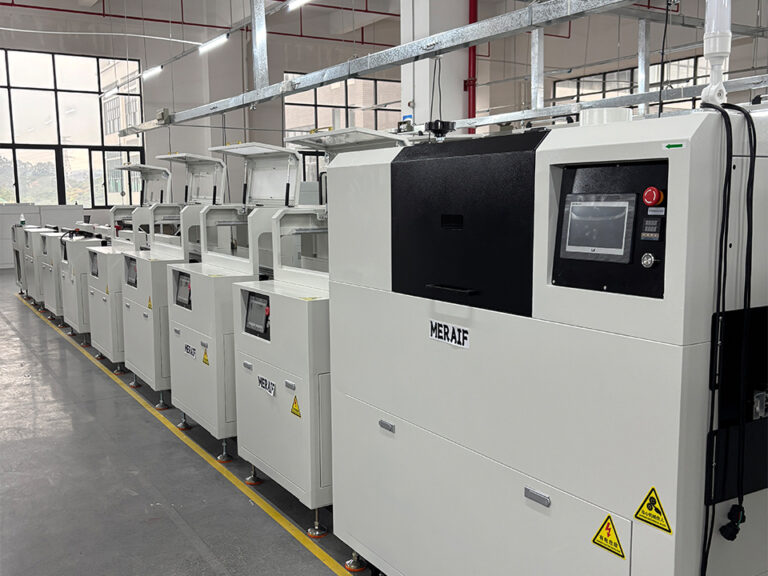
Nozzle wear rarely looks dramatic at first. It shows up as a slightly weaker pickup, a stubborn cleaning cycle, a soldering inconsistency that gets blamed on setup, or a defect trend that sits just low enough to escape management attention.
That is why this topic matters. In practice, the nozzle itself is not the real cost center. The real cost comes from the chain reaction around it: rework, false troubleshooting, line stoppages, unstable quality, extra labor, and the familiar habit of squeezing one more week out of a tool that has already started charging the factory interest.
Why nozzle wear becomes a cost problem
Most factories still evaluate nozzle replacement through a purchasing lens. I think that is the first mistake. A worn nozzle does not just consume budget; it distorts the economics of the entire process around it.
In selective soldering, this is not theoretical. Coventry University researchers and Pillarhouse International described nozzle wear as a combined chemical-and-mechanical problem caused by the interaction between flowing solder and the nozzle surface, which is exactly why wear eventually turns into lost productivity rather than a simple consumable expense. In a separate 2024 conference paper, the same research group emphasized that selective soldering has become a mature process with many variables across fluxing, preheating, and soldering, meaning nozzle condition has to be managed as part of process engineering, not treated as an isolated spare-parts issue. (Coventry University)
The same management lesson is showing up more broadly across manufacturing. In Reuters’ July 2024 coverage of a Lucidworks study, manufacturers were described as slowing planned generative AI rollouts because of accuracy concerns, even while 58% still planned to increase AI spending in 2024. My reading is simple: plants want better prediction, but they still do not trust black-box maintenance logic enough to let it make replacement decisions on its own. (Reuters)
What nozzle wear looks like on the line
Nozzle wear signs are usually modest before they become expensive. On SMT lines, the pattern often starts with intermittent mis-picks, inconsistent centering, vacuum instability, more frequent manual cleaning, or rising placement retries on a narrow set of components. On selective solder equipment, the symptoms shift toward dewetting, poor solder flow consistency, touch-up work, and longer process tuning after changeovers.
That distinction matters. A pick-and-place nozzle on a Panasonic NPM or Yamaha YSM platform is not living the same life as a wetted selective solder nozzle. They fail differently, they create different quality signatures, and they should never be forced into one generic replacement policy. If a team is sourcing across multiple formats, it helps to separate standard SMT nozzle inventory from selective wave solder machine nozzle stock so wear history can be tracked by process, not just by part number.
The best teams do one thing consistently: they define nozzle wear signs before the operator has to improvise. That means documenting visible damage, dimensional drift, abnormal cleaning frequency, recurring defect codes, and product-family-specific instability. Once that baseline exists, “when should you replace a nozzle” stops being a debate and starts becoming a control decision.
What actually shortens nozzle lifespan
Nozzles wear out because the process keeps attacking them. Heat, contact, chemistry, contamination, poor cleaning technique, and wrong application all work together, which is why nozzle lifespan can vary dramatically even across tools that look identical in inventory.
The Coventry work is useful here because it cuts through the lazy explanation. The 2023 paper ties nozzle wear to the solder-nozzle interaction itself, while the 2024 paper frames selective soldering as a variable-rich process in which board design, component placement, and manufacturing choices all influence quality and processing difficulty. That is a polite academic way of saying the nozzle does not fail alone; the process helps kill it. (Coventry University)
In real production, the common accelerants are familiar: abrasive manual cleaning, the wrong nozzle matched to the component or pad geometry, poor storage, prolonged thermal exposure, unstable vacuum performance, contamination buildup, and a maintenance culture that confuses aggressive cleaning with good discipline. I have seen good nozzles ruined by “care” more often than by honest runtime.
How to build a nozzle replacement schedule that works
A nozzle replacement schedule should be condition-based first, time-based second. That is the cleanest way to manage tool costs without replacing healthy nozzles too early or forcing damaged ones to stay in service too long.
A practical schedule uses three layers. First, a routine inspection interval by shift or by batch. Second, a trend layer using defect history, alarm frequency, cleaning time, and line performance by nozzle ID. Third, a hard replacement trigger tied to either measurable wear or rising process cost. That is the point where a professional schedule beats guesswork.
This is also where internal organization matters more than people admit. A structured maintenance and spares program gives the replacement rule somewhere to live, while a cleaner spare parts and accessories workflow prevents operators from making substitution decisions at the stockroom shelf. If the team is still learning how to standardize inspection criteria, formal training and after-sales support is usually a better fix than another emergency order.
How to reduce nozzle wear before replacement
The goal is not to make nozzles last forever. The goal is to extend useful life without degrading quality. Those are different ambitions, and too many factories confuse them.
The best way to reduce nozzle wear is to remove avoidable stress from the process. Standardize cleaning methods. Match nozzle geometry to the actual board mix. Keep maintenance intervals predictable. Track wear by application, not just by SKU. Quarantine tools that start behaving inconsistently instead of recycling them across machines because they “still look okay.”
There is also a bigger industry point here. NIST’s 2024 AI for Resilient Manufacturing initiative showed that U.S. manufacturing policy is now actively funding more resilient, data-driven operations. That is directionally important. But on the shop floor, the answer is still more disciplined data capture before it becomes more sophisticated analytics. Nozzle maintenance gets better when plants know what failed, where, when, and under which product conditions. (NIST)
A simple replacement model for tool cost management
The easiest mistake is waiting for visible failure. By the time a nozzle is obviously bad, the factory has usually already paid for that delay through rework, stoppages, and extra labor.
A better approach is to replace when one of three triggers appears: the nozzle is out of dimensional or process tolerance, its cleaning requirement rises beyond the normal range, or the quality cost of keeping it exceeds the replacement cost. That last trigger matters most. It is the difference between accounting for price and accounting for impact.
| Nozzle condition | Typical line symptoms | Cost effect | Recommended action |
|---|---|---|---|
| Healthy | Stable pickup or solder flow, normal cleaning time, no drift | Predictable cost per board | Keep running and inspect normally |
| Early wear | More cleaning, intermittent instability, minor defect creep | Hidden labor begins rising | Tag, monitor daily, plan replacement |
| Functional wear | Repeat mis-picks, weak vacuum, dewetting, recurring touch-up | Rework and micro-stoppages exceed part price | Replace within the current maintenance window |
| End of life | Frequent rejects, dropped parts, severe flow inconsistency, operator workarounds | Downtime and scrap dominate total cost | Replace immediately and quarantine similar stock |
That table is not complicated because it does not need to be. Good tool cost management is rarely about sophisticated math. It is about refusing to let a low-cost item produce high-cost instability.
FAQs
When should you replace a nozzle?
A nozzle should be replaced when measurable wear begins to increase mis-picks, vacuum loss, cleaning frequency, dewetting, solder instability, or dimensional drift beyond the normal process baseline, because that is the point where the hidden cost of keeping it in service becomes higher than the direct price of replacement. In practice, the best time to replace a worn nozzle is just before performance drift starts creating repeat defects, not after.
What are the main nozzle wear signs?
Nozzle wear signs are the physical and process indicators that the tool surface, opening, coating, or wetted zone is no longer holding stable performance, including chips, ovalized tips, weak pickup, poor solder flow, abnormal dewetting, rising alarm frequency, and repeat manual intervention on otherwise stable jobs. The earliest sign is often inconsistency, not visible damage.
How do you reduce nozzle wear?
Reducing nozzle wear means controlling the main wear drivers before they compound into failure, especially abrasive cleaning, wrong nozzle selection, excessive heat exposure, contamination buildup, unstable vacuum conditions, and poor storage or handling between runs. The most effective nozzle maintenance programs reduce unnecessary stress first and replacement cost second.
What is the best nozzle replacement schedule?
The best nozzle replacement schedule is a condition-based inspection and replacement system that combines routine checks, defect and alarm trends, cleaning frequency, and nozzle-specific performance history, instead of relying only on a fixed monthly or quarterly calendar that ignores actual process severity. A fixed interval can support the system, but it should not control it.
Why does nozzle wear affect tool cost management so much?
Nozzle wear affects tool cost management because the nozzle price is only the visible cost, while the real financial impact shows up through scrap, rework, line stoppages, troubleshooting time, customer risk, and the labor burden created when a worn tool stays in service past its useful life. Small tools create large cost distortion when they fail slowly.
If this article matches the way your line actually runs, the next step is straightforward: review your highest-use nozzle SKUs, tie them to defect and maintenance history, and clean up the sourcing path through your SMT nozzle range or your broader maintenance and spares support. For plant-specific recommendations on replacement intervals, sourcing, or cross-brand compatibility, use the contact page and build the schedule around process evidence, not habit.