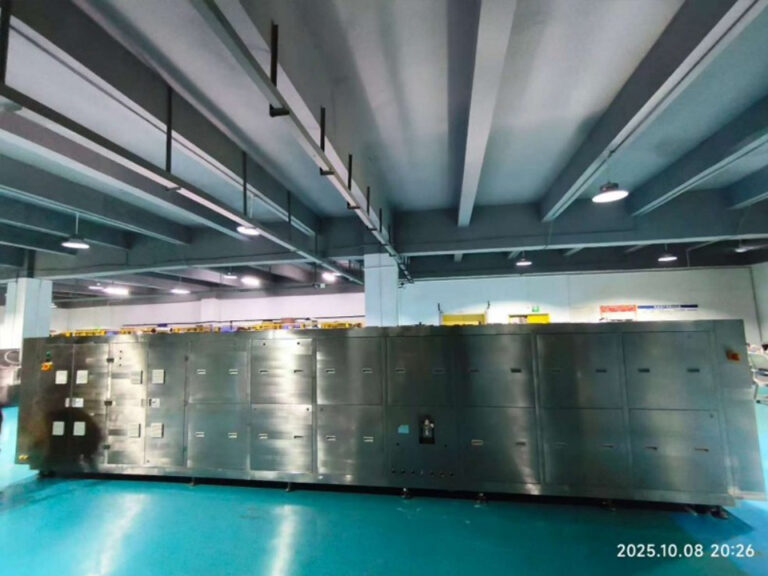
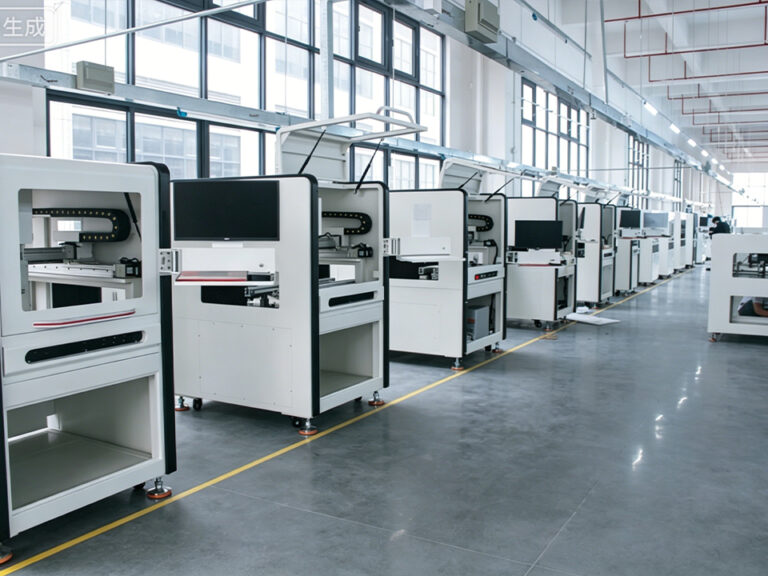
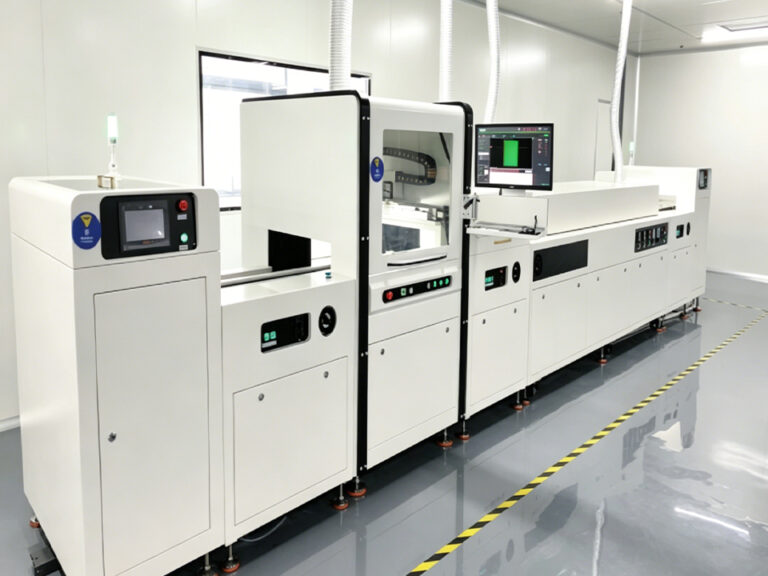
People love to blame the pick and place machine when a line starts throwing NO-PICK, dropping parts, or doing that annoying “component fly-off” thing. But a lot of the time, the real root cause sits right at the tip: the placement head + vacuum nozzle.
Here’s my take (and yeah, I’ll argue it): if you treat nozzles like “small cheap consumable,” your FPY and OEE will keep hurting. If you treat them like a process tool, you get stable placement, less babysitting, and way smoother ramp.
Meraif focuses on full SMT plant solutions—equipment selection, line design, install, calibration, commissioning, and training—so this nozzle topic shows up in real projects all the time.
Placement Head Technology and Vacuum Nozzle Basics
A placement head is basically a fast robot wrist with Z motion, vacuum control, and centering logic. Your nozzle is the “hand.” If the hand is wrong, the whole line feels dumb.
On pickandplacemachine.com, you’ll see Meraif covers the full SMT ecosystem—pick and place machines, feeders, reflow, AOI/SPI, cleaning, nozzles, consumables, and more.
That matters because nozzle issues are rarely “nozzle only.” They link to feeders, paste print, maintenance habits, and operator skill.
Pick-and-Place Vacuum Nozzle 5-Stage Cycle
I like to explain nozzle behavior using a simple cycle. It keeps troubleshooting clean and fast.
Vacuum Nozzle Pickup
Pickup sounds easy: go down, turn on vacuum, lift. In reality, pickup depends on:
- Pick height (too high = air leak, too low = hit part or tape)
- Top surface seal (flat top is happy; rough top leaks)
- Nozzle tip match (wrong ID/OD gives wobble or weak hold)
Shop-floor pain: you’ll see random NO-PICK, even though feeder looks ok.
Source type: placement head OEM practice + line debug experience
Vacuum Nozzle Hold and Transport
Once you lift the part, the head accelerates like crazy. If the hold isn’t solid, the part micro-slips and shows up as:
- vision re-center taking longer
- angle drift
- placement offset that “comes and goes”
Source type: placement head dynamics + common SMT line behavior
Vacuum Nozzle Placement and Release
Release is where many lines get weird. It’s not just “vacuum off.” Most systems use a vacuum break + blow-off timing so the part leaves clean, not sticky.
Symptoms of bad release timing:
- part sticks on nozzle (then drops later… worst)
- part drags and lands skew
- intermittent missing component
Source type: placement head pneumatic control practice
Vacuum Force Limit and Nozzle Tip Size Selection
Here’s the physics that people forget:
Vacuum holding force ≈ pressure difference (ΔP) × nozzle area (A)
So yes, nozzle size matters. But bigger isn’t always better, because:
- big tip can collide with neighbors
- big tip can pick wrong from tight pockets
- big tip may not fit tiny chips
Practical rule: match nozzle tip to the part family, then verify with real run, not only datasheet.
Source type: basic vacuum principle + nozzle selection practice
Z-Axis Compliance and Pick Height Tuning
In real production, your Z is never “perfect forever.” You fight:
- tape thickness variation
- pocket depth variation
- slightly warped PCB
- mixed package heights on same program
This is why many heads use Z compliance (a bit of “give”) and careful pick height recipes.
If you’re doing HMLV (high-mix low-volume), Z tuning becomes a daily thing. If you ignore it, you get phantom alarms and operators start “fixing” it by slowing the line. That’s a bad trade.
Source type: placement head mechanical design + HMLV line reality
Vision Centering and Vacuum Sensing for Mis-Pick Detection
A good line doesn’t just pick parts. It checks if it picked the right way.
Two common signals:
- Vision centering: camera verifies part position/angle on nozzle
- Vacuum sensing: confirms “something is actually there”
When vacuum is weak, vision starts working overtime. When vision is blind (dirty nozzle / bad background), you get false rejects and extra stop time.
This is one reason Meraif pushes training + after-sales support as part of a turnkey line handoff. It’s not “optional service,” it’s uptime insurance.
Nozzle Maintenance, Wear, and Cleaning
If you want a dirty truth: most nozzle failures are not dramatic. They’re slow.
Common killers:
- micro-clog from dust
- tip wear (seal gets worse)
- sticky contamination (flux mist, tape residue, oily fingerprint)
Then vacuum loss creeps in. The line still runs, but yield drops and defects get “random.”
If your factory says “we clean nozzles sometimes,” that’s basically saying “we accept downtime later.” You need a simple routine: inspect, clean, verify vacuum, and rotate spares.
Meraif also supplies spare parts & accessories like nozzles and feeders, so you can keep a proper nozzle matrix in stock instead of panic-buying later.
Key Arguments Table for Placement Head Technology and Vacuum Nozzles
| Argument title (keyword) | What it means on the line | Typical pain you’ll see | Source type |
|---|---|---|---|
| Pick-and-Place Vacuum Nozzle 5-Stage Cycle | Debug by stage: pickup → hold → transport → place → release | “Random” NO-PICK, skew, fly-off, missing parts | OEM practice + line debug |
| Vacuum Force Limit (ΔP × A) | Tip size affects max hold force and stability | Drop parts at high accel, weak grip on heavy parts | Vacuum principle |
| Z-Axis Compliance and Pick Height | Z recipe must match tape + part height reality | Intermittent pickup fails, crushed parts, pocket scratches | Mechanical practice |
| Vision Centering and Vacuum Sensing | Closed-loop checks reduce silent defects | More stops, more rejects, unstable placement offsets | Common machine architecture |
| Nozzle Maintenance and Wear | Clean + inspect avoids slow vacuum loss | “Weird” drift in yield, more rework, more babysitting | Maintenance best practice |
SMT Line Integration: Laser Cutting Machines and Stencil Quality
This part surprises many buyers: you can chase nozzles for days, but the real trigger is upstream.
Bad stencil aperture quality or inconsistent stencil condition can lead to:
- paste volume variation
- component float during reflow
- tombstoning that looks like placement error
- extra rework that people blame on “machine accuracy”
On pickandplacemachine.com, Meraif lists Laser Cutting Machines for PCB/SMT work, including stencil-focused models like MF-6080 Stencil Laser Cutting Machine and inspection equipment like MF-G6080 SMT Stencil Inspection, plus MF-6000PII UV Laser Cutting Machine.
So if your customer pain is “placement keep drifting,” don’t ignore stencil quality. It’s the quiet upstream troublemaker.
Turnkey SMT Line Solutions and Commercial Value for Buyers
If you’re a buyer, here’s the real business argument: nozzle stability is not a “nice-to-have.” It protects:
- OEE (less stoppage, less manual rescue)
- FPY (less rework, less scrap)
- changeover time (fewer emergency tweaks)
Meraif positions itself as a turnkey SMT line solutions expert—consultation, layout, integration, training, and run-ready delivery.
That’s useful because nozzle problems often sit between departments: process, maintenance, and production. A turnkey team can stop the finger-pointing faster.
And if you need OEM/ODM, bulk wholesale, or custom configuration, building the nozzle strategy into the whole line package is usually smoother than buying parts one-by-one. (Honestly, buying piece by piece is how many factories get stuck.)
Quick Troubleshooting Checklist for Vacuum Nozzles
| Symptom | Likely nozzle/head cause | Fast check (shop-floor level) | What to tell Meraif |
|---|---|---|---|
| NO-PICK spikes on one feeder | pick height off or tip seal weak | inspect tip, run vacuum test, verify pocket depth | feeder type + package size + nozzle model |
| Parts rotate or shift mid-air | wrong nozzle ID/OD or vacuum leak | check centering time + nozzle wear | part family + speed target + head type |
| Parts stick on nozzle after place | release timing / blow-off weak | watch placement slow-motion, check air line | board finish + part weight + placement speed |
| Yield drifts slowly over weeks | dirty nozzles + maintenance gap | clean + re-check vacuum + rotate spares | maintenance cycle + nozzle count + usage hours |