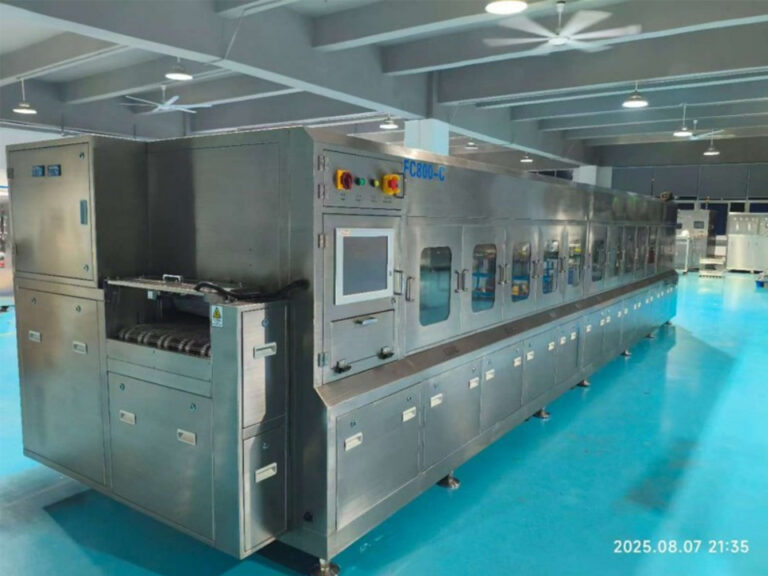
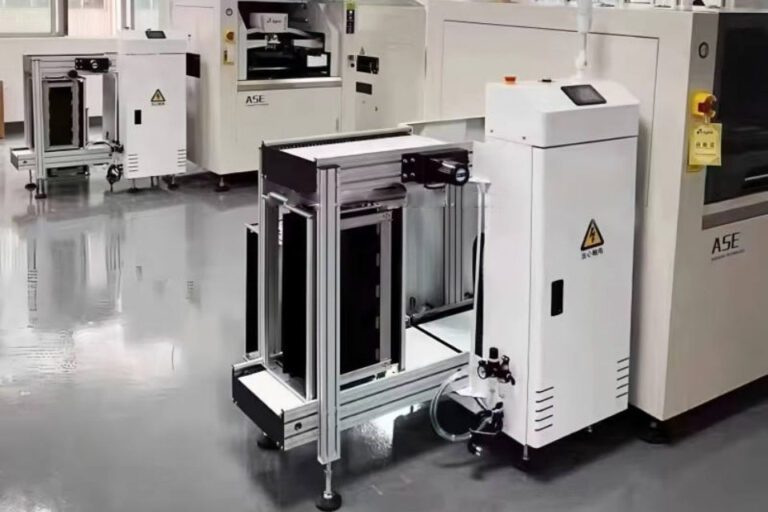
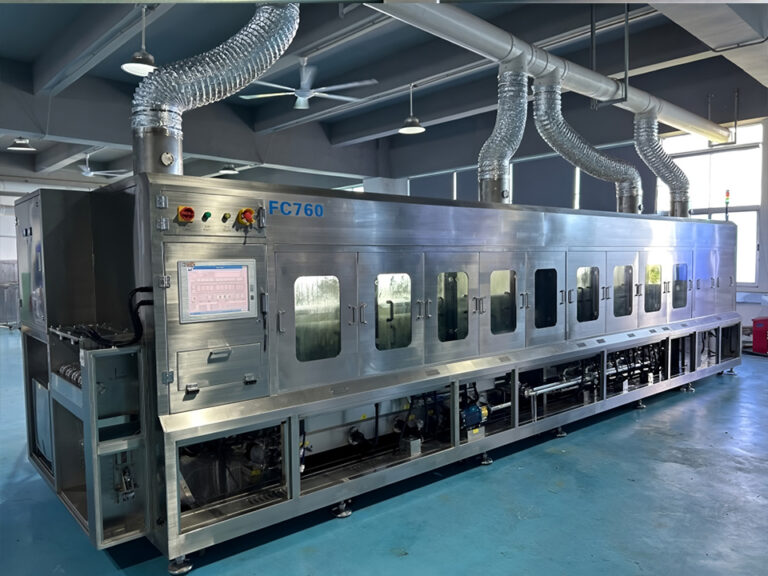
Machines rarely fail cleanly, and on a real SMT floor the first warning usually isn’t a dramatic stop but a messy little pattern—feeder indexing gets twitchy, nozzle vacuum starts slipping, servo current creeps upward, thermal zones drift a few degrees, AOI throws more noise than usual, and everybody pretends it’s “just one of those days.”
It usually isn’t.
I frankly believe this is where the industry lies to itself. Not always out of malice. More often out of habit. Plants say they want predictive maintenance, but what they really want is a shortcut past messy maintenance logs, inconsistent fault naming, missing spare parts, vague technician notes, and years of “we’ll clean that data later.” That shortcut doesn’t exist. Reuters reported in 2024 that 58% of manufacturing leaders planned to increase AI spending, yet only 20% of manufacturers’ planned AI projects had been implemented in the prior year, while 44% of manufacturing respondents cited accuracy concerns. That gap says a lot. Reuters (reuters.com)
Why Predictive Maintenance Matters More Than the Sales Pitch
But let’s start with money, because that’s what exposes bad theory fastest.
Reactive maintenance still burns cash in the dumbest possible way: line stops, scrap spikes, expedite fees appear, technicians get dragged into firefighting, and management suddenly acts shocked that a neglected bottleneck machine has become a business problem. NIST’s manufacturing analysis found that establishments relying heavily on reactive maintenance were associated with 3.3 times more downtime and 16 times more defects than peers at the low end of reactive maintenance. Among operations leaning more into preventive and predictive strategies, NIST associated stronger predictive maintenance use with 15% less downtime, an 87% lower defect rate, and 66% less inventory increase tied to unplanned maintenance. NIST (nist.gov)
That’s the real argument. Not “digital transformation.” Not “smart factory maturity.” Just basic economics.
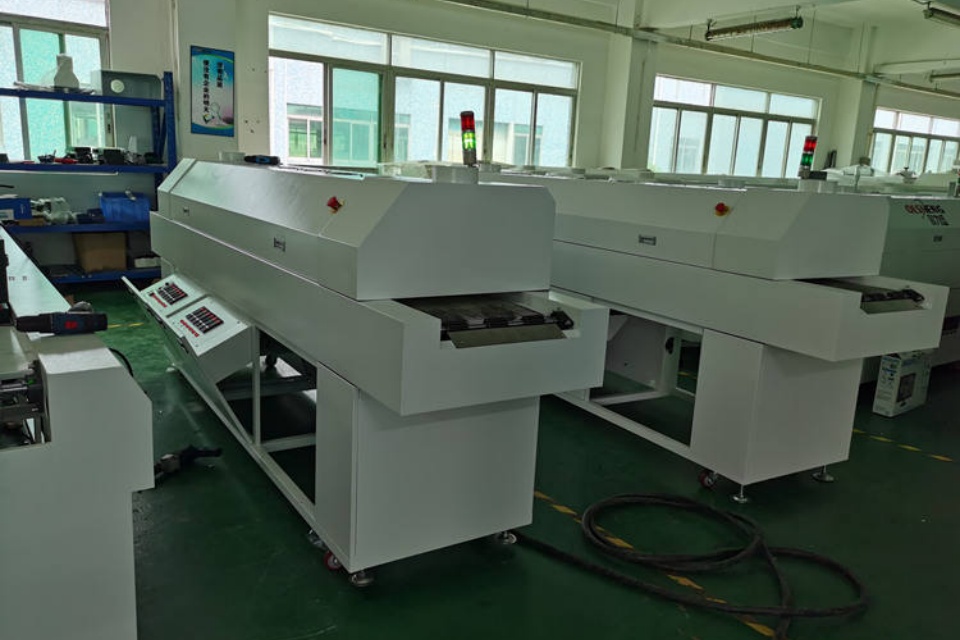
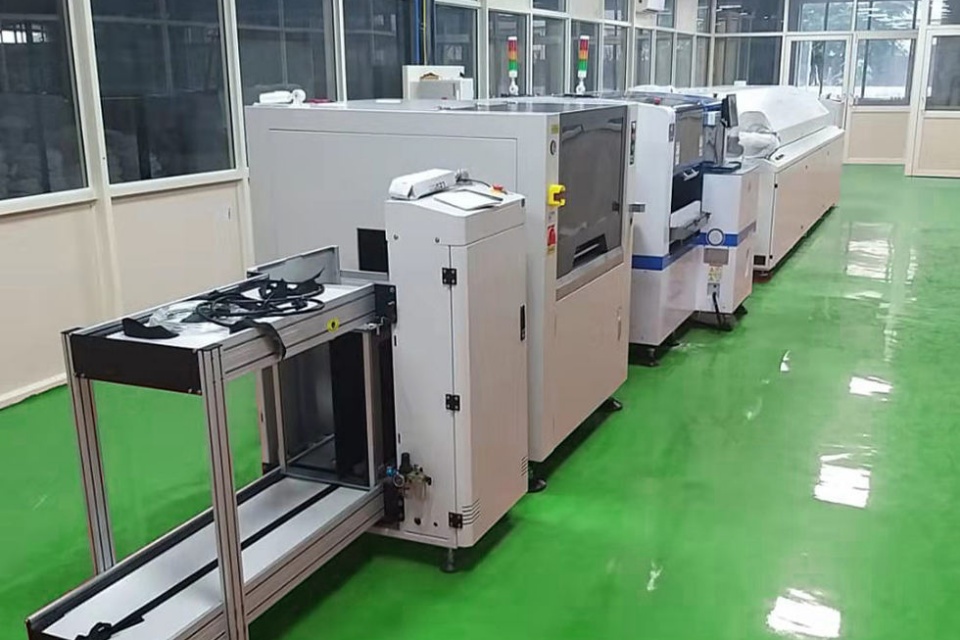
And on a line running a Yamaha YSM20R, Panasonic NPM-W2S, Heller 1936 MK7, Saki BF-Sirius 3D AOI, or Wickon thermal profiler, the pain compounds fast because the failure doesn’t stay local. A weak feeder can ripple into placement misses. A drifting reflow zone can mutate into yield loss. A transport-stage issue can back everything up upstream. One bad actor. Whole line suffers.
What Predictive Analytics for Maintenance Actually Means
Here’s the ugly truth: a lot of people still use “predictive maintenance” to describe glorified preventive schedules with prettier charts.
That’s not the same thing. NIST defines predictive maintenance as maintenance initiated from predictions of failure made using observed data such as temperature, noise, and vibration, while preventive maintenance is time- or cycle-based and reactive maintenance happens after failure. So, yes, the distinction matters. It’s the difference between servicing a machine because the calendar says so and servicing it because the machine is quietly telling you it’s getting into trouble. NIST (nist.gov)
From my experience, the good predictive maintenance software stacks do a few unglamorous things really well—they ingest machine-state data, align timestamps across systems that were never designed to talk cleanly to each other, establish baselines by asset and product family, detect drift before operators feel it, and rank alerts by operational consequence rather than by whichever sensor happens to be shouting loudest.
That last part matters. A noisy alert on a secondary conveyor isn’t the same as a thermal drift trend on the only oven carrying your throughput for the shift.
And NASA’s 2024 gearbox case study gets at the same point from another angle: corrective and preventive maintenance still dominate plenty of industrial operations, but prognostics exists because waiting for obvious failure or over-servicing healthy assets is expensive. Different sector. Same logic. NASA (ntrs.nasa.gov)
Which Signals Actually Predict Failure on an SMT Line
So what actually matters on the shop floor?
Not everything.
I’d watch servo current, vacuum pressure, feeder retry count, pick error rate, nozzle history, rail alignment drift, motor temperature, fan RPM stability, lubrication interval compression, and thermal deviation long before I got excited about some vendor bragging that they can ingest ten thousand tags per second. Data volume is easy to market. Signal quality isn’t.
And this is where outsiders usually miss the plot. In SMT, you’re not just watching for failure in the abstract. You’re watching for specific failure modes tied to known machine behavior: nozzle vacuum sag, feeder index wear, rail skew, encoder drift, zone imbalance, transport hesitation, placement repeatability decay, even lube breakdown on motion systems where the wrong grease or the wrong interval slowly ruins accuracy. Small stuff. Until it isn’t.
I’d also lean heavily on process-side evidence. Rising AOI false calls, SPI volume variation, and defect clustering by board family can tell you a machine is drifting before maintenance logs catch up. But there’s a trap here—and it’s a common one. If the real culprit is print instability, board warp, component variation, or bad setup discipline, your maintenance model will throw nonsense alerts and everyone will blame the algorithm instead of the process. That’s exactly why process quality control has to sit next to the maintenance conversation.
Condition-based maintenance helps here because it narrows the chaos. If nozzle vacuum drops from 82 kPa to 74 kPa, feeder pick errors climb from 0.4% to 1.3%, or a reflow zone starts missing target by 3°C to 5°C, that’s not random noise. That’s a machine changing its behavior. The predictive layer is supposed to ask the next question: how close is that drift to an economically bad failure, and when should you act?
Where the ROI Shows Up First
Yet a lot of teams still roll these projects out backwards.
They try to instrument everything. They model everything. They promise enterprise-wide visibility. Then six months later they still can’t tell you which three assets actually deserve predictive logic first. I’d start much narrower. Pick-and-place heads. Feeders. Conveyor transport. Reflow ovens. Inspection transport stages. Bottleneck assets first. Always.
Why? Because that’s where small degradation becomes expensive fast.
A good alert is only valuable if someone can do something with it. That’s why I don’t separate software from operating reality. If the model predicts feeder motor trouble but the replacement isn’t on-site, the maintenance window isn’t protected, and the technician response is improvised, then the prediction didn’t create much value. It just moved the panic earlier on the calendar. So, yes, maintenance spares planning, spare parts and accessories, and training and after-sales support belong inside the ROI discussion—not outside it.
There’s a useful parallel outside SMT too. Reuters reported in 2023 that Ford was monitoring 114,000 vans in Britain, tracking 4,000 data points, and estimating downtime at about £600 per van per day. Different hardware, same brutal arithmetic: once uptime has a visible cash value, maintenance becomes a prediction problem. Reuters (reuters.com)
Here’s the comparison that usually cuts through the noise.
| Maintenance model | Trigger | Data requirement | Downtime profile | Cost profile | Best fit on an SMT line |
|---|---|---|---|---|---|
| Reactive maintenance | Failure already happened | Minimal | Highest | Looks cheap until the stop becomes expensive | Non-critical, low-consequence assets |
| Preventive maintenance | Time, cycles, or calendar | Basic service history | Moderate | Predictable, but often wasteful | Standard wear parts with stable intervals |
| Condition-based maintenance | Threshold breach or inspection finding | Sensor and inspection data | Lower | Better timing, moderate setup effort | Feeders, vacuum systems, conveyors, fans |
| Predictive maintenance | Failure probability or remaining useful life | Sensor data, logs, context, model output | Lowest when executed well | Best ROI on bottleneck assets, highest setup discipline | Placement heads, reflow ovens, transport stages, critical inspection systems |
And the broader industrial direction supports that logic. The U.S. Department of Energy’s 2024 offshore wind operations and maintenance roadmap highlights unplanned maintenance as a major cost problem and points to the need for advanced digital and data analytics to improve insight into asset performance. Offshore wind isn’t SMT, obviously. But the operating economics rhyme. DOE (energy.gov)
A Realistic Implementation Plan for Predictive Maintenance Software
However, this is where the PowerPoint version of predictive maintenance usually dies.
If your CMMS history is full of notes like “checked machine,” “adjusted unit,” or “monitor later,” you don’t have training data—you have folklore. If one system says “YSM20R-L1,” another says “Line 1 Mounter,” and the technician writes “machine A,” you don’t have asset continuity. And if nobody trusts the alarm taxonomy, the model is already compromised before it starts.
So keep it boring. That’s my advice.
Standardize asset names. Clean fault codes. Force service notes to describe root cause and action taken. Tie machine-state data to maintenance outcomes. Rank assets by downtime cost per hour. Launch on one asset class, maybe two. Push alerts into actual maintenance workflow instead of some analytics dashboard people open only during vendor visits. Then—and only then—expand.
That’s also why I’d rather see a factory connect predictive maintenance to real operating structure through turnkey SMT line solutions and documented customer cases than chase another round of “AI-ready” branding. Marketing language is cheap. Clean service loops aren’t.
And no, I don’t think most sites should jump straight into deep learning. Not at first. Threshold logic, anomaly scoring, failure-mode ranking, and disciplined technician feedback will beat a fancy black-box model in a plant that still has messy tags and weak note quality. Usually. Maybe not in the slides. But in the factory, yes.
Frequently Asked Questions
What is predictive maintenance? Predictive maintenance is a data-driven maintenance method that combines sensor readings, machine history, inspection results, and statistical models to estimate failure probability before breakdown occurs, allowing teams to schedule intervention when risk is rising rather than when a calendar says so or after a machine has already stopped. NIST (nist.gov)
It’s basically maintenance triggered by evidence instead of habit. That’s the short version. The better version is that it helps you act before a drift turns into a line stop, scrap event, or ugly customer call.
How does predictive analytics anticipate maintenance needs? Predictive analytics anticipates maintenance needs by comparing live operating behavior with historical baselines, flagging abnormal drift in variables such as vibration, current, temperature, vacuum, or error rate, and estimating the likelihood and timing of failure early enough for planned service to replace emergency repair. NIST NASA (nist.gov)
In other words, it watches for the shape of trouble before the trouble becomes obvious. Good systems catch drift. Great ones tell you whether that drift is worth acting on now.
What is the difference between preventive and predictive maintenance? Preventive maintenance is a schedule-based approach that services equipment at fixed time or cycle intervals, while predictive maintenance is a condition- and probability-based approach that uses real operating data to decide when service is actually needed, reducing both unnecessary intervention and surprise downtime. NIST (nist.gov)
The practical difference is simple: preventive says “it’s time,” predictive says “it’s starting to go.” On expensive SMT bottlenecks, that distinction can be the difference between planned maintenance and a bad shift.
What should predictive maintenance software track on an SMT line? Predictive maintenance software for SMT should track machine-state data, cycle counts, alarm history, motor current, vacuum pressure, feeder errors, nozzle history, thermal-profile deviation, inspection drift, lubrication intervals, and work-order outcomes so the system learns both physical degradation and the business cost of delaying action. NASA DOE (ntrs.nasa.gov)
My blunt answer: track what maps to known failure modes and stop there. More tags won’t save a team that can’t tie signals back to root causes.
Predictive maintenance doesn’t work because the dashboard looks smart. It works when the machine signals, the technician response, and the spare-parts plan line up at the same moment. So start there: tighten your process quality setup, pressure-test your maintenance spares plan, align the workflow with training and after-sales support, and then move. If you want a line-specific discussion around uptime risk, service structure, and actual machine mix, contact Pick and Place Machine.