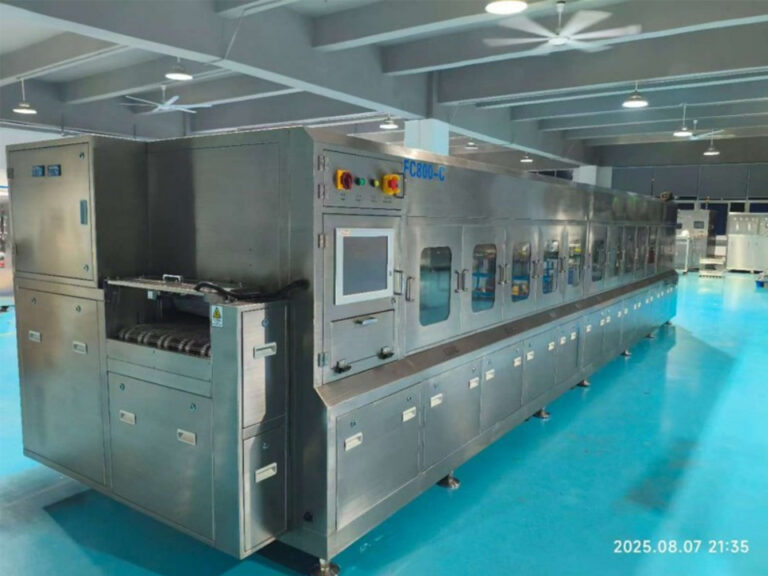
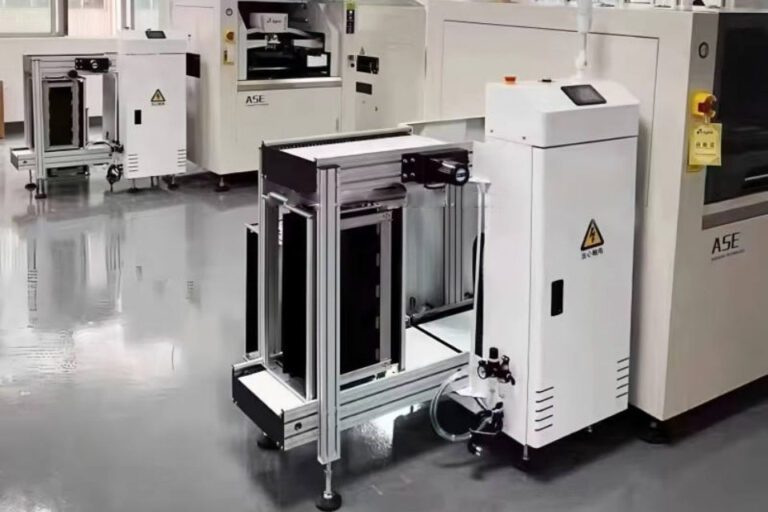
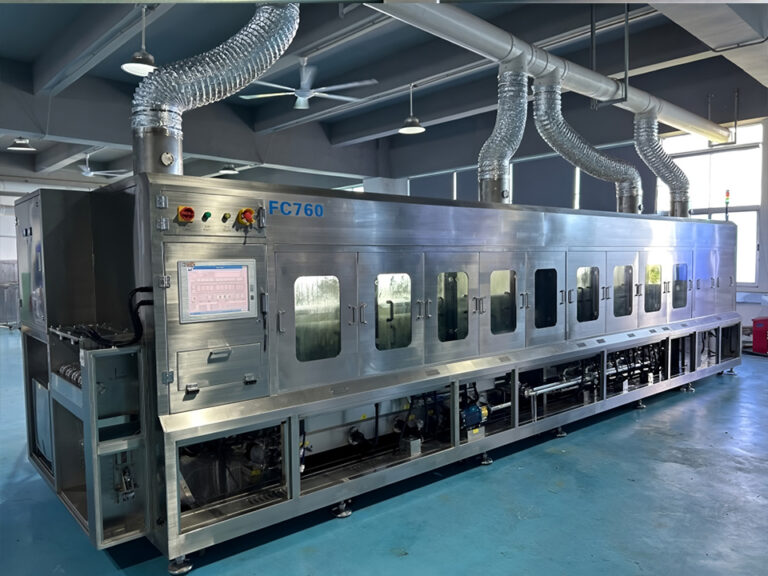
Contract manufacturing is expanding, but not evenly. The EMS providers gaining ground are not always the cheapest suppliers or the ones with the flashiest factory videos; they are the ones that can prove placement accuracy, schedule control, feeder discipline, inspection feedback, and repeatable throughput under ugly production conditions.
I’ll say the quiet part clearly: in electronics manufacturing services, the pick and place line exposes whether an EMS provider is operationally serious or just commercially loud. A quote can hide risk. A sales deck can hide weak process control. But a board with 0201 passives, fine-pitch ICs, BGAs, odd-form connectors, partial kits, and a compressed launch schedule does not care about marketing.
Why Contract Manufacturing Growth Now Depends on SMT Reality
The demand signal is real, but it is not forgiving. IPC reported that North American EMS shipments were down 4.0% year over year in March 2024, while the book-to-bill ratio stood at 1.31, meaning orders were running ahead of billed shipments. By November 2024, reported EMS shipments were up 10.6% year over year, with a 1.18 book-to-bill ratio. That kind of swing tells us something important: buyers are still placing work, but they are rewarding EMS providers that can convert demand into shipped assemblies without chaos. IPC’s March EMS report and the November EMS update show the volatility clearly. (điện tử.org)
This is where contract manufacturing growth becomes less about sales coverage and more about SMT assembly strategy. A provider can win the purchase order and still lose the customer if the line cannot absorb engineering changes, component substitutions, feeder shortages, stencil delays, or AOI feedback without blowing up the delivery date.
The broader electronics buildout adds pressure. The U.S. Department of Commerce OIG notes that the CHIPS Act authorized $39 billion in direct financial assistance for semiconductor fabrication, assembly, testing, advanced packaging, and R&D; the same source states that the U.S. produces about 10% of global semiconductor supply while East Asia accounts for 75%. Commerce OIG’s semiconductor manufacturing summary is a reminder that assembly capacity and supply-chain resilience are now strategic topics, not back-office details. (oig.doc.gov)
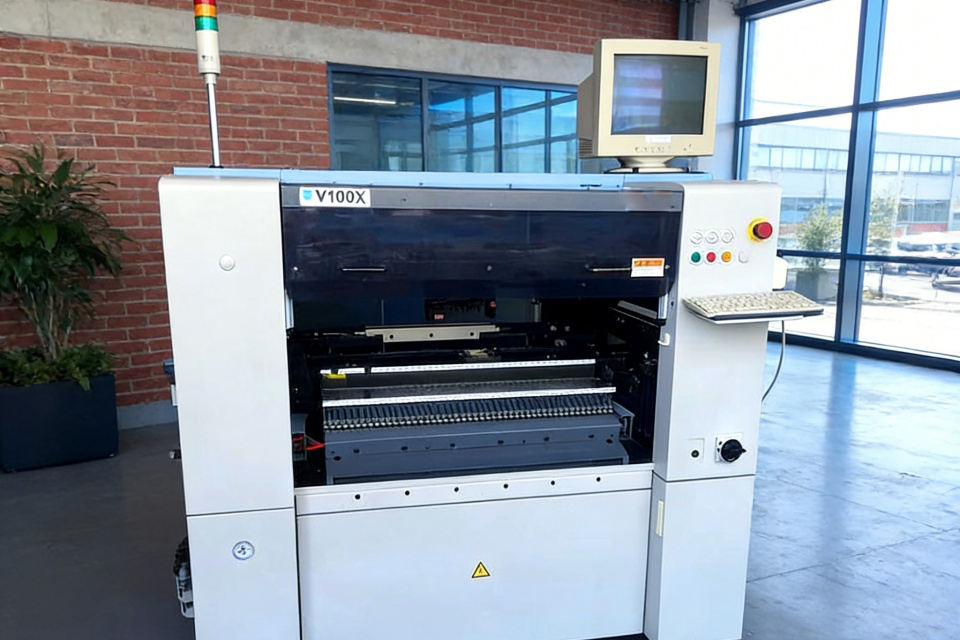
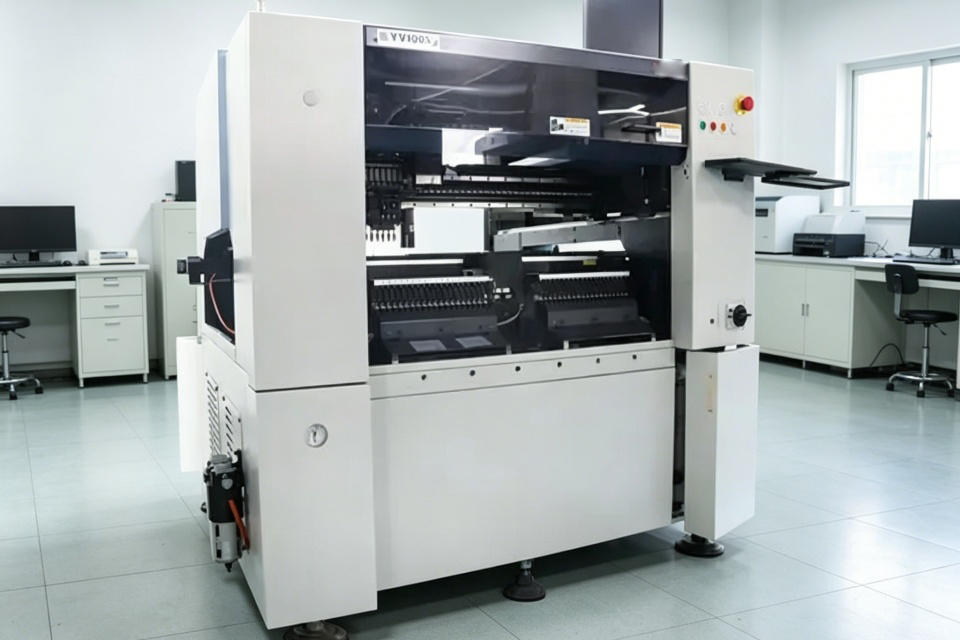
The Pick and Place Machine Is the EMS Provider’s Lie Detector
The pick and place machine is not just equipment. It is a stress test.
A weak EMS provider talks about brand names. A stronger EMS provider talks about nozzle mapping, feeder setup, placement libraries, board support, package-specific vision settings, reject tracking, preventive maintenance, and how the line behaves when production moves from prototype to volume. That distinction matters.
I have seen buyers overvalue machine speed and undervalue line behavior. Big mistake. A machine rated for high CPH can still underperform if the solder paste printer is unstable, feeder carts are poorly organized, AOI feedback is slow, or operators are rebuilding setups during paid production hours. Speed is attractive. Yield is the invoice.
That is why buyers should evaluate Giải pháp dây chuyền sản xuất SMT trọn gói before choosing an EMS provider or expanding internal production. The right question is not “How fast is the machine?” The better question is: “How does the whole line recover from variation?”
How to Choose an EMS Provider Without Buying a Sales Deck
The best EMS provider for pick and place work is not automatically the one with the newest Fuji, Yamaha, Panasonic, Hanwha, or Juki platform. The best provider is the one that can explain why its machine set, inspection process, feeder strategy, and production model fit your actual PCB mix.
That means asking for evidence. Not claims. Evidence.
Ask for first-pass yield data. Ask for AOI defect Pareto reports. Ask how they handle moisture-sensitive components. Ask whether placement libraries are locked, reviewed, and version-controlled. Ask how often feeders are calibrated. Ask what happens when a substitute component has a slightly different package height or vision profile.
For prototype-heavy customers, Dây chuyền sản xuất mẫu thử và sản xuất số lượng nhỏ bằng công nghệ hàn bề mặt (SMT) may matter more than raw speed because changeover discipline and engineering feedback dominate the economics. For mature programs with stable demand, Dây chuyền sản xuất hàng loạt tốc độ cao become more relevant, but only if printing, reflow, inspection, and handling capacity are balanced around the placement line.
The trap is simple: companies buy a mass-production story while their real product mix still behaves like NPI.
Pick and Place Strategy by Production Model
Contract manufacturing growth usually breaks into three operating models.
Prototype and NPI work needs flexibility, fast setup, close engineering communication, and tolerance for controlled disruption. In this model, the EMS provider must handle design changes without turning every revision into a scheduling crisis.
Mixed-volume production is harder than most buyers think. It may involve 8 to 20 board variants, fluctuating reel availability, short runs, and unpredictable kit completeness. This is where Dây chuyền sản xuất SMT hỗn hợp become valuable, because the commercial promise depends on fast changeover, feeder organization, and repeatable inspection feedback.
Mass production is different. It demands line balance, preventive maintenance, spare-parts readiness, duplicate-program discipline, stable work instructions, and tight control over bottlenecks. The provider that cannot show this discipline will eventually convert customer demand into overtime, rework, and missed shipments.
Reuters reported in December 2024 that the U.S. finalized more than $6.1 billion in CHIPS Act funding for Micron to support semiconductor facilities in New York and Idaho, with the investment expected to create at least 20,000 jobs by decade-end. Reuters’ Micron report shows how much public and private money is moving into electronics capacity. But fabs do not assemble finished boards. EMS providers still have to turn components into working products. (Reuters)
Comparison Table: What Serious Buyers Should Audit
| Audit Area | Weak EMS Provider Answer | Strong EMS Provider Evidence | Why It Affects Growth |
|---|---|---|---|
| Placement capacity | “We have high-speed machines.” | Board-specific CPH, utilization data, nozzle map, feeder loading plan | Prevents false capacity promises |
| Điều khiển chuyển đổi | “We support high mix.” | Average changeover time, offline setup workflow, feeder cart method | Protects margins in short-run production |
| Quality feedback | “We inspect everything.” | SPI/AOI defect trends, ppm history, rework escape rate | Reduces hidden cost and customer returns |
| Component handling | “We can source parts.” | AVL control, MSL process, dry storage, alternate approval flow | Limits delays from substitutions and shortages |
| Maintenance readiness | “Our machines are reliable.” | Feeder calibration logs, spare-parts list, service response process | Reduces downtime during demand spikes |
| Scale planning | “We can grow with you.” | Pilot-to-volume roadmap, duplicate line plan, operator training plan | Converts orders into shipments |
The labor-cost angle is not theoretical either. BLS data for computer and electronic product manufacturing shows continuing pressure around employment, establishments, productivity, labor, and wage-related indicators in NAICS 334. BLS industry data for NAICS 334 is useful because it reminds buyers that EMS performance is tied to labor efficiency, not just equipment ownership. (Cục Thống kê Lao động)
A contract manufacturer with weak process control will usually compensate with labor. More operators. More inspection. More expediting. More rework. That may get a shipment out the door once, but it does not create scalable growth.
The Hard Truth About EMS Provider Selection
Most sourcing teams ask too many commercial questions too early and too few factory questions before it is expensive to change suppliers.
They ask about MOQ, payment terms, lead time, and unit price. Fine. Those matter. But they often fail to ask how the EMS provider validates a new placement program, how it controls feeder setup, how it manages stencil revisions, how it closes AOI feedback loops, or how it trains operators across shifts.
That is how bad contracts happen.
A serious EMS provider should be able to walk a buyer through customer examples, production constraints, line design logic, and support structure. Reviewing Trường hợp khách hàng is useful, but buyers should go further and ask for build-level evidence when possible. For equipment selection and support planning, Đào tạo và hỗ trợ sau bán hàng should be part of the decision, not an afterthought after the line is already missing targets.
The uncomfortable truth is that many contract manufacturing failures are visible before the contract is signed. The buyer just does not know where to look.
Câu hỏi thường gặp
What is contract manufacturing in electronics?
Contract manufacturing in electronics is the outsourced production of PCB assemblies, subassemblies, or finished electronic products by an EMS provider that manages SMT assembly, component placement, inspection, testing, sourcing support, and sometimes box-build services for an OEM that owns the design and demand.
In practical terms, it is a transfer of manufacturing execution risk. The OEM wants speed, quality, and scale without owning every machine, operator, feeder cart, reflow oven, and AOI system internally.
How does pick and place manufacturing affect EMS provider growth?
Pick and place manufacturing affects EMS provider growth by determining placement speed, defect rate, changeover efficiency, component flexibility, and the supplier’s ability to move from prototype builds to repeatable volume production without excessive rework, labor cost, or missed delivery dates.
The machine matters, but the workflow around it matters more. Feeder discipline, nozzle condition, board support, vision setup, inspection feedback, and maintenance planning decide whether quoted capacity becomes real shipped output.
What is the best EMS provider for pick and place work?
The best EMS provider for pick and place work is the supplier that can match machine platform, feeder capacity, inspection method, placement accuracy, component handling, and production scheduling to your actual PCB mix rather than offering a generic high-speed SMT promise.
A strong provider explains tradeoffs clearly. They can tell you when a fast line is useful, when a flexible mixed line is better, and when your own design choices are creating avoidable manufacturing risk.
How should an OEM choose an EMS provider?
An OEM should choose an EMS provider by auditing real production evidence: first-pass yield, AOI defect trends, changeover performance, feeder calibration records, component handling procedures, preventive maintenance logs, and the supplier’s plan for moving from pilot builds into stable production.
Commercial terms matter, but they are not enough. A low quote from a weak SMT operation often becomes expensive through delays, rework, scrap, emergency freight, and engineering distraction.
Why do EMS pick and place strategies fail?
EMS pick and place strategies fail when providers optimize for theoretical machine speed instead of total line performance, including solder paste printing, feeder setup, component availability, reflow profiling, inspection feedback, operator training, and maintenance readiness.
The common failure pattern is easy to recognize: the machine is fast, but the factory is slow. That gap destroys margins and makes contract manufacturing growth look better in sales forecasts than it does in shipping reports.
Build the SMT Line Before You Sell the Capacity
Contract manufacturing growth is not won by the lowest quote or the biggest machine name on the factory floor. It is won by the EMS provider that can prove throughput, quality, flexibility, and recovery speed when the customer’s launch schedule becomes uncomfortable.
For buyers planning a new line, expanding EMS capacity, or comparing electronics manufacturing services providers, start with the full SMT solution portfolio and test every promise against your real board mix, real volume curve, and real tolerance for delay. The H1, keyword set, and internal-link pool used here follow the supplied brief.