Most buyers ask the wrong question. They ask whether hand soldering or pick and place is “cheaper,” as if both methods belong in the same cost bucket. They do not. Hand soldering is dominated by variable labor, operator skill, inspection burden, and rework exposure. Pick and place is dominated by setup, programming, line balancing, feeder preparation, and process control. Those are not small differences. They shape the entire economics of a build.
Đó là lý do tại sao PCB assembly cost per unit cannot be judged from a single quote line. A board that looks cheaper at first pass can become more expensive once you include touch labor, yield loss, debugging, schedule slippage, and quality escapes. In my view, that is where many sourcing decisions go off the rails: not in procurement, but in the false assumption that a low visible assembly price equals a low total cost per shipped board.
Why this cost comparison is usually misunderstood
The cleanest way to think about Chi phí lắp ráp mạch in (PCB) is to separate fixed costs from variable costs.
With hand soldering, the fixed-cost barrier is low. You do not need line programming, feeder setup, placement files, or the same level of front-end preparation. But each board absorbs more human time. That means the cost curve rises almost directly with quantity, complexity, and inspection intensity.
With pick and place, the opposite is true. The front-end work is heavier. You must prepare the program, verify component data, load feeders, validate the first article, and run a stable soldering process. But once that work is done, the cost per unit falls much faster as volume increases. For stable SMT builds, that is usually where the economics flip.
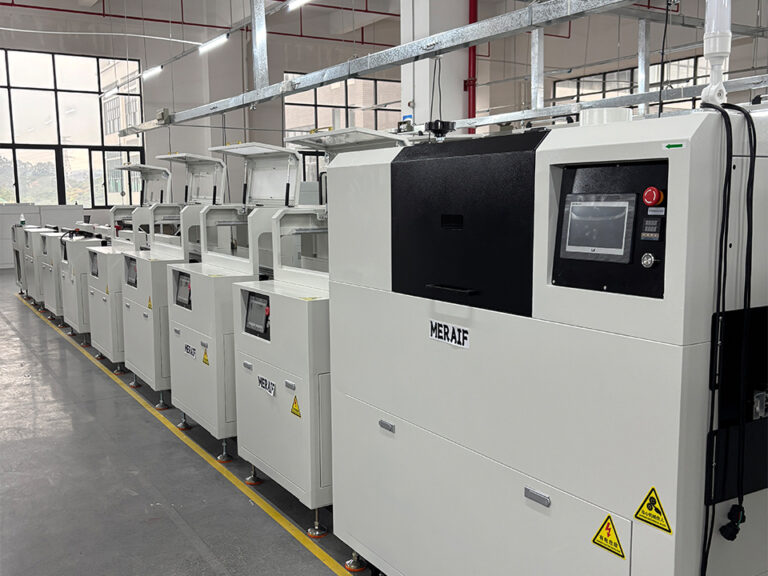
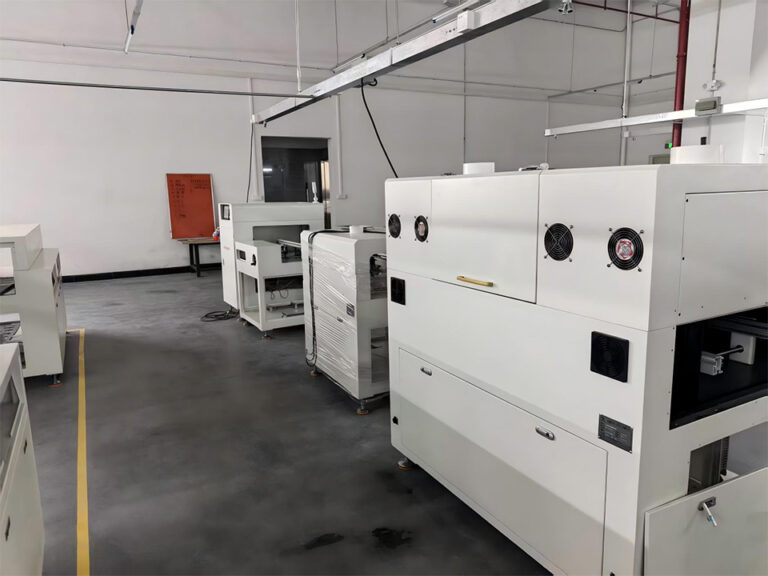
This matters even more on modern boards. Fine-pitch devices, dense layouts, 0402 passives, QFNs, and high placement counts make manual assembly slower and less predictable. That is one reason manufacturers move from improvised bench work toward Dây chuyền sản xuất mẫu thử và sản xuất số lượng nhỏ bằng công nghệ hàn bề mặt (SMT) and later into Giải pháp dây chuyền sản xuất SMT trọn gói.
What actually drives hand soldering PCB cost
Hand soldering is not just “cheap labor.” That phrase survives because people still underestimate the cost of skilled touch work.
A manual build typically includes component handling, alignment, solder application, visual inspection, touch-up, and often secondary verification. For through-hole boards or odd-form assemblies, that may be perfectly rational. For dense SMT boards, though, every additional placement and every finer pitch pushes manual work into a less forgiving cost structure.
The hidden issue is consistency. Two technicians can produce materially different outcomes on the same board, especially when thermal mass varies or when the assembly contains parts sensitive to dwell time and handling. That difference shows up later as extra inspection, more rework, and lower throughput.
Industry training data backs up the point. IPC’s 2024 workforce whitepaper argues that better training reduces rework, repair, and scrap, which is another way of saying that manual assembly quality is expensive to build and expensive to maintain. IPC’s 2024 workforce whitepaper is worth reading for that reason alone. And institutions such as RIT’s Center for Electronics Manufacturing and Assembly still teach specialized SMT rework and repair because good solder work remains a trained discipline, not a generic bench task.
So yes, hand soldering can be the right choice. But only when its flexibility offsets its labor intensity.
Where pick and place assembly cost starts to win
Pick and place looks expensive early because the quote includes activities buyers do not always value properly: setup, program verification, feeder loading, profile validation, and first-article approval. Those are real costs. But they are also costs that get diluted very quickly on repeatable work.
That is the key difference. Once the design is stable and the process is under control, machine-led SMT production usually delivers better repeatability, lower touch labor, and a more predictable yield profile. In plain English, the build becomes easier to forecast and easier to scale.
A useful case study comes from the University of Twente, where researchers examined PCBA time estimation and found that both hand soldering and SMT-line planning improved significantly when the process was measured properly. The practical lesson is not that machines solve everything. It is that automated lines become economically powerful when the process is disciplined enough to make their repeatability count.
And there is a second point that deserves more attention: predictability is a cost advantage. A line that runs close to estimate is easier to price, schedule, and support. That is why companies preparing for repeat demand often move from ad hoc assembly into more structured chất lượng quy trình và Dây chuyền sản xuất hàng loạt tốc độ cao.
Break-even thinking: volume, stability, and defect risk
There is no universal break-even quantity. Anyone who gives you a single number without asking about placement count, package types, side count, board size, or quality requirements is guessing.
Still, the pattern is consistent. Low volume and unstable design tend to favor hand soldering. Higher volume and stable design tend to favor pick and place. The crossover usually happens when the front-loaded setup cost of automation becomes smaller than the accumulated labor and rework cost of manual assembly.
| Build scenario | Hand soldering | Lấy và đặt | Likely winner |
|---|---|---|---|
| 1-10 boards, active engineering changes | Low setup burden, high flexibility | Setup cost too concentrated | Hand soldering |
| 10-50 boards, mixed technology, evolving BOM | Still practical if many odd-form parts | Starts to make sense for repeat SMT content | Depends on design stability |
| 50-250 boards, SMT-heavy, repeat build | Labor and inspection begin to compound | Setup cost spreads across the lot | Pick and place in many cases |
| 250+ boards, standard SMT, repeat demand | Manual cost becomes difficult to defend | Automation scales more cleanly | Lấy và đặt |
| Fine-pitch or high-reliability assemblies | High operator dependency | Better repeatability and control | Usually pick and place |
That table is not theoretical. It reflects how cost behaves once you account for real production friction. And that friction is where the wrong method becomes expensive.
A related warning comes from the broader automation market. Reuters reported in 2024 that North American robot purchases fell sharply in 2023 after the previous surge. I read that less as an anti-automation signal and more as a reminder that equipment only pays when demand, process discipline, and product mix are aligned. Buying automation too early is just another way to waste money.
The hidden costs buyers miss in a PCB manufacturing cost comparison
This is where the analysis usually gets serious.
The visible quote may show assembly labor, machine time, and maybe inspection. What it often does not show well enough is the cost of imperfection. Rework. Delays. Line stoppages caused by poor data. Yield loss from unstable process settings. Extra handling from mixed technology. Engineering time spent cleaning up avoidable production errors.
Those costs are not side notes. They can erase the apparent savings of manual assembly very quickly.
I would focus on six questions before choosing a method:
- How stable is the design?
- How many placements are on the board?
- Are there fine-pitch or thermally sensitive components?
- How many lots will repeat?
- What is the acceptable defect risk?
- Can the supplier support the next production stage?
That last point is underrated. A supplier that can support early builds but cannot transition into scalable manufacturing is only solving half the problem. That is why buyers should look beyond the immediate quote and evaluate things like Đào tạo và hỗ trợ sau bán hàng, line configuration, and whether the provider has relevant Trường hợp khách hàng.
What I would recommend for low-volume production
For early prototypes, engineering samples, and unstable products, I would usually tolerate more hand soldering. The flexibility is real, and forcing automation too early can turn a moving target into an expensive exercise in reprogramming and setup churn.
But for low-volume production that is no longer experimental, I would start moving toward SMT automation much earlier than many buyers do. Not necessarily full-scale mass production. But certainly a process with structured placement, controlled soldering, and a clearer path to repeatability.
That is the practical answer to the question behind best PCB assembly method for low-volume production: use hand soldering when you need flexibility, use pick and place when you need repeatability, and do not confuse a prototype workflow with a production strategy.
Câu hỏi thường gặp
What is PCB assembly cost per unit? PCB assembly cost per unit is the total cost required to produce one acceptable assembled board after setup, labor, machine time, inspection, rework exposure, and yield loss are allocated across the order quantity. In practice, this means buyers should evaluate shipped-good-unit economics, not just visible placement or soldering charges. A low quoted unit price can still be expensive if defect rates, manual touch time, or engineering support requirements are high.
Is hand soldering cheaper than pick and place for small runs? Hand soldering is usually cheaper than pick and place only when the run is very small, the design is still changing, or the board includes odd-form parts that do not justify line setup. Once quantity increases or the design stabilizes, the accumulated labor and inspection burden of manual work often erodes its early price advantage. What looks cheaper at ten boards may look inefficient at fifty.
How much does PCB assembly cost per unit on SMT builds? PCB assembly cost per unit on SMT builds depends on setup complexity, component count, feeder requirements, line speed, inspection level, and how many boards share the front-end cost of programming and validation. That is why SMT unit cost can look high on a prototype order and highly competitive on a repeat production run. The method rewards stability, data quality, and volume more than it rewards improvisation.
When does pick and place become more economical than hand soldering? Pick and place becomes more economical than hand soldering when fixed setup costs are diluted enough that automation delivers a lower cost per acceptable board than manual labor and its associated quality burden. In practical terms, that point often appears once a design is stable, SMT-heavy, and repeated often enough for consistency to matter as much as direct labor. The more complex the board, the faster the economics usually shift.
What is the biggest mistake in an SMT assembly vs hand soldering comparison? The biggest mistake in an SMT assembly vs hand soldering comparison is treating visible assembly charges as the whole cost while ignoring predictability, rework risk, inspection effort, and repeat-build efficiency. Buyers frequently compare a machine setup quote to a bench labor quote without recognizing that one is fixed-cost heavy and the other is variable-cost heavy. That leads to the wrong sourcing decision more often than most people admit.
If you are still evaluating Chi phí lắp ráp mạch in (PCB), the smartest next move is not to chase the cheapest headline quote. It is to map your board to the right production stage, pressure-test the hidden cost drivers, and choose a process that can survive repeat demand. For that, review the available Các phương án giải pháp hoặc Liên hệ với đội ngũ for a production path that fits your quantity, board complexity, and growth plan.