If you’ve ever watched a “perfect-looking” board go into the oven… then come out with 0402s skewed, QFNs shifted, or bridges you swear weren’t there—yeah, you’re not alone. A lot of folks blame the oven first. But most component shift problems start before solder fully melts: with solder paste slump, paste movement, and weak “hold” (tack) during placement.
At Meraif pick and place machine, we see this all the time in turnkey lines. Our site title says “Top 1 Turnkey SMT Line Solutions Expert in China,” and honestly, paste-and-placement headaches are exactly why buyers ask for full-line support instead of buying one machine and praying. If you’re building Turnkey SMT Line Solutions pick and place machine, getting paste stability right keeps your yield from turning into a daily drama.
Quick overview: why parts walk before solder even melts
Here’s the rough timeline on a typical line:
- Printer pick and place machine unload → SPI pick and place machine infeed
- Placement
- Oven entry → heat-up → soak → reflow → cool-down
So when do parts actually shift?
- Slump can happen right after print, especially if the paste is too “soft” (rheology drops fast) or the shop is hot.
- Paste movement can happen during conveyor vibration, board handling, or early heating (flux starts to activate, paste gets less stiff).
- True reflow forces can pull parts (wetting forces, surface tension), but that’s usually the last push, not the first mistake.
If you only tune the oven, you’re treating the symptom, not the root.
Paste slump and paste movement aren’t the same thing
| Term | When it happens | What you’ll see | Why it matters |
|---|---|---|---|
| Paste slump | After printing, before placement or before heat-up | Paste spreads, deposits get fatter, gap closes | Higher bridge risk, uneven deposit volume |
| Paste movement | After placement, during handling or early heating | Parts drift, rotate, “float” slightly | Skew, tombstoning, opens, shorts |
A quick tell: if your SPI looks “wide” and messy, that’s slump. If SPI looks okay but post-reflow parts are sliding, you’re dealing with movement + weak tack + handling or thermal forces.
The real root causes behind component shift
Component shift usually comes from a stack of small issues, not one big failure. Here’s the clean way to break it down.
| Root-cause bucket | What’s really happening | Quick check | Fast fix (practical) |
|---|---|---|---|
| Paste rheology / tack | Paste can’t hold parts; viscosity drops too fast | Print one board, wait 10–20 min, check deposit shape; do a “finger tack” feel test (gloves) | Tighten paste storage/conditioning; reduce open time; verify paste spec for slump/tack |
| Stencil / aperture design | Too much paste, wrong shape, uneven volume | Compare bridging/skew map to aperture locations | Reduce aperture, use home-plate on chip passives, tune area ratio and release |
| Print parameters | Over-squeegee, poor release, smear | SPI shows tails, slumping edges, volume variation | Adjust squeegee pressure/speed; check separation speed; ensure clean stencil underside |
| Placement settings | Z-height too low (squeeze-out) or too high (no embed) | Look at paste squeeze around chips; check placement force logs | Dial Z/force; verify nozzle condition; tune centering and vision thresholds |
| Board handling & vibration | Conveyor shake nudges parts while paste is weak | Mark where shift starts (before oven or after oven) | Smooth conveyor transfer; reduce shock at handoff; stabilize pallets/rails |
| Thermal profile | Early heating softens paste; wetting pulls off-center | Correlate shift to specific zones; profile with TC | Reduce ramp shock; balance soak; avoid uneven heating and air turbulence |
You’ll notice something: none of these fixes are “magic.” They’re boring, but boring is good in SMT. Boring means stable.
Process controls that actually reduce shift (without slowing the line)
Printing controls for solder paste slump
If slump is your main villain, start here:
- Keep paste handling consistent. Same thaw time, same stir/mix method, same stencil wipe rhythm.
- Watch board temperature. If boards come in warm, paste softens fast. That’s sneaky.
- Don’t chase volume only. You can hit volume target and still have ugly edges that slump later.
A real shop-floor trick: print two boards, leave one on the side for 15 minutes, run the other immediately. If only the “waiting” board shifts more, you’ve got a paste stability + open time problem.
Placement controls for paste movement
Placement issues often look like “the machine is inaccurate,” but it’s not always that.
- If Z is too low, you squeeze paste sideways. That reduces tack and pushes the part off-center.
- If Z is too high, the part barely touches paste. It can skate during transport.
- If nozzles are worn or dirty, you get micro-tilt. Then wetting forces pull harder in one direction.
Also, don’t ignore feeder vibration and head acceleration. On tiny parts (0201/01005), aggressive motion can matter more than you think.
Reflow controls for component shift (the part everybody blames)
Yes, the oven matters. But focus on balance, not just peak temp:
- Uneven heating across pads = uneven wetting force = pull.
- Too aggressive ramp can soften paste early, then the conveyor bump does the rest.
- Air turbulence near the start of the hot zones can nudge light parts (it’s rare, but real).
If you’re dealing with frequent shift on one side of the PCB, suspect thermal imbalance or uneven copper/pad design. That’s not “operator issue,” that’s physics.
If you’re shopping or upgrading, look at your reflow pick and place machine setup as a system (preheat stability + zone control + conveyor smoothness), not only “how many zones.”
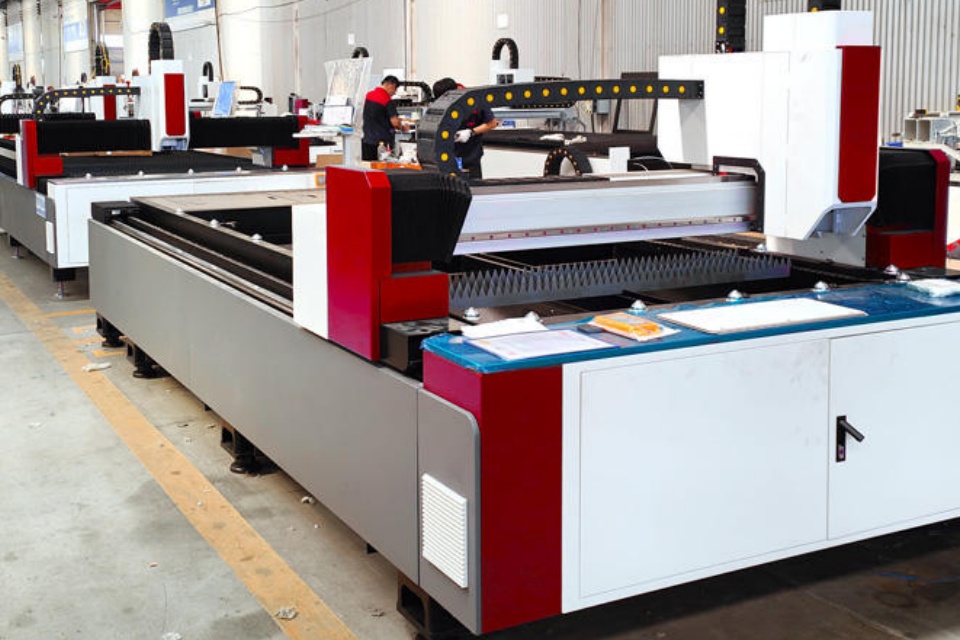
ESD Ionizing Air Blower: a simple fix for one annoying cause people forget
Static is one of those topics people roll eyes at—until it wrecks a run of tiny parts.
If you have lightweight passives, dry air, plastic carriers, or lots of peeling tape, static can “help” parts drift. It won’t always throw them across the room. Sometimes it just adds that tiny force that makes paste movement worse. And then you’re stuck reworking boards all day, not fun.
That’s why we often recommend ionization near problem spots. For example, ESD Ionizing Air Blowers pick and place machine can help knock down charge where tape peels, boards transfer, or operators handle panels.
Just to be clear: ionizing airflow shouldn’t become a “wind machine” that blows 0201s around. You want neutralization, not a hurricane.
Where static sneaks in (real shop spots)
- Tape peel points (especially high-speed feeders)
- Board unloading/stacking areas
- Manual touch zones (inspection, rework, sampling)
- Dry winter air + plastic fixtures combo (classic)
If shift gets worse on dry days, that’s a clue. Not proof, but a clue.
How to use an ionizing air blower without blowing parts away
Keep it simple:
- Point airflow across the working zone, not straight at the components.
- Use enough distance so the air spreads out.
- Aim at the charge source (tape peel / handling), not the paste deposit itself.
When you do it right, you’ll feel the line get “calmer.” Less random weirdness, less unexplained drift. Sounds vague, but you’ll notice it.
A practical shift triage checklist you can run tomorrow
When shift happens, don’t guess. Do this:
- Check SPI images: do you see fattened deposits or smeared edges?
- Stop one board before oven: does the part already look nudged?
- Look for squeeze-out: paste pushed out = placement Z/force issue.
- Compare shift map to layout: one area only often means handling or thermal imbalance.
- Test open time: run “print now vs wait 15 min” and compare.
- Watch the conveyor handoffs: small shocks matter on tiny parts.
- Consider static if the pattern feels random, especially on micro passives.
This checklist keeps you from wasting hours tweaking the wrong knob.
Why this matters commercially (not just technically)
Every time parts shift, you pay in hidden ways:
- Extra rework loops
- More inspection load
- Unstable delivery schedules
- Operators losing confidence (“this line is cursed”)
If you’re a contract manufacturer, that pain hits customer trust. If you’re a factory building your own product, it hits ship date. Either way, it’s not just an engineering problem.
That’s why Meraif leans into full-line thinking: printer + SPI + placement + oven + ESD control. Buyers want fewer surprises, not more dashboards.
Wrap-up: stop blaming the oven—fix the paste first
Component shift during reflow usually starts earlier than you think. Paste slump, paste movement, tack strength, and handling stability do most of the damage. Reflow just reveals it.
If you want to reduce shift fast, don’t start by “turning the oven hotter.” Start by checking paste behavior, print quality, placement embed, and line vibration. Then add ionization where static makes the situation worse.