If you’ve ever watched a team build boards “by hand + good luck,” you know the vibe. Early on it works. Then orders grow, the BOM gets messy, one operator quits, and suddenly your delivery plan looks… kinda optimistic.
Here’s my main point: scaling from manual to automated assembly isn’t “buy one big machine.” It’s flow + repeatability + control, step by step. In SMT, the quiet troublemaker is usually not the pick-and-place speed. It’s board transport, buffering, and handoff—the stuff between stations.
Meraif positions itself as a turnkey SMT line solutions provider with 20+ years of factory operations experience, covering equipment selection, layout, install, calibration, and training. That matters here, because scaling is a system problem, not a single-tool problem.
Manual assembly
Manual assembly gives you flexibility. It also gives you:
- operator-to-operator variation
- “tribal knowledge” processes
- rework loops that grow quietly
- bottlenecks that move every week
If you’re in NPI, high-mix, or you’re still tuning the design, manual work is normal. The trick is knowing when manual stops being “flexible” and starts being “fragile.”
Practical signal: when you spend more time firefighting WIP piles, missing boards, and line stops than actually building product… you’re ready to scale.
Don’t over-automate
This is the most expensive lesson in automation: don’t automate chaos.
If your process isn’t stable, full automation just locks in the pain—faster.
Instead, push for small wins:
- automate the step that causes the most defects
- standardize the handoff that causes the most line stops
- add traceability where customers scream the loudest (medical, automotive, industrial)
You don’t need a perfect line on day one. You need a line that gets less dumb every week.
Manual → manumation → automation islands → fully integrated SMT line
Think of scaling as four modes. Teams that win usually walk through them in order.
Manual + fixtures
Start with:
- better jigs
- poka-yoke (error-proof) checks
- simple torque / force controls
- clear work instructions (not a 40-page PDF nobody reads)
This stage is boring, but it fixes the “human variation tax.”
Manumation
Manumation is the “half step”: operators still work, but tools enforce consistency.
Examples you’ll recognize:
- guided placement / kitting to stop wrong part usage
- inline inspection points to catch defects early
- controlled soldering robot for repetitive through-hole joints
- ESD discipline that’s actually enforced, not just posters
Automation islands
Here you automate one module at a time, like:
- automated board loading/unloading
- buffering to protect takt time
- NG/OK split after inspection
- depaneling cells
- coating + cure cells
This is where SMT lines start feeling “real factory” instead of “busy workshop.”
Fully integrated SMT line
Now you connect the islands:
- stable takt time
- balanced stations
- traceability across printer → placement → reflow → AOI/SPI → downstream
- fewer manual touches, less board damage risk
Meraif explicitly frames turnkey SMT lines as printer + pick-and-place + reflow + AOI/SPI designed around throughput and lead time. That’s the integrated mindset: you design for the whole flow, not one station.
Cycle time and takt time
If you want a “success story,” you need a scoreboard. Not cost numbers—just process metrics you can defend in front of a buyer, QA, and production.
Here’s a clean KPI set that works in real SMT shops:
| Metric keyword | What it tells you | Direction you want | Typical “pain smell” |
|---|---|---|---|
| Takt time | can the line meet demand | ↓ more stable | stations starving / blocking |
| Cycle time | how fast a station really runs | ↓ less spread | huge variation by operator |
| OEE | availability + performance + quality | ↑ | micro-stops everywhere |
| First-pass yield (FPY) | how much passes without rework | ↑ | rework benches growing |
| WIP level | how much inventory is stuck mid-line | ↓ | trays stacked “temporarily” |
| Changeover time | how fast you switch jobs | ↓ | high-mix line always late |
| Traceability coverage | can you prove what happened | ↑ | customer audit stress |
No magic. Just measure, improve, repeat.
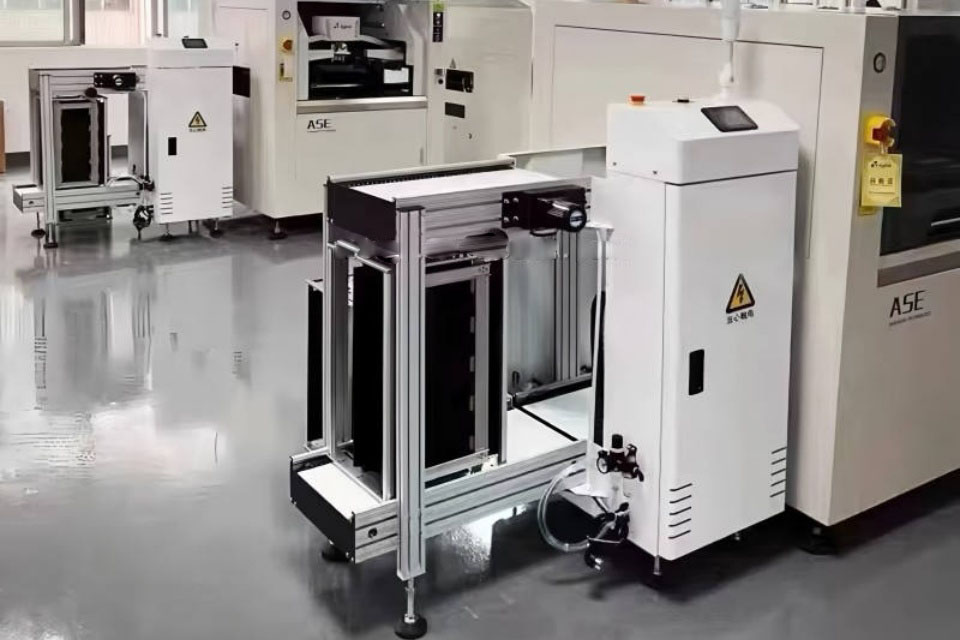
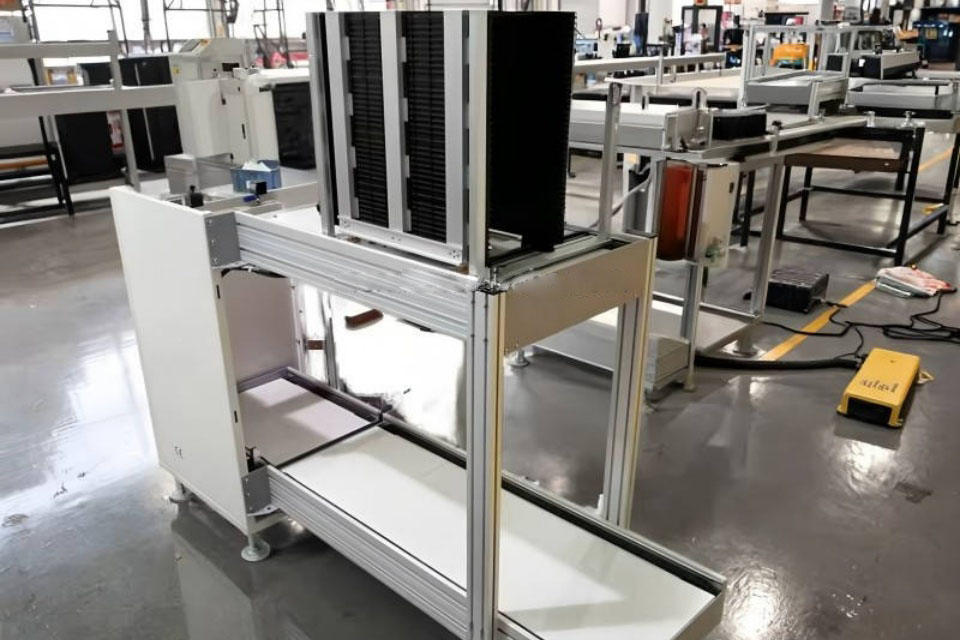
PCB Handling Machines
This is where many factories level up fast, because board transport is the glue.
On Meraif’s site, the PCB handling category calls out the exact goal: loaders, unloaders, buffers, and conveyors to move boards safely, balance takt time, and integrate with any SMT line.
Mini SMT Loader
Use it when your input side turns into a human feeding contest. If an operator feeds boards unevenly, your pick-and-place sits idle and still costs money per minute. A mini loader makes feeding boring again (good boring).
SMT Loader
This is the more standard loader role in a line handoff. It’s not “fancy,” but it kills the stop-and-go rhythm that destroys throughput.
NG OK Unloader
This one solves a real headache: mixing good boards with rejects.
With NG/OK logic, you protect your downstream stations from building on top of bad boards. Less rework loop, less confusion, less “who touched this board?”
PCB Buffer Conveyor
Buffers are not a waste. They’re shock absorbers.
If your AOI occasionally pauses, or your printer needs cleaning, a buffer can keep upstream or downstream from hard-stopping. It’s line balancing, not hoarding.
PCB Shuttle Conveyor + PCB Turn Conveyor
These are layout weapons:
- shuttle conveyors help when you need routing flexibility
- turn conveyors help when the floor plan forces a 90-degree transfer
If you’re retrofitting an old shop, these two often save the project. The floor is the floor, you can’t argue with wall.
SMT Conveyor
This is the simplest piece, but don’t treat it like cheap furniture. Conveyor spec mistakes create stupid problems: board jams, rail width mismatch, warped PCB issues, SMEMA handshake drama.
ESD PCB Storage Trolley
This is pure “factory reality.” You need controlled, ESD-safe storage for WIP, magazines, and boards—especially in high-mix lines where staging is half the battle. Meraif lists ESD PCB storage trolleys under PCB handling.
Table: PCB handling pain points and machine mapping
| Customer pain keyword | Likely root cause | PCB Handling Machines keyword | What changes in the line | “Pro” check item |
|---|---|---|---|---|
| Starving pick-and-place | manual feeding uneven | Mini SMT Loader / SMT Loader | steadier input flow | PCB size range + rail adjust |
| AOI blocks the line | no buffer, no decouple | PCB Buffer Conveyor | fewer hard stops | buffer logic + WIP limit |
| Rework chaos | good + bad boards mixed | NG OK Unloader | clean NG/OK split | NG rules + label/trace |
| Layout constraints | line needs routing | PCB Shuttle Conveyor / PCB Turn Conveyor | flexible floorplan | transfer stability + sensors |
| ESD/WIP mess | uncontrolled staging | ESD PCB Storage Trolley | safer handling + order | ESD spec + magazine fit |
(Yeah, it’s not sexy. It’s what stops the 2am phone call.)
DFA/DFM and DFAA
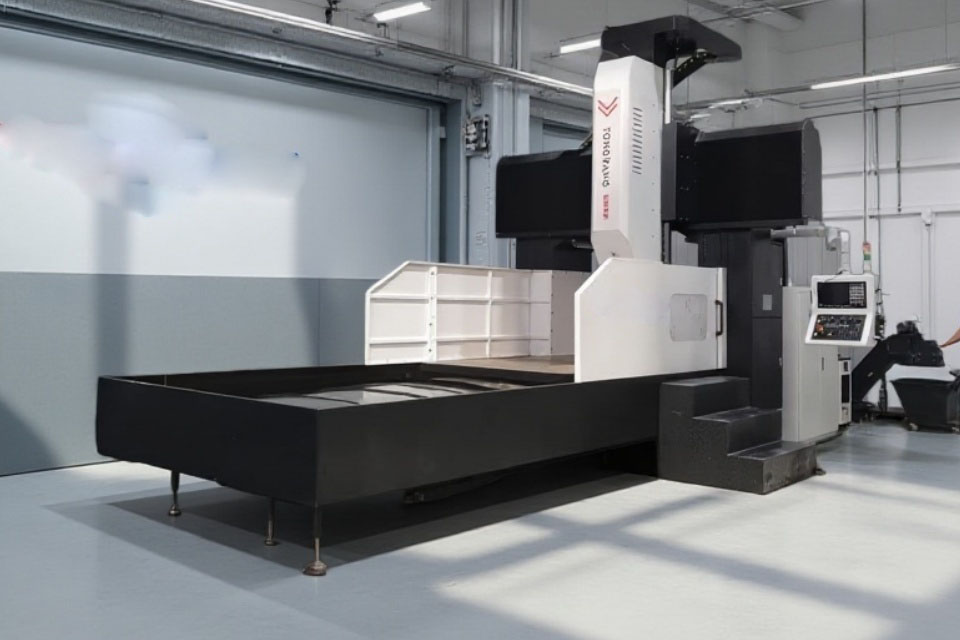
Automation loves simple design. Your product should help the machine, not fight it.
If you want smoother scaling, push for:
- fewer fasteners (or consistent fasteners)
- clear polarity/orientation features
- parts that feed well (tape/tray friendly)
- tolerance stack-ups that don’t demand wizard hands
- test points that don’t require contortion
This isn’t “design perfection.” It’s design that’s easy to build, even when the line runs fast.
Turnkey SMT Line Solutions
When you scale, you’ll juggle a lot: printers, pick-and-place, reflow ovens, inspection, plus all the small supporting stuff. Meraif describes turnkey SMT line construction as end-to-end: planning, line layout, installation, commissioning, and training.
Here’s the business value part, without cheesy words:
- Less vendor finger-pointing when something doesn’t handshake
- Faster ramp because the line is designed as one system
- Easier bulk/OEM/ODM planning when you standardize equipment blocks
- Better uptime when you can source spares (feeders, nozzles, belts, sensors) from one place
And yes—buyers doing wholesale or distribution care about that “system reliability,” not only sticker spec.
Closing thought
A real “success story” in automated assembly is simple to describe:
You build a line that runs steady, teaches new operators fast, and keeps quality under control.
Start with flow. Fix the handoffs. Add PCB handling where the line actually breaks. Then scale the rest.