Mass production sounds simple on paper. You place parts fast, you ship boards, you repeat.
But on the shop floor, it’s messier. A “fast” pick and place machine that stops all day will lose to a “slower” machine that just keeps running. So yeah, speed matters. Still, stable output matters more.
That’s the argument in this piece: if you build for volume, you should pick an industrial-grade machine that protects uptime, yield, and changeovers. Not just brochure CPH.
And if you want the whole line to work as one system, that’s where a turnkey approach (like Meraif’s) fits in naturally. You don’t buy one box. You build a line that behaves.
IPC-9850A Throughput And Real CPH
Vendors love “max CPH.” You’ll love it too… until you run your first real job.
For mass production, ask for throughput measured with IPC-9850 / IPC-9850A style test methods, or at least results that can be compared apples-to-apples. Then validate it with your own “golden board” run.
Because your board is not the demo board. Your board has:
- mixed package sizes
- odd rotations
- fine-pitch parts
- feeder swaps
- vision checks that actually take time
Effective CPH Vs Nameplate CPH
Think of nameplate CPH like a car’s top speed. Cool number. Not your commute.
What steals throughput in real builds?
- feeder indexing delays (especially cheap tape and worn pockets)
- pickup failures and retry picks
- vision centering time on tiny parts
- nozzle changes and nozzle cleaning
- board support and clamping time
- panel rails and bad fiducials (yup, it happens)
If your plan is “run 24/7,” those little pauses add up fast. And the line supervisor will call it what it is: death by a thousand cuts.
Placement Accuracy, Cpk, And First-Pass Yield
For mass production, you don’t just need accuracy. You need repeatable accuracy.
So don’t stop at “±X µm” in a brochure. Ask how they define it:
- is it 3σ?
- what board condition?
- what component size?
- what speed mode?
And then tie it to the metric you actually care about: first-pass yield.
What Makes Accuracy Drift
Here’s the part people skip. Machines don’t stay “perfect” all year.
Accuracy drifts because of:
- nozzle wear and bent tips
- feeder drag and inconsistent tape pull
- camera calibration drift (tiny, but real)
- poor maintenance intervals
- board warp and weak support pins
- vibration from nearby equipment
If you’ve ever chased a random QFN offset at 2 a.m., you already know this pain. It’s not fun, and it’s not “operator error” every time.
Feeder Capacity And Changeover Strategy
Mass production is not only about running one product forever. Even high-volume factories rotate SKUs.
That makes feeder capacity and changeover speed a big deal.
Industrial-grade setups usually win here because they’re built for:
- big feeder banks
- faster reel swaps
- stable pickup at higher feed speed
- better feeder health monitoring
The “Resident Reel” Setup
Here’s a practical move: keep your top runners mounted as “resident” reels. You only swap the long-tail parts.
That reduces:
- line stops
- setup mistakes
- the “where did that reel go” chaos
It also makes training easier. New operators can follow a fixed layout instead of reinventing the same wheel every shift.
Vision Alignment, Fiducials, And Misalignment Stops
In high volume, misalignment isn’t just a quality issue. It becomes a throughput issue too, because it triggers:
- alarms
- pauses
- re-teach loops
- extra vision checks
If you want fewer stops, treat vision and alignment like production tooling, not a “software thing.”
What To Log Every Shift
If you’re serious about output, log these by hour:
- pickup error rate by feeder lane
- nozzle change counts
- vision fail counts by part number
- top alarms (ranked)
- rework reasons from AOI/inspection
This data turns arguments into decisions. Without it, people guess. And guessing is expensive (and annoying).
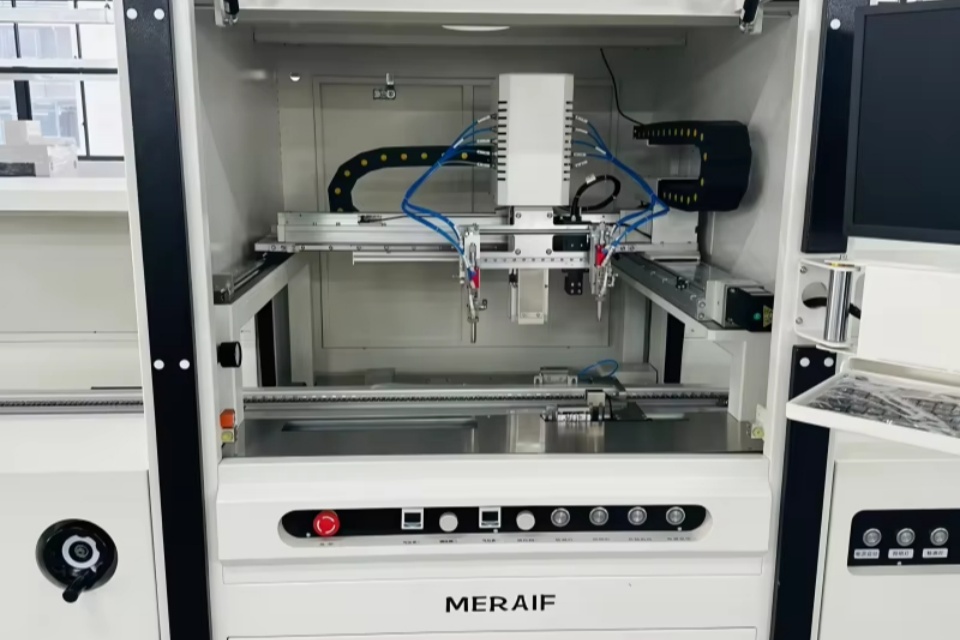
Line Integration For Mass Production
A pick and place machine is one station. Mass production is the whole chain:
- solder paste printing
- placement
- reflow
- inspection
- handling and buffering
- coating or cutting, depending on product
If your machine can’t integrate smoothly, you’ll feel it in jams, bottlenecks, and random waiting time.
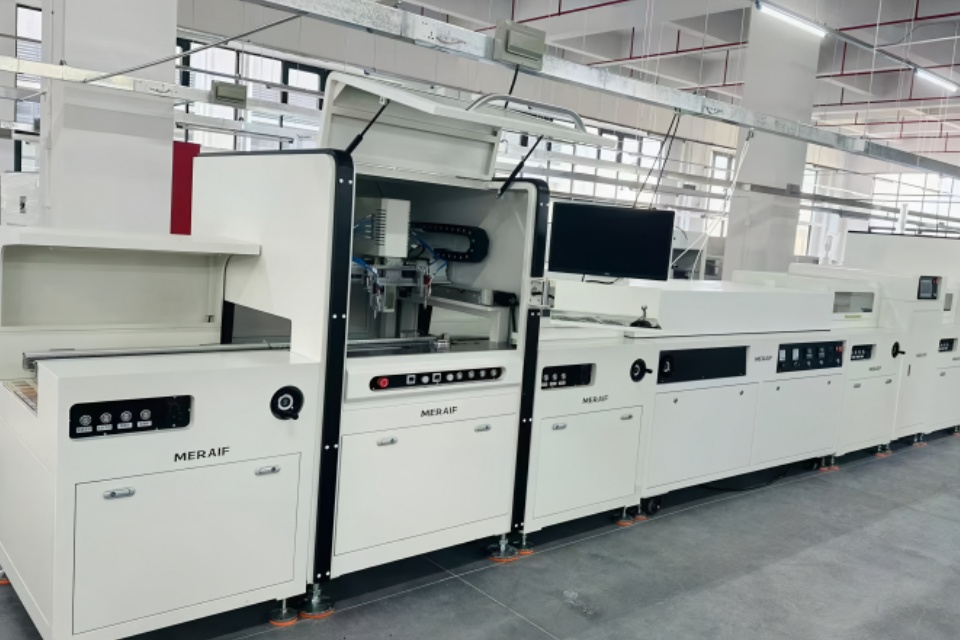
Turnkey SMT Line Solutions
This is where turnkey SMT line solutions make sense.
You’re not only buying a pick and place machine. You’re buying:
- matched conveyors and PCB handling
- stable upstream/downstream timing
- consistent process guidance
- easier OEM/ODM scaling for wholesale buyers
Meraif’s positioning (SMT plant solutions + practical factory experience) fits this reality. You want someone who’s seen real lines run, not just sold boxes. Sometimes the “little” choices—handling width, buffer length, inspection handoff—decide your daily output.
After Placement: Reflow, Inspection, And PCBA Conformal Coating
A lot of people write about placement like it’s the whole story. It isn’t.
For many industries, the job isn’t done after reflow. You still need protection, especially when the board lives in:
- humidity
- salt fog
- vibration
- dust and oil mist
- outdoor temperature swings
That’s why PCBA conformal coating shows up in serious volume builds.
PCBA Coating Machines For Production Scenarios
If you build automotive, industrial control, outdoor power, or anything “field harsh,” coating can move from “nice-to-have” to “must-have.”
A good coating step helps you:
- reduce corrosion failures
- improve insulation resistance
- cut field returns
- keep performance stable over time
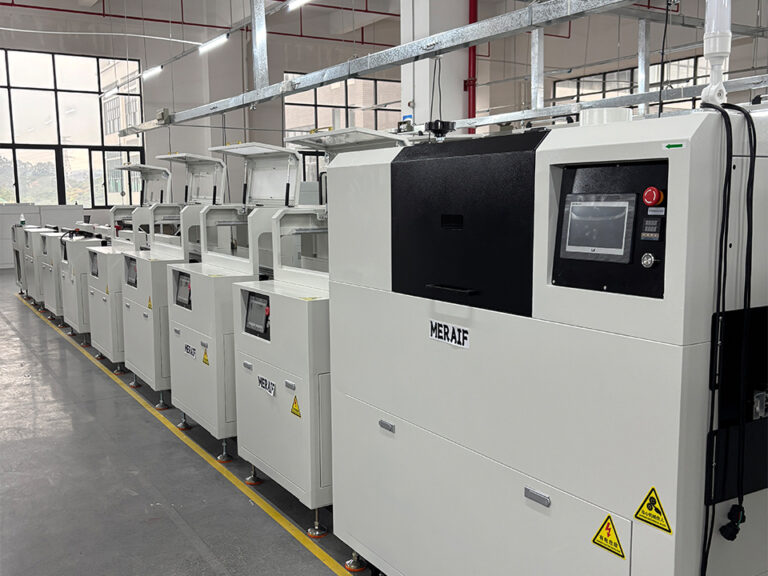
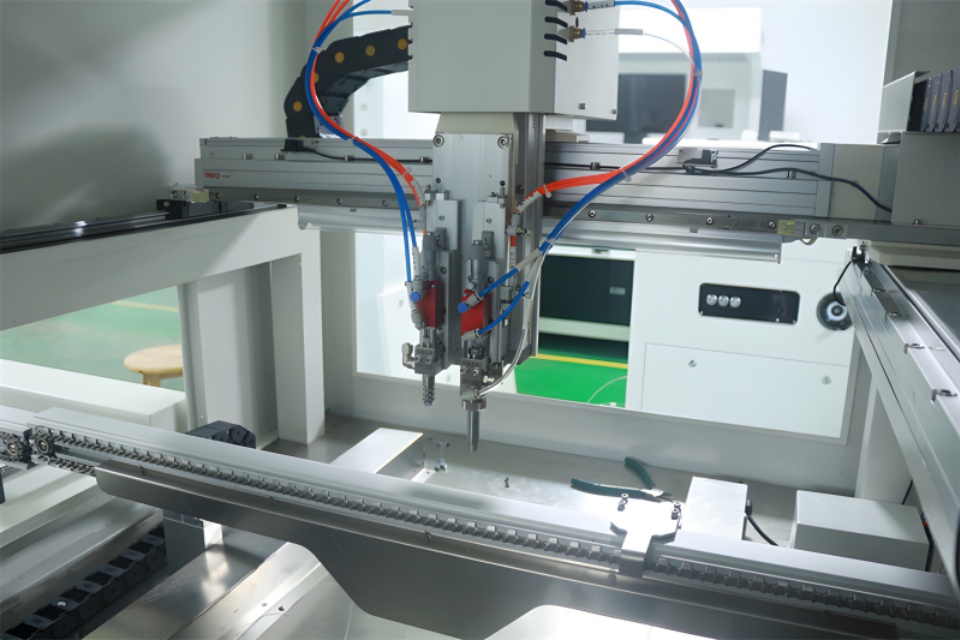
If coating is part of your flow, don’t bolt it on as an afterthought. Plan it like a real station with real takt time. Meraif’s PCBA Coating Machines category is exactly the kind of product family that belongs in a mass production conversation, because it connects reliability with volume.
Link: PCBA Coating Machines
Data Table: What To Check Before You Call A Machine “Industrial-Grade”
| What you check | What to ask for | Why it matters in mass production |
|---|---|---|
| Throughput standard | IPC-9850/IPC-9850A style result, plus your board trial | Stops you from buying a demo number |
| Effective output loss | Pickup fails, vision time, retry picks, top alarms | Shows the real bottlenecks |
| Placement capability | Accuracy definition (3σ / condition), process stability | Protects first-pass yield |
| Feeder system | Feeder capacity, swap speed, feeder health checks | Reduces changeover pain |
| Component range | Small parts, fine pitch, tall parts, trays | Avoids “can’t build this job” moments |
| Board handling | Support pins, clamp stability, warp control | Prevents drift and rework |
| Maintenance design | Nozzle cleaning flow, calibration workflow | Keeps performance from sliding |
| Line integration | Conveyor sync, buffering, interface options | Cuts waiting, jams, and awkward handoffs |
| Downstream reliability | Reflow profiling, inspection, coating readiness | Keeps returns down over time |
A Simple Shop-Floor Rule
If you remember one thing, make it this:
Mass production rewards stability.
Not the biggest spec sheet number.
So pick an industrial-grade pick and place machine that runs clean, handles feeders well, stays accurate, and integrates with the full SMT line. Then connect it to the rest of the process—printing, reflow, inspection, handling, and if your product needs it, conformal coating.
That’s how you get volume without daily drama. And yeah, you’ll still have weird days. It’s manufacturing. But you’ll have less of them, which is more better… you know what I mean.