I’ve seen AOI cells go from “promising new quality upgrade” to full-time nuisance generator in less than a quarter, not because the camera head was junk or the vendor lied about every spec, but because the line treated programming, lighting, review logic, and golden-board discipline like side chores instead of the real work. That happens. A lot.
And that’s the part I wish more buyers heard before the PO gets signed. Automated optical inspection isn’t magic. It’s a visual gate with a temperament. Feed it stable boards, sane thresholds, decent fiducials, and a team that knows the difference between a real bridge and harmless glare, and it’ll save your hide. Starve it of that stuff, and it’ll drown you in false calls.
Why automated optical inspection gets misunderstood
But let’s start with the basic misconception.
People buy automated optical inspection expecting certainty, when what they’re actually buying is a very fast, very literal vision system that compares what it sees against taught references or rule sets and then spits out judgments on visible defects like offset, polarity reversal, missing parts, rotation errors, solder bridges, lifted leads, and suspect joint geometry before those defects travel further down the SMT line. That’s the clean version.
The dirty version? AOI only looks smart when the process around it is smarter.
I frankly believe the industry still packages AOI as equipment when it should sell it as discipline. Because the real leverage isn’t just in megapixels, projector angles, or fancy vendor slides. It’s in recipe tuning, package-family grouping, illumination control, review disposition rules, and the boring but essential loop between inspection and repair. Miss that, and the machine becomes a high-speed complaint box.
And yes—this is where standards still matter more than people want to admit. IPC’s March 2024 IPC-A-610J is still one of the best anchors for deciding what is acceptable, what is marginal, and what is plainly defective, especially when shift-level judgment starts drifting. The reference is here at ipc.org.
What the vision system is really “seeing”
Here’s where outsiders get lost.
AOI doesn’t “understand” a board. It doesn’t reason like a seasoned process engineer staring at a fillet under magnification and thinking, “Yeah, that wetting looks a bit off, but it’ll probably survive thermal cycling.” It sees reflected light, contrast edges, body outlines, pad relationships, grayscale or color differences, and, in 3D platforms, height and slope data. That’s it. The rest is math, thresholds, and recipe logic.
Which is why lighting is everything. Seriously. Coaxial, side light, structured projection, shadow management, package reflectivity, solder sheen, silkscreen clutter, matte-black IC bodies, warped panels—change any one of those and the same board can look “good,” “bad,” or “suspicious” depending on how the machine was taught. Tiny shifts. Big consequences.
And there’s published backing for that, not just shop-floor griping. IPC’s AOI process-control standard, IPC-9716, released on January 10, 2025, puts calibration, detectability, resolution, lighting conditions, threshold limits, and program setup right at the center of the conversation. The 2024 Sensors study on AOI model optimization makes a similar point from the data side: the authors worked with 3,579 images across 32 categories and then evaluated against 12,000 ambiguously labeled images—because once your labels get fuzzy, your “high-accuracy” model starts looking a lot less heroic. That trail runs through shop.ipc.org.
That’s the real game. Not the brochure.
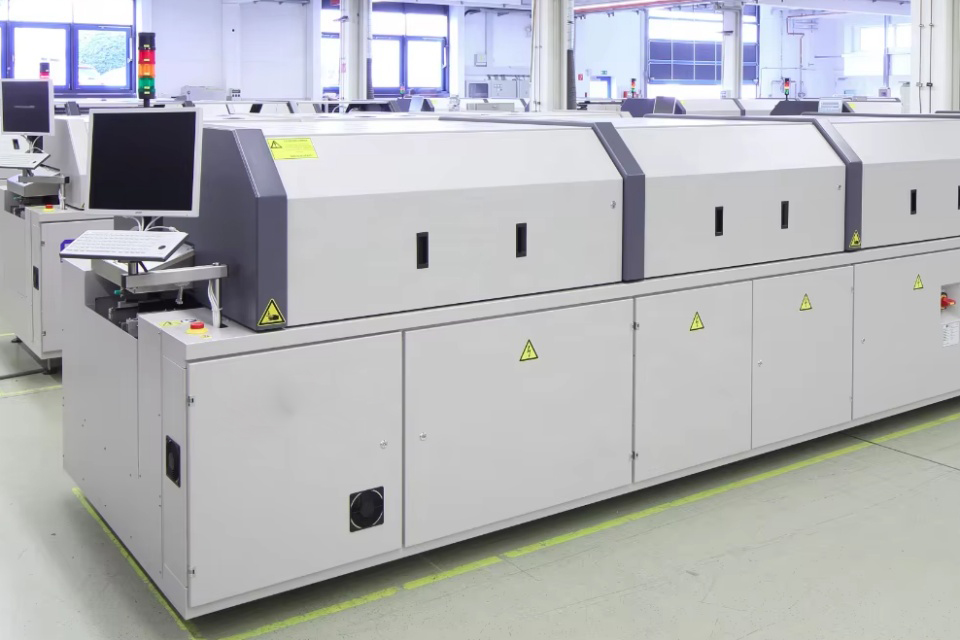
The hidden cost of AOI is false calls
Ask anyone who’s had to sit in front of a review station for hours and click through the same “defect” pattern again and again. They’ll tell you the machine price isn’t the part that hurts most. It’s the false-call load—the slow drain on labor, attention, and trust.
Here’s the ugly truth: nuisance calls poison AOI faster than missed defects do, at least in the short term, because once operators start assuming the box is crying wolf, they begin moving too fast, they stop respecting edge cases, and the whole defect-disposition loop gets soft around the edges until a real escape slips through under cover of repetition. That’s how it goes.
The 2024 real-world AOI dataset paper from Siemens and Helsinki University is one of the better reality checks I’ve seen on this. It covered 132 days of SMT production and published 440,274 AOI-triggered data points from a live line. One inspection class logged 96,735 false calls against 318 true defects. Another showed 150,650 false calls against 1,281 true defects. Those aren’t cute ratios. That’s operational drag, plain and simple.
It works. Usually.
That’s my honest summary of most AOI deployments. When the defect mode is visible, repeatable, and cleanly separated from harmless process variation, machine vision inspection is brutally effective. Missing parts, skew, reversal, gross offset, obvious bridging, visibly lifted leads—AOI loves those. But once you’re dealing with borderline fillets, inconsistent reflectivity, low-contrast joints, bottom-terminated components, or recipes stitched together from a half-baked library, the signal-to-noise ratio gets ugly fast.
And when it gets ugly, people pay. According to the U.S. Bureau of Labor Statistics manufacturing data, U.S. manufacturing still employed 377,260 inspectors, testers, sorters, samplers, and weighers in 2024. That number matters because automation hasn’t erased review labor. In plenty of plants, it’s just moved the pain downstream.
How vision systems catch defects on real SMT lines
Yet I don’t want to undersell what good AOI can do, because when it’s dialed in, it’s one of the most efficient control layers on the line.
A solid automated optical inspection system catches the obvious killers early: wrong-value bodies that don’t match expected dimensions, missing chips, polarity flips, placement offset, rotation drift, lead lift, solder bridges, tombstoning, and a whole lot of “that part simply does not belong there like that” scenarios that human inspectors would catch too—only slower, less consistently, and with more fatigue. That’s the practical value.
But then the board mix gets nastier.
Dark mold compounds. Shiny joints. Silkscreen crowding. QFNs and other bottom-terminated packages. Slight warpage after reflow. Marginal wetting that’s visually ambiguous. Those are the zones where optical inspection in manufacturing stops being a clean yes/no game and becomes a question of how well the recipe designer understood the process window. From my experience, that’s where the real expertise shows up—not in clicking “auto-generate.”
And the reason this matters is not just yield. It’s exposure.
Hyundai’s 2024 NHTSA recall report 24V-879 described rearview camera PCBs with insufficient solder joints that could crack over time, reducing visibility and violating FMVSS No. 111. That’s not a cosmetic miss. That’s a defect with downstream liability attached to it. So when people ask how vision systems catch defects, the real answer is: ideally, before the defect turns into a field event with a regulator’s name on it.
2D AOI, 3D AOI, and the bad arguments people keep making
However, the 2D-versus-3D debate still gets handled like brand theater, and I’m tired of it.
I don’t buy the lazy argument that 3D AOI is automatically “better” in every meaningful sense, because while height data, coplanarity information, and richer solder-shape interpretation absolutely help on dense, demanding assemblies, a badly maintained 3D recipe can still generate useless noise at scale and, in some cases, generate more expensive confusion than a well-tuned 2D system. More data doesn’t equal more judgment.
So I look at fit. Not prestige.
If the product mix is dense, the assemblies are unforgiving, and the cost of an escape is nasty—automotive, industrial controls, higher-liability electronics—3D often makes sense. If the boards are simpler and the dominant defect modes are visible, repetitive, and mechanically obvious, 2D may be all you need. Provided the team actually maintains the libraries and doesn’t treat recipe upkeep like janitorial work.
Here’s the no-nonsense view.
| Inspection layer | What it is best at catching | Where it usually struggles | My read |
|---|---|---|---|
| Pre-reflow 2D AOI | Missing parts, wrong part, polarity, gross offset, rotation errors | Solder-volume judgment, hidden geometry, paste-related ambiguity | Fast and valuable, but only if feeder, library, and fiducial discipline are tight |
| Post-reflow 2D AOI | Bridges, tombstones, visible skew, lifted leads, obvious wetting issues | Dark packages, glare, low-contrast joints, BTC/QFN nuance | Fine for simpler products; dangerous when buyers expect miracles |
| Post-reflow 3D AOI | Height, coplanarity, solder-shape anomalies, tougher geometry calls | Truly hidden joints and every defect mode that evolves after shipment | Best fit for dense, higher-risk assemblies and tougher customer specs |
| AOI plus manual review | Screening and triage | Operator fatigue, inconsistency, queue buildup | Necessary, but too much of it means the AOI recipe is weak |
| AOI plus AXI/functional test | Visible defect screening plus hidden-joint and behavior checks | Cost, cycle-time overhead, integration complexity | The right stack when escapes are expensive enough to hurt twice |
That table is the honest middle ground. Automated defect detection is a filter. A strong filter, sometimes a very sharp one. Still a filter.
What buyers should look at before choosing an AOI platform
But buyers still start in the wrong place.
They jump straight to model pages, camera counts, and headline accuracy claims when the better first questions are uglier: What are your top recurring defect modes? Which ones are visible? Which ones are geometry-driven? Where is the rework queue choking? What kind of false-call burden can your team actually absorb without going numb? That’s the stuff that determines whether an AOI purchase behaves like leverage or overhead.
If you’re evaluating options on the site, start with the SMT inspection systems page because it frames AOI inside the wider inspection stack. If AOI is only one piece of a broader line build, turnkey SMT line solutions is the better internal reference. And if the operating pain is throughput under scale—not just defect screening—then high-speed mass production lines is closer to the real problem.
Brand comparisons come after that. Not before.
For actual platform families, I’d look at Saki AOI/SPI systems and Mirtec AOI/SPI systems, then sanity-check those choices against what shows up in customer cases. That sequence makes sense to me because it moves from process fit to equipment family to implementation evidence. Too many teams do it backward.
Frequently asked questions about AOI inspection
What is automated optical inspection in electronics manufacturing?
Automated optical inspection is a camera-and-software quality-control process that images PCB assemblies, converts visual features into measurements, and flags visible defects such as component offset, polarity mistakes, missing parts, bridging, or abnormal solder geometry before the assembly moves downstream into rework, test, shipment, or failure analysis. In practice, it’s the line’s fast visual gate—not the whole quality stack.
That distinction matters because AOI works best when it supports process control rather than pretending to replace it. It’s a screening layer. A powerful one, yes. Not a cure-all.
How do vision systems catch defects on a PCB?
Vision systems catch defects by capturing controlled images, aligning them to references or rules, extracting measurable features such as offset, angle, polarity, height, and solder shape, and then comparing those values to programmed limits so the machine can classify each location as acceptable, suspect, or defective. The optics gather the scene; the recipe decides what the scene means.
That’s why lighting, calibration, and threshold tuning matter so much. Without those, even a premium automated optical inspection system turns noisy and hard to trust.
Is 3D AOI always better than 2D AOI?
3D AOI is a measurement-rich inspection method that adds height and shape information to standard image analysis, which usually improves decisions on complex solder geometry, coplanarity, and dense assemblies, but it is not automatically the better business choice for every board, defect mode, cycle-time target, or budget. Better fit beats prettier spec sheet.
On straightforward boards with visible defect patterns, 2D can be enough. On denser assemblies with tougher consequences for escapes, 3D often earns the spend.
Can AOI replace manual inspection and functional testing?
AOI is a high-speed visual screening system that reduces manual inspection load and catches many visible assembly defects early, but it does not replace every human judgment, hidden-joint inspection method, or downstream electrical test because some failures are ambiguous, internal, intermittent, or behavior-based rather than plainly visible. It trims risk. It doesn’t erase it.
That’s why the better lines stack methods instead of romanticizing one. AOI for fast screening, manual review for gray-zone calls, and functional or X-ray methods where hidden behavior matters.
Why do AOI machines generate so many false calls?
AOI false calls are incorrect defect flags caused by imperfect thresholds, weak lighting strategy, poor reference images, board-to-board variation, marginal contrast, library drift, or defect rules that are sensitive enough to see harmless variation but not smart enough to separate it from true failure. Most of the time, the problem sits in the recipe—not the camera.
And once the nuisance pile grows, operator trust drops with it. That’s when the review loop starts cracking.
If you’re trying to build an inspection strategy that catches real defects without burying your team in noise, start with the board mix, package types, defect Pareto, and throughput target—not generic “high accuracy” claims. Then contact the team with that data. I’d trust one honest defect history over ten polished requirement sheets any day.