If you run an SMT line, you already know the truth: defects don’t start at AOI. They usually start way earlier—often at solder paste printing. A tiny smear, a clogged stencil aperture, or a paste volume drift can snowball into tombstones, bridges, and ugly rework.
That’s why “deep learning for defect detection” isn’t just a buzz topic. It’s a practical way to keep your line steady when real life gets messy—lighting changes, boards change, operators change, and the “golden setup” stops being golden.
On Meraif’s side, your site frames the business as turnkey SMT line support—consulting, line design, integration, training, install, calibration, commissioning. That matters because vision isn’t a plug-in gadget. It’s part of the whole process loop.
SMT solder paste printer and stencil printing consistency
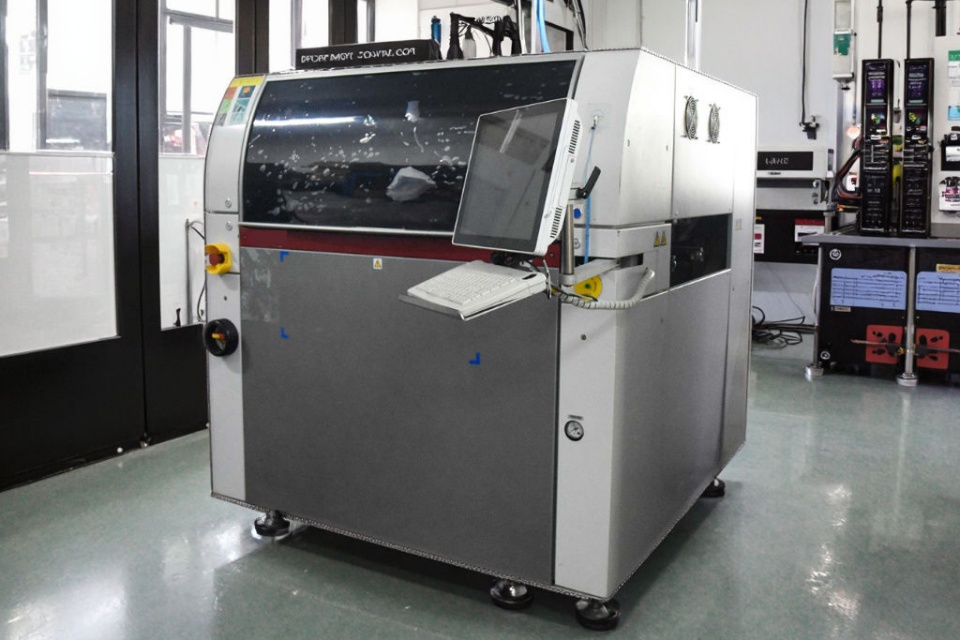
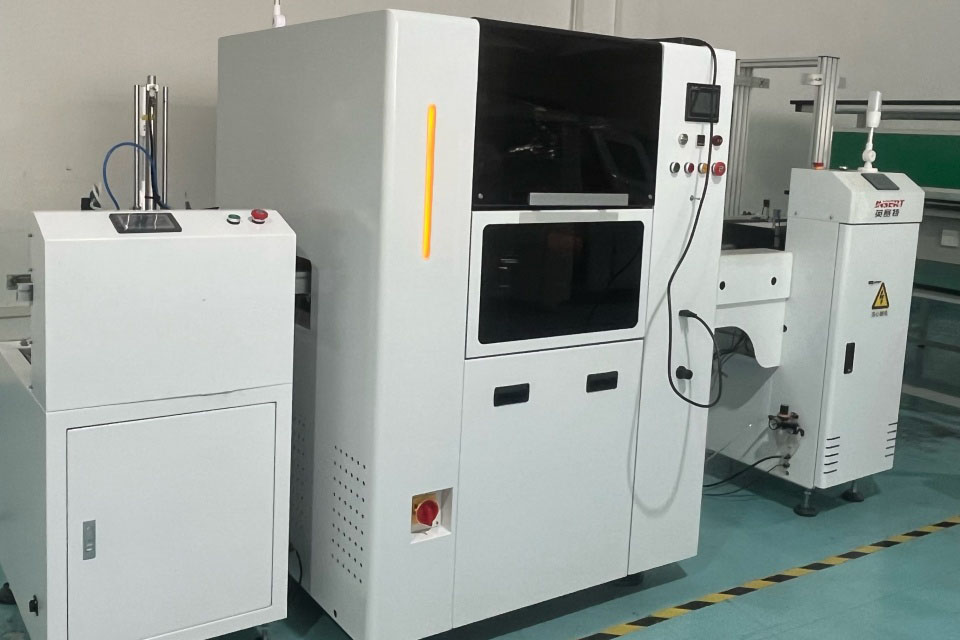
In SMT, printing is the gatekeeper. Your Solder Paste Printer category spells it out: accurate, repeatable stencil printing helps paste volume control and lifts first-pass yield.
And the Meraif solder paste printer section leans into “stable printing” + “process control” for print consistency.
Here’s the argument: when you combine process control with vision that actually understands defects, you stop fighting fires at the end of the line. You start fixing root causes near the start.
In real SMT talk, you’re trying to control:
- paste deposit volume and shape (not “looks ok”)
- stencil wipe timing (too late = smear city)
- squeegee pressure drift (hello random skips)
- board support / warpage effects (pads don’t lie)
Deep learning helps because it can spot patterns you don’t want to hand-code forever.
Deep learning defect detection vs rule-based machine vision
Deep learning beats rule-based machine vision on complex defects
Rule-based vision works… until it doesn’t. The moment you get:
- shiny pads vs matte pads
- different solder mask colors
- tiny pitch parts
- uneven lighting because someone moved a lamp (yep, happens)
…your thresholds start acting weird.
Research surveys keep repeating the same theme: deep models learn feature hierarchies directly, so they handle more complex patterns than hand-crafted rules in many industrial settings.
A quick SMT example:
- A rule system might treat “paste smear” and “paste spread” as the same blob.
- A deep model can learn that one blob still releases fine after reflow, while the other screams “bridge risk” at fine pitch.
Not magic. Just better pattern learning.
Industrial visual anomaly detection and open-set defect detection
Data scarcity and label cost in industrial defect detection
SMT defects are annoying for data. Why? Because your worst defects are rare (good news) and expensive to label (bad news). So the dataset you want barely exists.
That’s why recent surveys emphasize real-world constraints: defects are sparse, labeling is painful, and production changes fast.
In a factory, you don’t want a model that only knows yesterday’s defect library. You want something that can raise its hand when it sees “this looks off.”
Open-set defect detection and anomaly detection in manufacturing
This is where open-set defect detection and industrial visual anomaly detection show up.
One 2025 survey highlights the shift from closed-set (known defect classes) to open-set methods because factories keep meeting new defect types.
Another 2025 survey reviews a big set of anomaly detection papers and organizes methods by supervision level (fully supervised → unsupervised), which fits manufacturing reality: you often have “normal” data, not perfect defect labels.
For SMT printing, open-set thinking looks like:
- “This paste deposit is outside normal shape/volume behavior”
- “This pad pattern looks wrong for this stencil revision”
- “This board finish makes reflections, but this reflection still looks abnormal”
It’s less “classify defect A/B/C” and more “catch the weird stuff early.”
GAN-based data augmentation for data imbalance
Synthetic anomalies and imbalanced defect classes
In SMT, some defects show up once in a blue moon. If you wait for enough samples, you’ll wait forever.
Surveys and papers point out data scarcity and discuss synthetic anomaly generation as a way to reduce imbalance.
Practical translation for your customers:
- If you sell to high-mix lines, they can’t pause production just to collect defects.
- Synthetic data and targeted augmentation can help models “see” rare failure modes sooner.
No, it won’t replace real production data. But it can help the model not act blind on day one.
Domain shift in production lighting, materials, and line changes
Domain shift and generalization in real SMT lines
Domain shift is the silent killer. Same board design, different day, different result:
- humidity changes paste behavior
- stencil gets a bit worn
- camera exposure drifts
- operator swaps a light bar angle
Surveys call out domain shift as a big reason models struggle when moving from lab to factory.
What you do about it (real shop-floor moves):
- lock down lighting and camera mounts (stop the “quick adjust” habit)
- run calibration checks on a schedule, not only when you feel pain
- keep version control: stencil rev, paste lot, board finish, program rev
- retrain or fine-tune when drift shows up (don’t pretend it’ll fix itself)
Sometimes the line changes, and the model gotta change too. Simple.
Edge deployment and throughput constraints in SMT inspection
Model compression and real-time inspection on the line
SMT doesn’t care that your model is fancy. The line cares about takt time.
Surveys on anomaly detection and newer model families discuss the tension: bigger models can help with few-shot/zero-shot behavior, but they may slow inference, so people explore lightweight strategies.
In SMT terms:
- You need detection that keeps up with conveyors, not a “batch report later”
- You want stable decisions, not jittery false alarms that spam operators
So you tune the system like you tune the line: balance accuracy with throughput.
Key arguments table (SMT-ready)
| Argument title (keyword) | What it means in SMT | Practical move (no fluff) | Evidence source |
|---|---|---|---|
| Deep learning vs rule-based machine vision | Rules break under reflections, mask color changes, fine pitch paste shapes | Use deep models for complex visual patterns; keep rule checks for simple go/no-go | Surveys on defect detection + foundation models |
| Data scarcity and label cost | “Bad samples” are rare and labeling is slow | Start with normal-data anomaly detection; add labels over time | Anomaly detection survey + real-world defect survey |
| Open-set defect detection | New defect types show up after a new product intro | Use open-set / anomaly methods to flag unknowns early | Open-set survey (closed-set → open-set trend) |
| GAN-based data augmentation | Some defects almost never appear, but still kill yield | Use synthetic anomalies + targeted augmentation to reduce imbalance | Foundation-model defect detection survey + anomaly survey |
| Domain shift | Same program, different day = different results | Lock lighting, track process variables, retrain when drift hits | Open-set survey + Transformers/foundation model VAD survey |
| Edge deployment | You need speed, not a slow “lab model” | Prefer deployable models, optimize pipeline, reduce false-call noise | Foundation-model defect detection survey discusses complexity vs speed |
| Solder paste printing consistency | Print repeatability drives FPY upstream | Combine printer process control with SPI/AOI feedback loop | Meraif site: repeatable stencil printing, paste volume control, FPY |
Turnkey SMT line integration with Meraif (how to sell it without sounding salesy)
If you’re selling turnkey SMT line solutions, the best pitch is simple:
“We don’t just ship machines. We help your line behave.”
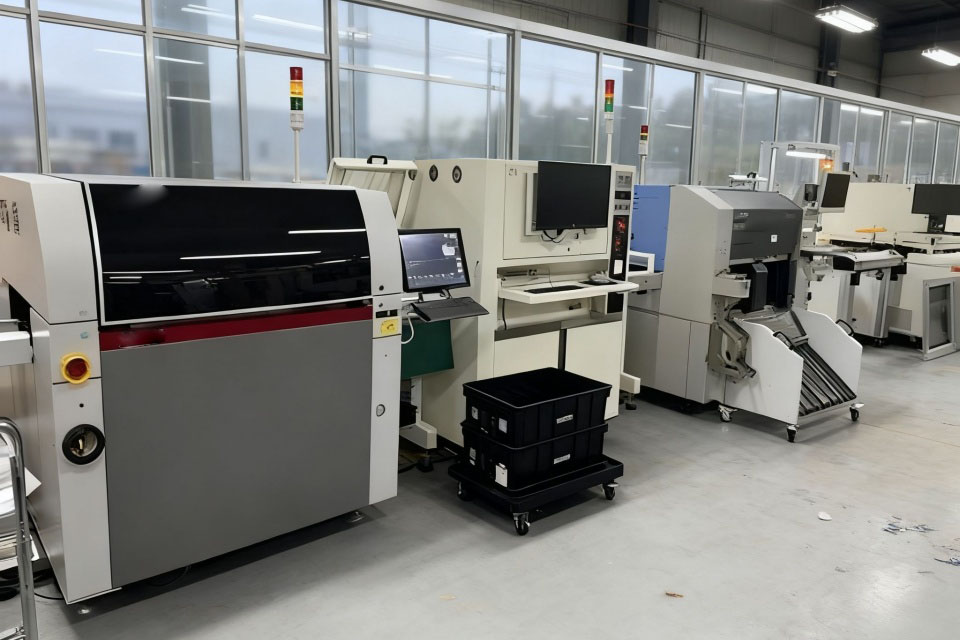
Your homepage already positions Meraif as a full-scope provider—from consultation and layout to equipment integration and training.
Your Solder Paste Printer category also frames printers inside a broader turnkey line context (pick-and-place, reflow, AOI/SPI).
So the commercial story becomes natural:
- If a customer buys a solder paste printer, they also need the upstream/downstream fit: PCB handling, printing, SPI/AOI, placement, reflow, cleaning, spare parts.
- For wholesalers and OEM/ODM buyers, they care about consistency, scaling, and service rhythm—not just spec sheets.
- Deep learning defect detection is part of that “stable line” promise, especially when customers run high-mix, quick changeovers, and tight FPY targets.
And yeah, you can say it plain: less rework, fewer escapes, smoother ramp-up. No dramatic claims, just what production managers actually want.
Closing take
Deep learning defect detection works best when you treat it like a process control tool, not a demo. Pair it with a solid printing foundation (stencil print stability, paste control), then connect inspection signals back into the line.
Do it that way, and you don’t just “detect defects.”
You prevent a bunch of them. That’s the whole point, honestly.