If you run an SMT line, you already know this truth: friction doesn’t “just happen.” It shows up as noise, heat, vibration, feeder mis-picks, conveyor hiccups, and random line stops that ruin your rhythm.
So here’s my argument: a lubrication schedule isn’t optional maintenance. It’s uptime insurance. Not fancy, not “extra.” It’s one of the simplest ways to keep moving parts moving, and keep your line stable.
Meraif builds turnkey SMT line solutions and also covers the boring-but-critical stuff—SMT grease, PCB handling machines, and SMT trolleys—because on real shop-floor, small friction becomes big trouble fast.
Lubrication Schedule for SMT line moving parts
In SMT, your “moving parts” are everywhere:
- Pick-and-place: linear rails, bearings, lead screws, feeder interfaces
- PCB handling: conveyor rails, turn conveyor mechanisms, shuttle parts, bearings
- Storage & logistics: SMT trolley casters, brakes, guide wheels, grounding chains
And if you ignore the lube plan, you’re basically saying: “Let’s wait until the line complains louder.”
Meraif’s product categories cover the full line—pick-and-place, PCB handling machines, SMT grease, SMT trolley, and more—because the line is a system, not single machine.
Why friction happens in SMT equipment
Friction is the resistance when parts slide or roll against each other. In SMT, that’s constant: rails sliding, bearings rotating, carts rolling, reels moving, feeders indexing.
The problem is friction doesn’t stay “small.” It tends to snowball:
- friction → heat
- heat → lubricant degrades faster
- degraded lube → more wear particles
- wear particles → more friction
That’s how you get the classic “it was fine yesterday” breakdown.
Key arguments you can use as H3 “thesis points”
Lubrication film reduces friction on moving parts
Your goal is simple: keep a thin lubricant film between contact surfaces. When the film is healthy, metal doesn’t grind metal, and movement stays smooth.
Friction creates heat and wear particles in SMT machines
Heat and microscopic wear debris are like a quiet tax on everything—rails, bearings, guides. You’ll see it as rough motion, weird vibration, and gradual accuracy drift.
Lubrication also controls temperature, contamination, and corrosion
Good lubrication isn’t only “slippery.” It also helps carry heat away, reduces contamination damage, and protects surfaces from corrosion (especially in humid plants or near wash processes).
Lubrication schedule means right lubricant, right amount, right timing
This is the big one. A schedule turns “someone should grease that” into a repeatable routine: what, how much, when, who.
Meraif’s SMT grease products position grease as a reliability tool—designed for protection, corrosion resistance, and longer performance life in harsh conditions.
Lubrication frequency depends on operating hours, load, speed, and environment
“Monthly” is not a real spec. Your interval changes with:
- run hours (24/7 vs day shift)
- dust level (clean room vs open warehouse air)
- speed/loads (fast conveyors vs gentle carts)
- heat zones (near reflow / hot areas)
Over-lubrication and under-lubrication both cause failures
More grease isn’t always better. Over-greasing can push grease into places it shouldn’t be, attract dust, and make a mess around sensors or belts. Under-greasing causes dry contact and wear. Either way, equipment gets angry.
Clean lubrication practices prevent dirty grease points and lubricant mixing
If you grease a dirty fitting, you’re injecting grit. If you mix incompatible lubricants, you can get weird consistency and poor protection. Clean point first. Label lubricants. Don’t freestyle it.
Friction reduction supports energy efficiency and stable throughput
Even without talking numbers, it’s obvious: less friction means less wasted motion and less stress. Your line feels smoother, changeovers don’t fight you, and downtime drops. It’s not magic—just less mechanical drama.
SMT Trolley: the “hidden moving parts” that mess with your line
People forget trolleys because they’re “not machines.” But when a trolley wheel binds, you get:
- slow kitting and line replenishment
- operator forcing the cart (ESD risk + safety risk)
- carts drifting, brake not holding, or wobble near the line
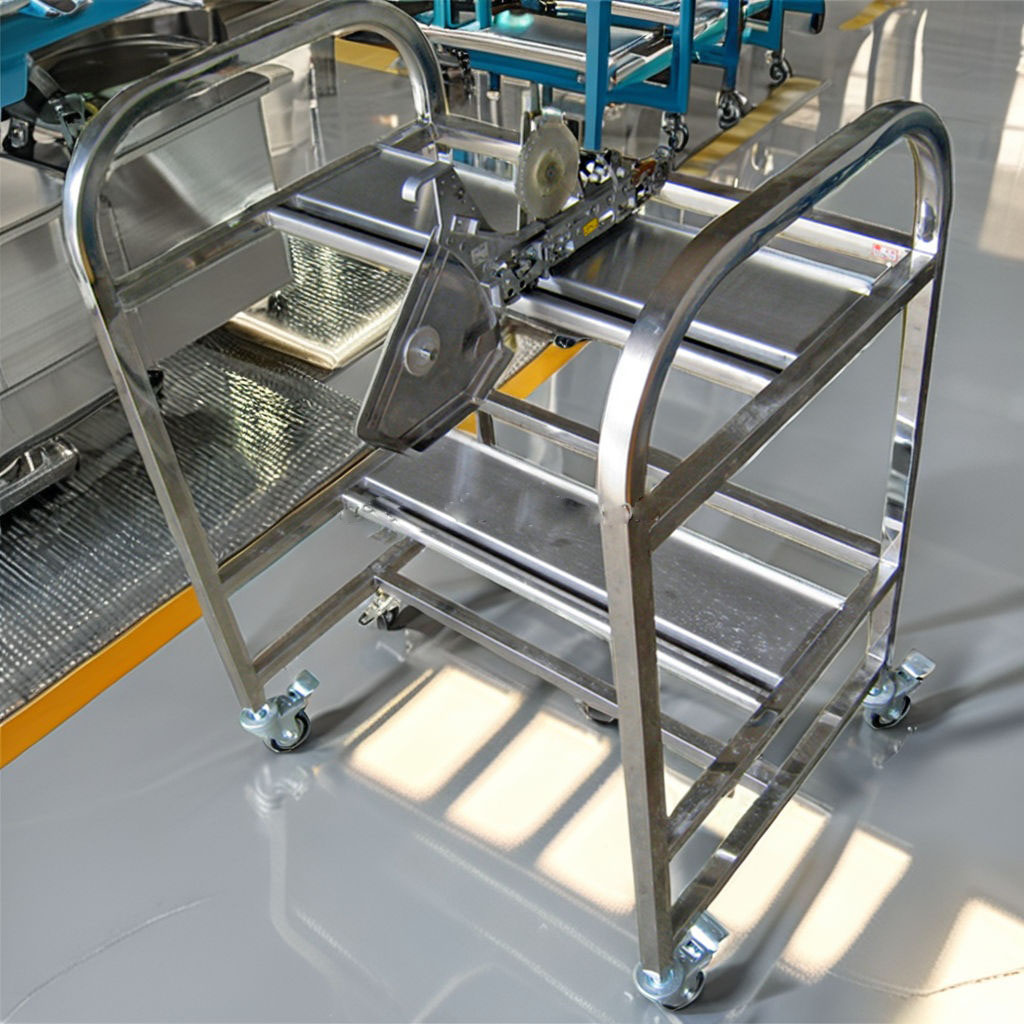
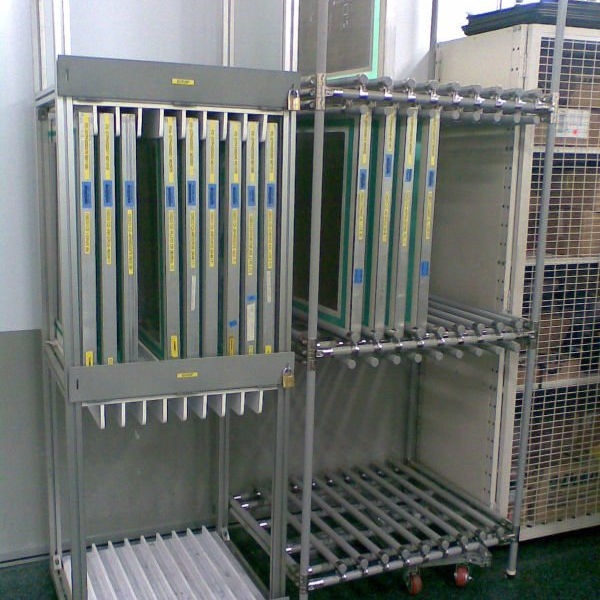
On Meraif’s SMT Trolley category page, the message is pretty direct: trolleys streamline line logistics with organized storage and smooth movement, including ESD-safe options for cleaner workflow.
And the details matter. For example, Meraif’s ESD PCB Storage Trolley lists 4-inch ESD rubber wheels, a conductive chain, and surface resistance 10^6–10^9 Ω—all practical ESD features you actually care about.
Lubrication Schedule table for SMT moving parts (practical template)
Use this as a starting point. Your OEM manual always wins, but this keeps your PM crew aligned.
| Equipment / area | Moving part | What to check | Suggested interval | Notes for SMT reality |
|---|---|---|---|---|
| Pick-and-place | Linear guides / rails | Dry spots, dust paste, rough travel | Weekly check, monthly service | Don’t let grease migrate near vision/sensors. Keep it clean-ish. |
| Pick-and-place feeders | Feeder interface points | Sticky index, noisy motion | Weekly | When feeders “act weird,” many times it’s friction + contamination. |
| PCB conveyor / shuttle | Bearings + guide rails | Squeak, vibration, belt tracking | Weekly check | If conveyors are noisy, line balance suffer and people panic. |
| SMT Trolley (PCB storage) | Caster bearings + wheel axle | Rolling resistance, wobble | Weekly check, quarterly lube | ESD wheels still need love; don’t wait until it drags. |
| SMT Trolley (stencil cart) | Wheels + brake pivot | Brake holds? wheel smooth? | Weekly | Stencil storage cart uses 4″ ESD wheels; brake wear is real. |
| Feeder storage cart | Casters | Pulls straight? | Weekly | Feeder storage carts help quick changeover; don’t let bad wheels slow it. |
| Reel storage cart | Casters + rollers | Smooth push/pull | Weekly | If reels aren’t accessible fast, kitting speed drops. |
Troubleshooting table: symptoms → friction root cause → quick fix
| Symptom on the floor | Likely friction issue | Quick action | Prevent it next time |
|---|---|---|---|
| Conveyor squeal at night shift | Dry bearing / dirty rail | Clean rail, apply correct lube | Add weekly rail wipe + check |
| Feeder starts “random mis-pick” | Sticky mechanical movement | Clean interface, light lube if allowed | Keep lube points labeled |
| SMT trolley drags / hard to steer | Caster bearing dry or clogged | Clean wheels, lube axle | Quarterly trolley wheel service |
| Brake doesn’t hold on stencil cart | Pivot friction / wear | Inspect, clean, adjust | Include brake check in weekly route |
| Grease everywhere near moving area | Over-lubrication | Wipe excess, reduce volume | Train techs: “more isn’t better” |
Real SMT use-cases: where lubrication schedule actually saves your day
High-mix changeover: feeder carts and “setup time creep”
Meraif notes feeder storage carts help quick changeovers and keep feeders protected and traceable.
But if the cart wheels bind, operators start doing the “push harder” thing. You lose minutes every changeover, and nobody notices until KPI gets ugly.
Line replenishment: reel cart speed matters more than you think
Reel storage carts improve kitting speed and line replenishment.
If your cart rolls like trash, replenishment becomes slow and messy. Then the line starves. Then placement stops. Then everyone blame the machine (it wasn’t the machine, bro).
PCB protection + ESD: trolley grounding chain isn’t decoration
That conductive chain and ESD wheel spec isn’t marketing fluff—it’s about safer handling and fewer “mystery defects.”
But when wheels don’t roll smooth, people yank the cart, hit corners, and boards get abused. Small friction turns into quality pain.
Where Meraif fits in (without the hard sell)
Meraif positions itself as “Top 1 Turnkey SMT Line Solutions Expert in China”, with 20+ years of hands-on SMT factory operations, and end-to-end support from layout to commissioning.
That matters because lubrication schedules aren’t only “buy grease.” You also need:
- the right trolley design (ESD-safe, stable wheels, good capacity)
- solid PCB handling equipment so boards move smooth and reliable
- grease options that match temperature/load reality (like wide temperature range products listed under SMT grease)
- OEM/ODM + bulk supply so you can standardize across sites (less chaos, less mixing, less mistakes)
And yeah—when you standardize the lube plan and hardware, your MTBF usually get better. It ain’t miracle. It’s just less friction, less drama.
Final take: friction reduction is a management decision
You can treat lubrication like “maintenance task,” or you can treat it like production control.
A simple lubrication schedule:
- makes motion smoother
- reduces weird downtime
- keeps carts rolling clean and ESD-safe
- helps your line hit stable throughput without constant babysit