Most lines drift.
They do not fail in one dramatic, cinematic moment; they leak seconds at every feeder swap, bleed margin on every emergency alternate, and quietly turn a scheduling problem into a sourcing problem, a quality problem, and eventually a customer problem.
And then everyone acts surprised?
I’ll say the unfashionable part first: dynamic feeder selection is not mainly about machine speed. It is about control. Real control. The kind that lets a line decide, with rules instead of panic, whether reel A from supplier X should stay on Panasonic NPM, move to Yamaha, get substituted with an AVL-approved alternate, or get blocked because its traceability chain is weak. That matters more in 2026 because the shocks from 2024 never really disappeared; they just became normal. The IMF reported that in the first two months of 2024, Suez Canal trade volume fell 50% year over year, while rerouting added 10 days or more on average, and Reuters reported UK manufacturers were seeing East Asia deliveries delayed by 12 to 18 days because of Red Sea disruption. That is the real backdrop for any serious discussion of automated component sourcing or intelligent feeder management. (IMF)
I do not buy the old purchasing argument that feeder planning belongs to manufacturing while source selection belongs to procurement. That split is exactly how you get a line loaded with the “right” parts from the wrong source, or the “right” source mapped to the wrong feeder family. If your team runs lignes SMT mixtes ou un prototype small-batch line, the penalty is immediate: more changeovers, more operator overrides, more ghost inventory, more half-validated alternates. If you run lignes de production de masse à grande vitesse, the penalty is uglier: line stoppage gets expensive fast because the denominator is huge.
Dynamic feeder selection is source management wearing steel-toe boots
Here is the hard truth.
A static feeder plan assumes the BOM is stable, feeder health is stable, supplier quality is stable, and logistics are stable, which sounds tidy in a spreadsheet but collapses the minute a 7.2-magnitude earthquake hits Taiwan and analysts start warning that supply of semiconductors and display panels may tighten while factories inspect tools and restart production.
So why would anyone still optimize as if none of that exists?
That is why I treat component feeder optimization as a decision stack, not a slotting exercise. The stack should rank, at minimum, approved manufacturer part number, source class (authorized distributor, OEM stock, broker, house stock), date code tolerance, moisture sensitivity constraints, feeder compatibility, nozzle compatibility, remaining reel quantity, line family, and placement priority. Reuters’ April 2024 reporting on the Taiwan quake made the point brutally well: even brief disruptions in Taiwan ripple through the global chip chain because the island sits at the center of semiconductor supply. In other words, the feeder table is not downstream from sourcing. It is where sourcing becomes operational reality. (Reuters)
And demand is not exactly quiet. The Semiconductor Industry Association said global semiconductor sales reached $627.6 billion in 2024, up 19.1% from 2023, with memory sales up 78.9% and DRAM up 82.6%. When that much volume and volatility is moving through the market, “best feeder selection strategy” stops being a lean-manufacturing slogan and becomes a risk filter for which parts deserve premium feeder positions, duplicate loading, or pre-qualified alternates. (Association de l'industrie des semi-conducteurs)
What intelligent component source management really means
People love buzzwords.
But intelligent component source management is not “AI” because someone added a dashboard; it is the disciplined use of provenance, pedigree, traceability events, and machine constraints so every reel, stick, tray, and substitute decision can be justified before the board is built, not explained afterward.
Would you rather explain a late shipment or a field failure?
NIST’s 2024 manufacturing traceability framework is useful here because it speaks the language too many SMT teams still ignore: provenance, pedigree, transparency, secure access, and traceability event recording. That framework matters because feeder decisions are traceability events whether engineers admit it or not. When reel 22C is split, re-labeled, moved from line 1 to line 3, or swapped with an alternate source, you just created a chain-of-custody question. If your MES, ERP, and feeder carts cannot answer it in seconds, your component source tracking is decorative. (csrc.nist.gov)
This is where the machine catalog starts to matter. Your source rules have to respect the actual SMT feeder options, and in practice that means brand and family constraints. A Yamaha CL or SS feeder strategy is not identical to a Panasonic CM/NPM strategy, and pretending otherwise is how supposedly “universal” software creates operator workarounds. If your environment is brand-heavy, build source rules around the feeder family first, then map alternates. That is why it makes sense to align feeder logic with dedicated pages like Yamaha SMT feeders ou Panasonic SMT feeders rather than treating all feeders as generic bins.
The model I would trust on a real floor
I want a system that scores each candidate source-part-feeder combination before a board lot is released. Not after. Before. The score should punish five things hard: unapproved source, weak traceability, low remaining quantity, cross-family feeder mismatch, and high changeover cost. And yes, I would rather sacrifice a little theoretical gantry travel efficiency than expose the line to a shaky alternate with poor documentation. That opinion annoys people who worship cycle-time calculators. I can live with that.
Here is the practical comparison.
| Decision Model | What It Optimizes First | What It Usually Ignores | Result on the Floor | Best Fit |
|---|---|---|---|---|
| Static feeder setup | Shortest travel and familiar slot maps | Source volatility, compliance, alternate approval timing | Clean plan, brittle execution | Stable, low-mix lines |
| Dynamic feeder selection | Travel, feeder availability, approved alternates, reel status | Requires stronger data discipline | Fewer emergency swaps, faster recovery | High-mix, variable supply |
| Intelligent component source management | Source risk, traceability, feeder compatibility, lot priority | More setup work in MES/ERP | Better resilience and auditability | Regulated, multi-customer environments |
| Hybrid strategy | Stable base load plus dynamic exceptions | Can become messy without clear rules | Strong balance of speed and control | Most modern SMT factories |
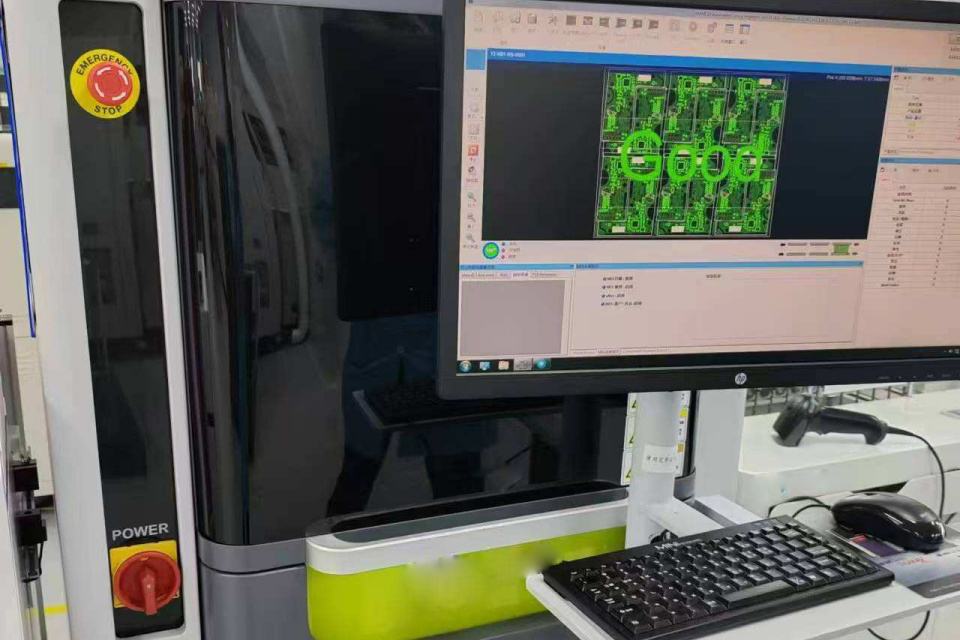
The best setups I see on paper all share the same bias: they separate “common parts that deserve permanent feeder real estate” from “volatile parts that should float.” For example, a line building consumer, automotive-adjacent, and industrial boards on the same week should not treat a stable 10k 0402 resistor, a marginally sourced MCU, and a broker-supplied connector as equivalent citizens. Common passives can live in fixed lanes. Risky sourced parts should enter a decision queue. That is what dynamic feeder selection is supposed to do.
How to improve component source management without buying another buzzword
Start small.
If the system cannot answer who supplied the reel, which feeder family can run it, whether an alternate MPN is approved, how much quantity is left, and what line is next in queue, then you do not have intelligent feeder management; you have spreadsheets with better branding.
Is that blunt enough?
I would force three rule sets into the process immediately.
First, source-tier rules. Authorized source stock gets priority. House stock with verified traceability gets second priority. Broker stock gets quarantined unless engineering explicitly releases it for defined customer classes.
Second, feeder duplication rules. Parts with repeat usage across product families should earn duplicate feeder positions or pre-staged carts. This matters even more if you manage turnkey automation projects where throughput consistency beats theoretical elegance.
Third, maintenance rules. A surprising amount of “source instability” is really feeder instability wearing a fake mustache. Worn tape advance, poor indexing, weak sensors, and damaged carts create false shortages because reels appear unusable or unreliable. That is why smart teams tie source logic to maintenance and spares instead of leaving feeder health in a separate silo.
And here is the nasty operational truth: if your feeder pool is dirty, your data will lie. A feeder recorded as available but mechanically unreliable is not available. It is a future stop.
The outside world already proved the point
The evidence is not subtle.
According to the IMF’s PortWatch analysis of Red Sea disruptions, Suez traffic slumped while rerouting increased transit times; according to Reuters reporting on UK manufacturers, East Asia deliveries were arriving nearly two to three weeks later; and according to Reuters’ Taiwan quake coverage, even short operational pauses in Taiwan can tighten semiconductor supply.
So why are so many factories still planning feeders as if 2018 never ended?
The deeper point is this: source volatility is now part of machine strategy. NIST’s 2024 supply chain traceability framework basically validates what good operations people already suspected — if provenance, pedigree, and traceability records are weak, the system becomes fragile under pressure. And the SIA’s 2024 market data shows the market is not shrinking into simplicity; it is expanding into more volume, more pressure, and more chances to make bad substitute decisions at speed. (IMF)

FAQ
What is dynamic feeder selection in SMT?
Dynamic feeder selection is an SMT operating method that assigns feeder slots, approved alternates, and replenishment priorities in real time or near real time by combining machine capability, part availability, feeder status, and production mix so the line keeps placing parts with less changeover drag.
In plain English, it decides which source-approved component should be loaded to which feeder, on which line, at which moment, without making operators improvise every exception.
How to improve component source management?
Component source management improves when purchasing, engineering, MES, and line setup share one decision model that ranks approved sources, alternates, date codes, quantity-on-reel, feeder compatibility, and traceability status before release to production, so material decisions are governed by rules instead of speed, memory, or operator habit.
The shortcut is to stop separating supplier approval from feeder loading. They are one workflow, not two.
What is the best feeder selection strategy for high-mix SMT lines?
The best feeder selection strategy for high-mix SMT lines uses a hybrid model in which high-frequency common parts stay fixed, volatile or customer-specific parts float dynamically, and all alternates are pre-ranked by source quality, feeder family compatibility, and changeover cost before scheduling starts.
That approach usually beats pure static maps because it protects both throughput and recovery speed.
Why does component source tracking matter?
Component source tracking is the discipline of recording supplier identity, part approval status, lot or date-code data, storage history, reel movement, feeder assignment, and placement context so a manufacturer can prove what was built, where it came from, and whether a substitute entered the process.
Without that record, root-cause analysis becomes theater, not investigation.
If your team is still treating feeder setup like a mechanical afterthought, fix that first. Then map the rules to the right SMT feeder catalog, align the logic to your line type, and when the data model is ready, use the page de contact to turn that logic into a line plan that can survive real supply noise, not just demo-day conditions.