Most throughput claims are padded. A machine’s published CPH number may be measured under ideal chip-placement conditions, but a real SMT floor has nozzle changes, fiducial checks, feeder replenishment, tray parts, board-transfer delays, operator decisions, and the occasional “why is this reel empty?” moment.
That is why the debate between a multi-head pick and place system and a single-head pick and place system should not start with datasheet speed. It should start with a harder question: which machine architecture produces the lowest cost per good board under your actual production mix?
What Throughput Really Means in Pick and Place Systems
Throughput is not simply how many components a placement head can mount in one hour. In practical SMT production, throughput is the number of acceptable boards completed per shift after accounting for placement speed, changeover time, machine uptime, first-pass yield, feeder logistics, operator skill, solder paste printing, inspection, reflow capacity, and material availability.
That distinction matters. Yamaha lists the YSM20R at 95,000 CPH under optimum conditions, while its YSM40R page shows up to 200,000 CPH for high-speed chip placement scenarios (Yamaha YSM20R specification, Yamaha YSM40R specification). Panasonic’s NPM-DX specification also shows head-level placement speeds such as 49,000 CPH and 35,000 CPH depending on configuration and accuracy mode (Panasonic NPM-DX specification).
Useful numbers. Not the whole truth.
If the board contains mostly repeated 0402 or 0603 passives, a high-speed multi-head system can approach impressive real-world output. If the same line is running mixed boards with BGAs, QFNs, connectors, shield cans, tray-fed ICs, and frequent engineering changes, theoretical CPH falls quickly. The machine may still be fast, but the job is no longer built for maximum-speed placement.
Where Multi-Head Pick and Place Systems Win
Multi-head pick and place systems win when the production environment is stable, repeatable, and disciplined. They are built to reduce wasted motion by picking and placing multiple components across fewer travel cycles. In volume SMT production, that can translate into lower cost per placement and higher output per square meter.
This is where multi-head machines earn their keep: automotive modules, LED boards, consumer electronics, telecom hardware, power supplies, and other assemblies with long runs and repeatable BOMs. If the feeder setup is stable and the line is properly balanced, more heads can mean more finished boards, not just a better-looking brochure.
But there is a catch. Multi-head throughput depends on keeping every supporting process synchronized. A fast mounter paired with a slow printer, undersized reflow oven, weak AOI process, or poor material staging will spend too much time waiting. That is not automation. That is expensive idling.
For factories targeting sustained volume, the better approach is to evaluate the entire high-speed mass production line instead of selecting the placement machine in isolation.
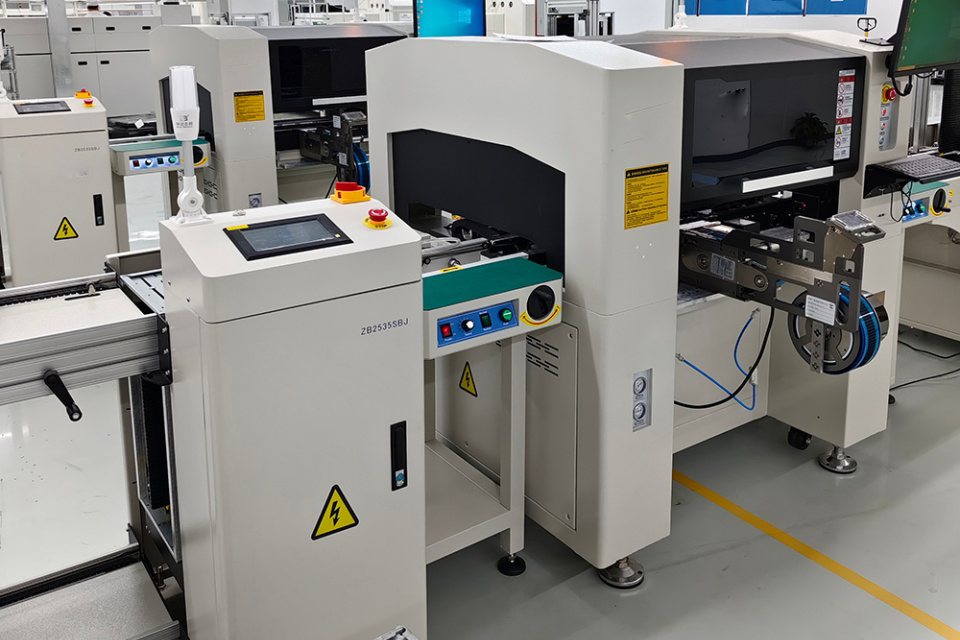
Where Single-Head Pick and Place Systems Still Make Sense
Single-head systems are not automatically inferior. They are often the better choice when production is high-mix, low-volume, engineering-driven, or forecast-sensitive. In those environments, the enemy is not always slow placement. The enemy is setup friction.
A single-head pick and place system can make sense for prototypes, pilot runs, industrial controllers, repair-linked production, custom IoT boards, aerospace assemblies, and EMS shops handling frequent product changes. These jobs punish long changeovers and reward machines that are easier to program, debug, and reconfigure.
JUKI’s RS-1R, for example, is positioned as a flexible modular mounter with 47,000 CPH under optimum conditions, using a design intended to adapt to varied production needs (JUKI RS-1R announcement). That kind of figure may look modest beside ultra-high-speed machines, but in mixed production, usable output often depends less on peak CPH and more on how quickly the next job can actually run.
For this reason, buyers running frequent NPI work or short production lots should examine prototype and small-batch SMT lines before assuming a multi-head platform is automatically the better investment.
Throughput Comparison: Rated CPH vs Real Output
The most common buying mistake is comparing machines by rated CPH alone. Rated CPH tells you what the machine can do under controlled assumptions. Real output tells you what the factory can ship.
| Factor | Multi-Head Pick and Place System | Single-Head Pick and Place System | Throughput Implication |
|---|---|---|---|
| Best fit | Stable, high-volume production | Prototypes, short runs, mixed batches | Multi-head wins on repetition; single-head wins on flexibility |
| Rated speed | Higher peak CPH, often 90,000+ on advanced platforms | Lower peak CPH, often more modest but flexible | Datasheet gap can shrink in real production |
| Changeover impact | Can be significant without strong feeder discipline | Usually easier to manage in short-run environments | Changeover time can erase speed gains |
| Component mix | Strong for repeated chip placement | Stronger for varied BOMs and frequent changes | Complex components reduce peak-speed advantage |
| Capital risk | Higher upfront investment | Lower entry risk | Demand certainty should guide investment |
| Operator dependency | High; errors scale quickly | Moderate; easier to troubleshoot | Training affects usable throughput |
| Best metric | Cost per good board at volume | Cost per good board across mixed jobs | Good-board output beats headline CPH |
The practical formula is simple:
Real throughput = rated placement speed × utilization × first-pass yield × line balance × changeover efficiency.
Most factories overestimate the first number and underestimate every number after it.
IPC reported that North American EMS shipments rose 14.7% year over year in October 2024, with a book-to-bill ratio of 1.25, showing continued pressure on electronics manufacturing capacity (IPC EMS October 2024 report). Reuters also reported that India’s electronics production reached roughly $115 billion in 2024, more than doubling over six years, while policy support increasingly targeted domestic electronics manufacturing capacity (Reuters electronics production report).
That demand pressure explains why buyers chase faster placement systems. It does not excuse poor line design.
How to Choose Based on Your SMT Production Pattern
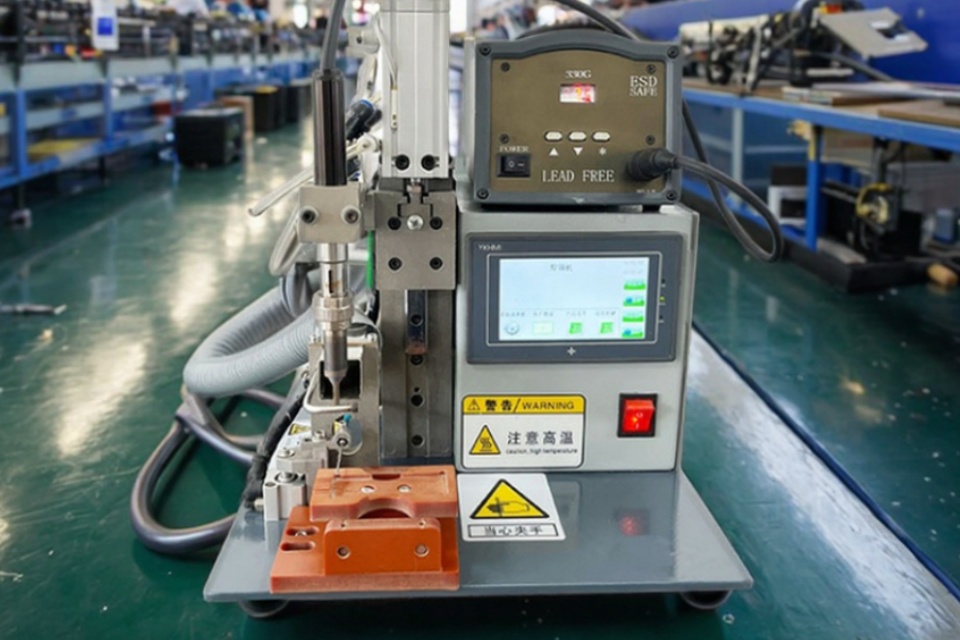
Start with the product mix. If your factory runs a small number of board types in long campaigns, with stable BOMs and predictable demand, a multi-head pick and place system is usually the stronger economic choice. It can reduce placement cost, improve output density, and support aggressive takt-time targets.
If your factory runs many board types, frequent changeovers, small lots, and engineering revisions, a single-head or flexible modular system may generate better real output. Not because it is faster in theory, but because it loses less time to setup and recovery.
For many EMS factories, the right answer is not purely multi-head or purely single-head. It is a mixed architecture: fast placement capacity for repeated passives and flexible placement capacity for complex, variant-heavy work. That is why mixed SMT line planning is often more realistic than buying one machine type and expecting it to solve every production problem.
The decision should come down to five questions:
How many unique assemblies do you run each week?
How many placements are small passives versus ICs, connectors, shields, LEDs, or odd-form parts?
How often do feeder setups change?
What is your actual shift-level uptime?
Where is the bottleneck today: printing, placement, reflow, inspection, operators, or materials?
If those answers are unclear, do not buy speed first. Build the line model first. A turnkey SMT line solution can prevent the classic mistake of buying a fast placement machine that the rest of the process cannot support.
FAQs
What is the main throughput difference between multi-head and single-head pick and place systems?
The main throughput difference is that multi-head pick and place systems can mount multiple components per travel cycle, giving them higher peak CPH in stable production, while single-head systems usually provide lower peak speed but better flexibility for short runs, frequent changeovers, and mixed-component PCB assemblies.
In real production, the difference depends on the board design, feeder setup, component packaging, inspection requirements, and operator discipline. A multi-head machine may dominate long passive-heavy runs, while a single-head machine may perform better than expected in prototype or high-mix production.
Is a multi-head pick and place system always better for production?
A multi-head pick and place system is not always better because production value depends on usable output, not maximum rated speed. Multi-head systems are strongest in repeatable, high-volume SMT environments, but their advantage can shrink when the line faces frequent changeovers, complex BOMs, tray-fed parts, or downstream bottlenecks.
The key question is whether the machine can stay utilized. If it spends too much time waiting for printing, inspection, reflow, materials, or programming changes, the extra heads do not produce extra revenue.
When should a factory choose a single-head pick and place system?
A factory should choose a single-head pick and place system when flexibility, lower setup burden, and easier job changeover matter more than maximum CPH. This usually applies to prototype builds, small-batch production, engineering-heavy assemblies, custom electronics, and EMS environments with unstable or highly varied demand.
Single-head systems can also be useful as support machines inside a broader SMT line, especially for complex components or jobs that do not justify occupying a high-speed multi-head platform.
How does pick and place machine throughput affect total SMT output?
Pick and place machine throughput affects total SMT output by determining how quickly components are mounted onto pasted PCBs, but it improves factory output only when placement is the true bottleneck. If printing, reflow, AOI, handling, or materials are slower, higher placement speed will not translate into more finished boards.
This is why throughput should be measured at the line level. Boards per shift and cost per good board are more reliable metrics than isolated CPH.
What should buyers check before investing in faster pick and place systems?
Buyers should check product mix, expected volume, changeover frequency, feeder requirements, component package range, board size, placement accuracy, operator skill, uptime history, and downstream process capacity before investing in faster pick and place systems. These variables determine whether rated speed becomes real output.
The safest buying process includes sample-board trials, changeover timing, first-pass yield review, feeder planning, and a complete bottleneck analysis across printing, placement, reflow, and inspection.
Final Recommendation
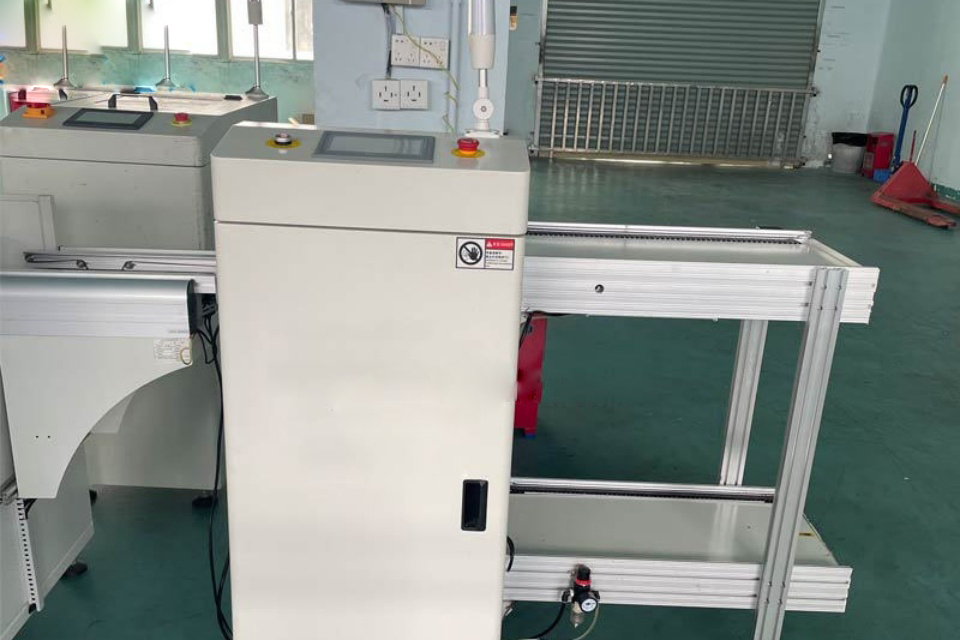
Multi-head pick and place systems are throughput tools. Single-head pick and place systems are flexibility tools. The wrong purchase usually happens when a factory confuses those two jobs.
If your demand is stable, your BOMs repeat, and your upstream and downstream equipment can keep pace, multi-head capacity is often the right move. If your production mix changes constantly, a flexible single-head or modular approach may protect margin better than raw speed.
For practical machine selection, line balancing, and equipment planning, review available pick and place machines or contact the team through the SMT equipment consultation page.