Most plans lie.
They read like scheduling documents, but the ugly truth is that many assembly plans are still optimized for utilization, takt, and staffing while the variables that actually decide quality in manufacturing—paste age, feeder validation, stencil wear, board support, nozzle selection, reflow drift, AOI gate logic, MSL handling, torque traceability, revision control—live in side spreadsheets, tribal memory, or nowhere at all.
And then people wonder why first-pass yield collapses?
I’ll say it plainly: an assembly plan without Quality by Design is just a polite way to defer pain. The pain arrives later as rework, line stops, false accepts, warranty claims, and the kind of customer call nobody forgets. That is not manufacturing excellence. That is expensive procrastination.
Quality by Design Means the Plan Knows What Can Fail
Quality by Design has a formal backbone, and that matters. In FDA’s Q8(R2) guidance, QbD is framed as a systematic approach rooted in predefined objectives, process understanding, and process control; FDA’s current Quality Management System Regulation page shows the same logic still running through modern regulation, including alignment with ISO 13485:2016 and a requirement that manufacturers consistently meet requirements and specifications. That language was written for regulated industries, yes, but the principle transfers cleanly to assembly plans: define what matters, understand what moves it, control what can break it. (U.S. Food and Drug Administration)
So when I talk about Quality by Design (QbD) in assembly plans, I do not mean more paperwork. I mean a quality planning process that binds CTQs to stations, machines, materials, inspection gates, reaction plans, and traceability before the first lot hits the line. It is design for assembly with consequences attached.
If you want the practical version, start with real process-quality guidance instead of treating quality as a postmortem meeting.
The Fantasy of “We’ll Catch It at Final Inspection”
I do not buy the old factory superstition that end-of-line inspection can rescue a weak process. It cannot. It only tells you, late and expensively, that the process already failed.
Need proof? In March 2024, Reuters reported on the FAA’s audit of Boeing, which found compliance problems in manufacturing process control, parts handling and storage, and product control. In December 2023, Reuters’ Tesla investigation described years of tracked part flaws and failures tied to low-mileage customer complaints. Different sectors. Same message. Weak process discipline does not stay hidden forever. (Reuters)
And for anyone still treating QbD as a soft idea, NIST’s manufacturing maintenance work hits harder than any conference talk: the plants leaning most on reactive maintenance were associated with 3.3 times more downtime and 16 times more defects, while stronger predictive-maintenance users were associated with an 87% lower defect rate. Add the BLS projection of about 198,800 assembler and fabricator openings per year on average over 2024–2034, and the conclusion is obvious: quality cannot depend on heroics, memory, or the one line leader who “just knows.” It has to be embedded in the plan. (NIST)
The stakes are getting bigger, not smaller. In August 2024, the U.S. Department of Commerce said CHIPS-related efforts already spanned 23 projects in 15 states, with 16 new semiconductor manufacturing facilities and more than 115,000 expected manufacturing and construction jobs; in September 2024, Commerce also said the U.S. was on pace to see more investment in electronics manufacturing construction that year than in the prior 24 years combined. Capacity is expanding. If your assembly plans are sloppy, you do not just scale output—you scale defects. (U.S. Department of Commerce)
What a Real QbD Assembly Plan Looks Like
A real assembly plan is not a traveler plus a work order. It is a living control document. It says which dimensions, joints, placements, cure windows, temperatures, force values, and cleanliness thresholds actually matter; which station owns them; which machine settings can drift; which lot codes must be captured; which inspection method is valid; and what happens the minute the process falls outside the allowed window.
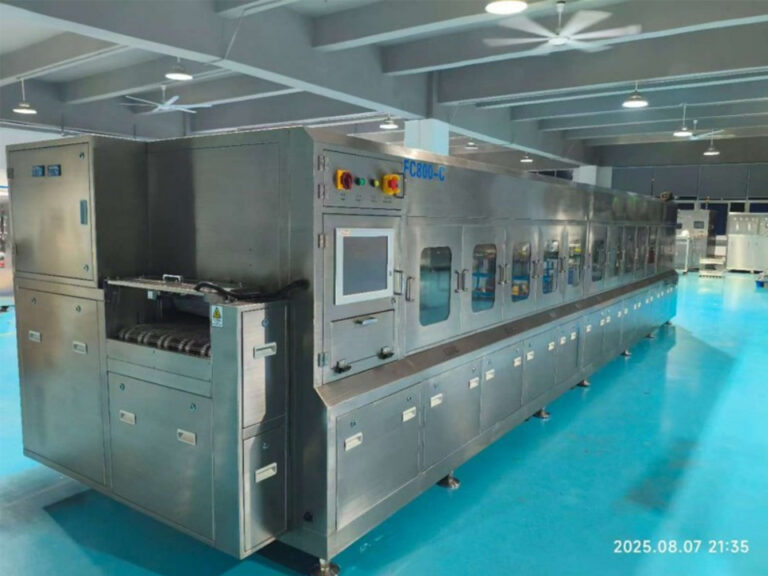
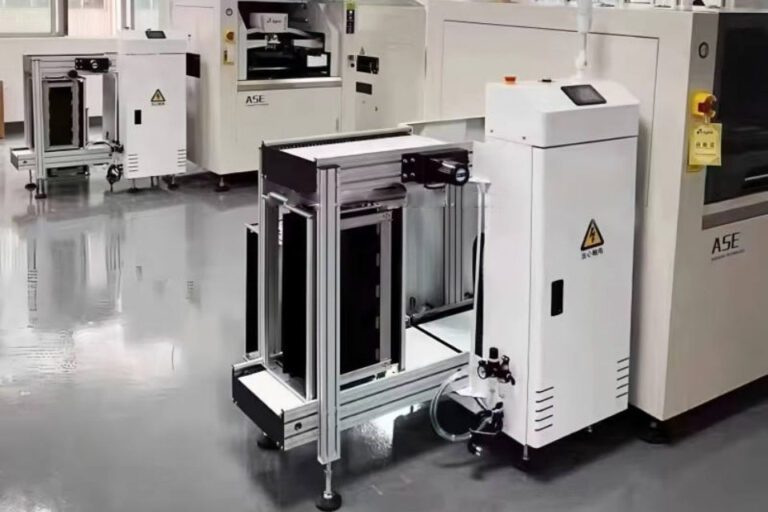
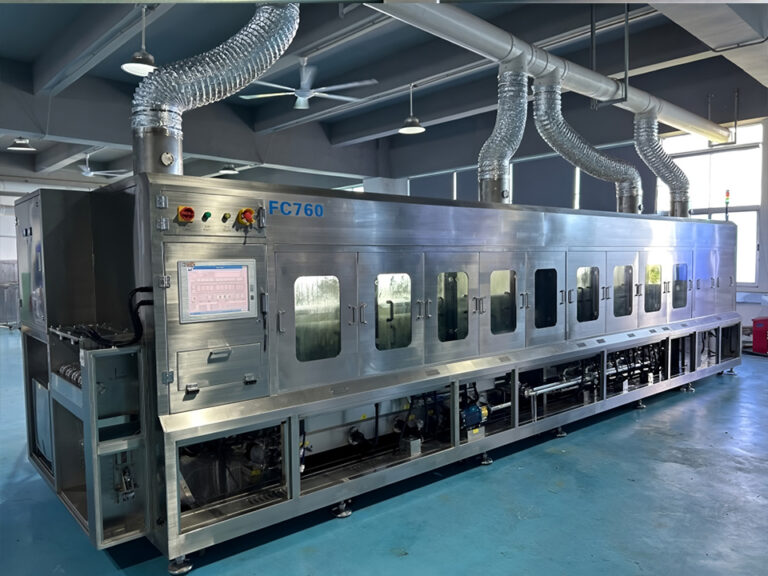
That is why the assembly plan has to change with line type. The controls for prototype small-batch lines should not be identical to the controls for turnkey SMT line solutions. Low-volume NPI needs rapid learning loops, tight ECO discipline, and brutal revision control. High-volume build needs lockable recipes, feeder-proofing, validated replenishment, SPC triggers, and fast containment rules. Same product family, different risk shape.
And no, inspection is not optional. But it has to sit inside the control loop, not outside it. Serious SMT inspection systems belong in the assembly plan as named gates with explicit pass/fail logic, escalation ownership, and feedback into upstream settings.
| Assembly-plan layer | What QbD should define | Example entity or metric | What happens if you skip it |
|---|---|---|---|
| Critical-to-quality map | Which features affect fit, function, safety, reliability | Coplanarity, solder fillet geometry, torque 0.45 N·m, cleanliness limit | Operators optimize speed, not outcome |
| Material control | Approved materials, lot traceability, storage rules, MSL handling | SAC305 paste, PCB revision, feeder barcode check, date-code rule | Mixed lots, latent failures, false genealogy |
| Equipment capability | Which machines and tooling can hold the process window | Panasonic NPM-W2S, Yamaha YRM20, nozzle family, stencil thickness | “Good enough” settings create unstable yield |
| Thermal and mechanical process | Locked ranges and verification method | Reflow delta-T, soak window, board support, placement force | Opens, voids, skew, tombstoning, warpage |
| In-process verification | Where to inspect, how to measure, what to stop for | SPI, first-article, Saki BF-Tristar II 3D AOI, GR&R <10% | Defects travel downstream and multiply |
| Reaction plan | Who owns the stop/go call and containment | SPC rule breach, 200 ppm trigger, NCR owner, hold-tag rule | Everyone sees the drift; nobody acts |
| Lifecycle feedback | How learning changes the next build | ECO closure, CAPA link, supplier NCR, golden board update | Same defect, different month |
That table is the heart of best practices for embedding quality into assembly processes. Not the slogans. Not the lobby poster. The plan.
Where the Smart Money Gets Specific
I have a simple test for any supplier, integrator, or factory manager talking about Quality by Design: ask them to show you the assembly plan section where defect prevention becomes executable. Not aspirational. Executable. Where is feeder validation documented? Where is stencil life limited? Where is the reflow profile tied to board mass and finish? Where is the AOI false-call threshold defined? Where is the quarantine trigger? Where is the ownership line when CpK slips below 1.33?
If the answer is “we handle that in production,” you do not have QbD. You have hope.
In SMT, specificity is everything. A Panasonic NPM-W2S placement strategy, a Yamaha YRM20 feeder architecture, a Heller 1913 MK III thermal profile, a Saki BF-Tristar II 3D AOI program, and a board built to IPC-A-610 Class 3 do not magically cohere because somebody wrote “follow standard process” in a work instruction. They cohere because the assembly plan makes the process measurable, auditable, and hard to improvise badly.
And if you want proof over brochure language, the right move is to read actual customer cases and see whether the supplier talks in line-balance clichés or in control plans, traceability, defect containment, inspection closure, and sustained yield.
How to Implement Quality by Design in Assembly Plans Without Wasting Six Months
Here is my blunt view. Most teams overcomplicate the first step. They launch a giant quality transformation deck, rename three meetings, and still fail to rewrite the assembly plan.
Do the opposite.
Start small. Pick one product family, one assembly line, one recurring defect cluster. Build the QbD version of the plan around five things only: CTQs, process windows, inspection gates, reaction rules, and traceability. Then force every engineering, quality, and production decision through those five fields. Once that works, scale the template.
That is how to implement Quality by Design in assembly plans in the real world. Not through corporate poetry. Through controlled repetition.
FAQs
What is Quality by Design in assembly plans?
Quality by Design in assembly plans is a method of building product quality into the line before the first board, unit, or subassembly runs by defining critical characteristics, process windows, control methods, traceability rules, and reaction plans directly inside the manufacturing instructions rather than relying on final inspection as the main defense. That is the same basic logic FDA and ICH attach to QbD: predefined objectives, process understanding, and process control. (U.S. Food and Drug Administration)
What is the difference between quality control and Quality by Design?
Quality control is the activity of detecting defects after or during production, while Quality by Design shapes the production system itself by linking specifications, material rules, machine settings, monitoring, and response thresholds to each assembly step so the process is less likely to generate defects in the first place. That distinction matters because real-world failures and audits keep pointing back to weak process control, not just weak final inspection. (Reuters)
How do you implement QbD in an assembly plan?
To implement QbD in an assembly plan, start by identifying the few variables most likely to break fit, function, safety, or reliability, then tie each one to a measurable limit, a station owner, a monitoring method, a traceability field, and a predefined reaction when the process drifts. In practice, that means converting engineering intent into executable control logic instead of leaving it scattered across emails, tribal memory, and disconnected quality forms. (U.S. Food and Drug Administration)
Why is end-of-line inspection not enough?
End-of-line inspection is not enough because it detects defects after value has already been added, meaning the business has already paid for the bad build through labor, machine time, material use, schedule loss, and often downstream exposure to warranty or compliance risk. The reporting on Boeing and Tesla, along with NIST’s maintenance-defect findings, all support the same ugly point: unstable processes create expensive surprises. (Reuters)
If your current assembly plan still treats quality as a back-end checkpoint, fix the document before you buy more machines. Review the process-quality resources, study the turnkey SMT line solutions, and contact the team when you are ready to turn QbD from a slide-deck phrase into a line-level operating rulebook.