I once watched an SMT line go dark because of a 3-cent capacitor. Not a BGA. Not an MCU. A boring little MLCC that didn’t show up, and suddenly you’re staring at idle heads, a reflow oven humming to nobody, and a scheduler quietly panicking.
Three cents. Hundreds of thousands in risk.
So when people tell me “we need supply chain resilience,” I don’t hear a slogan. I hear a question: how fast can your assembly line accept change without breaking?
And I mean real change. Alternate parts. New suppliers. A different reel width. A different pitch. A different country. A different compliance story. Same customer ship date.
The ugly truth: you’re not running one supply chain
You’re running at least two.
One is physics: boats, ports, lead times, shortages. In early 2024, Reuters reported spot ocean rates jumped hard after Red Sea attacks—Asia to U.S. East Coast up 55% to about $3,900 per 40-foot container, and West Coast up 63% to above $2,700. That’s not “noise.” That’s your buffer getting priced in overnight. Ocean cargo rates climb after new Red Sea ship attacks. (Reuters)
The other is law. Paperwork. Detentions. Denials. Reuters reported in March 2023 that electronics made up 88% of detained value under the Uyghur Forced Labor Prevention Act at the time—$961 million detained since mid-2022. US releases a third of electronics detained under China forced labor law, data shows. (Reuters)
So yes, manufacturing supply chain risk management is “logistics.” But it’s also compliance risk that can freeze “available” inventory into “not usable this quarter.”
That’s why resilience isn’t a purchasing project. It’s an assembly line design problem.
Stop treating flexibility like a nice-to-have
Most factories say they want assembly line flexibility. Then they build lines that only run when the stars align: single-source AVL, one approved MPN, one feeder setup, one stencil, one profile, one tribe of operators who know the “real” way to run the job.
It works. Until it doesn’t.
Here’s my bias: if you can’t swap a part number without a mini-civil war between engineering, quality, and procurement, you don’t have supply chain resilience. You have hope (and hope doesn’t ship product).
What flexibility looks like on a real SMT floor
Not buzzwords. Mechanics.
Production line agility is built from small, boring decisions that stack up:
1) Alternate BOMs that are actually executable
Not “we could use an equivalent.” A real, pre-approved alternate list tied to parametric limits.
Example: 0402 10µF MLCC, X5R, 6.3V. Sounds simple. Then you hit DC bias, case size constraints, and paste volume sensitivity. Your “equivalent” tombstones at high speed, or fails ICT because the capacitance collapses under load.
So we do this instead:
- Define electrical guardrails (ESR, tolerance, temp coefficient, DC bias curve).
- Define process guardrails (package 0402 vs 0603, termination finish, reel spec).
- Pre-run a short DOE on the alternates (SPI volume window, placement offsets, reflow soak).
- Lock the alternates into the MRP rules, not someone’s memory.
This is how to build supply chain resilience in assembly lines without turning every shortage into a fire drill.
2) Dual sourcing means dual failure modes
Dual sourcing in manufacturing isn’t “two vendors in the same industrial park.”
I want two geographies. Two upstream material chains. Two ways the world can break.
Because Red Sea disruption didn’t just raise costs; Reuters also reported UK manufacturers said East Asia deliveries were taking 12–18 days longer in early 2024 due to rerouting. That’s the kind of delay that eats your “just-in-time” strategy for breakfast. Red Sea disruption hits UK manufacturing at start of 2024. (Reuters)
So I push a supplier diversification strategy with a rule of thumb:
- If a part stops the line in under 48 hours, it doesn’t get a single point of failure.
- If compliance can detain it at the border, it doesn’t get a single documentation trail.
Harsh? Yep. But line-down is harsher.
3) Flex your line design, not just your sourcing
This is where flexible manufacturing systems (FMS) stops being a textbook term and becomes a layout choice.
If you want flexibility, build your flow so you can reconfigure:
- Keep your “core” SMT chain stable (printer → mounter(s) → reflow).
- Modularize what changes (AOI insertion points, depanel, selective solder, coating).
- Standardize interfaces (conveyors, board supports, fiducial strategy, recipe naming).
If you’re building new capacity, look at line concepts that support both NPI and volume, not one or the other. For example, a cell designed for prototype and small-batch SMT lines should share as much tooling logic as the high-speed mass production line you’ll scale into later.
Same language. Same recipe structure. Same feeder discipline.
Different tempo.
And when your product mix gets weird (it will), hybrid layouts like mixed SMT line configurations give you a practical middle ground between “one line per SKU” fantasy and “everything runs everywhere” chaos.
4) Use buffers like a surgeon, not a hoarder
Safety stock and inventory buffers work, but only when you’re honest about what you’re buffering.
I’m not impressed by warehouses full of random reels. I’m impressed by:
- Time-phased buffers for long-lead silicon (MCUs, PMICs, RF front-end parts).
- Line-side WIP caps that prevent starvation without hiding quality problems.
- Consumables planning (stencils, squeegees, nozzles, feeders) so changeovers don’t stall because someone “can’t find the right cart.”
If you want a sanity check, watch the macro pressure signal. The New York Fed’s Global Supply Chain Pressure Index exists because supply pain is measurable, not mystical. Global Supply Chain Pressure Index (NY Fed). (newyorkfed.org)
5) Train for changeovers, not just steady-state production
Most plants train operators to run today’s job. Then they wonder why tomorrow’s ECO is slow.
Cross-training is boring. And expensive.
Also, it’s how you keep output stable when you need a fast pivot from 01005-heavy boards to chunky connectors, or from leaded paste (Sn63/Pb37) to SAC305 profiles, or from one feeder family to another because the “good” one is stuck in transit.
If you don’t have a plan, at least steal one: formal training and after-sales support matters more when the line is changing weekly, not when everything is calm.
6) Tie flexibility to how you buy automation
Here’s the part people don’t like hearing.
If you buy equipment that only shines in one narrow operating point, you buy fragility. Fast, accurate, and brittle.
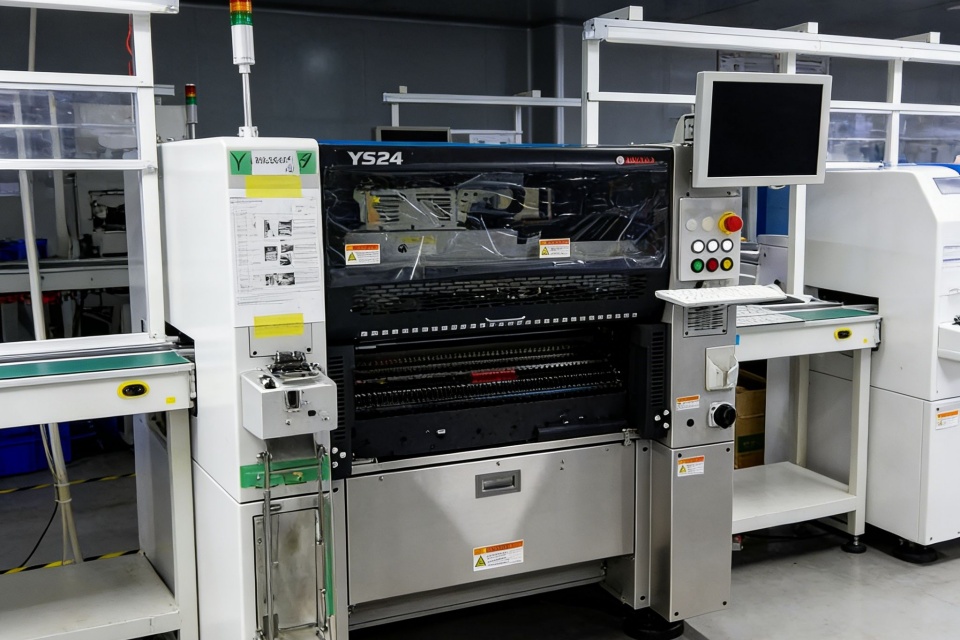
If you buy for controlled reconfiguration—feeder strategy, quick program edits, recipe governance, standardized spares—you get resilience as a side effect.
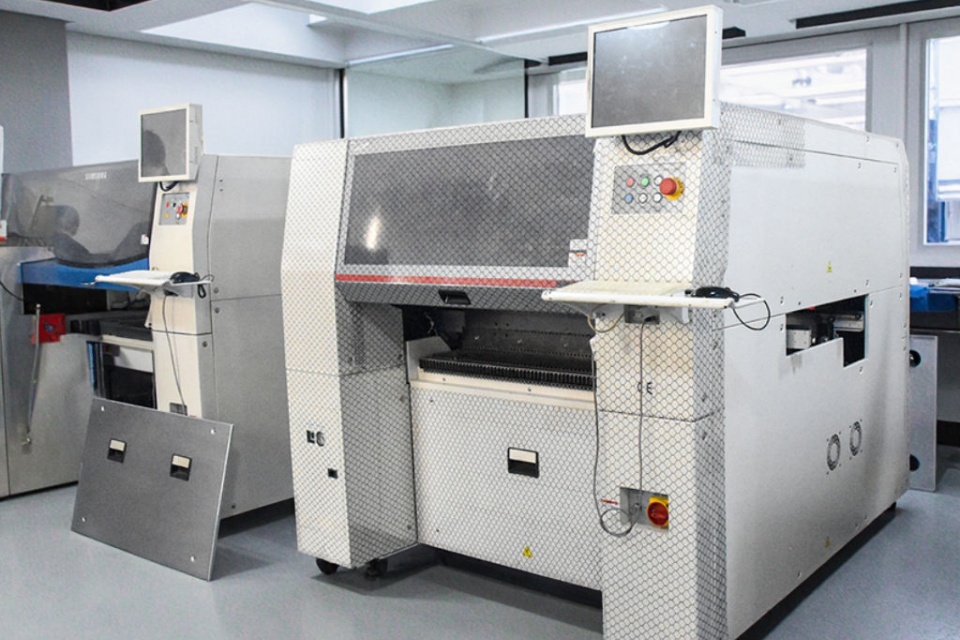
That’s why “turnkey” isn’t just a procurement word. A good turnkey build forces standardization across printer, pick-and-place, reflow, inspection, and handling—exactly the plumbing that makes switching products and suppliers less painful. Turnkey SMT line solutions is the direction I push when a factory wants fewer heroics and more repeatability.
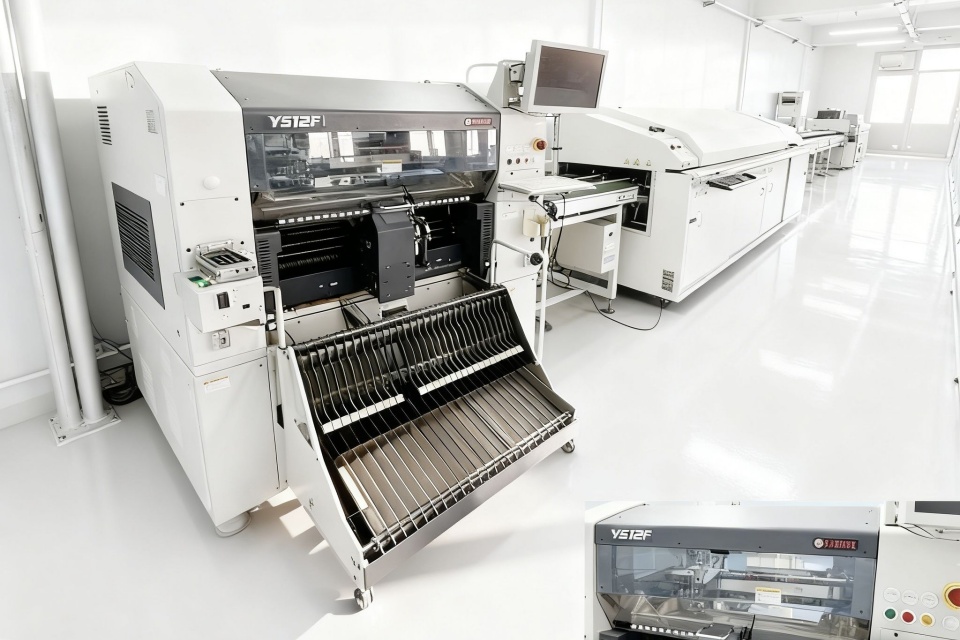
The levers that actually move resilience
| Flexibility lever | What it protects you from | Typical time to implement | Real downside (be honest) |
|---|---|---|---|
| Pre-approved alternate BOM (parametric + process limits) | Single MPN shortages, sudden EOL | 2–8 weeks | Extra validation work, more ECO discipline |
| Dual sourcing across geographies | Port disruption, geopolitical shocks | 1–2 quarters | Price variance, more supplier management |
| Modular line + standardized interfaces (FMS mindset) | Product mix swings, new variants | 1–6 months | Upfront layout planning, change control |
| Safety stock for true line-stoppers | Long lead-time silicon gaps | 2–6 weeks | Cash + obsolescence risk |
| Changeover training + recipe governance | ECO churn, operator dependency | 4–12 weeks | Training time, documentation upkeep |
| Compliance screening (UFLPA/forced-labor risk) | Border detentions, reputational hits | Ongoing | Slower onboarding of “cheap” suppliers |
FAQs
What is supply chain resilience in an assembly line? Supply chain resilience in an assembly line is the built-in ability of your production system to keep meeting output, quality, and delivery targets when parts, logistics, or compliance rules change, by using pre-approved alternates, adaptable processes, and reconfigurable capacity rather than relying on emergency expediting and last-minute heroics. If your line can’t absorb a part swap or a lead-time shock without stopping, resilience is missing.
What does assembly line flexibility mean in SMT manufacturing? Assembly line flexibility in SMT manufacturing is the practical capability to switch product mix, component sources, and process settings (feeder setup, placement parameters, stencil and reflow profiles, inspection thresholds) while holding yield and throughput inside a defined window, so changeovers stay predictable even when supply conditions force substitutions. Think “controlled change,” not “random improvisation.”
How do I choose between safety stock and dual sourcing? Choosing between safety stock and dual sourcing means deciding whether you want time protection (inventory buffers that bridge a lead-time gap) or structural protection (a second qualified supply path that reduces dependence), based on the part’s lead time, substitution difficulty, cash impact, and the probability that a shared upstream material chain could fail both suppliers at once. In practice, line-stoppers often need both—just sized smart.
What is a flexible manufacturing system (FMS) and how does it apply to assembly lines? A flexible manufacturing system (FMS) is a production approach where equipment, tooling, software, and material flow are designed for fast reconfiguration—routing changes, modular capacity, and standardized interfaces—so the factory can handle variety without rebuilding the line, which in assembly environments often means modular cells, common recipes, and consistent changeover logic across machines. For SMT, that usually shows up as modular line blocks and disciplined program governance.
How do forced-labor rules like the UFLPA affect manufacturing supply chains? Forced-labor rules like the UFLPA affect manufacturing supply chains by creating a legal presumption that certain goods are inadmissible unless you can prove clean provenance, which can trigger shipment detentions, delays, denied entry, and supplier churn—so your sourcing strategy must include documentation readiness, deeper tier mapping, and alternate suppliers that don’t share the same compliance exposure. Reuters has tracked both the electronics detentions and the expanding enforcement pressure. (Reuters)
Conclusion
If you’re trying to build supply chain resilience without slowing down your factory, I’d start with one move: map your top 20 line-stoppers, then design the line and the BOM to survive their disappearance.
Want a second set of eyes on your line concept (NPI vs volume, mixed-model strategy, training plan, feeder and recipe governance)? Reach out here: contact our team.