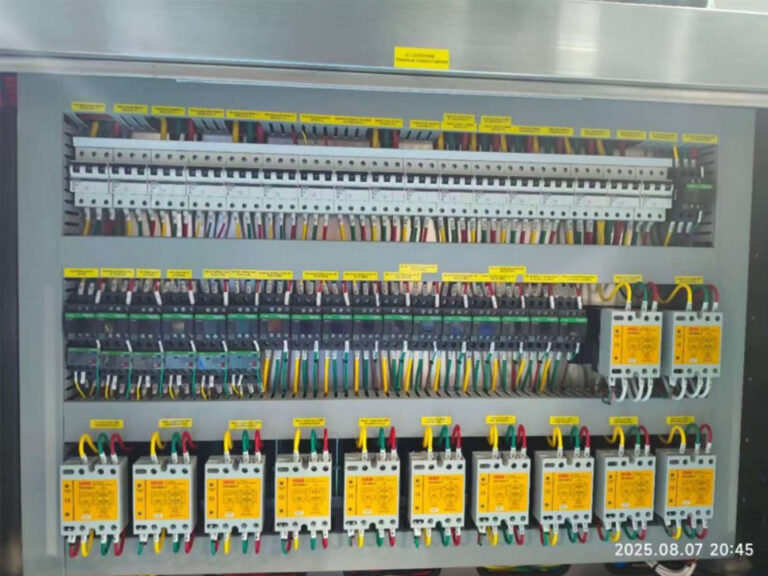
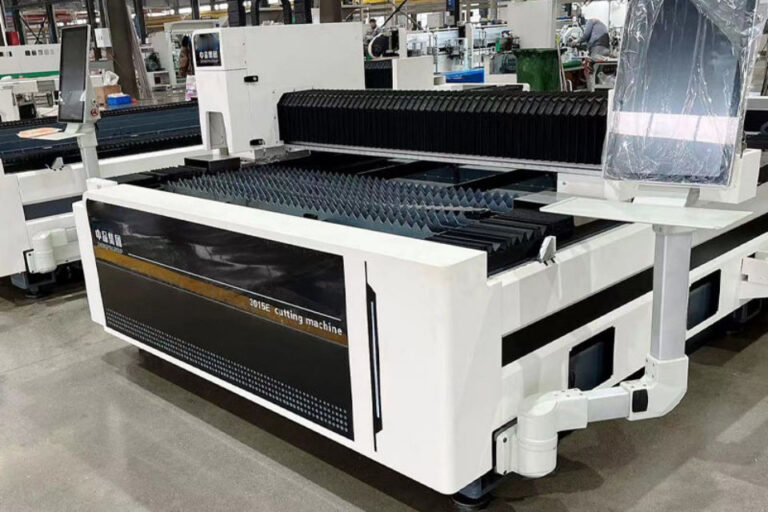
Wrong part placed.
And yeah, I’m being dramatic on purpose, because this defect isn’t like a tiny solder void you can argue about under a microscope; it’s the kind that flips a product from “passes test” to “why are customers returning this batch,” and it can happen even on a “good” line with expensive machines and a decent AOI.
So what’s “MSD” here? You wrote it as Most Severe Defects, and I get the intent: top-tier, stop-the-line, don’t-ship-this problems. But here’s the hard truth: in electronics, MSD already means Moisture Sensitive Device, and that acronym collision causes real confusion in meetings and audits. I’ve watched teams burn an hour arguing about floor life when the actual issue was a wrong part on PCB.
Want a clean definition anyway? Most Severe Defects in SMT are defects that can create a safety, compliance, or high-cost failure mode even if everything else looks fine—wrong component value, wrong footprint variant, swapped polarity device, incorrect programming offsets that push the part onto the wrong pads. Why does that matter? Because regulators don’t care that your yield chart looked pretty.
In March 2024, Reuters reported the FDA classified Abiomed’s Impella blood pump recall as the most serious type, citing 66,390 devices recalled and reports of 129 serious injuries and 49 deaths tied to the issue. That’s not SMT, but it’s the same lesson: when failure modes touch safety, the tone changes instantly. You don’t get to “explain it away.” Reuters coverage of the 2024 FDA classification. (Reuters)
Where wrong part placement really starts (hint: not the nozzle)
People love blaming the pick-and-place head. Easy target. But wrong part placement usually starts earlier, in boring places nobody wants to own:
- BOM ambiguity: two MPNs that look “equivalent,” but one is 1 µF X5R and the other is 1 µF X7R, and your power rail noise margin quietly disappears.
- AVL drift: purchasing swaps to a “same spec” part, engineering never updates the library image, AOI compares against the wrong golden.
- Kitting errors: the reel label says 10kΩ, the pocket contains 1kΩ, and the only thing between you and a field failure is whether you scan and validate.
- Program/library mismatches: CAD centroid is for the 0603 footprint, but you’re running the 0402 variant because “it fit.”
Is this harsh? Sure. Is it true? Also sure.
If you’re building lines for mixed builds, the risk spikes. High-mix doesn’t forgive lazy controls. If that’s your world, your process needs to be designed like a trap—every step catches the mistake before it becomes soldered fact. That’s why I keep pointing people to structured setups like prototype and small-batch SMT lines and disciplined scale-up paths like high-speed mass production lines instead of “we’ll figure it out on the floor.”
The dirty secret: AOI only finds what you teach it to find
AOI detection for wrong parts sounds comforting. It’s not magic. If your AOI model can’t tell a 100 nF 0402 from a 1 µF 0402 in the same body color, your “inspection” becomes theater.
Here’s how wrong component placement slips past AOI in real life:
- Same package, same color, different value (resistors and MLCCs love this trick).
- Variant placement (left vs right channel swapped, reference designators mirrored).
- Polarity confusion (diodes and tantalums on boards with messy silkscreen).
- Shadowing and glare (bad lighting profiles = false confidence).
But. AOI still matters.
It just needs backup—traceability, electrical checks, and line-level interlocks. The FDA’s own recall postings show how “just a board issue” turns into a Class I situation fast. In October 2023, Philips V60/V60 Plus ventilators were recalled due to power management printed circuit board assemblies not meeting ventilator standards, and the FDA identified it as Class I (most serious). FDA recall notice. (U.S. Food and Drug Administration)
If you’re thinking, “That’s medical, we’re not medical.” Okay. But your customers still hate RMAs. And your contract still has penalties.
Controls that actually reduce wrong part placement (not vibes, controls)
You don’t prevent wrong part placement with posters. You prevent it with locks, scans, and forced proof.
Here’s the stack I trust, in the order teams usually resist it:
- Feeder setup verification (with enforced scanning) Scan reel 2D code / label → match to BOM line item → match to feeder slot → match to program pick list. If your MES can’t do it, you can still do a “poor man’s” version with barcode + checklist + photo proof. Ugly, but effective.
- Program gating (no “quick edits” on the line) Pick-and-place programming errors explode when operators can “nudge” placements mid-run without a controlled change record. Lock the program. Require sign-off. Save the diff.
- Golden board + first-article discipline First board off the line isn’t a formality. It’s a deliberate trap for wrong part on PCB before you build 500 more.
- AOI rules tuned for wrong-part risk, not cosmetic yield Spend the AOI budget on “wrong part / wrong polarity / missing part” rules, not on chasing tiny solder fillets that don’t fail in test.
- Electrical verification where optics can’t help ICT, boundary scan, or functional test steps that detect wrong values (hello, 1k vs 10k). If you can’t test it electrically, you better have rock-solid traceability.
And if you want this to stick, you need training that doesn’t treat operators like button-pushers. That’s why I like formal training and after-sales support and process playbooks you can reuse across products, not tribal knowledge.
A quick reality table (what catches what)
| Control | Catches best | Misses often | Cost / Effort | Who must own it |
|---|---|---|---|---|
| Feeder setup verification (scan + BOM match) | Wrong reel, wrong MPN, wrong slot | Supplier mislabeling if you never incoming-check | Medium setup, high payoff | Process + materials |
| Pick-and-place program lock + change control | “Quick fix” drift, unauthorized offsets | Library errors baked into the “approved” file | Low to medium | Engineering |
| AOI detection for wrong parts (rule-based + model) | Missing, polarity, obvious wrong body | Same-body value swaps, occluded parts | Medium to high | Quality + AOI engineer |
| Golden board + first article sign-off | Early detection across the whole stack | If people rush it, it becomes useless | Low | Line leader |
| ICT / functional test targeting values | Wrong resistor/capacitor value, shorts/opens | Cosmetic placement issues that don’t change nets | Medium | Test engineering |
| Full traceability (reel → board serial) | Root-cause speed, containment | Prevents nothing by itself | High (tools + discipline) | Ops leadership |
The “Most Severe” part: compliance doesn’t care about your excuses
A wrong component placement can violate safety spacing rules even when the solder looks perfect. That’s not theory.
In April 2024, Malaysia’s Medical Device Authority posted a recall notice for IOMAX Cortical Modules stating an insulator between circuit boards may have been installed incorrectly, affecting required creepage/air gap to meet IEC 60601-1 expectations. That’s a textbook “looks fine until it doesn’t” failure mode. MDA recall notice (PDF). (Medical Device Authority (MDA))
Same story in SMT. Wrong part placement isn’t always visible. It’s often logical.
So if you want to prevent MSD-class failures, you need a line design that assumes humans will have bad days and suppliers will ship surprises. If you’re building or rebuilding a line, start with systems thinking, not shopping lists. A decent place to map options is turnkey SMT line solutions plus a sober read of process & quality resources before you spend money.
FAQs
What is wrong part placement in SMT?
Wrong part placement is a production defect where a pick-and-place machine (or the feeder setup behind it) installs an incorrect component—wrong value, wrong package, wrong polarity, or wrong variant—onto the PCB, creating an electrically incorrect build that may still look “normal” to operators and sometimes even to AOI.
Most teams underestimate value swaps (1kΩ vs 10kΩ) because the body looks identical in 0402/0603. Treat those as high-risk and force electrical verification or tight traceability.
How do pick-and-place programming errors cause wrong component placement?
Pick-and-place programming errors are mismatches between the placement program, CAD centroid data, and the live feeder configuration that can direct the machine to pick the wrong reel or place the correct reel on the wrong coordinates, leading to wrong part on PCB even when the machine is mechanically accurate and stable.
Lock programs, control edits, and require a recorded “diff” when changes happen. If edits happen in panic mode, you’ll repeat the same defect next week.
What is feeder setup verification, and why does it prevent wrong part placement?
Feeder setup verification is a controlled process that confirms each feeder slot contains the correct reel and correct component for the active job by checking labels/2D codes against the BOM and placement program, reducing wrong part placement by blocking common human errors during kitting, replenishment, and line changeover.
If you don’t scan, you’re trusting memory. Memory lies. Especially at 2 a.m.
How effective is AOI detection for wrong parts?
AOI detection for wrong parts is an optical inspection method that compares assembled PCB images to expected models to flag missing parts, polarity issues, and obvious wrong-body components, but it often struggles with same-package value swaps (like MLCCs and resistors) unless supported by strong libraries, lighting control, and risk-focused rule tuning.
Use AOI for what it’s good at, then backstop it with ICT/functional test for value-sensitive nets.
How do I prevent wrong part placement on high-mix SMT lines?
Preventing wrong part placement on high-mix SMT lines means combining enforced scanning at setup, strict program change control, disciplined first-article checks, and traceability that links reel IDs to board serial numbers, because rapid changeovers multiply the chance of swapping reels, loading wrong feeders, or running the wrong revision.
High-mix rewards discipline. It punishes improvisation. If you need a tighter operating model, build it into the line design, not into heroics.
Conclusion
If you want to cut wrong part placement without slowing the line to a crawl, we can map a control stack that fits your volume, mix, and budget—then bake it into your SOPs. Start with our service promise to see how we work, skim real outcomes in customer case studies, and reach out via the contact page when you’re ready to get blunt about your current failure modes.