Consumer electronics is brutal in a simple way: you ship late, you lose shelf space. You ship with defects, you bleed RMAs. And if your unit cost drifts up, your margin disappear fast. So “speed” and “cost” can’t be two separate projects. They’re the same system.
Below is a practical, shop-floor-friendly strategy map. It’s written for real SMT lines: stencil, placement, reflow, inspection, packing. I’ll also show where Meraif fits as a turnkey SMT line partner and Reflow Ovens supplier.
Strategy Map Table: Speed And Cost Levers Across The SMT Flow
| Keyword area (use in your outline) | What you actually do on the floor | Typical pain point it fixes | What to watch (no numbers) | Source note |
|---|---|---|---|---|
| Design for Manufacturing (DFM) / DFx | Run DFM checks before layout freeze; align pad/footprint, panelization, test access | ECO loops, rework, “why this can’t be built” drama | ECO count, rework rate, NPI cycle time | Industry practice (DFM/DFx) |
| Supply Chain Aware Design / AVL / Alternate Parts | Build an AVL, pre-approve alternates, lock “must-have” parts early | Line stop from allocation/long lead time | Shortage-driven ECO, expedite frequency | Industry practice (AVL) |
| BOM Cost Optimization | Standardize parts, reduce one-off SKUs, multi-source critical items | Slow quoting, weak leverage, buyer firefighting | SKU count, supplier concentration risk | Industry practice (BOM) |
| Rapid Prototyping / NPI Ramp | Split “proto line” vs “mass production line”; define a clean handoff | Proto chaos leaking into mass line | Ramp stability, changeover pain | Meraif line planning offers “design to ramp” |
| Reflow Ovens / Thermal Profile / SPC | Dial profile window, control soak/reflow, verify with profiler | Tombstoning, voiding, head-in-pillow, random defects | FPY trend, rework spikes after paste/board change | Meraif site mentions lead-free multi-zone + nitrogen + SPC profiling |
| SPI / AOI Quality Optimization | Catch paste + placement issues early, close loop to printer/P&P/reflow | Late discovery defects = expensive rework | Escapes, DOA/RMA drivers | Meraif offers inspection categories + turnkey lines |
| Continuous Cost Management (Kaizen) | Weekly cost-down reviews tied to yield + uptime + scrap, not just “price” | One-time cost-down that doesn’t stick | Scrap themes, downtime tags | Industry practice (Kaizen) |
Design for Manufacturing (DFM) and DFx to Cut Rework and ECO Loops
If you want faster time-to-market, start before the line even exists. DFM/DFx is not a “nice-to-have.” It’s your insurance policy against endless ECO ping-pong.
DFM checklist before layout freeze (NPI)
Here’s a real scenario: you’re launching a new earbuds board. The RF section is tight, the battery connector is special, and the mechanical team change the enclosure twice. If you wait until pilot build to do DFM, you’ll discover the ugly stuff late: keep-out violations, weak solder fillets, awkward nozzle access, and panel that doesn’t like conveyor rails.
Do the boring checks early:
- footprint sanity + polarity rules
- panelization and tooling holes (so AOI and depanel don’t fight you)
- paste aperture logic (especially for fine pitch and thermal pads)
- test access (DFT) so you don’t debug with a microscope at 2 a.m.
It sounds slow. It’s actually faster.
Supply Chain Aware Design, AVL, and Alternate Parts (Second Source)
Consumer electronics lives under allocation risk. When a key MCU goes long-lead, you don’t just pay more—you slip launch dates. That’s why “supply chain aware design” is a design rule, not a purchasing wish.
AVL rules and alternate parts (parametric swaps)
Build an AVL (Approved Vendor List) with your buyer and your SQE. Pre-approve alternates with clear parameters (package, temp range, key electrical limits). Then, when shortage hits, you execute a controlled swap instead of panic ECO.
Shop-floor truth: a rushed substitution creates ghost defects. You’ll see weird wetting, paste slump, or different reflow sensitivity. So you need alternates validated with process window, not just datasheet.
ECO discipline (change control that doesn’t kill speed)
ECO is normal. ECO chaos is not. Keep a simple ECO rule set:
- classify changes (fit/function vs process-only)
- define who signs off (engineering + QA + supply chain)
- re-qualify reflow profile if component thermal mass changes
This part is not glamorous, but it save you weeks.
BOM Cost Optimization Without “Cheap Parts” Mistakes
Cost-down is not “find the cheapest.” In mass electronics, the fast wins come from simplifying and standardizing.
Standardization and SKU diet
Every oddball part adds friction: more feeders, more inventory slots, more risk of wrong pull. Try a “SKU diet”:
- reuse common resistor/cap values
- standardize connectors where possible
- keep mechanical fasteners consistent
Less variety = faster kitting and less line changeover pain. And your buyer gets better leverage, naturally.
Multi-sourcing critical parts (don’t get single-point-of-failure)
For anything that can stop a line, push for at least two qualified sources. Even if you prefer one, having a backup keeps everyone honest and reduces “allocation tax.”
No need to calculate cost here. You’ll feel it in uptime and schedule stability.
Rapid Prototyping, NPI Ramp, and Turnkey SMT Line Planning
Fast prototypes are great… until proto habits infect the mass line. The clean way is to separate goals.
Prototype & Small-Batch Lines vs High-Speed Mass Production Lines
Proto stage wants flexibility. Mass production wants repeatability. Meraif’s solution menu literally splits these needs (“Prototype & Small-Batch Lines” and “High-Speed Mass Production Lines”).
A practical setup:
- proto line: quick changeover, flexible feeders, fast debug loop
- mass line: locked program control, stable profile, planned spares, strict kitting
When you switch from proto to ramp, do a formal “handoff build.” Don’t just copy-paste the program and pray.
Mixed SMT Lines and line balancing (takt time reality)
If your printer is fast but placement is slow, or reflow becomes the bottleneck, you don’t have a “capacity problem.” You have a line balancing problem.
Meraif promotes “Custom Mixed SMT Lines” for balancing speed and flexibility.
That’s the right idea: choose the combo that hits your takt time, not a single brand for ego.
Reflow Ovens, Thermal Profiling, and Process Window Control
Reflow is where good boards become great—or become rework. In consumer electronics, a tiny defect rate is still huge volume.
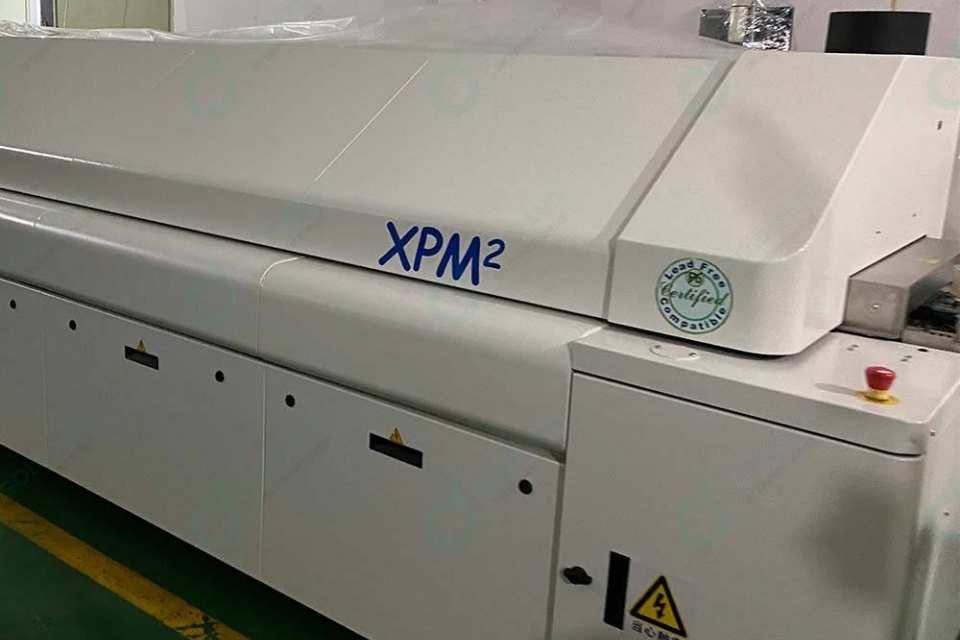
Lead-Free Multi-Zone Reflow Ovens, Nitrogen Options, and SPC Profiling
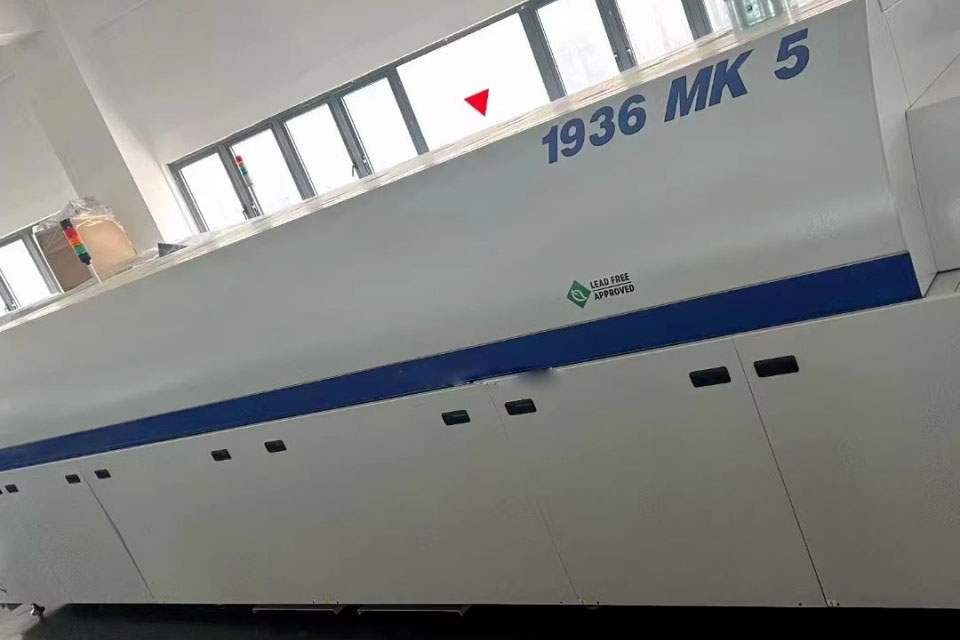
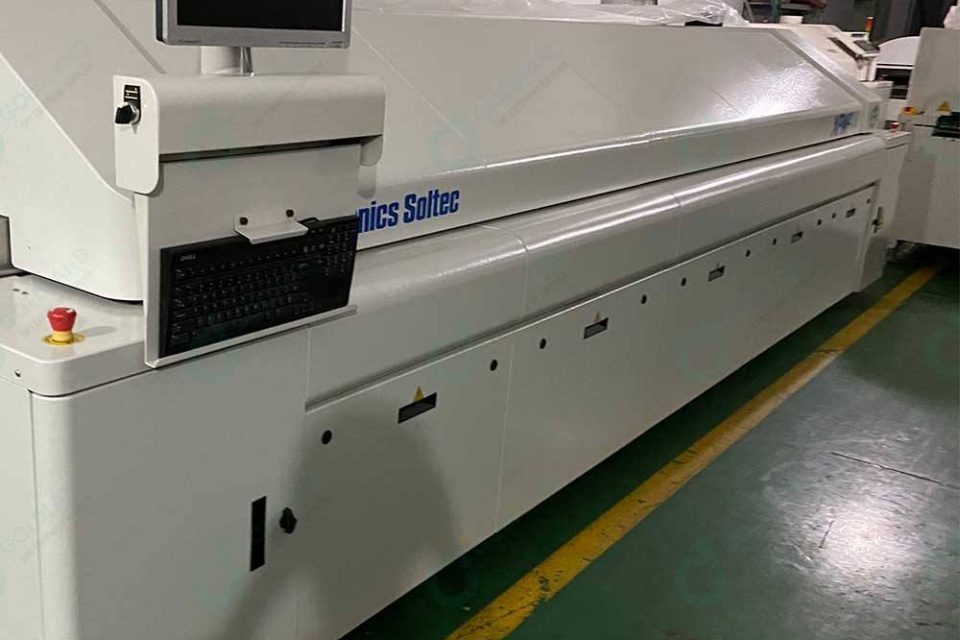
On the Meraif homepage, the Reflow Ovens section calls out lead-free multi-zone ovens, precise thermal control, nitrogen options, and SPC profiling for stable solder joints.
That’s exactly what you want when you’re chasing stable FPY.
If you’re selecting equipment, the question isn’t “how hot can it go.” It’s:
- can I hold the profile window across shifts?
- can I keep voiding controlled on BTC/QFN?
- can I maintain consistency when board mix changes?
Common reflow defects you can kill with better profiling
Real defects that burn time and money:
- tombstoning on small passives
- head-in-pillow on BGA
- voiding on thermal pads
- cold joints when soak/reflow is off
A solid thermal profile and stable oven control won’t fix a bad footprint, but it will stop random failures. And random failures are the worst, because you can’t predict them.
Quality Optimization With SPI, AOI, and Closed-Loop Feedback
Quality isn’t a separate department. It’s a feedback loop.
SPI catches paste issues early. AOI catches placement and solder shape issues. When you close the loop to printer settings, placement centering, and reflow profile, you stop “defect whack-a-mole.”
Meraif’s turnkey positioning includes reflow and inspection in the same line plan (printers, P&P, reflow, inspection).
That matters, because optimization happens at interfaces, not in a single machine.
Also, be honest: if you’re chasing DOA/RMA, you need traceability. Even simple batch tagging and failure coding help. It ain’t fancy, but it works.
Continuous Cost Management (Kaizen) That Doesn’t Fade After One Quarter
A lot of teams do “cost-down month” once a year. Then things slide back. The better rhythm is small, weekly, boring wins:
- scrap review by defect family (paste, placement, reflow, handling)
- downtime tags (feeder issue, nozzle clog, conveyor jam, profile drift)
- spares strategy (don’t wait for a belt to snap)
You don’t need a huge system to start. You just need discipline and one owner.
Turnkey SMT Line Solutions and Reflow Ovens (Meraif fit)
If you’re building or upgrading a line, you want fewer vendors to babysit. On Meraif’s contact page, they describe “Turnkey SMT Line Solutions” from design to ramp, including line layout, install, tuning, and run-ready handoff.
They also say they’ve delivered SMT line solutions with 20+ years of experience.
For Reflow Ovens, your site’s category page positions them as “high-performance reflow ovens” with “precise temperature control” for efficient PCB assembly.
And the Meraif JTE product page emphasizes programmable control and consistent temperature profile, aimed at high-throughput production.
So the commercial value is simple:
- you can source turnkey lines + reflow + spares from one place
- you can do bulk wholesale, customization, OEM/ODM for your market
- you get line-level thinking, not just “buy this machine”