Tiny parts. Big consequences.
SMT component miniaturization doesn’t “challenge placement precision” in some vague, marketing way—it breaks the old mental model that placement is the hard part and everything else is “supporting process,” because when you move into 0201 and 01005 territory, your print variation, your board stretch, your nozzle runout, and your vision thresholds start fighting each other in microns, not millimeters, and the machine is the least forgiving judge you’ll ever meet.
And here’s the hard truth I keep seeing in factory data dumps: most “pick and place accuracy problems” are upstream noise that the mounter is forced to average out.
So what changed?
The size trap: 0402 vs 0201 vs 01005 (and why people keep mixing up the names)
In the real world, teams argue about component codes and miss the physics.
- 0402 (imperial) is 1005 (metric). It’s small, but still forgiving.
- 0201 (imperial) is 0603 (metric). Now your process window starts to narrow fast.
- 01005 (imperial) is 0402 (metric). That’s where “looks fine” becomes “rework all night.”
Once you hit 01005, the board doesn’t need to be “warped” to hurt you. It just needs to be alive. A little stretch from reflow history. A little clamp pressure difference. A little fiducial paste smear. Then your “perfect” placement becomes consistent, repeatable scrap.
Why “placement precision” gets blamed (even when it isn’t the root cause)
Because placement is visible. Paste release isn’t.
One of the best public datasets I’ve seen on miniaturization pain doesn’t even come from a mounter vendor—it comes from printing. In SMTA International 2023, a study on stencil process control showed 01005 deposits behaving like two different universes: with coated stencils, coefficients of variation (CV) stayed ≤11%, but uncoated stencils ran roughly 30–60% CV. That’s not a “tweak your offsets” problem. That’s a process window collapse. According to the paper, 0201 looked stable; 01005 exposed the edge. Read it if you want a reality check: Performance Comparison of Contemporary Stencil Coatings (SMTAI 2023). (circuitinsight.com)
Now connect that to placement: if your paste volume varies wildly, your component will float, skew, or tombstone even when the machine hit the centerline.
But people still buy “more accuracy.” Why? Because it’s easy to approve a capital request. It’s harder to admit your stencil strategy is outdated.
The money trail: miniaturization is forcing heavy investment, not gentle upgrades
Mini parts mean more precision everywhere—materials, tools, inspection, handling.
Murata’s integrated reporting is blunt about the spending cycle: capital expenditures rose from 208.0 billion yen (FY2022) to 219.5 billion yen (FY2023), with 190.0 billion yen planned for FY2024. That’s not only because of SMT miniaturization, but it’s consistent with the industry’s push to pack more function into less space—more passives, tighter tolerances, higher density. Here’s the data section: Murata Value Report 2024 – Capex figures. (Murata Manufacturing Co., Ltd.)
Placement precision for 0201/01005 components: what actually moves the needle
1) Vision alignment for micro components: tighten your definition of “good enough”
When you run tiny parts, your vision system becomes a policy engine. It decides what it trusts.
What I’d audit first:
- Part edge contrast thresholds (especially for matte-black passives).
- Lighting stability (aging LEDs + dust films create fake “drift”).
- Rotation quantization (if your angle steps are coarse, 01005 will show it).
- Fiducial strategy (two is often not enough on long, thin boards).
If you’re running mixed boards, don’t pretend one vision recipe fits all. Build it like you build feeders: per family.
If you’re still designing lines like it’s 2016, look at how you’ve structured your process choices across mixed SMT lines and whether your inspection feedback loop is fast enough to matter.
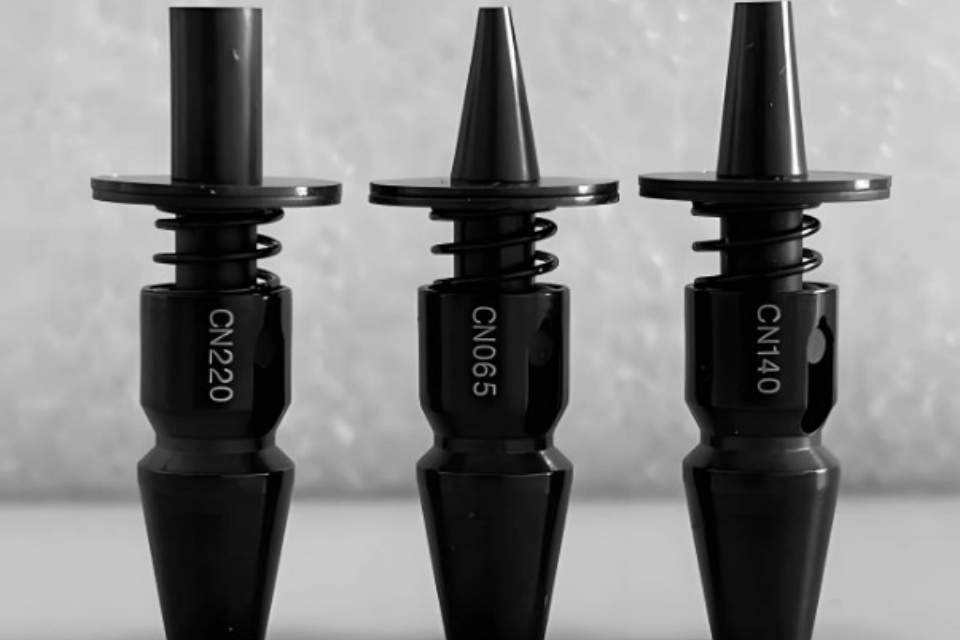
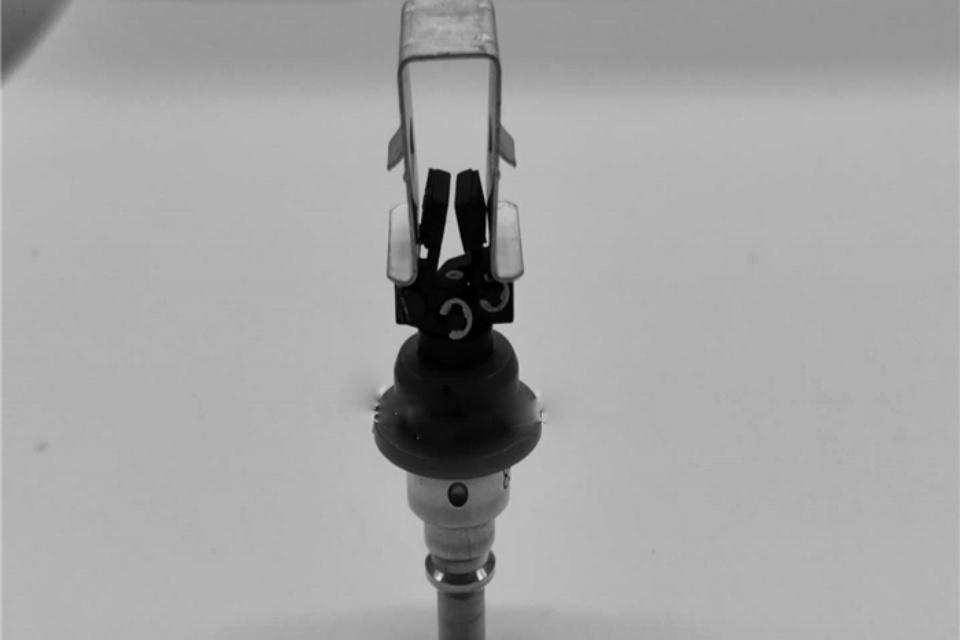
2) Nozzle selection for miniature SMDs: stop treating nozzles as “consumables”
Nozzles are metrology tools pretending to be cheap parts.
On 01005, small errors stack fast:
- Runout (even a few tens of microns matters).
- Vacuum leakage (pickup becomes inconsistent; vision starts correcting ghosts).
- Tip wear (contact geometry changes; centering changes).
And yes—cleaning matters. If you’re standardizing maintenance, don’t bury it in tribal knowledge. Put it in your line discipline and training plan, then enforce it through SMT training and after-sales support instead of hoping the night shift “figures it out.”
3) PCB assembly challenges with tiny components: board behavior is now part of placement
I don’t care how good your brochure spec looks. The board is a living object.
Watch these:
- Panel support and clamping repeatability
- Local warp near dense thermal zones
- Copper balance (yes, layout decisions show up as placement issues later)
- Fiducial cleanliness (paste smear = wrong reference = “mystery drift”)
If you’re doing prototypes, the pain is worse, because process tuning time is limited. That’s why line design matters—see how prototype and small-batch SMT lines differ from stable high-volume setups.
4) Best practices for high-precision SMT placement: control the whole window, not one machine
If you want a practical rule: your line must be capable at the smallest aperture, not the biggest component.
That’s not “philosophy.” It’s statistics.
In the SMTAI 2023 data, the paper describes capability thresholds for CV (green under 10%, yellow 10–15%, red over 15%) and shows 01005 on uncoated stencils landing deep in “unacceptable” territory. (circuitinsight.com) If your print is unstable, your placement “precision” becomes an expensive illusion.
If you want an end-to-end approach (equipment selection, process integration, inspection, training), build it like a system, not a shopping list—start from turnkey SMT line solutions.
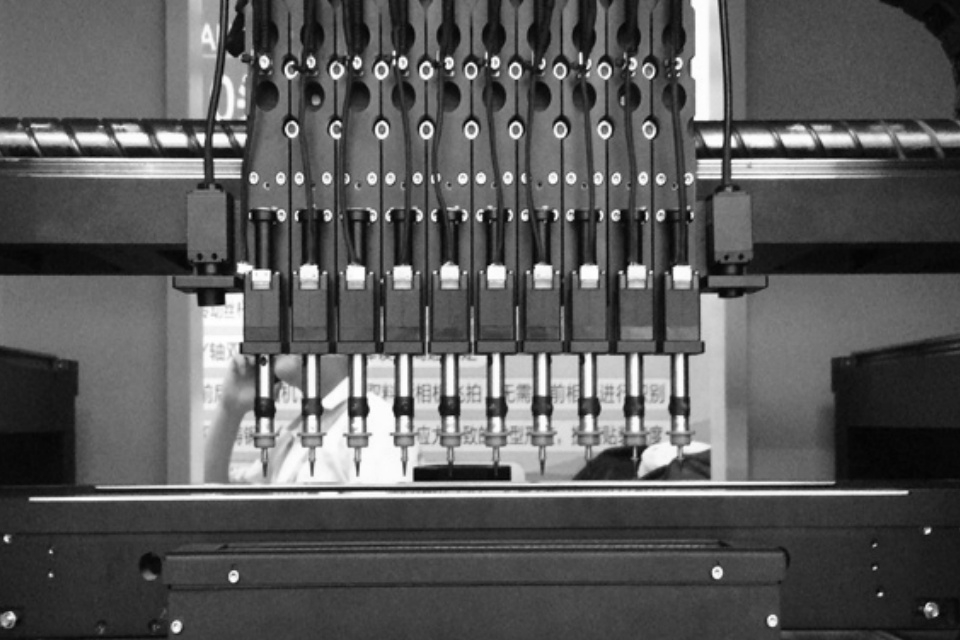
Precision Killers: where your microns go (and what to measure)
| Precision killer | What it looks like on 0201/01005 | What to measure (not guess) | What to change first |
|---|---|---|---|
| Paste release variability | random skew, opens, bridges, “AOI noise” | SPI volume CV by aperture family; wipe interval effect | stencil coating, wipe recipe (wet-vac patterns), paste type (Type 4/5) |
| Vision threshold drift | “placement drift” that comes and goes | false reject rate, edge-detect confidence, lighting drift logs | recalibrate lighting, tighten part library rules, clean optics |
| Nozzle runout / wear | consistent offset in one head/nozzle | nozzle runout checks, pickup success by nozzle ID | nozzle QA, cleaning discipline, replace wear-prone tips sooner |
| Board support inconsistency | same program, different panels behave differently | Z-support map, clamp pressure consistency, fiducial shift per panel | improve tooling, add support pins, review panelization |
| Recipe shortcuts | “works on 0402” but fails on 01005 | per-part placement correction distribution | split recipes; stop reusing generic settings |
The government angle (yes, it matters): “scale-down” is now an official manufacturing objective
This isn’t just an SMT shop-floor problem anymore—it’s part of how the U.S. is framing advanced manufacturing.
A July 8, 2024 Federal Register document on CHIPS advanced packaging R&D explicitly talks about the need to “scale-down” features and increase densities, and even calls out chiplet reconstitution as “placing and attaching singulated chiplets” in end-to-end flows. Different domain than SMT, same theme: placement precision is becoming a core national manufacturing constraint. Here’s the doc: Federal Register public inspection PDF (2024-14980).
If governments are funding “place and attach” problems at the chiplet level, don’t kid yourself that 01005 placement is “just a programming issue.”
FAQs
What is placement precision for 0201/01005 components?
Placement precision for 01005 parts is the ability of your mounter to put the component’s center and rotation within a tight tolerance band—usually measured in microns—after vision correction, accounting for board fiducials, nozzle runout, and pickup variation, not just a brochure “±X µm” spec. If your upstream variation (print and board stability) is wide, the machine can hit center and you still get defects. Precision is a system outcome.
What does SMT component miniaturization mean in practical manufacturing terms?
SMT component miniaturization means moving to smaller packages (like 0201 and 01005) that shrink pad geometry and stencil apertures so much that small shifts in paste release, board support, camera thresholds, and nozzle condition create outsized defects, narrowing your process window sharply. That’s why 01005 often “exposes” weaknesses that 0402 hides.
How do you improve placement precision for small SMD placement accuracy without buying a new machine?
Improving small SMD placement accuracy means reducing variation the machine must compensate for by stabilizing stencil transfer, tightening vision acceptance rules, verifying nozzle runout, and making board support repeatable, then validating with SPI/AOI trend data instead of trusting a one-off “golden board.” Start with SPI volume CV by smallest apertures, then correlate to AOI callouts.
Why does nozzle selection matter so much for miniature SMDs?
Nozzle selection for miniature SMDs matters because the nozzle is the physical interface that controls pickup centering, vacuum stability, and mechanical repeatability, and tiny wear, runout, or leakage that barely affects 0603 parts can cause visible offsets, rotation error, or dropped picks on 01005. Track pickup success and post-placement correction deltas by nozzle ID to find the offenders.
What’s the biggest hidden risk when moving from 0402 to 01005?
The biggest hidden risk is assuming your printing and board-holding process is “good enough” because it worked on larger parts, even though evidence shows 01005 can push uncoated stencils and marginal wipe strategies into instability with very high variation, effectively collapsing the usable process window. If you don’t validate with SPI stats at the smallest apertures, you’re flying blind. (circuitinsight.com)
Conclusion
If you’re planning to run more 0201/01005 builds, don’t start by shopping accuracy specs. Start by mapping where your variation comes from—print, vision, nozzle, board support—then design the line around that reality.
If you want a blunt second opinion on your setup (prototype, mixed, or high-volume), check our service promise and then contact our team with your component mix, smallest package, paste type (e.g., SAC305 Type 5 vs SnPb Type 4), and your current SPI/AOI trends.