Sticker price lies.
Used vs new pick and place machine decisions look simple until you price the stuff nobody puts on the quote—feeders that don’t match, software licenses that don’t transfer cleanly, service coverage that vanishes after serial-number checks, and the most expensive line item of all: downtime you thought “won’t happen.” Ready to do this the hard way, on purpose?
So here’s my stance. If you can’t explain your pick and place machine total cost of ownership in one spreadsheet tab, you’re not buying equipment. You’re buying surprises.
The TCO frame that doesn’t let you hide
TCO is not “machine price + maintenance.” It’s the full cash and risk profile across the machine’s useful life, normalized to output. For SMT, I like two outputs:
- Cost per placement SMT (best for high runners)
- Cost per board (best for mixed lines where placements lie)
A basic pick and place machine TCO calculator looks like this:
TCO (cash) = Purchase + Freight + Install + Training + Feeders/Nozzles + Spares + Software + Service + Energy + Planned PM + Unplanned Repairs + Changeover Loss + Scrap/Debug Loss − Resale
Cost per placement = TCO ÷ Lifetime placements
That last line is where bad deals get exposed.
New machines: you’re paying for predictability (and for the vendor’s rules)
Want a clean example of what “new” really buys? Panasonic’s North America launch note for the NPM-GH spells out the pitch: availability date, accuracy claims, and throughput numbers (±15 μm, “51,000 chips per hour,” and an “ultra-precise” ±10 μm spec). Read it like a buyer, not like marketing. You’re not just buying speed—you’re buying a known baseline for capability, support, and parts availability. Panasonic’s July 16, 2024 announcement. (na.panasonic.com)
But. New also means you live inside an ecosystem: approved feeders, approved parts, approved software versions, approved service terms. That can be fine—especially if you’re building a full line and want one throat to choke. If you’re doing that, don’t buy piecemeal. Look at a complete turnkey SMT line solutions approach and price the integration work upfront.
Used machines: you’re buying time, not just equipment
The “used” pitch is always the same: faster delivery, lower capex, acceptable performance.
And that part is often true.
MIT researchers looking at the secondary market for semiconductor manufacturing equipment make a point that maps cleanly to SMT: secondary markets can shorten lead times and cut purchase cost, but you inherit information gaps and hidden integration friction (documentation, remaining life, compatibility, and serviceability). They also cite a secondary market measured in the billions, which tells you this isn’t a niche corner—this is a real economic layer. MIT paper (May 2024). (MIT Digital Supply Chain Transformation)
Here’s the hard truth: a used placement machine that’s “cheap” but forces you into a feeder rebuild is not cheap. It’s a loan with a nasty interest rate.
If you’re shopping used, I’d rather see you buy from a supplier who will put support in writing and tie it to real training and parts access. If you want to see how we frame that, start with our service promise for SMT equipment and then push on the details (response time, parts lead time, what “refurbished” actually includes).
The cost pressures that make TCO matter more than ever
TCO gets more brutal when labor and materials move against you—because every hour of debug, rework, or babysitting gets more expensive.
IPC’s 2024 sentiment work is blunt: manufacturers reported rising costs (labor and materials) and described how macro conditions (like interest rates) can filter into reduced capex and slower investment. That is exactly why “buy cheap now, fix later” becomes a trap in a tight labor market. IPC March 27, 2024 release. (electronics.org)
And IPC’s June 2024 release highlights something buyers ignore: capacity utilization can swing, demand can weaken, and cost pressure can rise—all while you’re still making payments on equipment that doesn’t earn when it’s down. IPC July 3, 2024 release. (electronics.org)
That’s the TCO context. Not theory. Budget reality.
The line items that decide “used vs new” in the real world
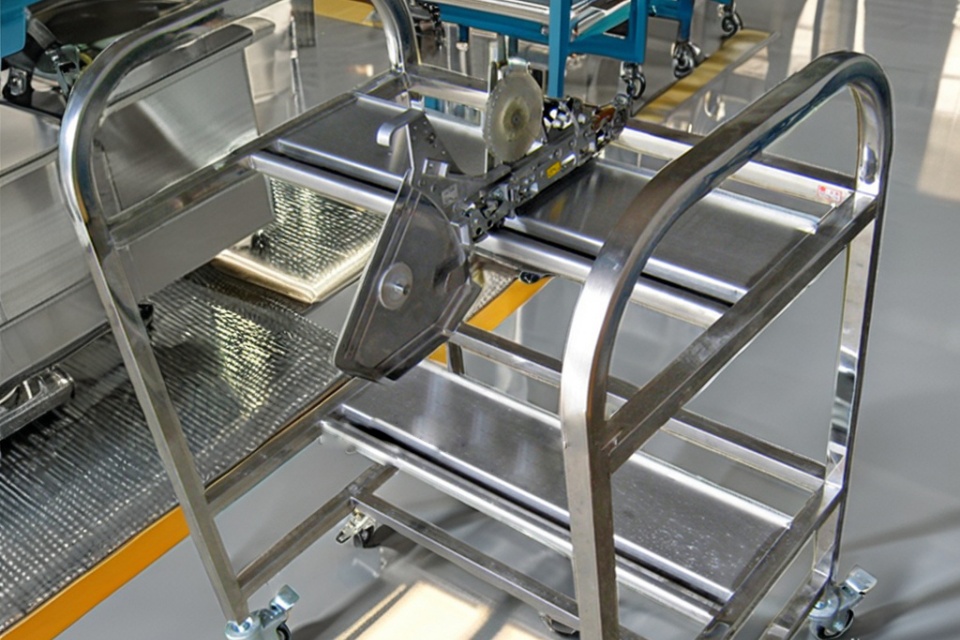
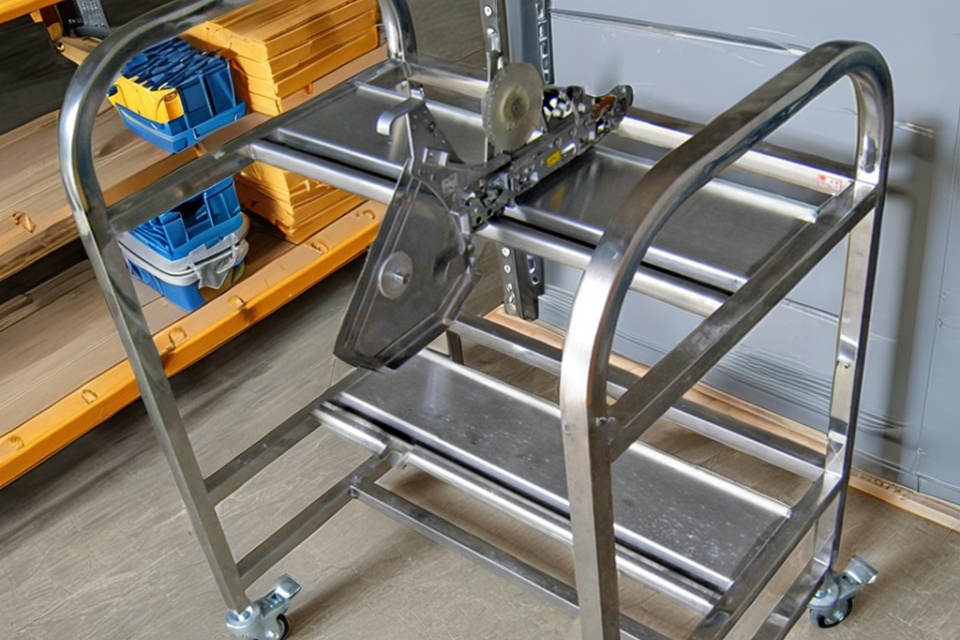
1) Feeders: the silent budget killer
People price the head. They forget the stomach.
If your used machine comes without the feeder set you need (8mm, 12mm, 16mm, odd-form, trays), you can easily spend your “savings” rebuilding the front end. And you still might end up with mixed revisions that increase misfeeds.
If you run mixed product, also price changeover tooling and staging. This is where mixed SMT lines planning beats “we’ll wing it.”
2) Service terms: what you can’t fix fast, you pay for twice
Mycronic’s annual reporting describes service contracts that can include maintenance and spare parts replacement. That’s not a sales brochure detail—it’s a hint that mature OEMs treat service and spares as a core revenue stream, which means you should treat service as a core TCO stream. Mycronic Annual & Sustainability Report 2024 (PDF).
Translation: if the used machine can’t get supported cleanly, you’re signing up for longer downtime windows and expensive “one-off” fixes.
This is why I push buyers to price training like it’s equipment. If you want structured coverage, look at training and after-sales support and then compare that cost to one serious line stop.
3) Software and “rights to run”
Some platforms treat software like a product. Others treat it like a leash.
Before you call anything “refurbished pick and place machine,” confirm:
- license transfer terms
- vision library availability
- data export for traceability
- remote diagnostics access
And yes, you should read warranty fine print. Here’s our baseline: warranty policy.
4) Output risk: your cost per placement SMT swings on downtime, not on capex
A used machine that runs 92% uptime vs a new machine that runs 97% uptime doesn’t sound dramatic—until you realize that’s almost double the unplanned downtime hours across a year on a 2-shift line.
I won’t fake your numbers. But I will tell you what to model: worst-week downtime. Because that’s when you miss shipments, pay overtime, and lose trust.
A comparison table you can actually use
| TCO driver | New SMT pick and place machine | Used / refurbished pick and place machine | What I’d demand in writing |
|---|---|---|---|
| Purchase price | Higher upfront | Lower upfront | Quote validity + included options |
| Lead time | Depends on build slots | Often faster if in stock | Delivery date + penalties |
| Placement capability | Known spec baseline | Varies by wear/config | Demo with your parts (01005/0201, fine pitch) |
| Feeders/nozzles | Usually clean ecosystem | Often mixed/partial | Full feeder list, revision IDs, condition |
| Maintenance costs | Predictable with contracts | Spiky without parts access | PM plan + spare parts list + pricing |
| Downtime risk | Lower early-life | Higher unless properly rebuilt | Uptime assumptions + support SLA |
| Resale | Stronger if current gen | Can be good if popular model | Buyback terms or resale support |
| Total cost of ownership | Stable if utilization holds | Can beat new if risk is controlled | Transparent TCO calculator + assumptions |
A worked TCO example (illustrative, not a quote)
Let’s say you’re choosing between:
- a used platform that meets today’s boards, and
- a new platform that also covers your next 24 months of density (more 01005, tighter pitch BGAs, higher feeder count).
If the used option saves you €200k upfront but costs you:
- one extra day of downtime per quarter,
- a feeder rebuild,
- and higher scrap during ramp,
your cost-per-placement can end up worse than new by year two.
That’s why I don’t “pick sides.” I pick assumptions. Then I attack them.
FAQs
How to calculate total cost of ownership for a pick and place machine?
Total cost of ownership (TCO) for a pick-and-place machine is the complete lifetime cost to buy, install, operate, maintain, and retire the system—minus resale value—measured against the output you get (placements, boards, or hours) across its useful life. Build a spreadsheet with cash costs (capex + opex) and risk costs (downtime, scrap, changeover loss). Then divide by expected lifetime placements.
What is “cost per placement” in SMT?
Cost per placement is the total lifetime cost of your placement system (all-in TCO) divided by the total number of components it places over its useful life, so you can compare equipment choices using a single output-based metric instead of headline purchase price. Use conservative uptime and realistic product mix; “best case” inputs make the number worthless.
Are refurbished pick and place machines worth it?
A refurbished pick-and-place machine is a used machine that has been rebuilt to a defined condition standard (parts replaced, alignment verified, documentation updated), ideally with test proof and support terms, so buyers trade some capex savings for controlled risk versus unknown-condition used equipment. Yes—if refurbishment includes feeders, calibration records, and a support path with parts access. No—if it’s just cleaning and paint.
What maintenance costs should I budget for a pick and place machine?
Maintenance cost is the ongoing spend required to keep placement accuracy, throughput, and reliability inside spec, including preventive maintenance labor, consumables, calibration, periodic part replacement, and any service contracts that bundle spare parts or repairs. Start with planned PM costs, then add an “unplanned” reserve that scales with machine age and parts availability.
Do feeders change the used vs new math?
Feeders change the math because they are the interface between your BOM and the machine, and mismatched, incomplete, or worn feeders create direct costs (replacement/repair) and indirect costs (misfeeds, downtime, changeover loss) that often exceed the headline savings of used equipment. If your used quote doesn’t include a complete feeder list, you don’t have a quote.
When does buying new make more sense than used?
Buying new makes more sense when your risk cost is high—high-mix with tight changeovers, high-volume with penalties for missed shipments, advanced component density (01005, fine pitch), or when you need predictable service and parts availability over years, not months. If the machine is a bottleneck, pay for predictability.
Conclusion
If you want, I’ll pressure-test your numbers. Send me your product mix (component types, placements/board), target throughput, shift pattern, and whether you already own feeders in a compatible ecosystem. Use our contact page and tell me if you’re running prototype and small-batch lines or high-speed mass production lines.