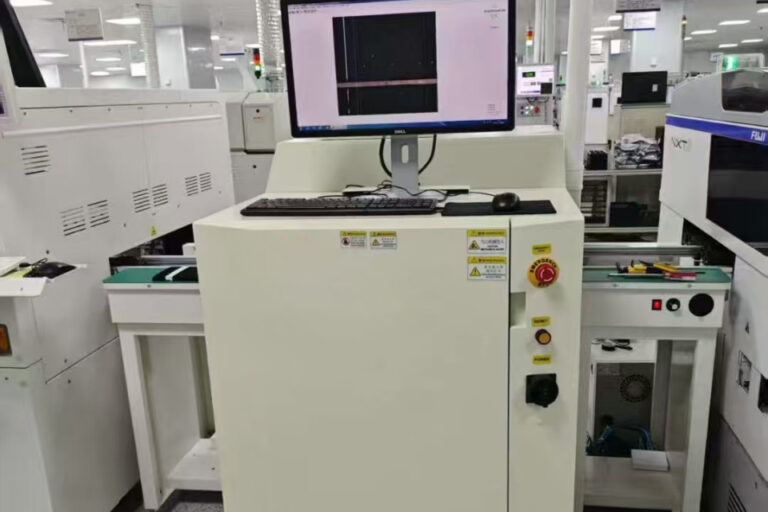
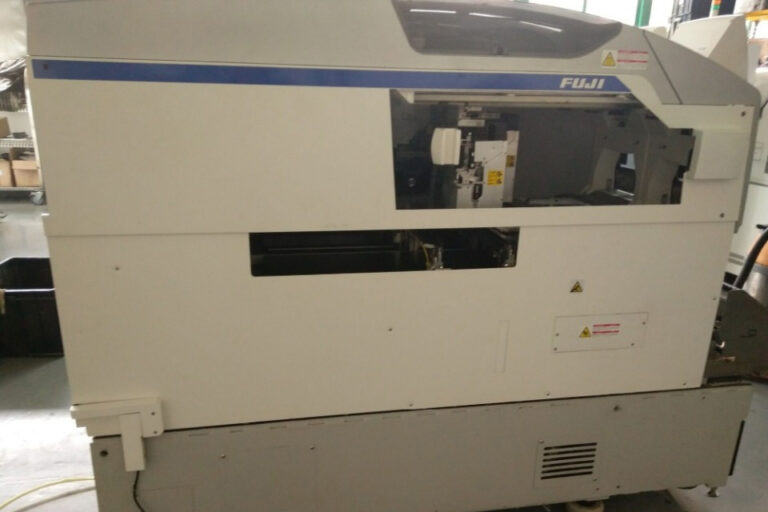
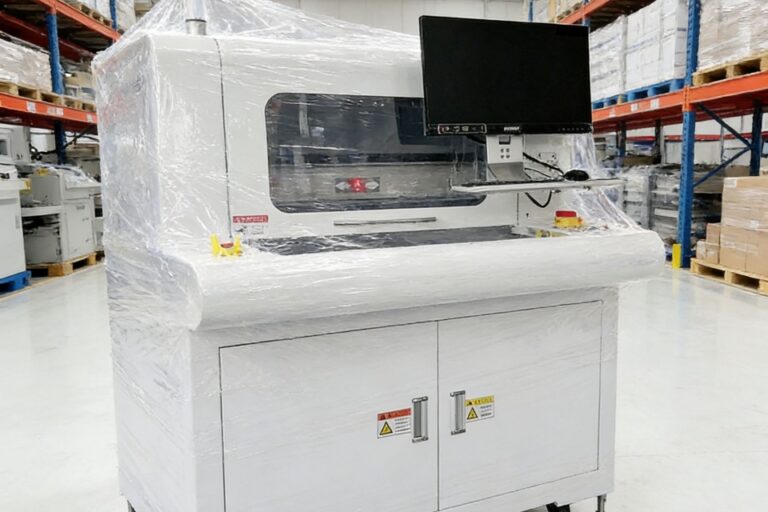
I’ve seen fast lines look slow for embarrassingly simple reasons, and one of the most common is this: the placement head gets blamed, the CPH number gets interrogated, management starts muttering about machine upgrades, but the real drag sits one step earlier—part presentation, tray swaps, validation misses, and line-side hesitation nobody wants to own. It’s messy.
And that’s why I frankly believe tray feeder discussions are usually handled backward. People shop hardware first. Process second. Then they act surprised when the line still hiccups on large connectors, shields, modules, JEDEC-trayed ICs, and weird package families that don’t behave like friendly tape-and-reel passives. Same story.
The line doesn’t choke where people think it does
But here’s the ugly truth: when you’re dealing with large component batch handling, the line rarely loses money because the mounter is “too slow.” It loses money because the setup is ragged, the tray isn’t staged, polarity confirmation gets fuzzy, and an operator ends up babysitting a feed problem that should’ve been solved long before the board entered the zone. That’s the leak.
Three words. It spreads.
I’ve watched factories pour money into speed while ignoring feeder logic, which is a bit like buying a race engine for a truck that still has a clogged fuel line, because no matter how pretty the machine spec looks, bad tray handling will still jam up the rhythm with micro-stops, false pickups, vision retries, nozzle hesitation, and those awful little “hold on a sec” moments that never show up cleanly in the daily output report.
That’s why a proper SMT tray feeder isn’t just a feeder. It’s a control point. It stabilizes orientation. It protects fragile bodies and pins. It reduces cowboy loading moves at the machine. It takes some of the line’s performance out of human memory—and puts it back into the process, where it belongs.
And no, I don’t buy the lazy line that every factory simply needs more feeder slots. Not for this class of problem. The real question is nastier: can the right part hit the right pickup point, at the right angle, in the right sequence, without creating a stop, a search, or a line-side debate? If the answer is “mostly,” you’ve already got a problem.
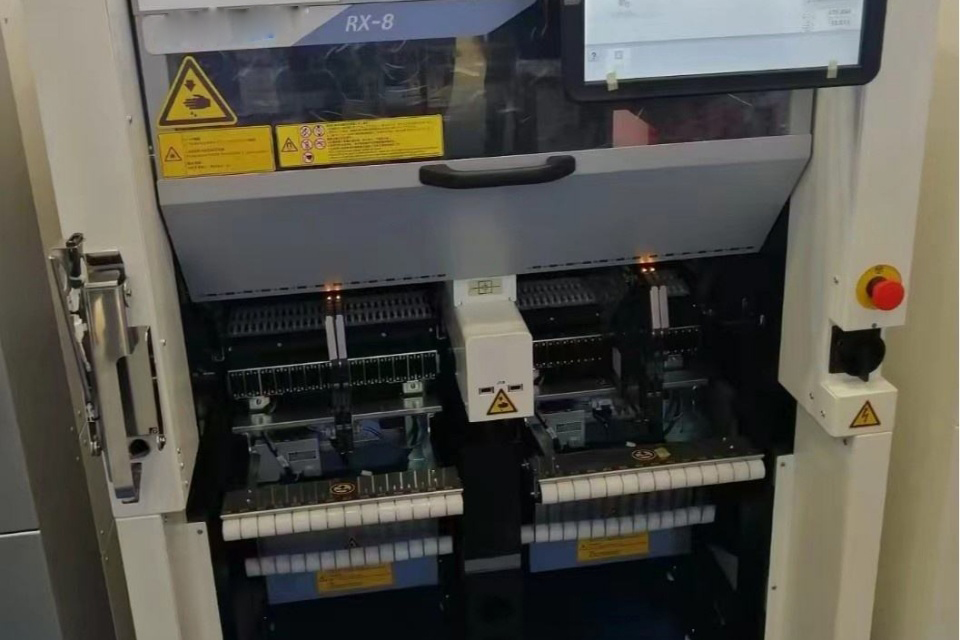
What tray feeder technology actually fixes
From my experience, tray feeder technology starts paying back the minute a plant stops treating large parts like awkward exceptions and starts treating them like a standard production reality, because once components get bigger, pricier, heavier, or mechanically fussier, feeding discipline matters more than brochure gloss. That’s the shift.
Это работает. Обычно.
An automated tray feeder fixes packaging reality first. Plenty of large components land in trays because tape is either unstable, wasteful, or just plain wrong for the package. Think connector bodies with goofy geometry, metal shields, modules with sensitive edges, and parts where one lousy pickup can turn into bent leads, dropped product, or a solder-side headache later.
Then it tackles operator variance. That part gets ignored far too often. If your outcome still depends on whether someone loaded the correct cavity, rotated the tray the right way, remembered the approved pickup origin, and didn’t mix revisions at the kitting bench, you don’t really have a stable process. You have a gamble with uniforms.
And the cost of mistakes? Higher than people admit. A mis-pick on a resistor is one kind of nuisance. A mis-pick on a large connector, shield can, or power device is a different species entirely—nozzle crash risk, vision rejects, body damage, scrap, rework, and line recovery time that bleeds far more money than anyone wants to write in the report.
That’s also why I’d never tuck this topic under generic SMT feeder strategy without talking about line design. On смешанные линии SMT, tray feeder systems aren’t decorative add-ons. They sit right in the middle of actual throughput.
The case for automation is already in the numbers
Yet some buyers still talk as if tray presentation is a niche issue. I think that’s outdated thinking—and the market data backs it up—because according to SEMI’s 2024 equipment billings report, global semiconductor manufacturing equipment sales reached $117.1 billion in 2024, up 10% from 2023, while assembly and packaging equipment sales jumped 25% as AI and HBM demand drove more complexity into back-end operations. Those aren’t vanity numbers.
They tell a story.
Bigger devices, denser packaging, tighter tolerances, higher value per board—none of that makes feeder sloppiness easier to absorb. It makes it more expensive. A tray feeder problem on a cheap build is annoying. A tray feeder problem on a higher-value, complex assembly can wreck a shift.
And we’ve got live case evidence, not just market chatter. In FUJI’s 2024 Alps Alpine case, fully automated feeder exchange pushed automation from about 12% to 56% and enabled five to six hours of unmanned production. In Panasonic’s ALPS ALPINE case study, production planning work in a high-mix environment reportedly dropped from roughly half a day to less than five minutes after automation and planning software changes. Different stack. Same lesson.
Feeders matter. A lot.
And the capacity build-out isn’t slowing down either. The U.S. government’s December 2024 CHIPS award announcement for Amkor said the company’s Arizona advanced packaging and test facility involves about $2 billion in investment and is expected to create roughly 2,000 manufacturing jobs plus more than 2,000 construction jobs. Meanwhile, Reuters reported in June 2024 that Foxconn won approval to invest $383 million in a Vietnam PCB plant with annual capacity of 2.79 million products. Volume is coming. Complexity already arrived.
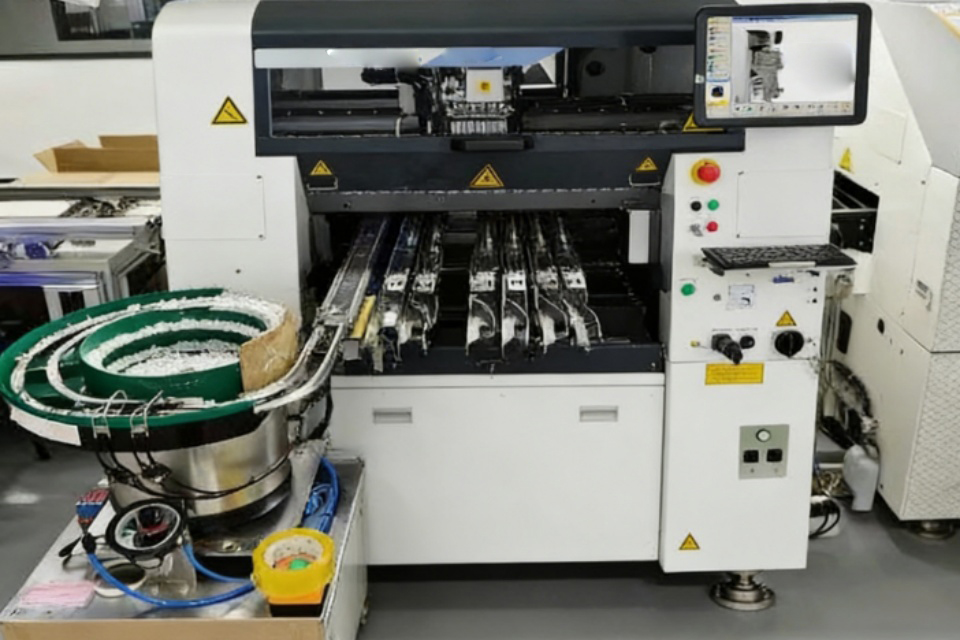
Where buyers get burned
However, and this is where the bruises usually come from, tray feeders do not magically make a line efficient just because someone signed off on a premium option, because if tray replenishment stays manual, tray IDs aren’t scanned, pickup coordinates drift between revisions, and ownership between warehouse, setup, and line-side is fuzzy, the hardware just becomes an expensive witness to bad process. Harsh, yes.
Still true.
I’ve seen gorgeous feeder hardware parked inside ugly workflows. The tray turns up late. The setup cart is wrong. Somebody grabs a “close enough” revision. The vision file hasn’t been cleaned up. Then the machine gets tagged as unreliable. That’s not a machine problem. That’s a handoff problem wearing a machine-shaped costume.
Here’s the buying mistake I see most: people compare feeder count, motion, and brand badge before they compare feeder behavior under production pressure. Bad move. The best tray feeder for large components is almost never the one with the flashiest pitch deck. It’s the one that matches your tray pitch, pickup height, component support, nozzle library, barcode discipline, and changeover tempo without forcing operators into side quests.
Fit wins. Ego doesn’t.
That’s why I’d tell any serious buyer to look at the feeder question inside broader высокоскоростные линии массового производства или Решения для линий SMT под ключ, not as a one-off addendum. Throughput isn’t head speed alone. Never was. It’s the absence of avoidable hesitation.
Comparing feeder options for large component batches
So let’s stop pretending every feeding method solves the same problem. It doesn’t. And once you start mixing tray-fed large devices with reel-fed standard parts, the wrong feeding choice can quietly load a line with extra labor, more setup friction, and a ridiculous amount of recoverable downtime. That’s the hidden tax.
| Метод кормления | Best Use Case | What It Does Well | Where It Breaks | My Verdict for Large Component Batches |
|---|---|---|---|---|
| Устройство подачи лотков | JEDEC trays, waffle packs, custom pallets, fragile or large parts | Stable orientation, controlled pickup, better handling of odd geometry | Weak offline staging or poor tray traceability ruins the benefit | Best choice when part value and geometry justify control |
| Tape feeder | High-volume standard SMD parts | Fast, familiar, dense feeder utilization | Large or awkward parts can become unreliable or wasteful | Great for commodity parts, not a cure-all |
| Stick / tube feeder | Axial or tube-packed semiconductors, some connectors | Simple format for certain package types | Lower flexibility, more operator dependence | Acceptable for niche packages, limited for scaled batches |
| Bulk or custom odd-form feed | Highly specialized components | Can support unusual shapes | Integration and repeatability are harder | Use only when standard tray logic cannot handle the part |
| Hybrid feeder mix | Lines running both reel-fed passives and tray-fed large devices | Balances speed with flexibility | Complexity rises fast without recipe discipline | Usually the smartest setup in mixed-model SMT |
My honest read? Most factories running serious product mix end up with some hybrid arrangement anyway. The smart ones admit it early and engineer around it. The slower ones keep chasing a one-format fantasy that doesn’t fit their package mix, then wonder why the line feels touchy every time a new family comes through NPI.
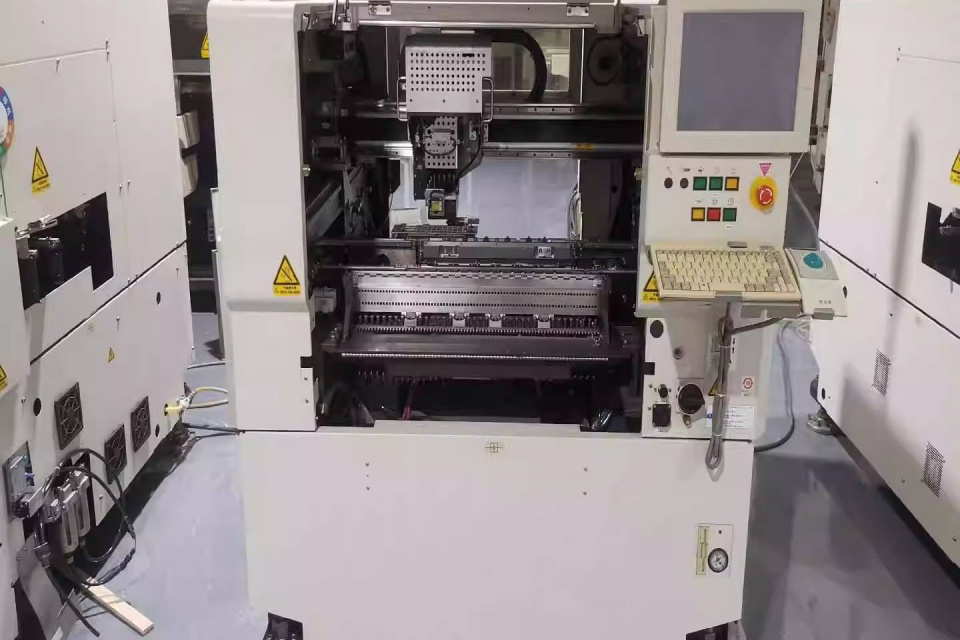
The operational playbook that actually works
Yet the answer to how to manage large component batches is almost offensively unglamorous, because what really moves the needle is not some mystical software promise but a stack of boring, disciplined habits: stage trays offline, validate part IDs before release, group tray presentation by family or nozzle logic, lock down vision data, and keep replenishment away from live placement. Boring wins.
Almost every time.
I frankly believe that’s the part the industry undersells. Real component feeding technology isn’t just metal, motors, and brochures. It’s governance. It’s deciding who verifies tray IDs, who owns setup release, who can edit pickup data, how revisions are fenced, and how line-side operators are prevented from improvising when the schedule gets ugly.
Because they will improvise. Of course they will. Production people are trying to keep the line moving. The system has to make the correct action easier than the risky one.
And if you don’t do that, tray feeders won’t save you. They’ll expose you.
Plants that get this right usually make prep look invisible. The tray is already kitted. The barcode is already checked. The nozzle package is already aligned to the program. The machine starts—and placement just happens. No scramble. No detective work. No weird little debate over whether cavity 12 or cavity 13 is the live pickup origin.
That is what mature operations look like.
It’s also why I’d tell buyers to stop worshipping raw CPH and spend more time reading actual дела клиентов. The CPH figure gets you excited. The feeder process determines whether Monday morning stays calm.
Вопросы и ответы
What is tray feeder technology in SMT assembly?
A tray feeder is an SMT feeding module that presents components from JEDEC trays, waffle packs, or custom pallets to the pick-and-place head in a fixed, repeatable orientation, making it the preferred option for large, fragile, high-value, or odd-form parts that do not travel well on tape. In plain shop-floor terms, it’s the setup you choose when package control matters more than feeder density.
When should I use a tray feeder instead of a tape feeder?
You should use a tray feeder when component size, mass, geometry, coplanarity risk, or packaging format makes tape feeding unstable, wasteful, or impossible, especially for connectors, power devices, shields, modules, and fine-pitch packages where mis-picks cost more than the feeder itself. If the part punishes casual handling, tray feeding usually makes more sense.
How do you manage large component batches without slowing the SMT line?
Managing large component batches means staging trays offline, validating part IDs before line-side release, sequencing tray presentation by nozzle and vision recipe, and separating replenishment work from live placement so operators are not improvising at the machine while the clock is burning cash. The short version: move the thinking upstream and leave the mounter alone.
What is the best tray feeder for large components?
The best tray feeder for large components is the one whose tray pitch, pickup height control, component support, barcode traceability, and software integration match your exact package family and changeover model, because a premium feeder that fights your line logic will still bleed uptime. I’d take a well-matched feeder over a flashy mismatch every day of the week.
Can tray feeder systems work in mixed SMT lines?
Yes, tray feeder systems work in mixed SMT lines when the line is built around common part validation, recipe discipline, offline setup, and clear handoff rules between tape, stick, and tray presentation, rather than treating every feeder type as a separate island of manual work. That’s usually where the biggest payoff shows up.
If you’re evaluating tray feeder systems now, don’t just ask for the glossy quote. Ask how the feeder behaves when revisions move, trays arrive late, operators rotate, and the schedule gets ugly. Then compare your options through the site’s SMT feeder category или связаться с командой with your package list, tray format, target UPH, nozzle library, and changeover pattern. That’s how you buy less fantasy—and a lot more uptime.