Small defect. Big signal.
I’ve never liked the way some factories talk about component lift-off. They say it like it’s a quirky oven problem, almost a mood swing in the reflow zone, when the defect is usually much more revealing than that. NIST describes tombstoning as a result of uneven surface tension in molten solder at the two ends of the component, and it lists familiar triggers: non-uniform heating or cooling, excess solder paste, inaccurate placement, overly large pads, uneven thermal mass, and unsuitable solder paste alloy. That’s not random behavior. That’s a process telling on itself. (tsapps.nist.gov)
And the stakes are not small. In 2023, Ford filed a U.S. safety recall covering 931 F-150 BEV vehicles because an electronic cabin coolant heater module could be built with a missing solder joint, tied to a supplier’s secondary low-volume line that lacked controls to stop an improperly soldered unit from moving forward. In 2024, Hyundai reported rearview camera PCB solder joints that could crack during manufacturing and worsen over time, reducing rear visibility. A “little solder problem” can become a compliance problem very fast. See Ford’s Part 573 safety recall report and Hyundai’s Part 573 safety recall report.
What Component Lift-Off Really Means on an SMT Line
Component lift-off during reflow means one end of an SMD part loses stable contact with its pad while solder is molten or as it freezes, leaving the component tilted, partially raised, or fully upright after the heating cycle. In small chip passives, the dramatic version is tombstoning. But I think that narrow label can hide the bigger problem, because not every dangerous lift-off defect stands up neatly for the camera. Some only rise enough to create a weak or intermittent joint. (tsapps.nist.gov)
That distinction matters in real production. A full tombstone is obvious. A partial lift-off is sneaky, and sneaky defects are the ones that slip past visual checks, land in test, or show up later as field failures. So when I say “component lift-off,” I’m talking about a defect family, not just the photogenic version operators joke about on the line. That broader view fits the physics NIST describes and it fits how the failures actually behave in production. (tsapps.nist.gov)
Why the Defect Usually Starts Before Reflow
The oven is where you see it. Not where it begins.
A lot of teams still troubleshoot this backward. They start with peak temperature, conveyor speed, and zone balance before they’ve even looked at pad symmetry, stencil transfer, component offset, or local copper distribution. That’s the wrong order. NIST’s explanation already points upstream, and a 2024 Binghamton University thesis abstract on passive component shifts during reflow makes the same point from another angle: self-alignment during reflow is shaped by solder paste pad volume and offset location captured through SPI, and the study reported 99% average fitness for its best SVR prediction model across directions. In plain English, component movement during reflow is not mysterious. It is measurable, and in part predictable. See the Binghamton University abstract. (tsapps.nist.gov)
So when a passive lifts, I don’t ask only, “What happened in the oven?” I ask, “What imbalance entered the oven already loaded?” That framing changes everything. It forces you to trace the defect back through design, printing, and placement instead of blaming the last station because it happened to be the most visible one. (tsapps.nist.gov)
Pad Design and Thermal Imbalance: The Quiet Trigger
This is the part many factories dodge.
Pad geometry and copper balance decide far more of this story than people like to admit. IPC-7530A says thermal profiling is unique to each fully populated PWBA, and it explains why: all solder joints must reach the minimum soldering temperature without pushing components beyond safe limits. It also says that boards with very large thermal mass components and very small components create a balancing act for the process engineer. That language matters, because component lift-off is often the visible result of that balancing act going wrong. (electronics.org)
And NIST backs up the defect side of that argument. Uneven thermal mass at opposing pads and overly large pads are both listed among the causes of tombstoning. Put those two sources together and the message is blunt: if the two ends of the component do not see equal thermal and wetting conditions, the solder meniscus will not behave politely just because your recipe file says “lead-free profile rev 12.” (tsapps.nist.gov)
That is why I’d rather see DFM review tied directly to process quality work than handled as a separate meeting with separate excuses. A bad pad layout can create a reflow problem before the printer ever touches the board. And once that happens, the rest of the line is just trying to survive a weak design choice. (tsapps.nist.gov)
Solder Paste Volume Control Is a Bigger Deal Than People Admit
Paste does not just affect bridges and insufficients. It affects force balance.
NIST explicitly lists excessive solder paste as a tombstoning trigger, and the Binghamton work ties component movement during reflow to solder paste pad volume and offset location seen by SPI. That combination is hard to ignore. If one side of a chip gets a stronger or earlier wetting pull because the deposit is larger, cleaner, or better placed, the component can rotate or rise before the second side catches up. This is not rare-shop folklore. It is consistent with both defect mechanics and recent predictive work. (tsapps.nist.gov)
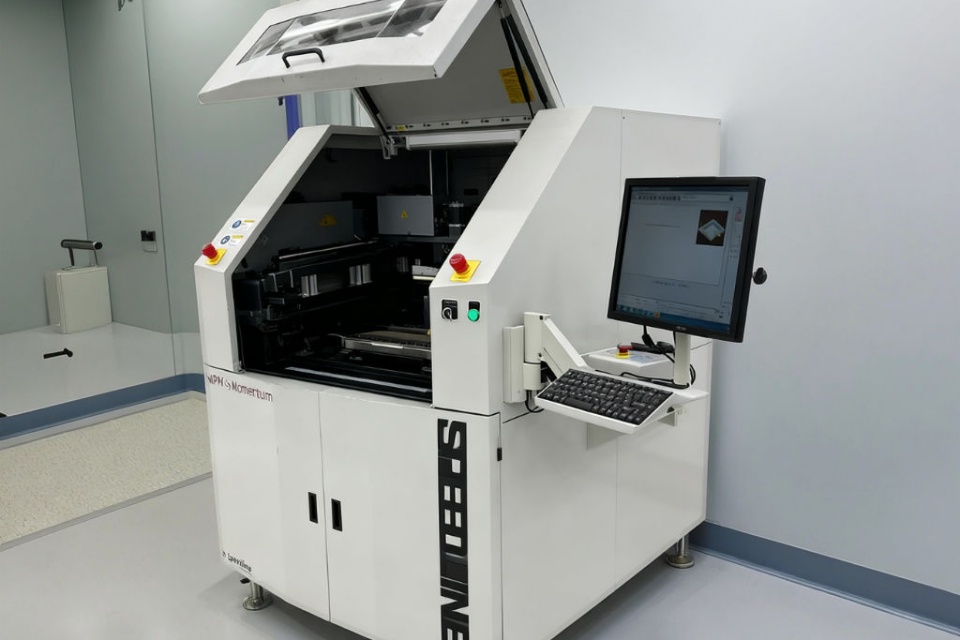
I’ve seen factories waste days tweaking oven settings when the real problem lived in aperture balance, stencil support, wipe discipline, or paste condition. That is why I’d check the printer and the SMT inspection system before I start rewriting reflow recipes. If your SPI data already shows asymmetry, the oven is about to expose it. Not fix it.
Placement Accuracy, Component Geometry, and Machine Stability Still Matter
Self-alignment helps. Until it doesn’t.
The romantic version of SMT says molten solder will pull parts back into place. Sometimes it does. Sometimes it pulls them into failure because the starting position was already bad and the wetting balance was already weak. NIST lists inaccurate component placement as a known cause of tombstoning, and the Binghamton research again reinforces the point by connecting shift behavior to offset location. So no, lift-off is not just a thermal story. Placement error narrows the margin that self-alignment has to rescue the part. (tsapps.nist.gov)
That is where machine condition becomes part of defect prevention, not just maintenance paperwork. Feeder repeatability, nozzle wear, pickup quality, board support, and minor placement drift can all push borderline parts into lift-off once the solder turns active. That is why it makes sense to connect defect reduction back to pick-and-place machines, feeder condition, and line stability instead of pretending the issue lives only inside reflow. (tsapps.nist.gov)
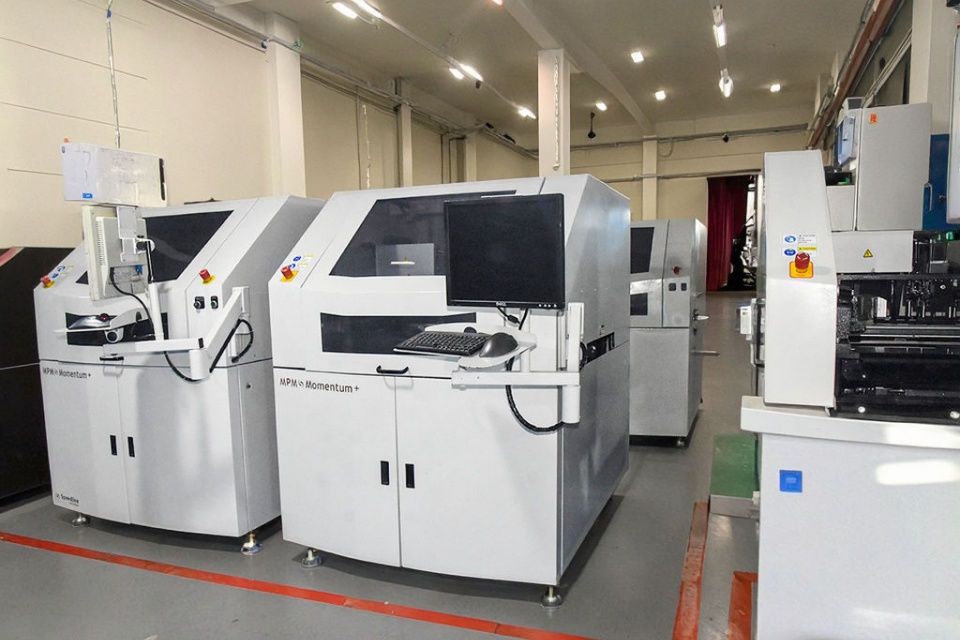
Reflow Profile for Lift-Off Prevention
Now we get to the oven. Finally.
But even here, the lazy fix is usually the wrong one. IPC-7530A states that each product requires unique oven settings and belt speed to achieve the desired profile on the PWBA, and it explains that smaller and temperature-sensitive parts must be protected while all joints still reach the minimum temperature above liquidus. In other words, copying last week’s recipe is not process control. It is wishful thinking with a filename. (electronics.org)
The same IPC family makes the control point even sharper. ANSI’s listing for IPC-7801A says the standard provides requirements for process control of conveyorized solder reflow ovens, while IPC-7530A defines the product-specific thermal profile. Taken together, the standards push you toward repeatable verification, not one-time setup. That is why a good reflow thermal profiler and stable reflow ovens matter more than broad claims about zone count or brand reputation. (webstore.ansi.org)
I’d focus on four things here: balanced heating across the assembly, enough time above liquidus for both terminations to wet properly, cooling that does not create ugly local gradients, and recipe control that survives changeovers. None of that is glamorous. It works anyway. (electronics.org)
Tombstoning vs Component Lift-Off: Why the Distinction Still Helps
Some engineers roll their eyes at this distinction. I don’t.
Tombstoning is the obvious form of lift-off: the passive rises and remains attached at only one end. Component lift-off is broader. It can include partial raising, angular tilt, or weak separation that does not leave the component standing straight up. The reason I keep both terms in play is simple: the broad label helps teams look for marginal cases, not only dramatic ones. That matches the defect mechanism NIST outlines and it matches what escapes inspection in real factories. (tsapps.nist.gov)
And yes, the language you use changes what people inspect for. If the team only hunts “tombstones,” they may miss lifted parts that still look flat enough at a glance. That is how line escapes happen. Quietly. (tsapps.nist.gov)
Prevention Strategies That Actually Reduce Defect Rates
No silver bullet. Just stacked control.
One 2023 PCB quality-control study published in PMC reported that FMEA-driven improvement reduced lot reject rate from 5,500 PPM to 900 PPM, with faults decreasing by 0.76%. That study was broader than tombstoning alone, but I think the lesson carries over cleanly: structured control beats random troubleshooting. And the Ford recall is a good reminder of what weak process discipline looks like in the wild: a secondary, low-volume supplier line without controls to keep an improperly soldered module from moving to the next operation. ([pmc.ncbi.nlm.nih.gov][4])
Here is the prevention model I trust most:
| Failure pattern | What it usually means | First thing I check | Most effective response |
|---|---|---|---|
| One end of a 0201 or 0402 rises during reflow | Wetting force became unbalanced early | Paste volume symmetry and pad geometry | Rebalance stencil deposit and review land pattern |
| Lift-off clusters near dense copper or large packages | Local thermal mass is distorting heat flow | Real product profile at high-mass and low-mass zones | Build a board-specific profile instead of reusing a generic one |
| Defect rate jumps after changeover | Recipe control is weak | Profile verification and setup history | Re-profile and lock recipe governance |
| Same feeder lane shows more lift-off | Placement repeatability is drifting | Feeder, nozzle, pickup, offset trend | Fix mechanical repeatability before touching the oven |
| Part tilts but does not fully tombstone | Marginal asymmetry is still present | SPI data and placement offset together | Tighten print and placement windows before failure becomes obvious |
That table is my synthesis of the defect mechanics in NIST, the profiling rules in IPC-7530A, the process-control direction in IPC-7801A, and the way recent academic and factory quality work frame self-alignment and defect reduction. It is not magic. It is just a better order of operations. (tsapps.nist.gov)
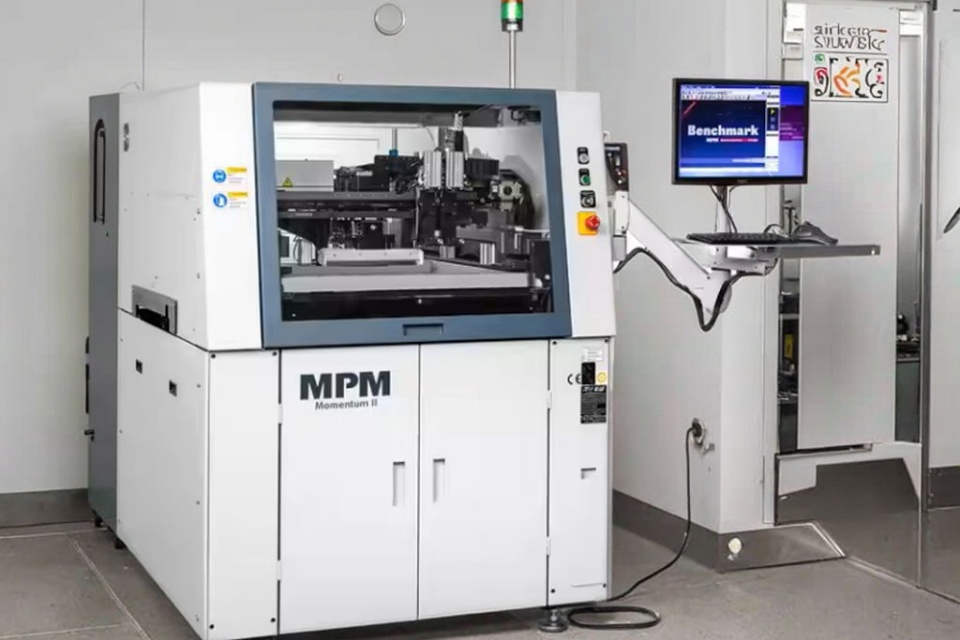
Process Control That Keeps the Defect from Coming Back
This is where many lines fail. They patch the symptom and preserve the weak system.
I think too many factories still treat reflow defects like isolated events instead of control failures. But the sources point the other way. IPC-7530A says each product needs its own profile, ANSI says IPC-7801A provides process-control requirements for conveyorized reflow ovens, Binghamton ties self-alignment behavior to measurable SPI and offset inputs, and the PMC study shows what happens when defect reduction is handled systematically instead of emotionally. The pattern is obvious: good factories reduce lift-off by building a control loop, not by celebrating one lucky trial run. (electronics.org)
That is also why broader line architecture matters. If your printer, placement machine, profiling tool, and inspection station are all producing data but nobody closes the loop, you do not have a smart line. You have expensive isolation. Real prevention looks more like turnkey SMT line solutions tied to disciplined review, backed by training and after-sales support when the team needs help turning machine capability into stable output. (webstore.ansi.org)
FAQs
What is component lift-off during reflow?
Component lift-off during reflow is a surface-mount soldering defect in which one termination of a component partially or fully loses stable contact with its PCB pad while solder is molten or as it solidifies, leaving the part tilted, raised, or electrically weak after the heating cycle. In chip passives, the most visible version is tombstoning, where one end stays soldered and the other rises. (tsapps.nist.gov)
What causes component lift-off in PCB assembly?
Component lift-off in PCB assembly is usually caused by uneven wetting force between the two ends of a part, and that imbalance often comes from non-uniform heating or cooling, excess solder paste, inaccurate placement, oversized pads, or uneven thermal mass across the two solder joints. That is why the defect so often points to combined process weakness instead of one single bad setting. (tsapps.nist.gov)
How do you prevent component lift-off during reflow?
The best way to prevent component lift-off during reflow is to control pad symmetry, solder paste volume, placement accuracy, and board-specific thermal profiling as one linked process, because the defect forms when those conditions stop giving both terminations equal chances to wet and settle correctly. In practice, that means checking SPI balance, placement offset, and real product profiles before making broad oven changes. (tsapps.nist.gov)
Is tombstoning the same as component lift-off?
Tombstoning is the most obvious form of component lift-off, where a small passive stands up or sharply tilts while remaining bonded at only one end, but the broader term “component lift-off” also includes less dramatic cases in which the part only lifts slightly and still creates a weak or intermittent joint. The broader term is more useful in quality control because not every dangerous defect looks dramatic. (tsapps.nist.gov)
Why does lift-off often appear after a product changeover?
Lift-off often appears after a product changeover because each fully populated assembly needs its own thermal profile, and a recipe that worked on a previous board may not suit the new board’s copper balance, thermal mass mix, small-passive density, or placement risk. That is why saved settings are not the same thing as verified control. (electronics.org)
Need to Reduce Component Lift-Off on Your SMT Line? Component lift-off rarely comes from one isolated mistake. It usually points to a wider control problem across printing, placement, profiling, and inspection. Review your process quality, study whether your current setup really fits your product mix, and use the contact page if you need practical help with line stability, reflow verification, or equipment planning.
[4]: https://pmc.ncbi.nlm.nih.gov/articles/PMC9838248/ ” Failure Mode and Effects Analysis of PCB for Quality Control Process – PMC “