A low quote can look beautiful on a spreadsheet. Then the first production run exposes the truth: unstable solder joints, substitute components nobody approved, rework that was never budgeted, and a delivery date that quietly moves from “confirmed” to “we are checking with production.”
I have seen this pattern too many times. The best custom electronics manufacturer is not always the cheapest supplier, and the most expensive one is not automatically the safest. The real question is sharper: which manufacturer can reduce cost without removing the controls that keep the product alive in the field?
Cost and Quality Are Not Opposites
Cost and quality are usually treated as enemies. That is the first mistake.
In custom electronics manufacturing, quality is not decoration. It is an operating system made of BOM discipline, SMT process control, inspection coverage, traceability, test strategy, operator training, and corrective action. When those controls are weak, the unit price may fall, but the real cost moves somewhere else: scrap, rework, warranty claims, delayed launches, customer complaints, or regulatory exposure.
The PCB market itself is volatile enough to punish lazy sourcing. IPC reported that North American PCB shipments in August 2024 rose 35% year over year, while the book-to-bill ratio stood at 0.99; bookings were up 44.2% year over year but shipments still fell 10.3% from the previous month, a useful reminder that short-term demand and capacity can swing hard. IPC’s August 2024 PCB data makes one thing clear: supply planning is not a clerical task. (eletrónica.org)
So yes, cost matters. But cost-effective electronics manufacturing is not achieved by stripping out inspection or forcing a PCB assembly manufacturer to absorb impossible margin pressure. It comes from better engineering, better line utilization, fewer defects, cleaner sourcing, and fewer surprises.
The Hidden Costs That Low Quotes Leave Out
The cheapest quote often excludes the most expensive problems.
A supplier may quote aggressively by assuming loose inspection, low-cost component substitutions, limited engineering review, minimal functional testing, or weak documentation. That can work for a simple board with low risk. It does not work for dense SMT assemblies, products with BGAs or QFNs, medical-adjacent electronics, industrial controls, power electronics, or anything expected to survive heat, vibration, humidity, or long service cycles.
One hard truth: many buyers ask for quality but only purchase assembly.
They send Gerbers, a BOM, and a target price, then expect the electronics contract manufacturer to guess the rest. What class of workmanship? Which alternates are approved? What is the acceptable first-pass yield? Are date codes controlled? Is X-ray required for hidden solder joints? Who owns test fixture design? What happens if a component hits end-of-life?
These questions decide cost.
For early builds, a disciplined prototype and small-batch SMT production setup is often more valuable than a low-cost high-volume quote. Prototype runs reveal the ugly details: tombstoning, polarity errors, moisture-sensitive packages, connector access problems, unstable firmware flashing, bad panelization, and components that look equivalent on paper but behave differently under load.
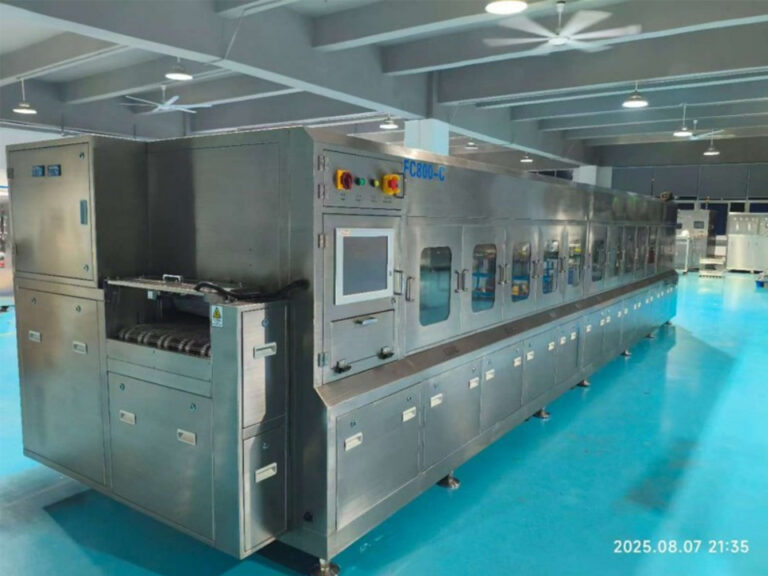
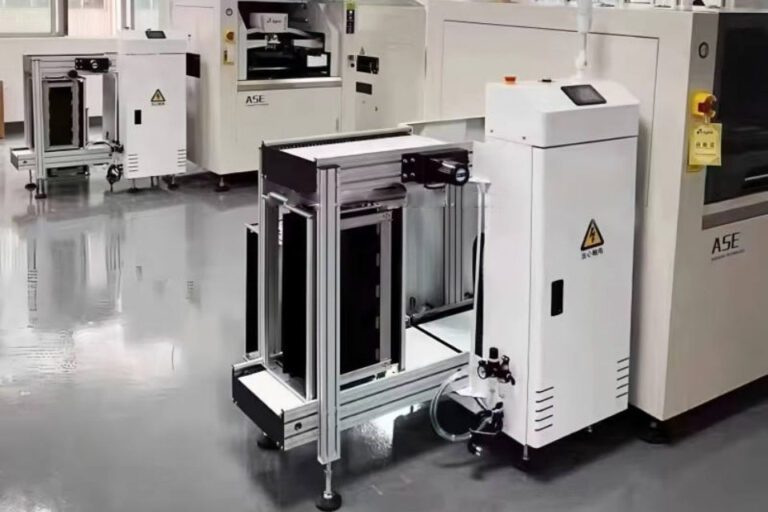
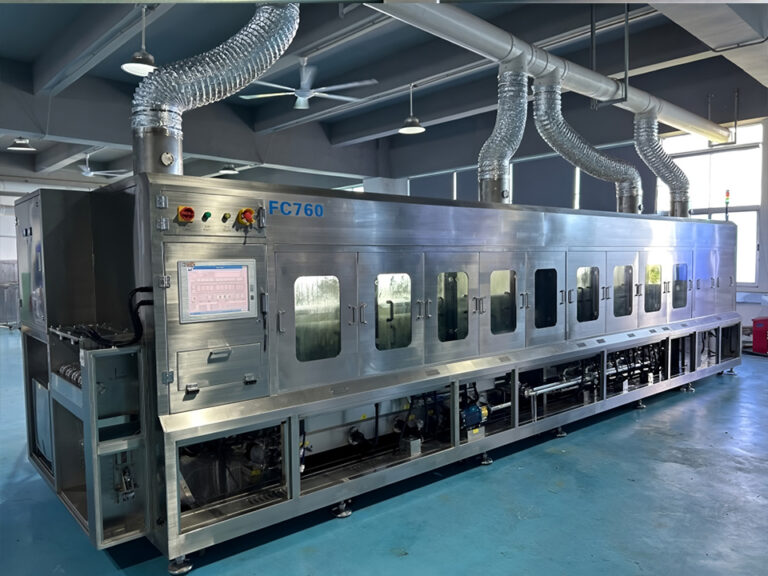
Once the design stabilizes, the math changes. At volume, cost reduction should come from throughput, line balancing, automation, feeder planning, and process repeatability. That is where linhas SMT de produção em massa de alta velocidade can cut unit cost without pretending quality control is optional.
How to Judge a Custom Electronics Manufacturer Before the First PO
Do not start with the unit price. Start with the process.
A serious custom electronics manufacturer should be able to explain its production flow in operational detail: incoming inspection, solder paste handling, stencil control, feeder setup, first article inspection, SPI, AOI, X-ray when needed, reflow profiling, rework limits, functional testing, traceability, and nonconforming material handling.
If the answer is mostly sales language, keep moving.
The supplier should also understand your product category. OEM electronics manufacturing for an industrial controller is different from assembling a simple consumer accessory. A power board is not an IoT sensor. A prototype run is not a 50,000-unit production order. The line, inspection plan, test method, and documentation depth should match the product risk.
Foxconn’s 2024 move to build what executives described as the world’s largest manufacturing facility for Nvidia GB200 superchips in Mexico is a useful large-scale example. Reuters reported that the project was tied to Nvidia’s Blackwell platform, AI server demand, and Foxconn’s advanced liquid cooling and heat dissipation capability. Reuters’ Foxconn report shows the same principle that applies to smaller OEMs: manufacturing location, capability, thermal expertise, and supply-chain strategy now belong in the same cost model. (Reuters)
For a buyer, the practical checklist is simple but unforgiving. Ask whether the supplier can show its electronics manufacturing quality control process. Ask what inspection equipment is actually used, not just shown on a website. Ask how they handle engineering change orders. Ask what happens when yield drops. Ask whether they stop the line or keep shipping.
That answer tells you more than the quote.
Cost vs. Quality Trade-Off Table
| Decision Area | Low-Cost Shortcut | Quality-Safe Alternative | What To Verify |
|---|---|---|---|
| PCB assembly manufacturer selection | Choose lowest unit price | Compare process capability, yield history, and inspection depth | First-pass yield, rework logs, defect Pareto data |
| Component sourcing | Use open-market substitutes | Use AVL, lifecycle checks, and approved alternates | Date codes, MSL level, counterfeit controls |
| Equipamento SMT | Run on any available line | Match line capability to board complexity | Placement accuracy, feeder condition, nozzle availability |
| Inspeção | Visual checks and basic AOI | SPI, AOI, X-ray for hidden joints, functional testing | Coverage by defect type and package risk |
| Scaling | Jump from prototype to volume | Pilot run, ramp plan, production gate review | NPI report, control plan, takt time |
| Documentação | Basic shipment records | Board-level traceability and corrective action records | Lot tracking, serial records, NCR/CAPA process |
| Apoio | Reactive email response | Defined support path, spare parts, and warranty handling | Response time, service process, replacement policy |
The table is not theory. It is where the margin actually goes.
A supplier with modern Sistemas de inspeção SMT can prevent defects from escaping into the field, but only if inspection is programmed around product risk. AOI is useful. SPI is useful. X-ray is useful. None of them are magic if the factory treats them as box-checking exercises.
Production Controls That Protect Margin
The best custom electronics manufacturer will not say yes to everything. That is a good sign.
A mature supplier will challenge weak documentation, unclear BOMs, unrealistic lead times, risky component choices, and missing test requirements. Buyers sometimes misread that as friction. I see it differently. Pushback before production is cheaper than failure after shipment.
The U.S. semiconductor supply chain offers a broader version of the same lesson. In December 2024, NIST announced preliminary CHIPS Act terms with Bosch for up to $225 million in proposed direct funding and about $350 million in proposed loans to support Bosch’s planned $1.9 billion silicon carbide semiconductor investment in Roseville, California. That is not small money, and it exists because resilient electronics production depends on capacity, materials, process control, and skilled execution. NIST’s Bosch CHIPS announcement puts real numbers behind the point. (nist.gov)
For day-to-day OEM manufacturing, margin protection usually comes from smaller but disciplined choices:
| Controlo | Why It Matters | Cost Impact |
|---|---|---|
| DFM review | Finds manufacturability issues before production | Reduces rework and launch delays |
| AVL management | Prevents uncontrolled substitutions | Reduces quality drift and sourcing risk |
| Reflow profiling | Matches thermal process to board design | Reduces solder defects |
| SPI and AOI | Detects paste and placement issues early | Protege o rendimento da primeira passagem |
| Functional testing | Confirms product behavior, not just assembly appearance | Reduces field returns |
| Rastreabilidade | Links failures to lots, reels, operators, and batches | Speeds containment and root cause analysis |
| Preventive maintenance | Keeps equipment stable over time | Reduces downtime and variation |
A solução de linha SMT chave na mão can also make sense when the buyer wants tighter control over process flow rather than fragmented responsibility across multiple vendors. Fragmentation is expensive. Everyone blames someone else, and the board still fails.
Legal pressure is increasing too. The European Commission says the new Product Liability Directive entered into force on December 8, 2024, with EU countries required to transpose it by December 9, 2026. The rules cover digital products and clarify that software, applications, operating systems, and AI systems can fall within the liability framework. The European Commission’s Product Liability Directive guidance is worth reading for any electronics company shipping into Europe.
That matters because electronics quality is no longer only about solder. Firmware, updates, cybersecurity, documentation, and post-sale control can all become part of the risk profile.

Buyer FAQs and Next Step
What is a custom electronics manufacturer? A custom electronics manufacturer is a production partner that builds PCB assemblies, electronic modules, box-build products, or finished devices according to a buyer’s design files, BOM, quality requirements, volume forecast, and testing plan while often supporting DFM, sourcing, SMT assembly, inspection, traceability, and production scaling.
In plain terms, the manufacturer turns engineering intent into repeatable production. The better ones do not simply assemble; they question the design, expose risk, and help prevent avoidable failure.
How do you balance cost and quality in electronics manufacturing? Balancing cost and quality in electronics manufacturing means reducing waste, labor inefficiency, sourcing risk, process variation, and unnecessary complexity without removing inspection, traceability, testing, or engineering controls that protect product reliability and customer safety.
The wrong savings come from skipped checks. The right savings come from better panelization, cleaner BOMs, faster setup, automated inspection, stable suppliers, and fewer defects per thousand boards.
What makes the best custom electronics manufacturer different? The best custom electronics manufacturer combines engineering review, disciplined SMT production, reliable component sourcing, inspection coverage, transparent communication, and documented quality control so buyers can scale production while controlling cost, delivery risk, defect rates, and long-term field reliability.
Look for process evidence, not slogans. A strong supplier can explain where cost can be reduced, where it should not be reduced, and what risk appears if the buyer insists on cutting too far.
Is an electronics contract manufacturer the same as an OEM electronics manufacturing partner? An electronics contract manufacturer usually builds products for another company, while an OEM electronics manufacturing partner may support broader production planning, sourcing strategy, testing, documentation, and sometimes design or lifecycle input depending on the commercial relationship.
The terms overlap in everyday sourcing conversations, but the responsibility model matters. Before signing, define who owns design validation, test coverage, component approval, firmware loading, failure analysis, and post-shipment support.
The practical next step is to stop treating the quote as the whole story. Review the production path, ask for process evidence, and compare suppliers by risk control as much as price. For a more grounded discussion around SMT equipment, process planning, and manufacturing fit, use the página de contacto to start a technical conversation before the PO locks you into the wrong cost structure.