If you run SMT long enough, you’ll see it: tiny solder “pepper” around chips, or a fat little bead sitting like it owns the place. AOI flags it, QA gets nervous, and the rework queue starts to look like a traffic jam.
In this post, I’m going to keep it practical. We’ll talk solder beading and solder balling, why they show up, and how you can clamp them down without turning your line into a science fair project.
Quick context from our side: Meraif builds turnkey SMT lines—from layout to install, tuning, and training—so we see these defects across high-mix NPI lines and high-speed mass production lines.
Solder Beading vs Solder Balling in SMT Reflow
Solder beading and solder balling look similar at first glance, but the “signature” is different:
- Solder beading: often hugs the end of a chip (think 0402/0603), kind of “parked” near the component body.
- Solder balling: more random scatter—little spheres on mask, between pads, sometimes rolling into risky places.
If you mix them up, you’ll chase the wrong knob. So first rule: classify by location + pattern, not just “it’s a ball.”
Excessive Solder Paste Volume
This one causes more pain than most people wanna admit.
Solder Paste Deposit Volume
When paste volume is too high, extra paste has to go somewhere. During placement it gets squeezed. During reflow it can break up and form beads/balls.
What you do on the line:
- Use SPI to watch deposit volume trend, not just pass/fail.
- Tighten your stencil wipe cadence when humidity or paste age changes.
- If your design allows, reduce the deposit on chip ends (more on stencil later).
Real talk: if your SPI is off-line or you don’t trust it, you’re basically driving at night with no headlights.
Placement Force and Print Registration
Most “mystery balling” isn’t mystery. It’s usually print + placement stacking up.
Placement Force (Z-Height) and Paste Squeeze
Too much placement force (or wrong Z height) pushes paste out from under the part. Then reflow turns that paste smear into solder spheres.
Print Registration and Stencil Alignment
If your print is slightly off, you can end up depositing paste onto solder mask. That paste loves to become little balls later.
Quick fixes that actually work:
- Verify placement recipe (Z height, placement force, contact time).
- Check stencil-to-board alignment and board support (under-stencil vacuum, tooling pins, support blocks).
- Watch for feeder indexing issues or nozzle wear that creates micro-shifts.
If your line is high-speed, tiny placement drift turns into big defect counts fast. That’s where stable mechanics matter.
Reflow Profile Ramp-Up Rate
Ramp-Up Rate (°C/s)
A too-slow ramp can let paste slump and move before it fully wets out, especially near small chips. Many factories start by tuning ramp-up into a controlled window (a common starting range you’ll hear is around 1.5–2.5°C/s, then adjust for your paste datasheet and board thermal mass).
What I’d do in a real shop:
- Profile with a thermal profiler (don’t guess from oven setpoints).
- Compare a “golden board” profile vs today’s profile.
- If you changed board thickness or copper pour, re-check profile. It matter, like a lot.
Preheat and Solvent Outgassing
Preheat / Soak Zone
When preheat is sloppy, solvents can outgas unevenly. That can create paste splatter and leave behind solder balls.
Dial-in tips:
- Keep preheat stable across lanes (if you run dual lane).
- Don’t rush ramp so hard that the top side cooks while the bottom stays cold.
- If you see random balling spikes on rainy days… yeah, keep reading.
Stencil Aperture Reduction and Stencil Thickness
This is your “physical control knob.”
10% Aperture Reduction for Chip Components
A common anti-beading tactic: reduce stencil aperture on chip ends (often around 10% reduction as a starting point), so you don’t overfeed solder at the component termination.
Stencil Thickness and Area Ratio
If the stencil is too thick for fine pitch work, you’ll fight paste release and smearing. If it’s too thin, joints get starved. You’re looking for a sane process window.
Shop-floor slang version:
Stencil is your “paste budget.” Spend it smart.
Moisture Control and Board Baking
Moisture makes everything weirder.
Humidity, Moisture Absorption, and Random Balling
Boards, components, even paste handling can pick up moisture. In reflow, moisture expands and can contribute to splatter and odd solder behavior.
Practical actions:
- Use dry storage (ESD dry cabinet when needed).
- Follow MSL rules for sensitive packages.
- Consider baking when you see moisture signatures (but do it based on data, not superstition).
This is one reason high-mix factories get hit more: materials sit, then suddenly run.
IPC-A-610 Solder Balls Acceptance Criteria
Not every solder ball means scrap. But you need a rule everyone agrees on.
Acceptance Criteria and Electrical Clearance
Common IPC-style thinking (simplified):
- Target: no loose solder balls.
- Acceptable in some cases if balls are trapped in residue/coating and don’t violate clearance.
- Defect if balls can move or violate minimum electrical spacing.
If you don’t define this, operators will argue all day, and your customer will still ask for an 8D.
Evidence Table: Root Cause → Action → Source
| Defect control point (argument) | What’s really happening | What you change on the line | Source / basis |
|---|---|---|---|
| Excessive solder paste volume | Too much paste gets squeezed or migrates | SPI volume control, stencil wipe discipline, aperture tuning | Process engineering best practice + paste datasheet logic |
| Placement force and print registration | Z-height/force pushes paste out; misprint puts paste on mask | Re-check placement recipe, board support, print alignment | SMT line debug experience (NPI + mass production) |
| Reflow profile ramp-up rate | Slow ramp allows slump/migration before wetting | Profile with thermal profiler, tune ramp/soak | Common OEM/paste supplier guidance + profiling practice |
| Preheat and solvent outgassing | Uneven outgassing can splatter, leaving balls | Stabilize preheat, validate soak, reduce day-to-day drift | Reflow profiling discipline |
| Stencil aperture reduction and stencil thickness | Deposit control reduces bead formation near chips | ~10% aperture reduction starting point, thickness matched to pitch | Stencil design practice (chip anti-beading patterns) |
| Moisture control and board baking | Moisture expansion increases random behavior | Dry storage, MSL controls, bake with evidence | Materials handling best practice |
| IPC-A-610 solder balls acceptance criteria | Need consistent judgement and clearance rules | Define “accept vs defect” in your SOP | IPC-A-610 industry standard framework |
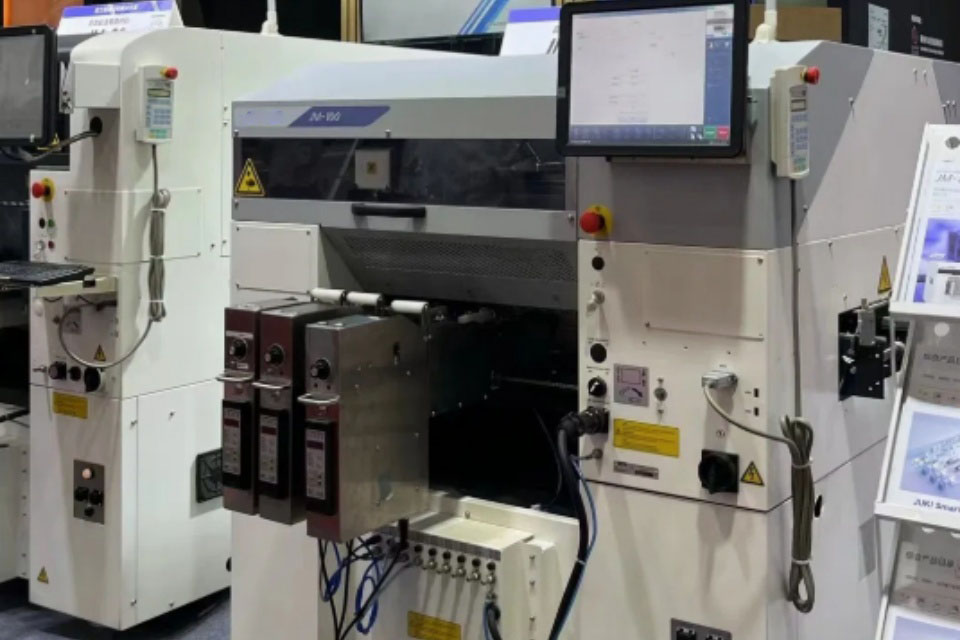
SMT Grease for Feeder and Machine Maintenance
This part gets ignored, but it’s real: mechanical stability affects placement stability, and placement stability affects paste squeeze.
On our site we call it straight: SMT grease for feeder and machine maintenance reduces wear, improves smooth motion, and supports stable performance across long production runs.
When feeders start to drag or a mechanism moves “not smooth,” placement can micro-shift, nozzle contact can get inconsistent, and you’ll see more paste smear. It’s not magic—just friction and drift.
If you source grease as a consumable item, you can check our SMT Grease category here:
https://pickandplacemachine.com/smt-grease/
(And yeah, we support bulk orders and OEM/ODM style supply for consumables and spares, because lots of customers don’t want to re-qualify suppliers every month.)
A Practical Troubleshooting Flow for the Line
Here’s how I’d run it on a real factory floor—fast, no drama:
- SPI first: volume trend, offset trend, paste release.
- Printer next: squeegee pressure, stencil wipe, underside contamination.
- Placement: Z-height/force, nozzle condition, feeder repeatability, board support.
- Reflow profile: measure with profiler, compare to golden run, check ramp/soak/TAL stability.
- Materials & environment: humidity, MSL exposure, storage discipline.
Do that and you’ll stop “random balling” from living rent-free in your line.
Turnkey SMT Line Solutions
If you’re building a new SMT line or you’re tired of patching one issue after another, the bigger win is end-to-end control: printer + pick-and-place + reflow + AOI/SPI + cleaning + handling, all tuned as one system. That’s basically what Meraif does as a turnkey SMT plant solution provider, including line design, integration, calibration, and training.
Beading and balling aren’t just defects. They’re signals. When you read those signals early, you protect first-pass yield and keep shipment schedule from going sideways… kinda important, right.